

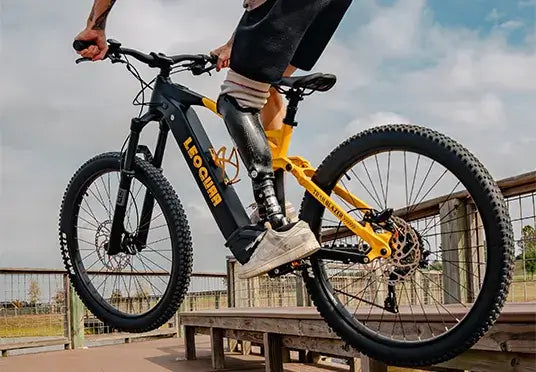


What Are the Best Electric Bike Conversion Kits in 2026?
You can add power to your current bike with an electric bike conversion kit. There are plenty of kits out there, but not all of them perform as well as they claim. We tested and reviewed the best electric bike kits to help you choose with more confidence. This 2026 list is based on real rider feedback, range testing, and long-term reliability. If you want a simple answer, here are our top picks:
- Best Overall: Bafang BBS02 Mid-Drive Kit
- Best for Simplicity: Swytch GO Kit
- Best for Power & Performance: CYC Photon Mid-Drive Kit
The guide shows you the best kit choices and helps you to select the right system for your bike. It can be seen as a full review of electric bike conversion kits, with an emphasis on actual performance rather than on marketing statements. Our reviews are based on long-term usage feedback, together with range tests and reliability scores provided by real riders in order that each recommendation actually matches real-world results. We're not going to include any sales talk and will concentrate on what's important. Our aim is reliable performance and to provide a good upgrade.
Understanding Core Components
The motor is what drives the bicycle. Power is measured in Watts (W). A 250W motor provides mild assistance and complies with the regulations in many areas, whereas motors with a power output of 750W or 1000W motor offer strong power when climbing steep hills or travelling at high speeds. It is important to understand the difference between steady power and peak power bursts.
The Battery: This is what stores your energy, and the amount it can hold determines how far you'll be able to travel. The two key figures are Volts (V), which relate to power, and Amp Hours (Ah), which relate to duration. When you multiply these two values you get Watt Hours (Wh), which gives you the actual amount of energy. For example, a light kit may come with a 300Wh battery for short journeys, while long-range kits can have more than 700Wh to enable all-day rides. If you want a complete solution, a number of the top 750W Electric Bikes kits currently include both a battery and a charger when they are shipped. Nevertheless, you should always check with the vendor since in some cases the kits sell the motor system separately from the battery pack.
The Controller: This functions as the brain; it's a small box which regulates the flow of power from the battery to the motor in response to your actions. Good controllers ensure that the power delivery is smooth, while a cheap one makes the ride jerky and poor.
Throttle and Pedal Assist (PAS): These are the means by which the motor is controlled. With a throttle it is possible to get power whenever you want it, regardless of whether you are pedalling or not. Pedal Assist detects when you are pedalling and then provides motor assistance accordingly. PAS is more similar to ordinary biking, whereas with a throttle you get help when you are starting off or when you are stopping pedalling. Most of the kits offer both options.
Hub vs. Mid-Drive Motors
The most important decision you have to make is between a hub motor and a mid-drive motor since they function in different ways, give different sensations when you're riding, and require different setup procedures.
Hub Motors
- Advantages include lower cost, easier installation, and less strain on your bike's chain and gears.
- Drawbacks include the fact that it can make the bike seem as if it's being pushed or pulled, adds weight to the wheel which hinders handling, and doesn't work well on steep hills because it doesn't make use of the bike's gears.
Mid-Drive Motors
- Advantages: It provides a smooth and well-balanced riding experience by assisting with your pedalling and making use of the bike's gears, which makes it suitable for ascending steep slopes. The mid-drive systems are still the preferred option for use in hilly cities and in off-road situations in 2026 because of their excellent torque and efficiency.
- Drawbacks include the higher price, the more difficult setup which usually requires special tools, and greater wear on the chain and gears.
Comparison Table
| Feature | ⚙️ Hub Motor | ⚙️ Mid-Drive Motor |
|---|---|---|
| 🚴 Ride Feel | Pushed/Pulled Sensation | Natural, Amplified Pedaling |
| 🛠 Installation | Easier (plug-and-play) | Complex (requires tools) |
| 💰 Price | Lower | Higher |
| 🧗 Hill Climbing | Moderate | Excellent (uses gears) |
| 🔧 Drivetrain Wear | Low | Higher (chain wear from torque) |
Over the past few years, interest in lightweight electric bike conversion kits has increased rapidly. Nowadays, riders prefer compact hub systems and smaller batteries which do not affect the bike's original handling. Most of the modern kits that weigh less than 5 kg are now able to provide sufficient range for everyday use while maintaining a neat and well-balanced setup.
Our Top Kit Picks
We looked at a large number of kits considering their performance, reliability, how easy they were to set up, and value. Kits for converting bicycles to electric ones are the best that are currently available.
Bafang BBS02 - Best Overall
Key Specifications:
- Motor: 750W Mid-Drive
- Battery: Varies by vendor (typically 48V, 13Ah-17.5Ah options)
- Control: PAS and Throttle
- Weight: ~4.3 kg (motor only)
Pros:
- Great power for climbing and speed.
- Uses bike's gears for better efficiency.
- Large community and easy to find parts.
- Fairly simple mid-drive setup.
Cons:
- Can strain the chain and gears hard.
- Heavier than hub kits.
Best For: Daily riders, long-distance cyclists, and casual riders who want a powerful system that handles different terrain well.
Swytch GO Kit - Best for Simplicity
The Swytch kit transformed the industry by concentrating on simple design and keeping the weight low. It is generally considered to be the best kind of lightweight electric bike conversion kit for city riders who value portability and want as little extra weight as possible. The kit has a motor in the front hub and the battery is contained in a small, removable pack which attaches to the handlebars.
Key Specifications:
- Motor: 250W Front Hub
- Battery: 90Wh (GO) to 180Wh (GO+)
- Control: PAS only
- Weight: ~1.5 kg (motor) + 1.1 kg (power pack)
Pros:
- Very easy to install and use.
- Light design barely affects bike handling.
- Removable battery pack makes charging simple.
- Fits on almost any bike, including folding bikes.
Cons:
- Limited power struggles on very steep hills.
- Shorter range than bigger systems.
Best For: City riders, casual cyclists, and those who want easy setup and light weight over raw power.
CYC Photon - Best for Performance
For riders who want a modern, light, and powerful mid-drive, the CYC Photon is a top choice. It has an advanced sensor that gives very smooth and responsive power.
Key Specifications:
- Motor: 750W Mid-Drive (nominal)
- Battery: Varies by vendor (compatible with 36V-52V)
- Control: Torque-sensing PAS and Throttle
- Weight: ~3.4 kg (motor only)
Pros:
- Advanced sensor gives a very natural ride feel.
- Compact and lighter than many other mid-drives.
- Highly customizable through a phone app.
- Great power-to-weight ratio.
Cons:
- High price.
- Setup can be harder than a Bafang kit.
Ideal for: Riders concerned with performance, mountain bikers, and tech-oriented users who want the smoothest power and a lot of customization.
2026 Electric Bike Kit Trends & Buying Insights
In 2026 the market for electric bike conversion kits is still developing rapidly, with lightweight and modular systems currently being the preferred choice, these having taken the place of the more bulky arrangements used in previous years. Manufacturers such as Bafang and Swytch have improved their kits so as to achieve greater energy efficiency and easier installation.
People are also placing greater emphasis on upgrade value, seeking out the best electric bike kits that offer a combination of reliability, compact battery packs, and a smoother torque response. Whatever your priority—speed, climbing power, or portability—this year's designs are trying to achieve a balance of all three without making the installation too complicated.
If you are planning to upgrade your bike this year, acquainting yourself with these trends will enable you to concentrate on kits that perform well over time rather than being attracted to specifications that may look impressive but do not work well when used every day.
Your Buyer's Compass
Picking the right electric bike kit is personal. Beyond our top picks, use these questions to guide your choice and find the perfect match for your needs.
What is your riding style?
Your daily ride decides what you need. For easy city riding on flat ground, a simple 250W front hub kit like the Swytch works well and costs less. If your route has steep hills or you enjoy trail riding, a mid-drive motor from Bafang or CYC climbs much better and is worth the extra money. For long trips, pick a kit with a big battery (700Wh+).
What is your bike's compatibility?

- For hub motors, measure your dropout spacing. Most front wheels use 100mm standard, and rear wheels usually use 135mm. or mid-drive motors, find your bottom bracket type (like threaded BSA or PressFit). Most kits work with standard BSA bottom brackets, and you may need adapters for other types.
- Check your brake type. Some kits have brake levers with motor cut-off sensors that may only work with cable brakes, not hydraulic ones.
- Make sure your frame, usually the downtube, has enough space and proper mounting points for the battery.
What is your budget?
Be realistic about costs. Basic hub motor kits cost a few hundred dollars, but quality and battery life may be poor. For riders on a tight budget, several affordable e bike kit options still deliver dependable performance without cutting corners on safety or usability. A good hub kit from a trusted brand usually starts around $500-$800. High-performance mid-drive kits like the Bafang BBS02 often cost $800-$1200 with a decent battery, while premium kits like the CYC Photon can cost over $1500.
Affordable Kits Worth Considering
Not every upgrade needs to break the bank. Today’s affordable e bike kit options are far better than early low-cost models. Kits like the Tongsheng TSDZ2 and Voilamart 500W hub drive provide reliable assistance for daily commuting at half the cost of premium systems. While they may not have the advanced torque sensors or app tuning of higher-end kits, they deliver consistent performance, solid battery range, and simple DIY installation — ideal for first-time converters. For city commutes or short trips, a mid-range, budget-friendly kit may be the smartest upgrade. In 2026, dependable options like the Voilamart 500W and Tongsheng TSDZ2 remain top picks among affordable electric bike conversion kits.
How comfortable are you with DIY?
Be honest about your mechanical skills. A front hub motor kit is easiest, often needing only basic tools. A rear hub motor adds the challenge of dealing with the bike's gears. A mid-drive kit is the hardest, requiring you to remove cranks and the bottom bracket. This often needs special tools like a crank puller and bottom bracket tool.
Real-World Installation Tips
- 📐 Measure & Check Compatibility – Frame size, dropout spacing, bottom bracket.
- 🔧 Install Motor – Front/rear hub or mid-drive (with bracket tools).
- 🔋 Mount Battery – Secure on downtube or rack mount.
- ⚡ Wire & Connect – Route cables, connect controller.
- 🎛 Test System – Power on, check assist/throttle function.
1. The "Essential" Unlisted Tools. With any mid-drive arrangement, a crank puller and the correct bottom bracket tool are not optional—they are necessary and you should not begin without them. Good hex keys, wire cutters, and a sufficient supply of good quality zip ties are your best friends whenever you have a kit.
Tip 2: Cable management is essential since it distinguishes amateur efforts from professional ones. Before you begin securing the components, plan out the route that the cables will take. Make use of the frame to conceal the wires whenever you can. Cables that are neat and securely fastened will avoid getting caught, will be protected against damage, and will give the end product a more unified appearance.
Tip 3: The Bottom Bracket Hurdle. The greatest difficulty when fitting a mid-drive system is usually a bottom bracket that is stuck or damaged. If it doesn't move when you apply reasonable force, then halt and take it to a local bike shop; using excessive force could damage your frame and turn what should be a enjoyable do-it-yourself job into a costly repair.
Fourth tip: Use torque arms when it comes to power. When you fit a powerful hub motor (one with more than 500W), in particular if it's mounted on the front fork, a torque arm is an essential safety component. It is a small metal support which prevents the motor's shaft from twisting and possibly coming out of the fork when a high torque is applied. Torque arms may be included in some kits; if they aren't, you should buy them.
The Final Turn
Then, is it worthwhile to have a bicycle converted with an electric kit? If you own a bike that you really like and which suits you well, the answer is yes. It provides a green and economical means of getting into e-biking and gives your existing bike a new, powerful role. What is important is not selecting the single best kit available, but choosing the kit that is right for you. When you understand the key components, decide between hub and mid-drive motors, and honestly assess your bike, your budget, and your own abilities, you cease to be merely a buyer and become an informed builder instead. After you have grasped these factors, it becomes easy to narrow down the most suitable electric bike kits since the whole point is to match the system's power, weight, and price to your actual riding style. You now have the knowledge to proceed with confidence and can begin your journey towards riding an electric bike.
Frequently Asked Questions
1. What is the time taken to fit an electric bike conversion kit?
The time it takes to carry out the installation depends on the kind of kit and on your level of experience. Beginner riders usually take 2 to 4 hours to fit a front hub motor kit. Rear hub motor kits take 3 to 5 hours because of the gear complexity. Mid-drive kits take 4 to 8 hours and generally require special tools when removing the cranks and bottom brackets.
2. Does fitting an electric bike kit cancel my bicycle warranty?
bicycle warranties usually become invalid if you fit an electric conversion kit to the bike, since the changes needed for installation, particularly those involved with mid-drive systems, are seen as alterations to the original design. If warranty coverage is important to you, it is advisable to contact the manufacturer of your bike before fitting any kit.
3. What average range should I expect from an electric bike conversion kit?
The distance you can travel depends on the capacity of the battery, the type of terrain, your weight, and the level of assistance you use. A battery with a capacity of 300Wh generally offers a range of 15 to 25 miles. One with a capacity of 500Wh generally provides a range of 25 to 40 miles. Batteries that are larger than 700Wh can give a range of 40 to 60 miles or more. Factors such as hills, headwinds, and a high level of assistance can cause the range to be reduced considerably.
4. Is it possible to fit an electric bike kit onto any bicycle?
It is not true that all bikes can be used with a conversion kit. Before buying one, you should check that the bike has the standard dropout spacing (100mm in the case of the front hub and 135mm for the rear hub) and that there is adequate frame clearance. Mid-drive kits also demand that the bottom bracket has the appropriate threading (this is usually the BSA standard). The frame needs to have places to mount the battery and sufficient clearance for all the components. Bikes that are very old or that are damaged may not be suitable.
5. How much does it cost to maintain an electric bike conversion kit?
Maintenance costs are generally low for the electrical components. Hub motors are sealed and require minimal care. Mid-drive systems increase chain and cassette wear, so expect to replace these parts more frequently (every 1,000-2,000 miles vs. 2,000-3,000 miles on regular bikes). Battery replacement every 3-5 years is the biggest long-term cost, typically $300-$600 depending on capacity.


Leave a comment