


Filter


Electric Bikes for Beginners
Electric bikes for beginners should feel predictable at starts, stops, and low-speed turns. Before comparing motor numbers, decide where you will ride, how often you need to lift the bike, and whether a lower frame would make mounting easier. Those choices have a bigger effect on confidence than buying the most powerful model.


UL 2849 / UL 2271
Certified

Factory-Direct
From $1,050

US Warehouse
Free Shipping

2-Year
Warranty
14-Day
Returns

How to Choose Electric Bikes for Beginners
Check fit before features. Compare standover height and saddle range with your body measurements, then think about bike weight if you must use stairs, a vehicle rack, or tight storage. Our electric bike size guide helps you review the numbers before an order.
Next, match the tires and motor to the route. Paved neighborhood rides do not require the same tire width or torque as loose gravel and steeper grades. A stronger motor can help on hills, but it also makes smooth control and sensible assist selection more important on a first ride.
Three Beginner Electric Bikes, Three Different Uses
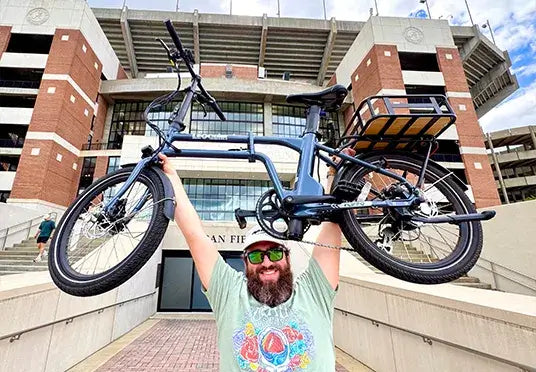
Sprint suits errands and everyday mixed city routes. It uses a 350W rated rear hub motor with up to 600W peak output, a cadence sensor, 20 x 3.0-inch tires, and a 20 mph assisted limit. The bike weighs 55 lb with its battery and supports 275 lb total, including rider and cargo.
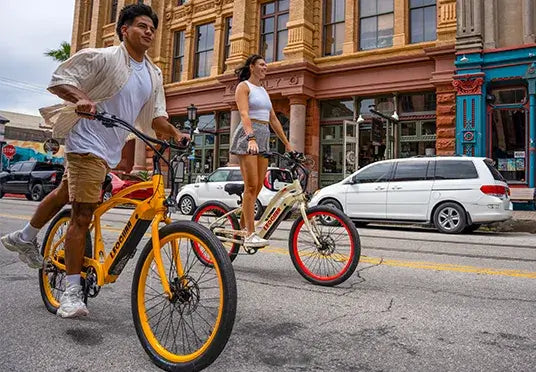
Zephyr ST suits riders who want an upright cruiser and an 18.33-inch standover. Its rear hub motor is rated at 500W, reaches 750W peak output, and provides up to 60Nm of torque. The 26 x 2.35-inch tires favor city streets, bike paths, boardwalks, and other firm routes.
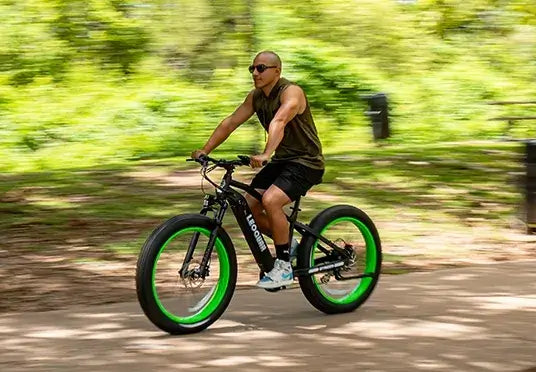
Fastron ST suits riders who expect firmer mixed terrain and want 26 x 4.0-inch tires. Its rear hub motor is rated at 750W, reaches 1,000W peak output, and provides 85Nm of torque. It weighs 70 lb with its battery, so it is the heaviest choice here and may be less convenient to lift or store.


Build Confidence on Your First Rides
Begin in an open, level area with low assistance. Practice mounting, straight-line starts, braking with both levers, slow turns, and stopping before adding traffic or steeper ground. Learn how the cadence sensor brings in assistance, and keep your fingers ready at the brakes during low-speed practice.
Sprint stays at a 20 mph assisted limit. Zephyr ST and Fastron ST ship set to 20 mph and list settings up to 28 mph where local rules permit; a first-time rider can leave the factory setting in place. Review our eBike basics if pedal assist, throttle use, and battery care are new to you.
Check the Details Before You Choose
The battery on each of these three models is certified to UL 2271. Certification does not replace correct charging, storage, and inspection, so follow the supplied manual and use the charger specified for the bike. Check current delivery and service terms on the product page before purchase.
Use our model comparison to review the full lineup, then return to the cards above to confirm color, availability, geometry, and current specifications. Pick the bike that feels manageable for your normal route, because the easiest first eBike is the one you can handle calmly every time you ride.

Frequently Asked Questions
The easiest choice fits your body and normal route. Zephyr ST offers the lowest standover of these three for paved riding, Sprint keeps a 20 mph limit for everyday utility, and Fastron ST adds wider tires and more power but also more weight.
You can pedal with assistance on all three models, and each also has a throttle. Pedaling lets you choose how much effort to contribute, while throttle use draws more from the battery and should be practiced at low speed before riding near traffic.
Avoid choosing from top speed or maximum range alone. Check fit, total bike weight, brake type, tire choice, battery documentation, service terms, and local access rules. Also confirm whether you can safely lift and store the bike.
No, but a lower top tube can make mounting and stopping easier for some riders. Compare the actual standover and saddle measurements because step-through frames still vary in height.
Check brake operation, tire pressure, lights, battery and charger instructions, assist behavior, fit, and the local rules for your route. Practice starts, stops, and turns in a quiet area before riding around vehicles or pedestrians.