



Fall Turkey Hunting 2026: 9 E-Bike Setup Tips
Could your e-bike go down a quiet woods road without each buckle, decoy stake, and cargo strap giving away your presence?
What is more important than top speed when hunting turkeys in the fall is the condition of your bike. You could leave before sunrise, have to wade through wet leaves, carry the awkward decoys, and then ride back when the temperature falls. If you set up the bike properly, it should seem quiet, well balanced, and reliable—not like a loose toolbox on two wheels.
The nine tips concern themselves with the ride by outlining where it is legal to take an e-bike, how to carry your turkey gear, and what should be tested before opening morning.
Access Comes First for Fall Turkey Hunting
Tip 1: Check the Season and the Trail
You have to answer two separate questions: whether hunting is allowed here and whether you can ride an e-bike here.
The dates for the fall turkey season differ greatly from state to state and, in some cases, from zone to zone. In 2026, Wisconsin's fall season runs from September 12 to January 3, 2027. In Pennsylvania, dates vary by Wildlife Management Unit, and some units are closed. These examples serve as a reminder, not a replacement for your state's rulebook.
Another check is whether trail access is available. The BLM states that it is the local managers who determine which non-motorized roads or trails are able to accept particular e-bike classes; the federal rule does not mean that every route is open. When it comes to National Forest land, refer to the current Motor Vehicle Use Map and any local notices. A route that is shown on a recreational app may still be closed to your bike.
Before loading the truck, make sure to save your license or harvest authorization, the official season page, the land manager's current map, any seasonal closure, and any written permission from the landowner if it is required.
Quiet Gear Wins on a Fall Turkey Hunt
Tip 2: Run a Five-Minute Rattle Test
The motor could be quiet, and the load might not be.
Take the bicycle exactly in the way that you plan to ride it, roll down a curb cut, apply the brakes firmly, go across a short stretch of gravel close to home, and keep an ear out for metal decoy stakes, zipper pulls, a loose kickstand, or tools rattling around in a hard box.
Cover the contact points with cloth or rubber, put the small tools in a soft pouch, shorten the loose ends of the straps so that they won't slap the frame, and don't neglect the bike itself: a dry chain, a loose fender, or a battery that isn't fully latched can all cause problems over a long stretch of quiet morning woods.
Tip 3: Cover Decoys and Carry Hunting Gear Safely
When you are traveling, make sure that your turkey decoys are covered up since an uncovered decoy might be taken for a live bird. Also, a blaze-orange cap or vest will make it easier for other hunters to spot you while you're on the move, even in places where it is not required.
You cannot use your firearm or bow to block the bars, the brake levers, the pedals, or to carry out a quick dismount. It shouldn't be balanced on the handlebar. Instead, you should use a padded case or a secure mount that is designed for the equipment and then adhere to the transport regulations in the place where you are hunting. The equipment might have to be unloaded, put in a case, or carried in a specific way depending on the state and the type of land. Make sure to check beforehand since there are no rules that apply nationwide.
Carry Turkey Hunting Gear Without the Sway
Tip 4: Put Heavy Items Low and Centered
The decoys seem light when you hold them, but a tall bag can catch the wind and cause the bike to move around.
Put the water, the tools, and the spare battery in a low position close to the center of the bike and distribute the weight equally between the panniers. Although you can place lightweight, bulky items higher up, they should still have two secure attachment points.
When the bike has been loaded, turn the handlebar all the way to the left and then all the way to the right. If the bike has a fork and a rear suspension, compress these parts and then rotate both wheels. Make sure that nothing comes into contact with the tire, the spokes, the chain, the brake rotor, or the cables. Don't forget that the payload figure covers you, your clothes, all the bags, and any gear that is mounted.
Tip 5: Use a Trailer Only When It Earns the Width
A trailer is useful if you are transporting a number of decoys, a blind, or camp equipment since it gives you a wider setup, enables longer turns, and uses up more battery when climbing or traveling over soft ground.
The Leoguar Bike Cargo Trailer is now advertised as capable of carrying up to 132 pounds, but that does not mean that you should load it without thinking. The hitch, the bike, the brakes, the tires, and the route all have their own limitations. It is advisable to practice tight turns, starting uphill, and making controlled stops with the trailer loaded near your home. If you only need one covered decoy bag and a day pack, a rack bag might be the better option. You can use Leoguar's hunting bike trailer guide to compare the two arrangements without turning this article into yet another list of trailers.

Grip for Wet Fall Hunting Ground
Tip 6: Set Pressure With the Real Load
No single ideal tire pressure works for all turkey hunting routes. Soil that is wet, as well as roots, gravel, and hardpack covered with leaves, all have different sensations.
Begin with the pressure value printed on the tire and as given by the bicycle manufacturer, then add the weight of your actual hunting load, ride a short loop, and make minor adjustments. If the pressure is too high, it can cause the bike to skip over roots and wet leaves, while if it is too low, the steering will become vague and the risk of a rim strike or a pinch flat will increase. Take a gauge, the appropriate tube or repair kit, and a pump that is suitable for the volume of your tire.
Tip 7: Practice Stops on a Damp Surface
You can't tell how a loaded bike stops on a shaded woods road just from the condition of the driveway.
Check the condition of the pads, the rotor, the lever response, and the motor cut-off. After that, load the bike and carry out a number of controlled stops on a safe surface which is similar to the one you'll be using on your route. Apply both brakes smoothly and keep the bike upright.
Wet leaves can hide mud, stones, holes, and branches. Give yourself more room downhill. If the rear tire begins to slide, squeezing harder won't create grip; slow down before the covered section.
Power Planning for a Fall Turkey Hunt
Tip 8: Start With a Warm Battery and Working Lights
The actual range can be reduced by cold air, tires that are soft, and cargo.
Keep the battery and charge it indoors, making sure to do so within the temperature range specified in the owner's manual. Rather than leaving it in the freezing truck bed overnight, install it just before you leave. Do not heat the battery using a heater, a fire, or a homemade wrap.
When the bike is fully loaded, check the headlight and rear light. They are not meant to help you find or take wildlife where the regulations prohibit the activity, but to help you travel safely before dawn. Develop a good routine: Ride to your parking spot, turn off the bike, turn off the lights, lock the key, and only start your hunt after you have followed the local regulations.
Tip 9: Park With Enough Battery to Ride Out
The advertised "up to" range is not your actual hunting range.
Before you begin, select a turning point and then observe how the battery performs under the same conditions of load, tire pressure, and assist level that you'll use on the way back. A route that has a gradual descent in the morning may turn into a steep ascent when you're tired, and the air is colder.
Save the parking space on the offline map, park away from the trail, secure the frame to a fixed object when it's permitted, and remove the display or the battery if the design permits it. Keep the key separate from the bike. If the route is based on the final battery bar, then shorten it.
Choose a Fall Turkey Hunting E-Bike
Pick the bike for the ground you'll actually ride, not for the largest wattage figure on a product page.
The Fastron SO Fat Tire Ebike fits wider access roads, loose gravel, and softer ground. Its current page lists a 750W rated rear hub motor, 85Nm of torque, a 720Wh removable battery, 26 × 4.0-inch tires, and a 300-pound total weight limit. The optional rear basket is rated for 55 pounds, but that cargo still counts toward the bike's total limit.
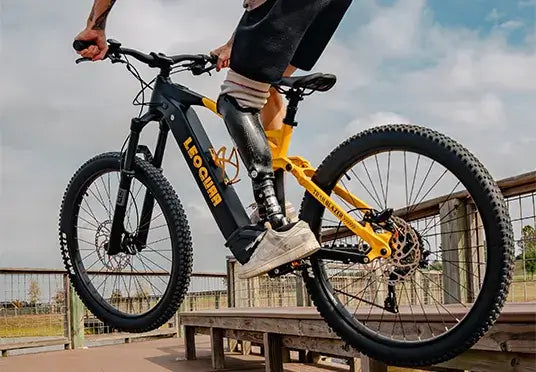
The Trailblazer Mid-Drive EMTB is the better Leoguar comparison for rocky climbs and rougher surfaces. Its listed setup includes a 500W-rated mid-drive motor with up to 100Nm, a 720Wh battery, RockShox full suspension, 27.5 × 2.6-inch Maxxis tires, and a 275-pound payload limit.
Both bikes make no provision for creating a closed route, and neither claims their advertised range will substitute for a test ride under similar conditions. If you still need the basic information before comparing the models, then refer to Leoguar's electric hunting bike guide.
A Better Fall Turkey Hunting Morning Starts at Home
It isn't necessary to rebuild the bike the night before opening day; all that is needed is a legal route, a quiet load, functioning brakes, sensible tire pressure, and enough battery to allow the ride to be made in both directions.
Arrange the bike a few days in advance and ride it with the actual bags, decoys, clothes, and trailer that you intend to carry. Deal with each rattle individually and then carry out the brake and clearance checks again when you get to the trailhead. Although it seems fussy in the garage, it sounds like a bike that is just doing its job in the woods.
Fall Turkey Hunting FAQs
How much should I allocate for things beyond the e-bike?
Before deciding on the bike, work out the cost of the helmet, the lock, the repair kit, the pump, the secure straps and the cargo system. A rack, panniers or a trailer can increase the overall weight of the setup. Avoid the situation where you spend all your budget on the motor and battery specs and then find that you can't carry the gear safely.
Is a mid-drive or hub-drive Better for turkey hunting?
A mid-drive suits long, steep, technical climbs because it sends power through the bike's gears. A hub-drive can work well on farm roads, gravel, and rolling trails and often costs less. Base the choice on the hardest mile of your usual route.
Should I get fat tires for my trip hunting turkey in the fall?
It isn't always the case that fat tires provide better flotation on sand, soft soil, and shallow mud since they do increase weight and rolling resistance; narrower mountain bike tires may be more suitable for firm forest roads and rocky trails.
Should you buy a cargo trailer for turkey gear?
This situation arises when decoys, a blind, or the camp equipment won't fit safely on the bike. For a short day's hunt, a rack bag might be the simpler option. A trailer also provides more storage space at home, increases transport weight, requires more maintenance, adds width, and uses more battery.


Leave a comment