



Is a Fat Tire E-Bike a Good Choice for Fall Riding?
When you leave the house on dry tarmac, turn onto a path made of gravel, and come to a shaded corner thick with wet leaves, this situation is typical in the autumn; it is also the place where a bicycle that was in good condition in July can suddenly become less predictable.
Is a fat-tired e-bike a good option for riding in the fall? Yes, for many riders. Wide tires provide a steadier ride on hard gravel, poorly surfaced tracks, and uneven roads, and the motor helps when mud and wind make the bike work harder. Nevertheless, fat tires don't turn wet leaves, ice, or deep mud into safe ground; you still need to reduce your speed, select a clear line, and leave yourself more room to stop.
The guide is intended to assist you in determining if a fat-tire e-bike is suitable for the fall routes that you actually ride, not for an imaginary trail under ideal weather conditions.
Riding a Fat-Tire E-Bike in Fall
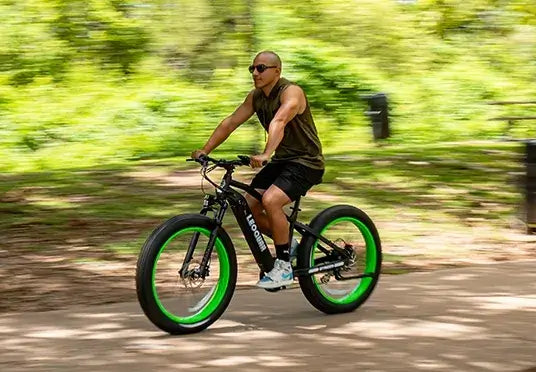
It is reasonable to choose an e-bike with wide tires when your riding involves traveling from pavement to hard, uneven ground. This kind of terrain includes crushed gravel, hard-packed park trails, dry leaves, shallow ruts, and rough streets. A 4-inch tire has more rubber in contact with the ground than a narrow city tire and therefore is able to cushion smaller bumps. Additionally, the motor makes up for some of the extra weight and rolling resistance caused by the wider tires.
If most of the route consists of smooth tarmac, the answer is different. An e-bike with wide tires is heavier to carry, requires more effort to move, and will use up more of the battery than a lighter bike when traveling on the same paved road. However, if you live in a flat house or put your bike into a car after each ride, these disadvantages might be more important than the extra traction.
Wet leaves are also a hazard; no tire makes them harmless. The National Highway Traffic Safety Administration includes wet leaves among the road hazards that can cause a rider to fall. When riding over them, keep an upright position, avoid sudden steering or braking, and make use of a clean strip of pavement if one is available.

Where Fat Tires Help in Fall Season
You seldom get one type of surface throughout the day when riding downhill. Wide tires justify their presence when the ground is constantly changing.
Gravel, Hardpack, and Shallow Ruts
On a dry rail trail or a well-compacted forest road, a wide tire tends to seem more at ease when the front wheel comes over loose stones or a shallow rut. Although you still have to choose a route, the bicycle is less likely to feel nervous than a road bike with narrow tires.
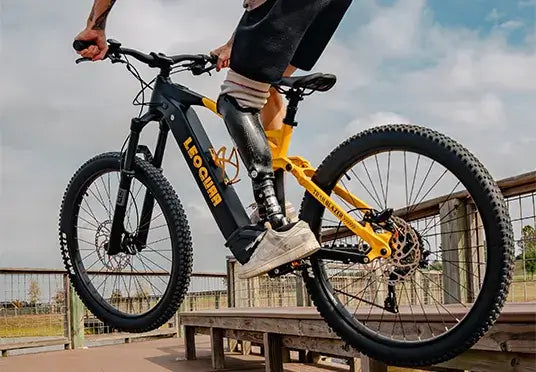
This is the kind of route where Leoguar's Fastron SO Fat Tire E-Bike fits well. It uses 26 × 4.0-inch Vee tires, a suspension fork with 3.14 inches of travel, and hydraulic disc brakes. Those parts can make mixed surfaces easier to manage, though your speed and technique still decide how much grip you have.
Rough Pavement and Trail Debris
On cold nights, cracks may appear in the pavement and, during storms, twigs and gravel end up in the bike lanes. A tire with a high volume reduces the impact of these small bumps. Nevertheless, you should not ride over branches or over hidden potholes. You should look further ahead, slow down before reaching the bad section, and keep both hands on the handlebars.
Short Mud Patches
Fat tires are better at navigating a short muddy section than narrow street tires, particularly when the mud is shallow, and the ground beneath it is firm. In the case of deep, sticky mud, however, it can work its way into the tread, block the area around the frame, and conceal rocks or ruts. If your tire begins to cut a deep groove, then you should turn around instead of damaging the trail.
Where a Fat Tire E-Bike Still Slips
The widest tire on the rack cannot fix a poor line or too much speed.
Wet leaves are the biggest fall trap because they can hide painted lines, potholes, and slick pavement. Brake before the leaf-covered section, not while you are leaning through it. Keep the bike as upright as you can and avoid a hard burst of throttle on the way out.
Wooden bridges, the metal utility covers and the painted road markings all lose their grip when they are wet. Although a wide tire gives you a bigger area of contact, it does not affect the surface below. It is better to go slowly, in a straight line, and smoothly.
When it comes to morning frost, you should be even more careful: if you're unsure about whether a shaded corner is wet or frozen, don't use a wider tyre as an excuse to ride on it. Instead, alter your route, wait for the surface to warm up, or walk that part.
Fall Range on a Fat Tire E-Bike
The distance an e-bike can travel is affected by factors such as cool weather, soft ground, wind, low tire pressure, the weight of the rider, and the assist level; it is possible to find that when autumn comes, you have less charge remaining after completing a route that you know well from the summer.
The Fastron SO and ST models are listed as having a 720Wh removable battery and an advertised range of up to 60 miles when pedal assist is used. However, that figure does not guarantee a range of 60 miles on every journey. The product pages state that temperature, wind, terrain, tire pressure, speed, assistance level, and cargo can affect the outcome.
If you're doing your first ride in the cooler weather, take the same route but make it shorter. When the display shows the battery is down to about half its charge, turn back and compare the last mileage you obtained with that from your summer rides. This will give you a useful figure regarding your body, the type of terrain, and your particular way of riding. For more information on the seasonal decrease in range, Leoguar's cold-weather battery guide explains why lower temperatures temporarily reduce the available range.
Bring the battery indoors for charging if the owner's manual allows it, and let a very cold battery return to a safe charging temperature first. Follow the instructions for your own battery rather than copying a temperature rule from another brand.

Set Up Your Fat Tire E-Bike for Wet Rides
If you leave now, you can do a quick check in ten minutes and thus avoid having to walk home for a long distance.
Start With Tires and Brakes
Use the pressure range printed on the tire sidewall and the guidance in your bike manual. Do not drop pressure just because a social post says lower is always better. Too little air can make steering vague, increase rim-strike risk, and add rolling drag. Leoguar's e-bike tire pressure guide gives you a better way to test small changes.
Press both brake levers and push the bicycle forward. The brakes must be able to stop the wheel without the levers needing to be pulled all the way to the grip. When you first start, carry out one slight test stop. Wet rotors may differ from dry ones, and your actual stopping distance matters most.
Add Coverage and Light
A late-afternoon ride can become a dark journey back home because of the shorter days. Make sure to charge your lights, check the rear light by positioning yourself behind the bike, and take a small spare light with you if you're going to be away from home.
Fenders are also worth considering. They do not improve traction, but they keep much of the spray off your clothes, battery area, and back. The Leoguar Fastron front and rear fender set is made for the Fastron SO and ST; the product page says the metal set and its mounting hardware are sold separately.
After the journey has been muddy, clean the dirt off with a damp cloth and a soft brush. Never aim a pressure washer at the motor, the display, the battery contacts, the bearings, or the seals. Make sure the bicycle is dry before storing it and wipe the chain as stated in the manual.
Which Fat Tire E-Bike Fits Your Fall Routes?
The frame choice matters when you wear thicker clothes or stop often.
The Fastron ST uses a low step-through frame. It can be easier to mount when you are wearing rain pants, carrying a rack bag, or stopping often to take photos. The recommended rider-height range is 5'3" to 6'5", but height alone does not determine fit. Check the geometry and make sure you can stand over, steer, and reach both brake levers comfortably.
The Fastron SO uses a step-over frame and the same listed 26 × 4.0-inch tire size, 720Wh battery, 750W rated rear hub motor, and 300-pound total weight limit. Both bikes weigh 70 pounds with the battery. If you need to carry the bike up stairs or lift it onto a rack, test that task before buying.
Mostly riding paved errands with a little gravel? A lighter commuter or cruiser may be easier to store and more efficient. Riding park paths, gravel roads, and rough pavement in the same weekend? The Fastron models are the better match. You can see the current options together in Leoguar's fat tire e-bike collection.
Your Fat Tire E-Bike Decision
A heavy-tired e-bike is a good choice if your routes involve firm gravel, rough pavement, shallow mud, or packed trails and if you have a practical method of storing and transporting a 70-pound bike; you will have a steadier sensation when riding on mixed surfaces as well as benefit from the motor when the wind and soft ground slow you down.
This is not a way to avoid the risks of wet leaves, ice, poor brakes, or a poorly planned route. Check the forecast, leave before dark, turn back when the surface stops looking predictable. Truth be said, it’s better to miss a slippery section than to spend the rest of the fall waiting for a wrist to heal.
Fat Tire E-Bike FAQ
Are Fastron fenders included?
On the other hand, the product pages for the Fastron SO and ST show metal fenders as an optional item that must be bought separately, and the matching front and rear set includes mounting hardware. It is necessary to check the current package contents and price before placing an order since promotions may change.
Should we choose the Fastron ST or SO for the fall?
If the step-through option is easier to use when wearing rain pants or a bulky jacket, then choose the ST; but if you prefer a traditional step-over design, go for the SO. Both options specify the same tire size, battery capacity, rated motor power, and total weight limit, so the choice should be based on fit and mounting comfort.
Can my car rack hold a Fastron?
When checking the rack, you should look at the weight limit per bike rather than just the total capacity. Since each Fastron weighs 70 pounds with the battery and has 4-inch tires, the wheel trays also have to be wide enough. It is not reasonable to assume that a rack designed for a lightweight road bike will work. You should follow the rack manufacturer's loading instructions as well as Leoguar's guidelines for removing the battery.
What other things should I include in my budget?
Save some money for a helmet that fits properly, a repair kit, a pump that is compatible with your valve, wet-weather clothing, and any necessary transport rack. If you anticipate rain or mud, get compatible fenders as well. Purchase the safety and repair essentials before buying the decorative accessories.


Leave a comment