




MTB E Bikes For Sale: Top Trail‑Ready Bikes With Long‑Range Batteries
Looking for MTB e-bikes for sale can be exciting and overwhelming at the same time. The market has many options available. Your goal is specific: you need a bike that gives you real trail performance and long battery life for longer rides. You're not looking for a city bike with thick tires; you want a bike built to climb hills and handle downhill rides. This guide will help you choose.
We'll explain what makes an e-MTB truly good, how to understand battery claims, what parts you must have, and show you our top picks for the best trail electric mountain bikes you can buy today. Let's find your next bike.
What Makes a Trail-Ready E-MTB
The term "trail-ready" means more than just having a motor. It means the frame, suspension, and parts work together with the electric system to give you control, strength, and confidence on tough off-road trails. A real e-MTB is very different from a basic electric bike. Here are the main parts that make a good machine.
Suspension: This is important for comfort and grip. A hardtail e-MTB (front suspension only) can be efficient and lighter, but a full-suspension e-MTB (front and rear suspension) is what most serious trail riders choose. It helps the wheels stay on the ground better on rough trails, giving you more control and making you less tired. Expect travel from 120mm to 140mm for regular trail bikes and 150mm to 180mm for more aggressive all-mountain or enduro e-bikes.
Frame Geometry: Modern e-MTB geometry helps with stability and performance. A slack head tube angle (usually 64-66 degrees) helps with stability on steep downhills, while a steep seat tube angle (76-78 degrees) puts you in the right position over the pedals for strong climbing. This combination is key to the "climb up to go down" nature of e-MTBs.
Integrated Motor and Battery: A quality e-MTB has a mid-drive motor (located at the bike's bottom bracket) and a battery that fits smoothly into the downtube. This design gives you a low, central center of gravity, which is important for balanced and predictable handling. It's much better than older hub-drive systems, which can make the bike feel unbalanced and are less tough for off-road use.
Tough Components: The extra weight and speed of an e-MTB put more stress on its parts. Look for MTB-specific components, especially powerful 4-piston hydraulic disc brakes for reliable stopping power, a wide-range drivetrain (like a 1x12 system) to handle steep climbs, and strong wheels with aggressive, tubeless-ready tires.
Understanding Long-Range Batteries
One of the biggest questions when looking at MTB e-bikes for sale is about range. While companies show the battery's capacity in Watt-hours (Wh), that number is only part of the story. Most modern long-range e-MTBs have batteries from 600Wh to over 900Wh, but this number doesn't tell you exactly how far you can ride. Understanding the real-world factors that affect range is important for choosing a bike that meets your needs.
What Really Affects Your Range?
The distance you can cover on one charge changes based on many factors. These factors can dramatically change your bike's efficiency.
- Assist Level: This is the biggest factor. Riding in "Eco" or "Tour" mode uses little power, giving you maximum range. Using "Turbo" or "Boost" mode gives you maximum power for steep climbs but will drain your battery much faster.
- Terrain and Elevation: A flat, smooth fire road needs very little power. A ride with 3,000 feet of steep, technical climbing will use a lot of energy. The more you ask the motor to fight gravity, the shorter your range will be.
- Rider Weight and Style: A heavier rider needs more energy to move. Also, a rider who pedals with a smooth, high cadence will be more efficient than one who pushes hard on the pedals in a tough gear.
- Conditions: Outside factors play a surprising role. Riding in cold temperatures can reduce a battery's effective capacity. Soft, muddy ground or a strong headwind also forces the motor to work harder, reducing range.
On our test rides, a 750Wh battery consistently gave us over 40 miles on rolling fire roads in Eco mode. However, when tackling a 3,000-foot technical climb using Trail and Boost modes, that same battery's effective range was closer to 25 miles. This shows why understanding your typical ride is important. The relationship between motor efficiency and battery life is complex, and as noted in this complete guide to e-MTB motors and batteries, a more efficient motor from a top-tier brand can often squeeze more range out of the same size battery.
Your E-MTB Component Checklist
When comparing different MTB e-bikes for sale, the spec sheet can be confusing. This checklist breaks down the most important components to focus on, making sure you get a bike that's built to perform.
The Motor
This is the power source of your e-bike. The key number to understand is torque, measured in Newton-meters (Nm), which represents climbing power. Full-power motors from leading brands like Bosch, Shimano, Brose, and Specialized typically offer 85-95Nm of torque, giving you the help needed to climb the steepest hills. Lighter-weight e-bikes may use motors with 50-60Nm for a more natural feel, but they require more rider effort on climbs.
The Suspension
As mentioned, full-suspension is the best choice for trail riding. Look for good suspension brands like Fox and RockShox. An air-sprung fork and rear shock offer the best adjustability, letting you tune the suspension to your weight and riding style for the best comfort and control.
The Brakes
This is a must-have safety feature. Due to the extra weight and speed, e-MTBs need more stopping power than regular bikes. You must have 4-piston hydraulic disc brakes. They offer better power and heat management, giving you consistent, reliable braking on long descents where it matters most.
Wheels and Tires
Many modern trail e-bikes use a "Mullet" or "MX" wheel setup, which combines a larger 29-inch front wheel with a smaller 27.5-inch rear wheel. The 29er front wheel rolls over obstacles easily and provides great traction, while the 27.5" rear wheel allows for quicker, more agile handling in tight corners. As confirmed by extensive testing from bike experts, the combination of these high-quality components is what creates a truly great-riding e-MTB.
Our Top Trail E-Bike Picks
After extensive testing, we've chosen a list of top-performing e-MTBs that deliver on the promise of trail-ready performance and long-range capability.
| Model | Price Range | Battery (Wh) | Motor Torque (Nm) | Best For |
|---|---|---|---|---|
| Specialized Turbo Levo Comp | ~$7,500 | 700Wh | 90Nm | All-Around Trail Dominance |
| Santa Cruz Heckler | ~$8,000 | 720Wh | 85Nm | Aggressive, Playful Riding |
| Canyon Spectral:ON CF 8 | ~$6,000 | 720Wh or 900Wh | 85Nm | Long-Distance Adventures |
| Leoguar Trailblazer Mid-Drive EMTB | ~$2,899 | 720Wh | 100Nm | Steep climbs and rugged trail riding with high-torque mid-drive control |
Specialized Turbo Levo Comp - Best for All-Around Trail Dominance
The Turbo Levo is often considered the standard for trail e-MTBs, and for good reason. Its combination of a powerful, smooth Specialized motor, a highly adjustable geometry, and a well-balanced suspension platform makes it very versatile. We loved how the bike's geometry gave us confidence on steep descents, while the 700Wh battery left us with plenty of charge after a long day on the trails. It feels natural from the first pedal stroke, making it a great choice for riders who want one bike to do it all, from easy loops to challenging backcountry rides.
- Battery: 700Wh
- Motor: Specialized 2.2 Custom (90Nm)
- Suspension Travel: 160mm Front / 150mm Rear
- Price: Approx. $7,500
Canyon Spectral:ON CF 8 - Best for Long-Distance Adventures
For riders whose main goal is to go as far as possible, the Canyon Spectral:ON is a clear winner. It offers the option of a huge 900Wh battery, giving you more range than almost any other bike in its class. Paired with Shimano's reliable EP8 motor, this bike is built for all-day adventures. The ride feel is planted and stable, making it a great climber and a confident descender on fast, flowing trails. As a direct-to-consumer brand, Canyon delivers great value for the components you get.
- Battery: 720Wh or 900Wh
- Motor: Shimano EP801 (85Nm)
- Suspension Travel: 150mm Front / 155mm Rear
- Price: Approx. $6,000
Leoguar Trailblazer – Best for Steep Climbs and Confident Trail Control
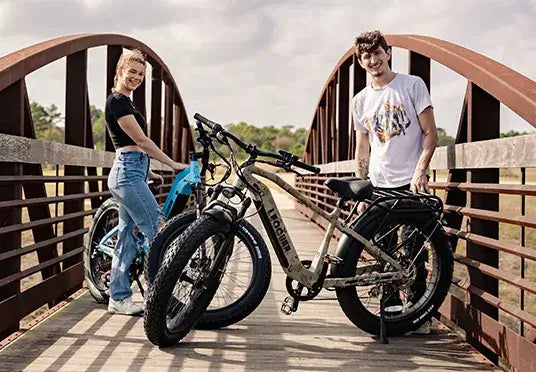
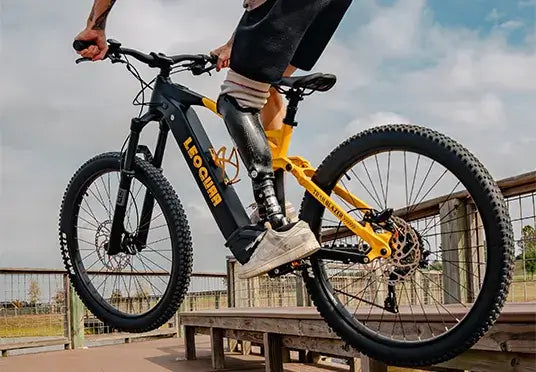
The Leoguar Trailblazer EMTB takes a more traditional, power-focused approach to e-MTBs. Built around a high-torque mid-drive motor and a full-size battery, it’s designed to handle steep climbs, loose terrain, and demanding trail conditions with confidence. On the trail, the Trailblazer feels planted and composed rather than ultra-light or twitchy, favoring stability and traction over minimal assist.
We found it to be an excellent choice for riders who prioritize climbing performance and control on technical terrain, especially those tackling longer rides or heavier trail setups. The 720Wh battery delivers strong all-day range, reducing the need for range extenders or mid-ride charging, while the full-suspension layout helps smooth out roots, rocks, and repeated impacts. Compared to lightweight e-MTBs, the Trailblazer trades a bit of agility for noticeably more torque, range, and confidence when the trail gets steep or rough.
- Battery: 720Wh
- Motor: Mid-Drive (500W, 100Nm torque, 750W peak)
- Suspension Travel: Full Suspension (Trail-focused setup)
- Price: Approx. $2,899

Final Pre-Purchase Checks
You've done your research and narrowed down your options. Before you make your purchase, a few final checks will make sure you make a purchase you'll be happy with for years to come.
Know Before You Go
E-MTB trail access is not the same everywhere. In the US, e-bikes are typically put into a Class system. Most trail-focused e-MTBs are Class 1, meaning the motor only helps when you are pedaling and cuts off at 20 mph. Rules vary a lot by state, county, and land manager. Always check local trail regulations on official resources like the U.S. Forest Service website or local trail group websites before you ride.
Your Final Checklist
- Test Ride, If Possible. Nothing replaces feeling a bike for yourself. A test ride helps you confirm the fit is right and that you enjoy the bike's handling and motor characteristics.
- Check Warranty and Support. A good e-MTB is a big investment. Make sure the brand offers a solid warranty on the frame and, just as importantly, on the electronic components (motor, battery, and display).
- Consider Local Bike Shop vs. Direct-to-Consumer. Buying from a local bike shop (LBS) provides expert assembly, in-person support, and service. Direct-to-consumer (DTC) brands like Canyon often offer better pricing, but you'll be responsible for final assembly and handling service issues more on your own.
Your Adventure Awaits
Choosing the right e-MTB is about finding the perfect mix of capability and endurance for your personal riding style. By focusing on the basics—trail-ready suspension and geometry, tough components, and a realistic understanding of real-world battery range—you can confidently select a bike from the many MTB e-bikes for sale. An e-MTB is more than just a bicycle; it's a tool that opens up new trails, longer rides, and bigger adventures. The only thing left to do is get out and ride.
Frequently Asked Questions
Q: How long do e-MTB batteries typically last before needing replacement?
A: Most e-MTB batteries last between 3-5 years or 500-1000 charge cycles before their capacity drops significantly. Proper care like avoiding extreme temperatures and not storing them fully charged can help extend their life.
Q: Can I ride an e-MTB without using the motor assistance?
A: Yes, you can ride any e-MTB with the motor turned off. However, e-MTBs are heavier than regular mountain bikes (usually 45-55 pounds), so pedaling without assistance requires more effort, especially on climbs.
Q: What's the difference between Class 1, Class 2, and Class 3 e-bikes?
A: Class 1 e-bikes provide assistance only when pedaling and stop at 20 mph. Class 2 e-bikes have a throttle option and also stop at 20 mph. Class 3 e-bikes assist up to 28 mph but are pedal-assist only. Most trail e-MTBs are Class 1.
Q: How much should I expect to spend on a quality trail-ready e-MTB?
A: Quality trail-ready e-MTBs typically start around $4,500-$5,000 for entry-level models. Mid-range bikes with good components cost $6,000-$8,000, while high-end models can exceed $10,000. The sweet spot for most riders is $6,000-$7,500.
Q: Do I need special maintenance for an e-MTB compared to a regular mountain bike?
A: E-MTBs require the same basic maintenance as regular bikes, plus some additional care for the electrical components. Keep the battery clean and dry, avoid pressure washing the motor area, and have the system checked by a qualified technician annually. Most routine maintenance like brake adjustments and drivetrain service remains the same.


Leave a comment