




Electric Bicycle Throttle: Choosing the Right Throttle Setup
What Is an E-Bike Throttle?
An electric bicycle throttle is a user-controlled input that lets you engage the motor and control your speed without pedaling. It's usually a lever or a twisting grip on the handlebar. Think of it as the accelerator on a scooter or motorcycle - simple and direct. When you activate the throttle, it sends a signal to the bike's controller, which then draws power from the battery and delivers it to the motor.
The more you engage the throttle, the more power is delivered, and the faster you go. This continues up to the bike's legally mandated speed limit. This provides a method of propulsion that is entirely independent of the pedal-assist system. While a PAS amplifies the effort you put into pedaling, a throttle provides power on demand, whether your feet are moving or perfectly still on the pedals. This distinction is fundamental to understanding how you will interact with your e-bike.
Why You Want a Throttle
The inclusion of an electric bicycle throttle transforms the riding experience. It offers a layer of convenience and control that pedal-assist alone cannot match. We find that riders appreciate a throttle for several key reasons.
First is instant acceleration. A throttle allows for a quick and safe start from a dead stop, which is invaluable at traffic lights or in stop-and-go urban environments. You can get up to speed without fumbling for the right gear. Second is the option for effortless cruising - there are times when you simply want a break from pedaling. A throttle lets you sit back and enjoy the ride, turning your e-bike into a light electric vehicle perfect for leisurely trips or when you're feeling tired.
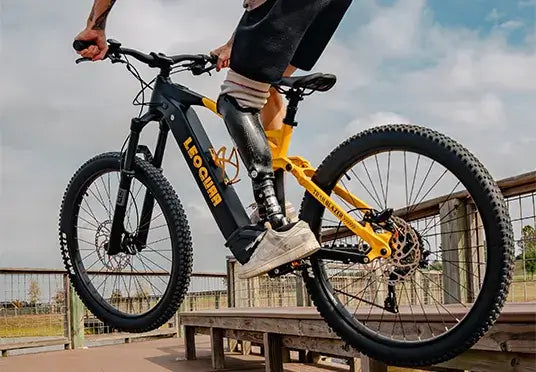
Third, it provides a crucial boost on inclines. Starting on a steep hill can be challenging, so a throttle gives you that initial push to get moving without having to strain against gravity. It's also a fantastic tool for maintaining momentum on rolling hills. Finally, a throttle can be a significant accessibility feature for riders with knee problems, limited mobility, or other physical considerations. A throttle makes cycling possible and enjoyable by removing the requirement for continuous pedaling.
Main E-Bike Throttle Types
When choosing an e-bike, the type of throttle it's equipped with will have a major impact on comfort, control, and overall feel. There are three primary styles you will encounter: the thumb throttle, the half-twist throttle, and the full-twist throttle. Each has a distinct design and is suited to different riding styles.
Thumb Throttle
A thumb throttle is a small, paddle-like lever located on the handlebar near the grip. You push it forward with your thumb to activate it. It is a discrete and highly popular option among many riders.
- Pros: The biggest advantage is that it allows you to maintain a full, secure grip on the handlebars with all your fingers. This is especially critical for control on uneven surfaces or during technical off-road riding, and it also leaves the entire grip area free for your choice of grips. For many riders, it causes less wrist fatigue than a twist-style throttle on long rides.
- Cons: The primary drawback is the potential for thumb fatigue when holding the lever down for extended periods. The small lever can also feel less natural than a twisting motion for riders accustomed to motorcycles.
- Best For: We recommend thumb throttles for urban commuters who need quick bursts of power, mountain bikers who prioritize a secure grip, and any rider who values handlebar space for other accessories.
Half-Twist Throttle
A half-twist throttle is integrated into the inner portion of your handlebar grip. You operate it by twisting this section—typically about a quarter-turn—towards you, while the outer part of the grip remains stationary. This allows your fingers to maintain a firm hold.
- Pros: This style offers an excellent compromise between control and comfort. It provides the natural, motorcycle-like feel of a twist throttle while reducing the risk of accidental engagement that can occur with a full-twist version on bumpy roads. Many riders find it acts as a natural cruise control, as you can set the power and relax your hand while still maintaining a secure grip.
- Cons: A half-twist throttle dictates your grip choice and takes up more handlebar real estate than a thumb throttle. While better than a full-twist, it can still contribute to some wrist fatigue over very long distances.
- Best For: Riders who enjoy long-distance touring or cruising will appreciate the comfort of a half-twist throttle. It's also a great choice for those who want the feel of a twist throttle but desire more security and control than a full-twist design offers.
Full-Twist Throttle
As the name implies, a full-twist throttle requires you to rotate the entire handlebar grip to engage the motor. This design is identical to the control on a motorcycle or scooter. This design is deeply ingrained in our collective understanding of a motorized throttle.
- Pros: For anyone with a background in motorsports, this is the most natural and familiar option. It allows for very fine and gradual power control using your entire hand and wrist, which some riders prefer for smooth acceleration.
- Cons: The primary safety concern is the higher risk of accidental engagement when hitting a bump or making a sudden maneuver. It can also cause more significant wrist fatigue and requires a specific, compatible grip, limiting customization.
- Best For: We generally see full-twist throttles on e-bikes designed for smooth pavement. They are best suited for experienced riders, especially those transitioning from motorcycles, who are comfortable with the control scheme and primarily ride on roads.
Throttle vs. Pedal Assist
It's important to understand that a throttle and a pedal-assist system serve different functions. They often coexist on the same e-bike, but they work in completely different ways. A PAS provides power in response to your pedaling, while a throttle provides power on demand.
A PAS feels like you have a constant tailwind, amplifying your own effort for a more traditional, athletic cycling experience. It's highly efficient and is the key to achieving the maximum possible range from your battery, making it perfect for longer rides.
A throttle, on the other hand, is a power override for moments when you don't want to or can't pedal. This convenience comes at a cost: electric bike battery range, since the motor is doing 100% of the work. Using the throttle exclusively will drain your battery significantly faster than using a moderate level of pedal assist.
| Power Mode | Rider Effort | Battery Range (Estimated) | Best Use Case |
|---|---|---|---|
| Throttle Only | None | 20-35 miles | Quick starts, cruising, hill boosts |
| Pedal Assist | Low to High | 40-70+ miles | Exercise, long-distance, natural feel |
Understanding Legal Classes
In the United States and many other regions, e-bikes are often categorized into a three-class system. This system dictates where and how they can be ridden, and the presence of an electric bicycle throttle is a key determining factor.
- Class 1: These e-bikes are pedal-assist only and do not have a throttle. The motor provides assistance only when you are pedaling and cuts off at 20 mph, and they are generally permitted on any bike path or trail where traditional bicycles are allowed.
- Class 2: These e-bikes are equipped with a throttle that can propel the bike up to 20 mph without any pedaling. They also feature pedal assist that cuts off at 20 mph, but regulations can be more restrictive for Class 2 bikes on certain multi-use paths.
- Class 3: These are pedal-assist e-bikes with assistance up to 28 mph, sometimes called speed pedelecs. If a Class 3 e-bike has a throttle, the throttle is only allowed to provide power up to 20 mph, and these bikes often have the most restrictions.
Before you buy or ride, we strongly advise you to check the specific laws in your state, city, and on your local trail systems. Regulations can vary widely depending on your location.
Can I Add a Throttle?
This is one of the most common questions from owners of Class 1 e-bikes. The answer is: it's complicated, and we generally advise against it for several important reasons.
First, the bike's controller must be designed to support a throttle with a specific input port and the correct firmware. Many major brands like Bosch, Shimano, Brose, and Yamaha use proprietary, closed-loop systems that do not allow for the addition of third-party components like throttles. Second, making this modification will almost certainly void your bike's warranty. If any electrical component fails after the modification, the manufacturer will likely not cover the repair, leaving you with expensive out-of-pocket costs. Finally, adding a throttle to a Class 1 e-bike legally changes its classification to Class 2. This means you may no longer be legally permitted to ride it on paths and trails that were previously accessible to you.
For these reasons, the best approach is to purchase an e-bike that is designed and certified from the factory with the features you desire.

Choosing Your Ideal Throttle
The perfect electric bicycle throttle is the one that best complements your primary riding style. Different riders have different needs, so consider your main use case when making this decision.
The Urban Commuter: We recommend a thumb throttle for its ability to provide instant power for getting across intersections. Its minimal design leaves your handlebar free for a secure grip and other accessories like bells or phone mounts.
The Long-Distance Tourer: A half-twist throttle is an excellent choice that minimizes thumb fatigue and acts as a comfortable cruise control for long, flat stretches of road. It still offers a secure grip while providing sustained power when needed.
The Off-Road Adventurer: A thumb throttle is the clear winner for safety and control in challenging terrain. On technical singletrack, maintaining a full, uncompromised grip on your handlebars is paramount to prevent accidents and maintain control.
The Motorcycle Enthusiast: A half-twist or full-twist throttle will provide the most familiar and natural control. This makes the transition to an e-bike feel seamless and comfortable for those with motorsport experience.
Frequently Asked Questions
Q: Does using an e-bike throttle drain the battery faster?
A: Yes, absolutely. Relying solely on the throttle means the motor is doing all the work, which is the most power-intensive way to ride. You can expect your range to be 25-50% less than if you were using a low-to-moderate level of pedal assist.
Q: Which throttle type is best for a beginner?
A: We typically recommend a thumb throttle for new riders. Its operation is distinct from braking and shifting, and the risk of accidental engagement is very low. It's a simple and safe way to get comfortable with on-demand power.
Q: Can I program my throttle's sensitivity?
A: On some e-bikes, particularly those with advanced aftermarket controllers, you can adjust the acceleration curve to make it either more aggressive or more gradual. However, on most pre-built e-bikes from major brands, this is not a user-adjustable feature.
Q: What is a brake cutout sensor?
A: This is a vital safety feature that's a sensor connected to your brake levers. It instantly cuts power to the motor the moment you pull a brake, ensuring that you can always stop safely even if the throttle is accidentally engaged. Never ride an e-bike with a throttle that doesn't have this feature.
Q: Are throttles legal on all e-bikes everywhere?
A: No, throttle legality varies by location and e-bike class. In the US, Class 1 e-bikes don't have throttles, while Class 2 and some Class 3 e-bikes do. Always check your local and state laws before purchasing or riding, as regulations can be quite different between areas.


Leave a comment