



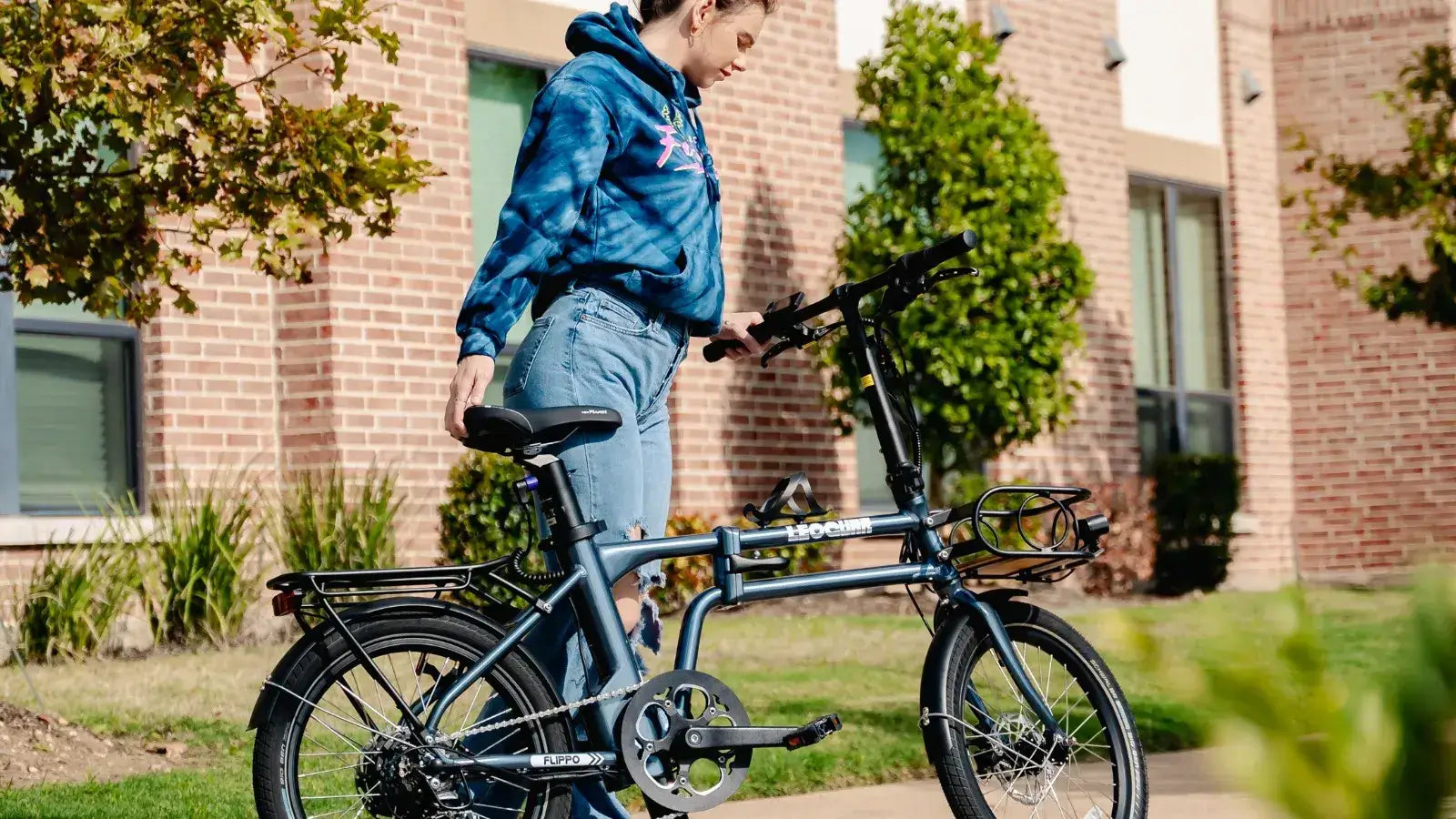
Folding Ebike for Steep Hills: Which One Is Right for Me?
You love the idea of a folding electric bike. The freedom to combine a bike ride with a train journey, or to tuck your ride away in a small apartment closet, is really appealing. But there's one big question: can it handle the hills? You live in a city with steep streets or dream of exploring hilly countryside, and you worry that a small bike will leave you struggling on the climbs. Let's clear this up: a well-chosen folding ebike for steep hills is not a weak choice; it's a powerful and smart solution. This guide will walk you through the important tech, help you figure out your personal needs, and help you find the perfect climbing bike.
What Makes a Hill-Climbing Bike
To find a folding e-bike that works great on hills, you need to look past fancy ads and understand the main parts that give real climbing power. This is what makes the difference between a bike that struggles and one that flies up hills.
Motor Power and Torque
The motor is the heart of your e-bike's climbing ability. But not all motors work the same way.
- Motor Power (Watts): You'll see "nominal" and "peak" power numbers. Nominal power is what the motor puts out all the time, while peak power is what it can do for short bursts. For long climbs, nominal power tells you more about how well it will work.
- Motor Torque (Newton-meters, Nm): This is the most important number for hill climbing. Think of it as the "twisting force" that gets you moving from a stop and pulls you up a hill. For steep hills, a higher torque number matters more than a higher watt number. Look for a motor with at least 60Nm of torque; 70Nm or more is best for tough hills.
- Motor Type: There are two main types you'll find on folding e-bikes: mid-drive and hub-drive. Each has good and bad points for hill climbing.
| Motor Type | Hill Climbing Performance | Cost & Availability on Folders | Maintenance |
|---|---|---|---|
| Mid-Drive | Excellent. Uses the bike's gears for best torque and power use. Feels natural, like having super-powered legs. | Less common on folding bikes, and usually found on more expensive models. | More complex, as it's built into the bike's pedal area. |
| Hub-Drive | Good to Excellent. Most common on folders. A powerful rear hub motor (like 750W) with high torque can climb really well. | Very common and cheaper. The standard for most folding e-bikes. | Simpler and easier to fix, as it's a complete unit in the wheel. |
Battery Voltage and Amps
Your battery isn't just about how far you can ride; it's a key part of the power system.
- Voltage (V): Think of voltage as the pressure in a water hose. A higher voltage system (like 48V or 52V) can send power to the motor better and with less stress, especially during the high demand of a long climb. A 36V system may have trouble on long, steep hills.
- Amp-Hours (Ah): This is the size of your "fuel tank." It decides how long your battery can keep giving that power output. Climbing hills uses a lot of energy, so a bigger Ah rating means you can tackle more hills before needing to charge again.
For anyone who expects to climb steep or frequent hills, we suggest a battery of at least 48V and 14Ah as a good starting point.
Gearing, Your Secret Weapon
Don't forget about regular bike gears. Even on a powerful e-bike, gears are needed for climbing steep hills well. A wider range of gears lets you find the perfect pedaling speed, working with the motor instead of against it. This lets you help the motor work better, saving battery and stopping the motor from getting too hot on long climbs. As noted in Consumer Reports' e-bike buying guide, mid-drive motors are really good at this, as they directly use the bike's gears to work best on hills.
Important Control and Safety
What goes up must come down.
- Brakes: Going down a steep hill on a heavy e-bike puts huge stress on your brakes. We strongly suggest hydraulic disc brakes. They offer much better stopping power, better control, and more reliability with less hand effort compared to mechanical disc brakes.
- Tires: Wider tires with a good tread pattern give a bigger contact area with the ground, which means better grip. This is key for stopping wheel slip when you're putting down a lot of power on a steep, loose, or wet surface. Look for tires at least 2.4 inches wide for added confidence.
- Frame: A bike's shape affects your riding position and the bike's stability. A well-designed frame will feel stable and predictable, even when you're standing up and working hard on a climb.
Finding Your Perfect Bike
Now that you know the key specs, it's time to match them to your specific needs. Answering these five questions will help you build a picture of your ideal folding ebike for steep hills.
Your Hill-Climbing Profile
1. What's Your "Steepest Hill"?
Is your daily challenge a short, steep 15% grade city block, or are you planning to tackle long, winding mountain roads with a steady 7% grade? The first needs burst power (peak watts and high torque), while the second needs steady power and good heat control from the motor and battery.
Expert Tip: For long, steady climbs, a mid-drive motor or a high-quality hub motor with good heat management is key to prevent performance from getting worse.
2. What's Your Total Load?
Be honest about your weight plus the gear you usually carry—a laptop in a backpack, a week's worth of groceries, or camping gear. More weight needs more torque to get moving and keep speed up a hill.
Expert Tip: We've found that for a total load over 220 lbs (100 kg), an e-bike with at least 70Nm of torque makes a big difference on hills steeper than 10%.
3. How Important is Portability vs. Power?
Will you be folding the bike daily to carry it up several flights of stairs, or just sometimes to put it in your car trunk? More powerful motors and larger batteries add a lot of weight, creating a direct trade-off with portability. A 50 lb bike is manageable for some; a 70 lb bike is a serious lift.
Expert Tip: If you need to lift the bike often, practice lifting a similar weight (like a large bag of dog food) to get a real feel for what you can handle. A 5-10 lb difference is very noticeable.
4. What's Your Riding Style: Throttle or Pedal Assist?
Do you want to press a throttle and let the motor do all the work, or do you enjoy the feeling of exercise and want a pedal-assist system that makes your effort stronger? If you rely heavily on the throttle for hills, a powerful hub motor is a great choice. If you prefer a natural pedaling feel, look for a bike with a better torque sensor.
Expert Tip: A torque sensor measures how hard you're pedaling and gives power accordingly, making for a very natural ride. A cadence sensor simply measures if you're pedaling and gives a set level of help, which can feel more sudden.
5. What's Your Budget Reality?
High-torque motors, large-capacity batteries from good brands (like Samsung, LG, or Panasonic), and hydraulic disc brakes all add to the cost. A higher price often means directly better performance, reliability, and safety on hills. Set a realistic budget, but understand that spending too little on motor or brakes can lead to a frustrating and unsafe experience.
Expert Tip: The "sweet spot" for a capable and reliable folding e-bike for hills often starts around the $1,500 mark and goes up from there.
Beyond the Spec Sheet
A spec sheet tells you part of the story. Real-world performance depends on factors that need a more experienced eye to judge.
Safe Descents and Brakes
We mentioned it before, but it's worth saying again: your ability to safely go downhill is as important as your ability to climb. A heavy folding e-bike combined with a steep downhill grade creates huge momentum. Hydraulic disc brakes are not a luxury; they are a critical safety feature. They provide the consistent, powerful braking needed to control your speed and stop confidently, even in wet conditions.
Frame Stiffness and Quality
When you're climbing, you transfer a lot of force through the pedals and handlebars into the bike's frame. A weak frame or a poorly designed folding mechanism will bend, wasting your energy and making the bike feel unstable and wobbly. A stiff, well-built frame, especially around the main hinge, ensures your power goes directly to moving you forward and provides a solid, confidence-inspiring ride. This is an area where you can see the value of expert tests from publications like Bicycling magazine, as they often judge ride quality and handling under load.
How to "Test Ride" Online
If you can't test a bike in person, you can still do your homework to get a sense of its real-world abilities.
Watch Video Reviews: Search for reviews that specifically show the bike being tested on hills. Pay attention to the reviewer's speed, listen for any straining sounds from the motor, and see how much effort they seem to be putting in.
Read User Forums: Communities on Reddit (like the r/ebikes subreddit) or brand-specific Facebook groups are goldmines of information. Search for the model you're considering and terms like "hills," "incline," or "climbing" to find feedback from actual owners in real-world conditions.
Check the Warranty and Support: A powerful e-bike used on hills is a hardworking machine. A solid warranty (especially on the motor and battery) and a reputation for good customer service provide a crucial safety net should any issues arise.

Making Your Final Choice
You've done the research and figured out your needs. Now it's time to bring it all together and compare your top choices.
The Hill-Climber's Scorecard
Use this simple scorecard to compare different models side-by-side. It will help you cut through the marketing and focus on the features that matter most for climbing.
| Feature | Bike 1 | Bike 2 | Bike 3 |
|---|---|---|---|
| Motor Torque (Nm) | |||
| Battery (V and Ah) | |||
| Brake Type (Hydraulic/Mech) | |||
| Gearing (No. of Speeds) | |||
| Weight (lbs/kg) | |||
| Price | |||
| Your Personal Rating (1-5) |
Power vs. Portability
In the end, your decision will likely come down to the main trade-off: climbing power versus portability. The strongest climbers often have larger motors and batteries, making them heavier and harder to fold and carry. Think back to your answers from the personal assessment. If you only need to conquer one or two moderate hills and have to carry the bike daily, a lighter model might be the better compromise. If your rides are all about challenging terrain and the bike lives in your garage, focusing on torque and battery capacity is the right move.
Your journey to the summit starts with knowledge. By combining a clear understanding of the technology—torque, battery voltage, and brakes—with an honest assessment of your personal needs, you can confidently select a folding e-bike. You don't have to choose between convenience and capability. The right folding ebike for steep hills won't just get you up the hill; it will open up a whole new world of exploration, all in a package you can carry.
Frequently Asked Questions
1. Q: What's the minimum motor torque I need for steep hills on a folding e-bike?
A: For steep hills, look for at least 60Nm of torque, but 70Nm or more is ideal for challenging terrain. Higher torque gives you the twisting force needed to climb from a stop and maintain speed on inclines.
2. Q: Are mid-drive or hub-drive motors better for hill climbing on folding bikes?
A: Mid-drive motors are generally better for hill climbing because they use the bike's gears for optimal efficiency. However, they're less common and more expensive on folding bikes. A powerful hub motor (750W+) with high torque can also climb hills very well and is more commonly available.
3. Q: How much should I expect to spend on a good hill-climbing folding e-bike?
A: The sweet spot for a capable and reliable folding e-bike for hills typically starts around $1,500 and goes up from there. Higher prices usually mean better motors, larger batteries, and important safety features like hydraulic disc brakes.
4. Q: Why is battery voltage important for hill climbing?
A: Higher voltage systems (48V or 52V) can deliver power to the motor more efficiently and with less stress, especially during the high demand of long climbs. A 36V system may struggle on sustained, steep grades compared to higher voltage options.
5. Q: Do I really need hydraulic disc brakes for hill climbing?
A: Yes, hydraulic disc brakes are essential for safety when climbing and descending hills on a heavy e-bike. They provide superior stopping power, better control, and more reliability compared to mechanical brakes, which is crucial when managing the momentum of descending steep hills.


Leave a comment