




Hilly City Commuting: When Mid-Drive Is Worth Paying For and When Hub Motor Is Enough in an Electric Bike
For hilly city commuting, a mid-drive eBike is worth paying for when your route has repeated steep climbs, stop signs on hills, heavy rider or cargo load, rough pavement, or weekend trail riding. A hub-drive eBike is enough when the hills are short, moderate, and predictable, and you want lower cost with simpler upkeep.
That is the real buying decision. Not "mid-drive is better" or "hub motors are cheaper." A city hill commute is its own thing. It is not a mountain bike trail, and it is not a flat bike-lane cruise. You may climb out of a parking garage, stop halfway up a 10 percent street, restart with groceries, brake into traffic, and do it again tomorrow.
This guide keeps the question practical: when does the Leoguar Trailblazer Mid-Drive eMTB make sense for city hills, and when are hub-drive models like the Sprint, Fastron SO, Fastron ST, or Flippo the more sensible daily choice?
Quick Verdict: Mid-Drive or Hub for Hilly City Commuting?
Choose mid-drive for hilly city commuting if climbs are steep, long, repeated, or paired with cargo and stop-start riding. Choose hub drive if your hills are moderate, your route is mostly pavement, and you care more about price, simplicity, and low-maintenance daily riding.
| Your Hill Commute | Better Motor Choice | Why |
|---|---|---|
| Short rolling hills, light rider, no cargo | Hub drive | Enough assist without the cost of mid-drive |
| Repeated steep streets with stop signs | Mid-drive | Better low-speed climbing when you use the gears |
| Heavy backpack, groceries, child seat, or higher rider weight | Mid-drive if hills are steep; hub if hills are mild | Load makes every climb harder |
| Rough pavement plus hills | Fat-tire hub or mid-drive | Tires and frame comfort matter too |
| Weekend trails plus weekday commute | Mid-drive | One bike can handle both jobs better |
| Apartment storage, transit, short climbs | Folding hub-drive eBike | Portability may matter more than climbing power |
If your commute has one small hill, do not overbuy. If your commute feels like leg day every morning, do not underbuy.
Why City Hills Are Different From Trail Hills
Trail climbs are usually about traction, line choice, and steady effort. City hills are about interruptions.
The stop sign halfway up the hill matters. So does the delivery truck blocking the lane. So does the driveway cut with loose gravel, the wet painted crosswalk, and the moment you have to restart with a backpack and cold brakes. A motor that feels fine on a steady climb can feel weaker when you stop and ask it to move the bike again from low speed.
That is where mid-drive starts to earn its price. A mid-drive motor works through the bike's drivetrain, so it can use lower gears when the climb gets steep. When the rider shifts correctly, the motor can stay in a better operating range instead of trying to push the wheel through the same ratio all the time.
A hub motor is simpler. It sits in the wheel and pushes directly. That can feel excellent on flat roads, rolling neighborhoods, and moderate hills. It can also be easier to own because the motor does not send its power through the chain and cassette.
Neither layout is magic. The hill decides.
When Mid-Drive Is Worth Paying For
Mid-drive is worth paying for when the climb is not just steep, but repeated. A single hill you ride twice a week is annoying. A steep hill on every commute is the kind of problem that shapes the whole bike purchase.
Look for these signs.
You restart on hills often
Starting from a dead stop is harder than continuing a climb. If your route has stop signs, traffic lights, garage ramps, or crowded intersections on hills, mid-drive starts to make sense. The ability to shift down and let the motor work through a lower gear can make the restart feel controlled instead of strained.
This is especially important if you carry a backpack, laptop, groceries, or child seat. Weight turns a moderate climb into a harder climb. The motor may be rated well on paper, but the restart is where you feel the difference.
Your route has long climbs, not just bumps
Short hills are not the same as long climbs. A hub motor can help you over a short pitch without much drama. A long climb asks more from the motor, battery, rider, and drivetrain.
For a rider in a hilly city, the problem may be heat and fatigue. The motor keeps working. The battery drains faster. The rider shifts body position and starts looking for lower gears. If this is your daily route, paying for the motor layout that handles climbing better can be cheaper than buying the wrong bike and replacing it six months later.
You want one bike for city hills and weekend trails
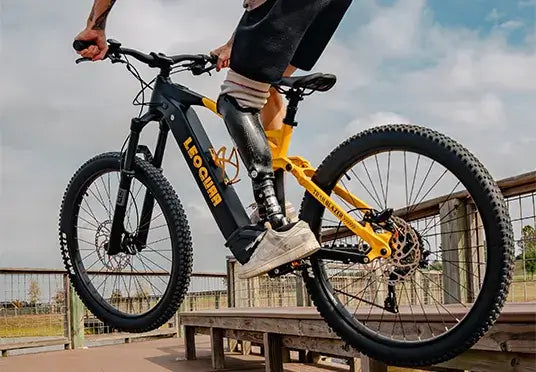
This is the clearest Trailblazer use case. The Trailblazer is not just a commuter with a nicer motor. It is a mid-drive electric mountain bike with trail geometry, a 720Wh battery, up to 100 miles of range, and a MotiNova mid-drive motor. It also won 1st place at the 2025 E-Dirty Cross eMTB race.
That matters if your weekday hill commute and weekend rides overlap. If you climb steep city roads Monday through Friday and ride dirt on Saturday, a mid-drive eMTB can make sense as the one-bike answer.
If you only ride three flat miles to work, it is too much bike. Nice, but too much.
When a Hub Motor Is Enough
A hub motor is enough for many hilly city commuters. That sentence may save you money.
Hub-drive eBikes work well when the hills are moderate, the route is mostly paved, and the rider wants simple ownership. You do not need a mid-drive motor just because your city is not flat. You need it when the hill profile overwhelms a hub setup.
Your hills are short and predictable
If the climb is one block, the grade is moderate, and you can carry speed into it, a hub motor can feel fine. The motor helps, you downshift if the bike has gears, and you are over the hill before anything feels strained.
The Sprint Fat Tire Utility eBike is a practical example for city riders. Leoguar lists it with a 350W motor, peak 600W output, 35Nm of torque, Shimano 7-speed gearing, a 614Wh removable battery, and up to 55 miles of range. It is not a Class 3 trail machine. It is a utility commuter with enough assist for daily errands and moderate hills.
You care more about upkeep than max climbing feel
Hub motors are mechanically simpler for many riders. The motor does not push power through the chain, so the chain and cassette are not carrying motor torque the way they do on a mid-drive. You still need normal maintenance, but the drivetrain usually has an easier life.
For a commuter, that matters. The best bike is the one that gets you to work without turning every month into a service appointment.
Storage or portability matters more
If your route has mild hills but your building has stairs, transit, or tiny storage, the motor question may not be the main question. The Flippo Folding eBike makes more sense when the bike has to fold for trains, apartments, RVs, or office storage.
No motor helps when you are wrestling a bike into a hallway.
Hill Grade: The Number Buyers Should Learn
Grade is the slope of a hill, usually shown as a percent. A 5 percent grade rises 5 feet for every 100 feet forward. A 10 percent grade rises 10 feet for every 100 feet forward. That difference feels huge on an eBike, especially with stops.
You do not need engineering software. Use a mapping app, cycling app, or your own ride feel.
- Under 5 percent: most eBikes feel comfortable for average riders.
- 5 to 8 percent: route, rider weight, gearing, and assist level start to matter.
- 8 to 12 percent: mid-drive becomes more attractive, especially with stops or cargo.
- Over 12 percent: test ride if possible. Spec sheets get less useful here.
The stop matters as much as the grade. A 10 percent hill with a clear rolling start can feel easier than an 8 percent hill with a stop sign in the middle. City commuting punishes restarts.
Battery Range on Hills: Expect the Number to Drop
Hilly city commuting uses more battery than flat commuting. That is not a brand issue. It is physics.
Climbing asks the motor to lift rider, bike, battery, cargo, and accessories against gravity. Add wind, cold weather, stop-start traffic, soft tires, and high assist, and the range number drops again. If your commute is hilly, do not buy based on best-case range alone.
The Sprint's up to 55-mile range is useful for moderate city riding. The Trailblazer's 720Wh battery and up to 100-mile range give more room for hills and longer rides. In both cases, the safe buying move is to leave margin.
For a hilly commute, I would rather finish the day with 35 percent battery than arrive home staring at the last bar. If you cannot charge at work, treat your round trip as the full test.
For more detail, read Leoguar's guide to how far an eBike can go on hills vs flat roads.
The Drivetrain Tradeoff With Mid-Drive
Mid-drive climbing feels good because the motor works through the gears. That same fact creates the maintenance tradeoff.
A mid-drive motor can put more load through the chain, cassette, and derailleur. If you shift badly under high assist on a steep hill, you can wear parts faster or make the drivetrain complain. This is not a reason to avoid mid-drive. It is a reason to ride it correctly.
For mid-drive commuting:
- Shift to an easier gear before the hill gets steep.
- Ease pressure on the pedals during the shift.
- Avoid mashing the highest assist level from a dead stop.
- Keep the chain clean and lubricated.
- Replace worn drivetrain parts before they damage the next part.
Hub-drive commuters get a simpler version of this life. You still shift, clean, brake, and maintain the bike. You just are not feeding the motor's power through the chain in the same way.
If you want the full mechanical comparison, Leoguar's mid-drive vs hub-drive eBike guide covers the layout differences. This article is the city-hill version of that decision.
Model Fit: Which Leoguar Bike Makes Sense?
| Model | Best Hill Commute Fit | Why |
|---|---|---|
| Trailblazer Mid-Drive eMTB | Steep, repeated hills; trail plus commute | Mid-drive climbing, 720Wh battery, eMTB control |
| Fastron SO Fat Tire eBike | Rough city hills, gravel shoulders, mixed pavement | Fat tires and front suspension help comfort and grip |
| Fastron ST Fat Tire eBike | Rough hills with easier mounting | Same fat-tire idea with step-through access |
| Sprint Fat Tire Utility eBike | Moderate hills, errands, campus, utility rides | 350W motor, 7-speed gearing, rear cargo mount |
| Flippo Folding eBike | Mild hills plus apartment or transit storage | Folding convenience beats extra climbing hardware |
The Trailblazer is the premium answer for serious hills. Sprint is the practical city-utility answer. Fastron is the rough-road and fat-tire answer. Flippo is the storage answer.
That last sentence is the whole buying guide.
How to Test Your Route Before Buying
Do this before you spend mid-drive money.
- Map the steepest part of your commute.
- Count how many times you must stop on a hill.
- Add your real cargo: backpack, lock, groceries, work gear.
- Check whether you can charge at work.
- Decide whether you need trail riding or only pavement commuting.
- Think about storage before choosing a larger bike.
If you can test ride, test the worst part first. Do not test the bike on a flat parking lot and guess how it will climb. Start from a stop on an incline if the shop or route allows it. Shift. Brake. Restart. That is the moment that tells you more than a spec chart.
Who Should Pay for Mid-Drive?
Pay for mid-drive if your hilly city commuting route has steep restarts, long climbs, heavy loads, rough pavement, or weekend trail use. Pay for it if you hate the feeling of a motor straining while you are still pedaling hard. Pay for it if you know you will use the gears properly and maintain the drivetrain.
Do not pay for it just because the term sounds more premium. If your hills are mild and your budget matters, a hub-drive eBike may be the better daily machine.
Who Should Stick With Hub Drive?
Stick with hub drive if your commute is mostly pavement, the hills are moderate, and you want a lower-maintenance ownership experience. Hub motors are also a better fit when the bike's main job is errands, storage, or simple daily commuting.
For many city riders, the Sprint is enough. For apartment riders with short hills, Flippo may make more sense. For riders who want fat-tire comfort on broken pavement, Fastron can be the better route than jumping straight to an eMTB.
The goal is not to buy the most capable motor. The goal is to buy the bike that makes your actual route feel easy enough to repeat.
FAQ
Is mid-drive better for hilly city commuting?
Mid-drive is better for hilly city commuting when the route has steep, repeated climbs or stop-start traffic on hills. It is not always needed for short, moderate climbs on pavement.
Can a hub motor eBike climb city hills?
Yes. A hub motor eBike can climb many city hills, especially if the grades are moderate and the rider uses the bike's gears well. It may feel weaker on steep restarts or long climbs with heavy cargo.
Does mid-drive use more battery on hills?
Battery use depends on grade, rider weight, assist level, speed, wind, and cargo. Mid-drive can climb efficiently when you use the gears correctly, but steep hills still drain any eBike faster than flat roads.
Is the Trailblazer too much for city commuting?
It can be too much for flat or short city rides. The Trailblazer makes sense when your commute has serious hills, rough pavement, or weekend trail riding. If your route is mild, Sprint or Flippo may fit better.
What is the best Leoguar eBike for hilly commuting?
For steep hills, choose the Trailblazer. For moderate city hills with cargo needs, choose Sprint. For rough pavement and fat-tire comfort, compare Fastron SO or Fastron ST. For apartment storage and short hills, choose Flippo.
Bottom Line
Hilly city commuting should be judged by the worst five minutes of your route, not the average mile. If those five minutes include steep restarts, heavy loads, and long climbs, mid-drive is worth paying for. If your hills are moderate and your real needs are errands, storage, and easy upkeep, a hub-drive eBike is enough.
Compare the Trailblazer Mid-Drive eMTB if climbing is the hard part. Compare the Sprint Fat Tire Utility eBike, Fastron fat tire models, or Flippo Folding eBike if your city problem is simpler than that.


Leave a comment