



What Cycling Rain Gear Do You Need for a Wet E-Bike Commute?
Have you ever gotten to work with a dry jacket but socks that could be wrung out? Your cycling rainwear should extend below the shoulders. If you're commuting in light rain, then you should begin with a waterproof jacket, rain pants, footwear protection, gloves that you can break in, and a dry spot for your work clothes.
You needn’t buy all the items at once; if your existing rain jacket fits on the bike, then spend your money on the part that continues to get wet. And don’t forget about the journey home – your morning kit needs a place to dry before you put it back on.
Build Your Cycling Rain Gear Kit
Record the duration of your time outside, not just the distance you ride. In the case of a 15-minute commute involving a stop somewhere to change, you'll need a different kit from the one you'd need for a 45-minute ride followed by a morning at the front desk. Begin with the row that best matches your typical working day.
|
Commute |
Rain gear priority |
Destination backup |
|
Short ride, occasional showers |
Packable jacket; protection for shoes you can't change |
Dry socks |
|
Steady rain, work clothes underneath |
Waterproof jacket and overpants; gloves; suitable shoe covers |
Spare socks and a shirt |
|
Longer ride or a sweaty climb |
Vented waterproof shell; thin layers; overpants you can move in |
A full change of clothes |
|
No drying space at work |
A kit you can hang elsewhere during the day |
Separate bag for wet items |
For advice on the bike itself and handling wet roads, read our e-bike rain-riding guide. Here, we're focusing on what you wear and carry to work.
A Rain Jacket You Can Pedal In
Try the jacket in your riding position before you remove its tags. Reach both arms toward the bars. Bend your elbows. Turn your head as you would to check behind you. If the sleeves pull above your wrists or the shoulders tighten, the jacket isn't a good match, even if it feels fine when you're standing.
If the jacket is meant to be used in regular rain, make sure it is advertised as waterproof and has sealed seams, rather than depending on a description that says it can shed light showers. Although water-resistant material may be suitable for occasional light rain, it is not the same as buying a jacket for frequent wet journeys.
I would prefer well-designed, functional vents over extra pockets. The rainwear guide from REI points out that sweat can overcome breathable fabric when there is intense activity; underarm zips provide another means for heat to escape. With an e-bike, you will still get warm when you are pedaling up a hill and then cool down while you are waiting at a crossing.
Start with a small amount of insulation underneath the shell and then add some warmth when you need it for your activity. Even if the weather forecast says it's going to rain, there's no reason to wear your thickest sweater underneath. If you are damp on the inside even though it's not raining through the openings, adjust the situation by using less insulation and more ventilation before thinking about replacing the jacket.
Check the rear hem, too. It should cover your lower back when you reach the bars, without hanging near the wheel or catching on the saddle when you get on and off.
Keep Rain Off Your Work Pants
A long jacket doesn't cover your thighs when you're seated. If you need to walk straight into work wearing the pants you rode in, waterproof overpants are worth considering.
Test them on your real work clothes. Sit down, lift one knee and step the bike over. You'll need plenty of space on either side of the seat and the knees, but a broad and swinging ankle might touch the chain. Adjust the cuff or use a trouser strap to keep the right leg clear.
Ankle zips let you pull overpants on without taking off your shoes beside the office bike rack. Check that the openings fit over the footwear you'll use, not just the sneakers you wore to the store.
Where does the water go next? Arrange the trouser hem over the top of your shoe cover or boot, following the footwear maker's instructions, rather than leaving an opening that sends runoff into your socks.
And don't ask your pants to handle all the spray alone. Front and rear fenders reduce water thrown up by your tires. If you ride a Fastron SO or ST, Leoguar's Front & Rear Fenders are listed for those two models; don't assume that set fits another e-bike.

Rain Gloves and Dry Feet
Your usual commuting shoes can stay in the kit. The question is whether they'll stay dry, grip the pedals, and let you put a foot down comfortably at a stop.
Shoe covers are one option, but buy them for the shoes you actually wear. A close-fitting cover made for a slim cycling shoe may not stretch over a bulky sneaker. Read the sizing notes and check that the sole openings suit flat pedals or your cleat system. Bring the shoe with you if you shop in person.
Waterproof commuting boots may suit you better if you also walk a few blocks after parking. Try pedaling in them before committing to a full workday. A stiff, heavy boot that keeps rain out can still feel awkward on your pedals.
Pack spare socks either way. We'd rather carry one small dry pair than spend eight hours hoping damp ones will dry inside our shoes.
For gloves, warmth isn't the only test. With the bike stationary and powered off, squeeze both brake levers and operate the shifter. You should be able to reach the controls without the glove bunching in your palm. Also check the throttle control without switching the bike on.
Choose waterproof gloves for cold, wet rides, with insulation that suits your temperature. Thick ski gloves may be warm, but they aren't a bargain if you can't use the controls comfortably. Cycling UK makes the same point: test your hand movement before using an alternative glove on the bike.
Rain Gear Around Your Helmet
You have a few ways to keep rain off your head. A helmet cover sits outside the helmet. A thin cycling cap has a brim that can help shield your glasses. A jacket hood may work if it's designed to fit over your helmet.
Test the combination at home and make sure that the helmet still fits properly and secures in the way that the manufacturer instructs. Do not adjust it in order to fit a thick hat. When selecting a hood that is compatible with a helmet, REI suggests that you check the hood with your own helmet rather than relying just on the label.
Turn your head both ways with the hood up. If you're staring into its side instead of seeing behind you, stow it or use another option. Tighten loose cords so they stay away from the controls.
For dark, rainy mornings, clear lenses are more useful than dark sunglasses. They keep rain and spray from hitting your eyes, though droplets still need attention. Carry a lens cloth and stop somewhere out of traffic when you need to clean them. Cycling UK recommends clear cycling lenses for autumn rain and road grit.
Pack Rain Gear for Both Commutes
You've kept your work shirt dry on the way in. Don't undo that by stuffing it beside wet gloves on the way home.
Use a separate inner dry bag for clean clothes and electronics. A backpack cover can help, but it doesn't make every opening or seam in the backpack waterproof. Check the bag maker's instructions, especially if you're carrying a laptop.
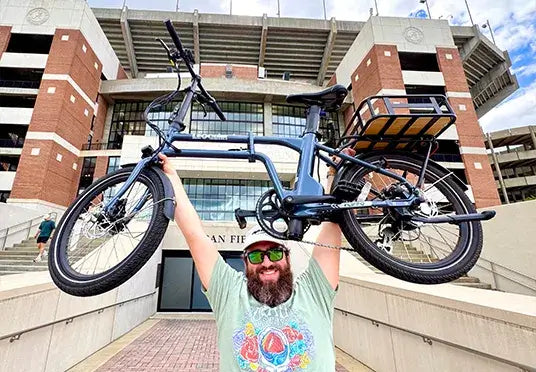
If you'd rather take the bag off your back, a suitable rack bag or pannier can help. Check how it mounts and whether it clears your heels and rear light. The Flippo folding e-bike has a rear rack and metal fenders, but that doesn't make an arbitrary bag compatible or waterproof.
At work, hang the shell and overpants so they can drip; instead of rolling up the gloves in a pocket, lay them out. If there isn't any space available for drying, then decide in advance where the wet kit can go before your first trip in the rain; do not assume it will dry in a closed locker.
Bright clothing and reflective details belong in your rain kit, too. But they don't replace front and rear lights. Check that your jacket, bag, and any covers leave those lights visible.
For your next commute, lay out the whole kit once. Put on the shoes, pants, jacket, gloves, and helmet together, then sit on the stationary bike. That's when you'll notice the short sleeves, tight knees, or hood that blocks your view—before you're late for work in the rain.
Cycling Rain Gear FAQ
What should I buy first on a budget?
If your current jacket keeps your upper body dry, keep it and buy protection for whichever part gets wet next—often your legs or feet. We'd skip matching sets and extra pockets until you've fixed that problem.
Do I need two sets of rain gear?
Not to start. If your gloves or footwear protection are still wet each morning, consider a spare pair of those items before buying a second jacket and pants; keep the dry pair ready for the next commute.
Are rain capes better than jackets?
A cycling cape designed for this purpose will be suitable for an upright and leisurely commute, but the way it covers the body and its fit will be different from that of a jacket and pants combination. Make sure the cape doesn't obstruct the lights, controls, or wheels; if the loose fabric is hard to manage on your route, we would prefer clothes that fit more closely.
Is secondhand rain gear worth buying?
It can be, if the fit works and you can inspect the seams, zippers, and fabric for damage. We'd skip an item with peeling seam tape or holes unless you already know the repair cost and method.


Leave a comment