

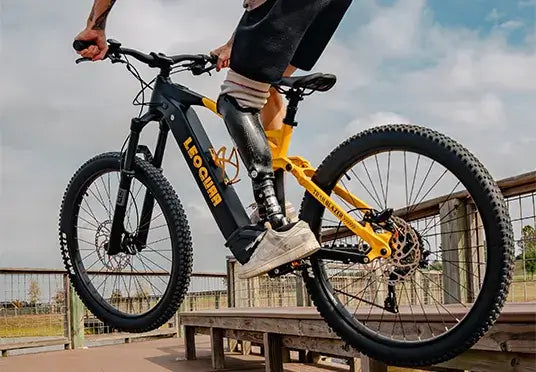


What Should You Expect from Electric Bike Motor Acceleration?
Electric bike acceleration should feel smooth and easy to control. It should not be sudden or jerky when you start riding.
How quickly an e-bike speeds up depends on several things like motor power, torque, sensor type, how the controller is set up, how much you weigh, and what kind of ground you're riding on. This guide will help you understand what to expect and what makes the best acceleration for how you like to ride.
How Fast Do E-Bikes Accelerate?
Many people want to know how quickly an electric bike gets up to speed. While top speed gets talked about a lot, acceleration matters more for riding in the city because it helps you get ahead of cars at stop lights and merge safely into traffic.
A typical commuter ebike with a 500W motor might go from 0 to 15 mph in about 4 to 7 seconds. But this is just a rough guess since many things can change this number. A lightweight road e-bike will feel much quicker than a heavy cargo bike carrying a full load. The key is not hitting a specific number, but having smooth, quality acceleration.

The Feel of Smooth Acceleration
What should perfect electric bike motor acceleration feel like? The best systems give you three main feelings: smooth, predictable, and controlled.
Smooth means the power starts gradually and feels like a natural part of your pedaling rather than a sudden jolt. It should feel like a helpful push, not a jarring movement that surprises you. Predictable means the motor responds the same way to your input every time you ride. You know exactly how the bike will react when you start from a stop or push harder on the pedals going up a hill, with no surprises. Controlled means you are always in charge of the bike. The power assist helps you without taking control away from you.
The bike should never feel like it's running away from you or giving unexpected bursts of power. This smooth and responsive feel shows you have a well-made system. An electric bike torque sensor is key to getting this perfect blend of human and machine power working together.
Factors Affecting Acceleration
Several important parts work together to decide how your e-bike accelerates. Learning about them helps you pick the right bike for your needs. The main factors are motor wattage, motor torque, rider weight and terrain, sensor type, and controller tuning.
How Wattage Affects Acceleration
Ebike motor wattage measures how much power the motor can put out. It mainly affects the bike's ability to keep going at speed, especially when carrying heavy loads or fighting against wind. While torque gets you moving, watts help keep you moving at speed.
How Torque Affects Acceleration
Torque gets measured in Newton-meters and is the twisting force that gets you moving from a complete stop. It's the most important factor for getting going quickly from a standstill and is crucial for climbing hills well. Think of torque as the initial push that gets you rolling.
How Weight and Terrain Affect Acceleration
This follows basic physics rules. Heavier loads, including you, the bike, and any stuff you're carrying, need more power and torque to speed up at the same rate. Starting on a steep hill needs much more force from the motor than starting on flat ground.
How Wattage Changes Acceleration
Motor wattage is one of the most common specs you'll see when shopping for e-bikes. Here's how different power levels feel when you're actually riding.

What a 350W Motor Feels Like
A 350W motor gives gentle help that feels like a steady tailwind rather than a strong push. It's great for keeping speed on flat ground and for riders who want exercise with a little help, but it can feel slow when starting from a stop or going up hills. This power level is common in Europe and on lightweight road e-bikes.
What a 500W Motor Feels Like
This is the perfect middle choice for most riders. A 500W motor gives a clear and satisfying boost from a standstill, making it perfect for city riding. It has enough power to make small hills feel almost flat and gives a great balance of quick acceleration and good battery life.
What a 750W Motor Feels Like
A 750W motor focuses on power and is often the legal limit for Class 2 or 3 e-bikes in the United States. It gives strong, confident acceleration that gets you up to speed quickly and handles steep hills with ease. This is an excellent choice for heavier riders, carrying cargo, or anyone who wants a powerful, responsive ride.
Motor Wattage Comparison
| Motor Wattage | Acceleration Feel | Best For (Terrain) | Ideal Rider Type | Hill Performance |
|---|---|---|---|---|
| 250W | Gentle, supportive "tailwind" | Flat terrain, bike paths | Fitness-focused, lightweight riders | Struggles on steep inclines |
| 500W | Noticeable, confident boost | City commuting, rolling hills | Daily commuters, all-purpose riders | Good on moderate hills |
| 750W | Strong, rapid, and powerful | Hilly areas, stop-and-go traffic | Performance seekers, heavy riders | Excellent on steep hills |
How Much Torque You Need
Torque is what you feel when you first push the pedals after stopping. But more isn't always better since too much torque can make the ride jerky and use up your battery faster. The right amount depends completely on what you need the bike to do.
Is 35–50 Nm Enough for Everyday Riding?
Yes, for most city riders on fairly flat ground, this range works perfectly. It gives helpful and smooth acceleration from traffic lights and over small hills without feeling aggressive or overwhelming. It's efficient and gives a very natural riding feel that most people enjoy.
When Do You Need 60–80 Nm?
This is the sweet spot for bikes that need to do everything well. This torque range works great for riders in hilly areas, those who want quicker acceleration to keep up with traffic, or anyone who regularly carries moderate loads like groceries or a child. It gives a clear performance boost without being too much to handle.
Who Needs 80+ Nm of Torque?
This level of electric bike torque is for high-performance uses. It's essential for electric mountain biking to power over obstacles, for riders dealing with very steep hills, for hauling heavy cargo, or for heavier riders who want strong performance in all conditions. Most casual riders won't need this much torque, but it's great when you do need the extra power.
Torque vs. Cadence Sensor
Two bikes with identical motor specs can feel completely different to ride. The reason is often the sensor, which is the part that tells the motor when and how much power to give.

Torque Sensor Acceleration
A torque sensor measures how hard you are pedaling and gives a matching amount of power. If you pedal lightly, you get a little help, and if you push hard to climb a hill, you get a lot of help. The result is smooth acceleration that feels like a bionic extension of your own legs. Think of it like a dimmer switch for power that responds to your effort.
Cadence Sensor Delay
A cadence sensor is simpler and only detects if you are pedaling, not how hard. Once the pedals make a rotation, it tells the motor to turn on to a preset power level based on your chosen assist setting. This can cause a slight delay after you start pedaling, followed by a sudden kick of power that can feel unnatural or jerky. It's like an on/off light switch instead of smooth control.
Why E-Bikes Feel Jerky
A jerky or sudden acceleration is a common complaint, especially on cheaper e-bikes. Understanding what causes this can help you choose a better bike or adjust how you ride.
Pedal Assist and Jerkiness
A jerky feeling often comes from using a high pedal assist setting on an ebike with a cadence sensor. In the highest mode, the controller gives maximum power as soon as it detects pedaling, which naturally feels sudden and rough. Try using lower assist levels to get smoother acceleration.
Cadence Sensor and Delay
As explained above, the basic design of a cadence sensor creates a delay followed by fixed power output, which is the main cause of jerky feeling. The system isn't responding to your effort but simply turning on when it detects pedal movement.
Controller Settings and Response
The e-bike's controller is programmed by the manufacturer for a specific power delivery pattern. Some are set up for aggressive, quick acceleration, while others are tuned for smoother, more gradual power increases. Some advanced e-bikes even let users customize these settings through a smartphone app.
Best Motor for You
Let's combine these factors to find the right motor setup for your specific riding style and needs.
Motor for City Commuting
A 250W to 500W motor with 40–60 Nm of torque is perfect for city riding. A torque sensor is highly recommended for navigating stop-and-go traffic smoothly and naturally. This setup gives a perfect blend of efficiency and on-demand power for urban environments.
Motor for Hills
For hilly terrain, look for a 500W or 750W motor with at least 60–80 Nm of torque. High torque is absolutely necessary for climbing effectively. A torque sensor is also crucial here because it lets you control power precisely on steep and changing grades.

Motor for Trail Riding
High-performance trail riding needs a specialized motor setup. A mid-drive motor with high torque (85+ Nm) and a sophisticated, responsive torque sensor is the standard for serious off-road riding. Factors like heat management and power delivery at different pedaling speeds are just as important as peak numbers.
Motor for Heavy Loads
For heavy riders or those planning to haul significant cargo, a powerful system is necessary. A 750W+ motor with 80+ Nm of torque will handle the extra load without struggling. Look for bikes with strong frames and components to match the powerful motor.
Final Motor Checklist
When choosing an e-bike, don't focus on just one number like wattage or torque. The best electric bike motor isn't the one with the highest specs; it's the one that creates the best riding experience for you.
The perfect acceleration is smooth, predictable, and matched to your riding style and terrain. Focus on the overall system: a quality motor paired with a responsive sensor and a well-tuned controller will always work better than a powerful motor that's poorly set up.
FAQs
How fast does an electric bike accelerate?
A standard commuter e-bike can typically go from 0-15 mph in 4 to 7 seconds. This varies greatly based on motor power, rider weight, and the assist level used.
Does a higher-watt motor accelerate faster?
Generally, yes, more wattage allows the motor to deliver more power, but torque is the more direct measure of initial acceleration. A high-wattage motor with low torque may feel sluggish from a standstill, while a moderate-wattage motor with high torque will feel quick off the line.
How much torque is good for an e-bike?
For casual city riding, 40-50 Nm is sufficient. For all-around use with hills, 60-80 Nm is a great target, and for heavy loads or serious mountain biking, 85 Nm or more is recommended.
Is a torque sensor better for smooth acceleration?
Absolutely, a torque sensor provides power that is proportional to your pedaling effort, resulting in much smoother, more natural, and intuitive acceleration compared to the on/off feel of a cadence sensor.
Why does my e-bike jerk when the motor kicks in?
This is most often caused by a cadence sensor, especially on a high assist level. The sensor detects that the pedals are moving and tells the motor to deliver a fixed, strong burst of power, causing a sudden lurch, and poor controller tuning can also contribute to this problem.


Leave a comment