




Compact Utility E-Bikes: Easier Elevators, Harder Cargo Planning
Compact utility ebikes are easier to live with in apartments, elevators, garages, and tight city storage rooms. The tradeoff is cargo planning. A shorter bike can carry groceries, bags, and daily gear, but it will not swallow longtail-cargo-bike loads without careful rack setup, weight math, and realistic expectations.
That is the part buyers miss. They ask, "How much can it carry?" Then the first week of ownership asks a different question: "Where does this bike sleep, and can I get it through the door without clipping the wall?"
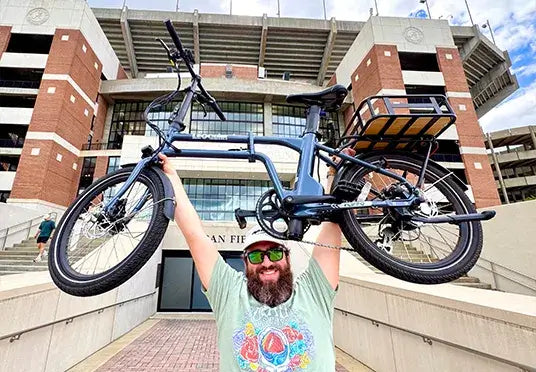
For city riders, that second question matters more than a spec sheet. A compact utility eBike like the Leoguar Sprint Fat Tire Utility eBike is built around that daily squeeze: 20 inch tires, a rear cargo mount, upright comfort, and a city-friendly footprint. If storage is even tighter, the Leoguar Flippo Folding eBike gives up utility-bike cargo space in exchange for a folding frame.
Quick Verdict: Who Should Buy Compact Utility eBikes?
Choose compact utility ebikes if you need one bike for errands, work bags, groceries, campus riding, apartment parking, and elevator access. Choose a full longtail cargo bike if you carry large boxes, two kids, bulky weekly shopping, or passenger loads every day. Choose a folding eBike if storage and transit matter more than cargo.
| Rider Situation | Better Choice | Why |
|---|---|---|
| Apartment, elevator, narrow hallway | Compact utility eBike | Easier to roll, turn, and park than a longtail |
| Groceries, backpack, small child seat, daily errands | Compact utility eBike | Cargo is useful without making the bike too long |
| Train, RV, office corner, car trunk | Folding eBike | Folded storage beats rear-rack utility |
| Two kids or bulky cargo every weekday | Longtail cargo bike | More deck space and passenger room |
| Rough city pavement, curbs, park paths | Compact fat-tire utility eBike | Wider tires add comfort and grip |
The Sprint sits in the middle of that table. It is not trying to be a van replacement. It is the smaller daily bike for riders who want useful cargo without committing to a long, heavy cargo frame.
Why Compact Utility eBikes Make Apartment Life Easier
The advantage starts before the ride.
Picture a weekday morning. The bike is parked beside a washing machine, behind a car, or in a shared storage room with four other bikes. You need to roll it out, turn through a doorway, wait for the elevator, and avoid scraping the bars against the wall. A longtail bike may carry more, but it can feel like moving furniture every morning.
Compact utility ebikes reduce that friction. A shorter wheelbase is easier to turn in a hallway. A smaller tire diameter keeps the bike from feeling huge in an elevator. A rear rack gives you enough carrying space for real errands without adding the length of a cargo deck.
The Sprint is a good example of the category. Leoguar lists it with 20 x 3.0 inch tires, a 614Wh removable battery, up to 55 miles of range, a 350W motor, 7-speed gearing, and a 275 lb payload capacity. Those specs point toward daily city use, not oversized cargo hauling. You can carry a backpack, groceries, gear bags, or a compatible child setup. You still need to plan the load.
That sounds boring. It is not.
The bike that is easy to store gets ridden more. The bike that requires a fight at the elevator gets skipped on rainy mornings, even if it has better cargo numbers.
The Cargo Tradeoff: Shorter Bike, Less Room to Be Sloppy
Cargo planning gets harder as the bike gets shorter. A longtail cargo bike has deck length. A compact utility eBike has placement. That means you have to care about where the weight sits, how wide the bags are, and whether your load blocks the rider, rear light, heel path, or kickstand.
On a compact utility bike, the rear area usually does several jobs. One day it holds groceries. Another day it holds a work bag. Another day it may hold a rear basket, rack bag, or child seat. That flexibility is useful, but it also means every accessory choice affects the next one.
Here is the mistake I would avoid: buying accessories one at a time without a cargo plan. A rear basket may work for groceries but fight with a pannier. A child seat may remove room for a rack bag. A wide bag may make elevator turns harder. A tall rear load can make the bike feel worse when you start, stop, and lean it onto the kickstand.
Use the bike's rear mount as a system, not as a shelf.
Cargo Planning Rules for Compact Utility eBikes
These rules keep the bike useful without turning it into a wobbly project.
1. Count the rider first
Payload is not cargo-only. It includes rider weight, clothes, bags, lock, child seat, cargo, and accessories. If a bike lists a 275 lb payload capacity, a 190 lb rider does not have 275 lb left for groceries. The real remaining capacity is much smaller.
That matters on the Sprint because the 275 lb payload rating is practical for daily utility use, but it still needs math. A 190 lb rider, 10 lb lock, 6 lb bag, and 25 lb grocery run already uses 231 lb before any child seat, basket, or extra gear.
The lesson is simple: cargo capacity is a budget. Spend it carefully.
2. Keep heavy items low and close
Heavy cargo belongs low and close to the bike. A tall stack on the rear rack can make a compact bike feel nervous, especially when you start from a stop or turn slowly in a garage. A lower bag or basket feels calmer than a high crate with the same weight.
This is why grocery bags can be awkward. They are soft, uneven, and easy to overload. If you use the bike for shopping, build a repeatable setup. Same basket. Same bag. Same strap points. The less the cargo moves, the better the bike feels.
3. Do not block the rear light
Utility setups often bury the rear light behind a bag. That is a small detail until you ride home after sunset. Before your first real commute, load the bike the way you plan to use it and stand 30 feet behind it. If you cannot see the rear light, fix the setup.
The Sprint page notes an LED headlight and taillight with brake signals. Keep them visible. Lights do not help if the cargo hides them.
4. Test heel clearance
Pedal slowly with your loaded bag in place. If your heel taps the cargo, it will annoy you every ride. Worse, it can pull your foot off line during a stop-start moment.
Compact bikes give you less room to cheat. Long bags, boxy panniers, or rear-mounted crates can sit too far forward. Move the bag back, use a shorter bag, or choose a different rack accessory.
5. Plan the parking position
A compact utility eBike is easier to park than a longtail, but cargo changes the center of gravity. A loaded rear rack can make the bike want to tip when you lean it on the kickstand. Practice parking with the bike loaded before you trust it outside a store.
This matters if you carry a child. Load and unload carefully, keep one hand on the bike, and follow the child seat maker's instructions. A compact frame can be practical for family errands, but it is not a place to improvise.
Sprint vs Flippo: Utility or Folding?
The Sprint and Flippo answer two different apartment problems.
| Question | Sprint Fat Tire Utility eBike | Flippo Folding eBike |
|---|---|---|
| Main job | Errands, daily utility, campus, light cargo | Apartment storage, transit, car trunk, office storage |
| Cargo setup | 3-in-1 rear mount for cargo, kids, or gear bags | Smaller commuter cargo needs |
| Tires | 20 x 3.0 inch fat tires | Compact 20 inch folding commuter setup |
| Range focus | Up to 55 miles | Up to 45 miles |
| Best buyer | Rider who needs cargo and manageable storage | Rider who needs the bike to fold first |
Choose Sprint if your weekly routine includes groceries, bags, campus errands, or family utility. Choose Flippo if your biggest problem is getting the bike into an apartment, train, RV, closet, or car trunk.
There is overlap. A Flippo can carry small daily items. A Sprint can fit many apartment routines. But the buying decision should start with the hardest part of your week. If the hard part is carrying things, start with Sprint. If the hard part is storing the bike, start with Flippo.
What Compact Utility eBikes Do Better Than Longtail Cargo Bikes
Longtail cargo bikes are excellent when the mission is obvious: passengers, big grocery loads, school runs, and bulky cargo. The problem is ownership friction.
A compact utility bike is easier when you:
- Share a building bike room
- Use a small elevator
- Park in a garage with a car
- Roll through narrow doors
- Ride mixed errands instead of one cargo-heavy route
- Need a bike that still feels like a normal commuter
The smaller bike also feels less intimidating for new riders. A longtail can feel stable once moving, but it asks for more space when turning, parking, and walking the bike. For someone moving from a regular bicycle or first eBike, compact utility ebikes can feel less like a lifestyle change.
That is the hidden reason compact utility bikes work. They reduce the number of excuses before the ride starts.
What Compact Utility eBikes Do Worse
The weak points are just as real.
Compact utility bikes are not ideal for very bulky loads. They are not the best answer for two-child school runs. They do not give you long cargo-deck space for awkward boxes, big pet carriers, or oversized bags. They also require stricter accessory choices because the rear area has less room.
If you regularly carry big cargo, buy the bike around that need. A compact utility eBike can handle many errands. It should not be asked to act like a delivery cargo bike every day.
Another weak point is load visibility. On a shorter frame, cargo can end up close to the rider, the rear wheel, and the light. You need to check straps, bag position, and heel clearance more often. The bike is easier to store because it is smaller. That same smaller footprint gives cargo less space.
Fair trade. But still a trade.
Tire Size Matters More Than It Seems
The Sprint uses 20 x 3.0 inch tires. That size is important because it gives the bike a compact feel without using skinny tires. The smaller diameter helps with storage and handling at low speed. The 3.0 inch width adds comfort over potholes, cracked pavement, campus paths, and curb cuts.
For city riders, that is useful. Utility riding is often slow and messy. You start, stop, dodge bad pavement, cross driveways, and roll over rough parking lots. A wider tire can make those little impacts less annoying, especially when the bike is loaded.
The downside is that wider tires can feel slower than narrower commuter tires, and they can use more battery if run too soft. Keep tire pressure in the right range for your load and route. Too soft feels comfortable until the bike starts feeling sluggish and the tire becomes easier to pinch on sharp edges.
Apartment Storage Checklist Before You Buy
Before buying any compact utility eBike, measure the route from storage to street. Not roughly. Actually measure it.
- Measure the elevator door opening.
- Measure the tightest hallway turn.
- Check where the handlebars sit when the bike is turned sideways.
- Confirm the tires fit your bike room rack or floor space.
- Check whether the rear rack hits a wall or car bumper.
- Decide where the charger and battery will live.
- Load a bag and repeat the path in your head.
Most people measure the bike. Fewer people measure the path. The path is what decides whether the bike feels easy after two weeks.
If your path includes stairs, be honest. A compact utility eBike may be easier than a longtail, but it is still an eBike. If you need to carry the bike daily, a folding model or lighter commuter may fit your life better.
Cargo Setup Checklist
Build your cargo setup around your most common errand, not the biggest fantasy load.
- Daily work bag: choose a secure rack bag or pannier that does not hit your heels.
- Groceries: use a basket or bag setup that keeps weight low and does not hide the rear light.
- Child seat: check compatibility, payload math, foot protection, and mounting instructions.
- Lock: carry it in a repeatable place so it does not swing or rattle.
- Rain gear: leave room for fenders, bag covers, and dry storage.
- Phone and small items: avoid overloading the handlebar area.
The best setup is boring. It loads the same way every time. You know where the straps go. Nothing swings. Nothing blocks the light. Nothing touches your heel.
FAQ
Are compact utility ebikes good for apartments?
Yes. Compact utility ebikes are usually better for apartments than longtail cargo bikes because they are easier to roll through doors, fit into elevators, and store in shared bike rooms. They still need a ground-level or elevator-friendly storage path.
Can a compact utility eBike replace a cargo bike?
Sometimes. A compact utility eBike can replace a cargo bike for groceries, work bags, and light family errands. It is not the best replacement for two-child transport, oversized cargo, or heavy delivery work.
Is the Sprint a compact utility eBike?
Yes. The Leoguar Sprint is a compact utility eBike with 20 x 3.0 inch tires, a 3-in-1 rear mount, a 614Wh removable battery, up to 55 miles of range, and a 275 lb payload capacity.
Should I choose Sprint or Flippo for apartment commuting?
Choose Sprint if you need more cargo utility. Choose Flippo if folding storage, transit, RV use, or car-trunk fit matters more than rear-rack cargo.
How should I carry groceries on a compact utility eBike?
Keep groceries low, balanced, and secured. Use a rack bag, basket, or pannier that does not block the rear light or touch your heels. Do not stack heavy bags high on the rear rack.
Bottom Line
Compact utility ebikes make sense when your real life includes elevators, narrow storage, small garages, errands, and occasional cargo. They are easier to own than longtail cargo bikes, but they ask you to be smarter about payload, accessory choice, and where the load sits.
Start with the hardest part of your week. If it is cargo, look at the Leoguar Sprint Fat Tire Utility eBike. If it is storage, compare the Leoguar Flippo Folding eBike. If you are still deciding by use case, browse the full Leoguar eBike lineup before buying a bike that is too big for your building or too small for your errands.


Leave a comment