

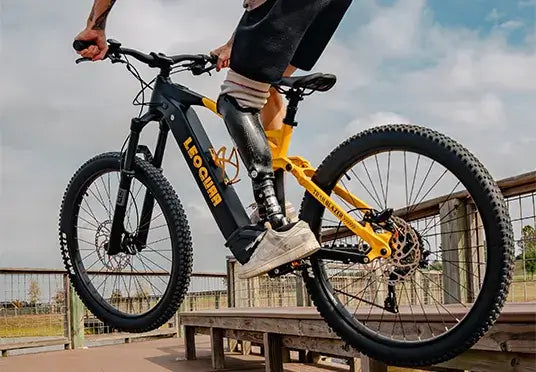


7 Best E-bikes for Camping in 2026
What makes an e-bike a good choice for camping? Power and speed may look impressive on paper, but they are not the only things that matter outdoors. The right camping e-bike should suit the terrain, carry your camping gear, fit in your truck or on your bike rack, and offer enough battery range to get you back to camp without worry.
That is why bigger is not always better. A heavy-duty off-road e-bike may be a great choice for rough mountain trails, but it can be more than you need for a quiet weekend at a state park. Your camping style may call for cargo racks for coolers and bags, a folding frame that takes up less storage space, or a step-through design that is easier to ride around the campground. In this guide, we compare seven Leoguar e-bikes based on different camping needs, so you can find the model that fits your destination and travel style.
Quick Comparison of the Best Ebikes for Camping
| Ebike | Best camping use | Main advantage |
|---|---|---|
| Fastron SO | Rough roads and mixed terrain | Fat-tire grip and step-over frame |
| Fastron ST | Accessible all-terrain riding | Fat tires with easier mounting |
| Trailblazer | Hilly trails | Mid-drive climbing support |
| Sprint | Carrying camping gear | Utility layout and cargo flexibility |
| Flippo | RVs, vans and limited storage | Compact folding design |
| Zephyr SO | Paved campgrounds and leisure rides | Relaxed cruiser comfort |
| Zephyr ST | Easy campground riding | Step-through cruiser access |
1. Fastron SO: Best Overall Ebike for Camping
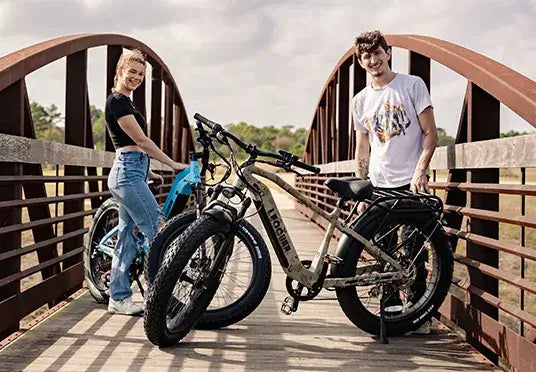
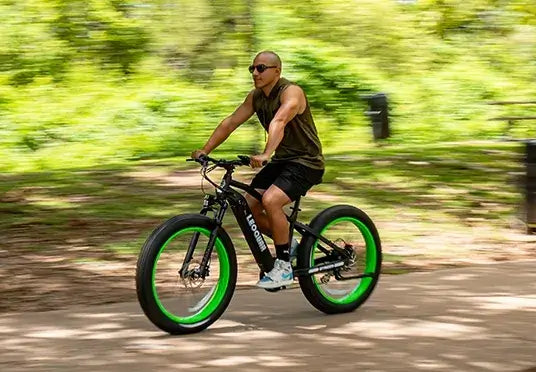
The Fastron SO Fat Tire Ebike is the strongest all-around choice for campers who expect a mixture of pavement, gravel, and uneven access roads.
Its 26-by-4-inch tires provide a broad contact patch on loose surfaces, while the front suspension helps soften repeated bumps. Leoguar lists a 750W rear hub motor, 720Wh battery, and assisted range of up to 60 miles. Actual range will vary with rider weight, cargo, temperature, elevation, tire pressure, and assist level.
The step-over frame favors riders who want a firm, conventional frame layout. Optional rack and basket equipment can make it easier to transport a day pack, groceries, or fishing equipment.
Best for: Mixed terrain, longer day rides, and campers who prioritize grip.
2. Fastron ST: Best Step-Through Fat Tire Ebike for Camping
The Fastron ST Fat Tire Ebike combines an all-terrain fat-tire format with a step-through frame.
That lower entry can be useful when repeatedly getting on and off near a campsite, especially when the rear of the bike is carrying gear. It can also suit riders who find a high top tube inconvenient when wearing outdoor clothing.
Choose the ST over the SO when mounting access matters more than a traditional step-over layout. Before loading any bike, check the product’s current total weight and rack limits; cargo ratings are not interchangeable.
Best for: Accessible mounting, campground stops, and loose surfaces.
3. Trailblazer: Best Camping Ebike for Hills
For steep access roads and rolling trails, consider the Trailblazer Mid-Drive Electric Mountain Bike.
A mid-drive system applies assistance through the bicycle drivetrain. When the rider selects an appropriate gear, this layout can feel more controlled on sustained climbs than simply relying on a powerful hub motor. It is especially relevant for campsites surrounded by elevation changes.
The tradeoff is that shifting technique matters. Reduce pedal pressure during shifts, select a lower gear before a steep section, and avoid forcing the drivetrain under maximum load. Check local trail rules as well, because access may vary by ebike class and land manager.
Best for: Hilly campgrounds, climbing, and trail-focused riders.
4. Sprint: Best Cargo Ebike for Camping Gear
The Sprint Utility Fat Tire Ebike is the most practical option when carrying capacity matters more than compact storage.
Its utility-oriented design suits grocery runs from camp, picnic supplies, and other bulky but securely packed loads. Weight should be distributed evenly and kept as low as possible. Loose straps must stay clear of the wheels, chain, and brakes.
Remember that payload affects braking distance, handling, and battery use. Stay within the current limits published on the product page and take a short test ride before entering traffic or descending a hill.
Best for: Hauling supplies, family camps, and utility trips.

5. Flippo: Best Folding Ebike for RV Camping
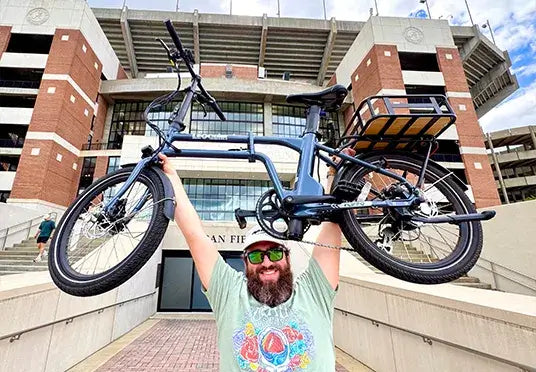
Space is often the deciding factor in an RV or camper van. The Flippo Folding Ebike is designed for riders who need a bike that is easier to store between trips.
Leoguar lists a folded size of approximately 36.22 by 18.5 by 29.92 inches and a bike weight of 55 pounds including the battery. Its 480Wh battery supports an advertised assisted range of up to 45 miles, subject to conditions.
The 20-inch tires favor paved campground roads, urban stops, and maintained paths rather than deep sand or highly technical trails. Measure the intended storage compartment before buying and secure the folded bike so it cannot shift while the vehicle is moving.
Best for: RV storage, vans, paved campsites, and town excursions.
6. Zephyr SO: Best Camping Ebike for Comfort
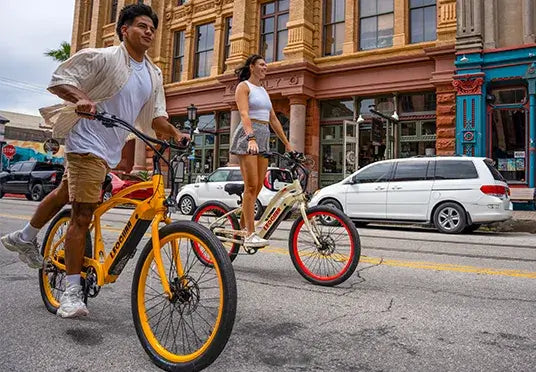
The Zephyr SO Beach Cruiser Ebike is intended for relaxed riding rather than demanding trail use.
A cruiser can be a sensible camping bike when most journeys involve paved loops, waterfront paths, or trips to nearby stores. Its upright style is well suited to riders who value comfort and easy sightseeing.
It should not be treated as a substitute for an electric mountain bike on rocky or deeply rutted trails. Match the bike to the roads you will actually ride, not the most extreme terrain near the destination.
Best for: Paved campground loops and casual recreational rides.
7. Zephyr ST: Best Easy-Access Cruiser for Campgrounds
The Zephyr ST Beach Cruiser Ebike adds a step-through frame to the relaxed cruiser format.
It is a practical option for frequent short rides around established campgrounds, especially when easy mounting is a priority. It can also work well for couples or families whose camping itinerary emphasizes sightseeing over technical riding.
As with the Zephyr SO, choose maintained roads and appropriate paths. For loose sand, rough forest roads, or steep trails, a fat-tire or mountain-oriented model is the better match.
Best for: Easy mounting, paved campsites, and low-stress leisure riding.
How to Choose the Best Ebike for Camping
Match the Tires to the Surface
Fat tires can improve flotation and stability on loose ground, while narrower tires usually roll more efficiently on pavement. No tire makes every trail safe. Mud, deep sand, and wet roots still require conservative speed and careful line choice.
Plan Range as a Round Trip
Do not plan around the advertised maximum alone. Include the return distance and reserve capacity for headwinds, hills, cold weather, or a detour. Higher assist levels, heavy cargo, and soft tires can reduce range.
Check Transport and Storage
A folding bike may fit inside a vehicle, while a full-size fat-tire bike usually needs a suitably rated carrier. Confirm the rack’s total weight rating, per-bike rating, tire width, and wheelbase compatibility. Read the camper and RV bicycle carrier guide before choosing a transport system.
Pack Cargo Safely
Use panniers, a secured rack bag, or an approved basket. Keep essential weight balanced and avoid hanging items from the handlebar. Never exceed the bike or accessory manufacturer’s stated load limit.
Verify Trail and Campground Rules
Ebikes may be allowed on campground roads but restricted on certain natural-surface trails. Check the land manager’s current rules, permitted ebike classes, and seasonal closures before leaving home.
Frequently Asked Questions About Ebikes for Camping
What Type of Ebike Is Best for Camping?
A fat-tire ebike is a strong choice for gravel roads and uneven campsite access, while a folding ebike is usually easier to store in an RV or van. For steep terrain, a mid-drive electric mountain bike can provide more controlled climbing when used in the correct gear.
How Much Ebike Range Do You Need for a Camping Trip?
Plan for the complete round trip rather than the advertised maximum range. Add a reserve for hills, cold temperatures, soft ground, cargo, headwinds, and unexpected detours. Riders traveling far from camp should turn back before the battery reaches its final quarter unless a reliable charging option is available.
Can You Charge an Ebike Battery at a Campsite?
You can charge at a campsite when a suitable electrical outlet is available and permitted by the campground. Use only the manufacturer-supplied charger, keep the battery and charger dry, and avoid charging inside a hot vehicle or enclosed tent. Never connect an unverified solar panel or generator directly to the battery.
How Do You Transport an Ebike to a Campground?
A folding ebike may fit inside an RV, van, or vehicle storage area. A full-size model normally requires a carrier rated for the bike’s total weight, tire width, and wheelbase. Remove loose accessories and secure the bike so it cannot shift during travel.
Are Ebikes Allowed on Campground Trails?
Rules depend on the campground, trail surface, land manager, and ebike class. An ebike may be permitted on paved campground roads but prohibited on nearby natural-surface trails. Check current local rules, closures, and class restrictions before your trip.
Which Camping Ebike Should You Choose?
For varied terrain, the Fastron SO is the strongest overall option, while the Fastron ST offers easier mounting. Choose the Trailblazer for climbing, Sprint for cargo, or Flippo when RV storage is the main constraint. The Zephyr SO and ST are better fits for relaxed riding on paved campground roads.
The best ebike for camping is ultimately the one suited to your terrain, transport setup, and realistic daily distance. Make those three decisions first, and the right model becomes much easier to identify.


Leave a comment