







Women's Electric Bicycles: What Many Buyers Overlook
When you start shopping for a women's electric bicycle, you feel excited. Suddenly, getting to work seems fun, hills look easy to climb, and weekend trips feel like they have no limits. But that excitement can turn into confusion fast. You find yourself looking at spec sheets and comparing numbers that seem important: range, motor power, and price. While these numbers matter, they only tell part of the story.
The gap between a good e-bike and the right e-bike for you lies in details that spec sheets rarely show. These small things define your daily ride, how comfortable you feel on long trips, and how happy you'll be with your bike for years. This guide looks beyond the numbers to explore important factors that people often miss. We'll share secrets that experienced riders know, helping you make a choice that fits your budget, your body, your lifestyle, and how you want to ride.
Beyond the "Step-Through" Frame
One of the biggest myths about e-bikes is that a "women's bike" must have a step-through frame. To make the best choice, you need to think about frame shape as something that affects how the bike works, not just what gender should ride it.
The Step-Through Myth
Long ago, low-step frames were made so women wearing skirts and dresses could get on a bike easily. This easy-to-use feature is why they remain the default choice for many women's electric bicycles today. While they work great for many people, they are not the only option or always the best one. If you only look at this single style, you might miss a bike that offers better performance and stability for what you actually need.
A Functional Frame Guide
Let's break down the main frame types by how they actually work, so you can choose based on your ride, not just tradition.
Step-Through: This frame has the lowest top tube, or no top tube at all, making it very easy to get on and off. It's perfect for casual city riding with lots of stops, running errands, or for anyone who has trouble moving around. The trade-off can be less frame stiffness, which you might notice as a slight bend on bikes with very powerful motors or at higher speeds.
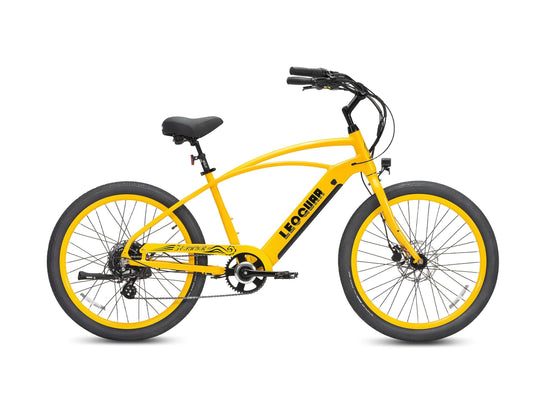
Low-Step (or Mid-Step): This design works as a great middle ground. It has a lower top tube than a traditional frame but is higher than a full step-through. This makes getting on much easier than a step-over bike while giving more strength and often better battery placement than a true step-through. It's a good choice for people who commute and want both easy mounting and solid handling.
Step-Over (or Diamond Frame): This is the classic bike frame design. It offers the most stiffness and strength, which means the most stable and responsive handling, especially at higher speeds, on hills, or on trails. For many women, especially those focused on fitness, performance commuting, or light trail use, this is the better choice.
Choose for Your Body and Ride
The right frame depends completely on what you personally need. Think about how flexible you are, the terrain you'll ride on, and what matters most to you in your ride.
- For maximum convenience and frequent stops: Step-Through
- For a good mix of easy mounting and stability: Low-Step/Mid-Step
- For performance, handling, and off-road use: Step-Over
The Hidden "Weight" of Your Bike
A number that first-time e-bike buyers always underestimate is weight. The number on the page doesn't show the real-world effort you'll need to live with your bike every day.
Why E-Bikes Are Heavy
Electric bikes weigh more than regular bikes for a few key reasons. The motor adds several pounds, the battery alone can weigh 7-10 lbs, and the frame must be built stronger to handle the extra forces and weight. As a result, many popular commuter and cruiser women's electric bicycles weigh between 50 and 80 lbs. Understanding the different types can help explain why some models weigh more than others.
The Real-Life Weight Test
Before you fall in love with a powerful, long-range e-bike, ask yourself these practical questions. Think about the physical effort of: Lifting the bike onto a car rack. Can you confidently lift 65 lbs above your waist?
- Carrying it up stairs to your apartment or office.
- Moving it in a tight garage, hallway, or crowded bike storage area.
- Lifting the rear wheel to fix a flat tire on the side of the road.
A bike that is amazing to ride but terrible to manage when you're not riding can lead to serious regret.
Finding the Right Balance
There is a direct trade-off between weight, power, and range. Lighter e-bikes often have smaller batteries (less range), less powerful motors, or are made from expensive materials like carbon fiber, which greatly increases the price. If being able to carry your bike matters most to you, look for models marked as "lightweight," or think about an e-bike with a removable battery. Taking the battery out can remove those important 7-10 lbs, making the bike much easier to lift.
The Secret to a Natural Ride
How an electric bike feels is probably the most important factor for long-term happiness, and that feeling comes from a tiny, often overlooked part: the pedal-assist sensor. Understanding the difference between the two main types changes everything.
What is a Pedal-Assist Sensor?
Simply put, this sensor tells the motor that you are pedaling and that it should give power. It's the brain behind the strength, and learning how an electric bike motor works is key. But how it tells the motor to start—and how much power to give—creates two completely different ride experiences.
Cadence Sensors: The On/Off Switch
A cadence sensor detects that the pedals are turning. As soon as it senses movement, it tells the motor to deliver a set level of power based on your chosen assist level.
- How it feels: The help can feel like it kicks in suddenly. It doesn't matter if you pedal hard or soft; as long as the cranks are moving, you get the same amount of push from the motor. This can sometimes feel jerky or like an on/off switch.
- Think of it like: It's like a basic light switch. As long as the switch is flipped (you're pedaling), the light is on at a fixed brightness.
- Best for: Riders who want simple power with minimal effort, those who mainly ride on flat ground, or buyers on a tighter budget, since cadence-based systems cost less.
Torque Sensors: The Intuitive Amplifier
A torque sensor is more advanced. It measures how hard you are pressing on the pedals. The more force you apply, the more power the motor gives.
- How it feels: This creates a very smooth, natural, and organic ride. The motor's help seamlessly boosts your own effort, making you feel like you're having a great day on a regular bike, but with superpowers. It gives you exact control, especially when handling tricky situations or climbing hills.
- Think of it like: It's like a dimmer switch. The more you turn the dial (pedal harder), the brighter the light gets. The response matches what you do and feels natural.
- Best for: Riders who want a natural cycling experience, enjoy getting exercise, often tackle hills, and are willing to spend more for a premium, responsive ride feel.
Which is Right for You?
| Feature | Cadence Sensor | Torque Sensor |
|---|---|---|
| Ride Feel | On/off, power surge | Smooth, intuitive, amplifies effort |
| Control | Less precise, based on speed | Highly precise, based on pressure |
| Best Use | Flat terrain, casual riding | Hills, fitness, technical riding |
| Exercise | Less effort required | Encourages active pedaling |
| Price | Less expensive | More expensive |
The Power to Stop Safely
With the added speed and weight of women's electric bicycles, your ability to stop quickly and safely matters more than ever. The type of brakes on your e-bike is not something to compromise on.
Mechanical vs. Hydraulic Brakes
Most quality e-bikes use disc brakes, but they come in two main types: mechanical and hydraulic.
Mechanical Disc Brakes: These work like traditional bike brakes, using a steel cable to pull the brake pads against the disc (rotor). They offer reliable stopping power—a big step up from old-fashioned rim brakes—and are easier to maintain and repair on your own. However, they require more hand strength to apply fully and can feel less responsive.
Hydraulic Disc Brakes: These use a sealed system of fluid, like the brakes in a car. When you squeeze the lever, the fluid pushes the brake pads against the rotor. This system gives much more stopping power with much less effort. The feel at the lever is light and responsive, giving you more detailed control over your braking (called "modulation"). While they are more complex to service, their better performance is a critical safety feature for a heavier, faster e-bike.
Why It Matters for E-Bikes
An 80-pound e-bike traveling at 20 mph has a lot more momentum than a 25-pound regular bike. In an emergency stop or on a steep downhill, the easy power of hydraulic brakes can be the difference between a close call and an accident. For this reason, we strongly recommend choosing an e-bike with hydraulic disc brakes if your budget allows.

Fit, Comfort, and Touchpoints
You can have the perfect frame and motor, but if the bike isn't comfortable, you won't want to ride it. True comfort goes beyond just the right frame size; it's about the "touchpoints"—the three places where your body connects with the bike.
Beyond Saddle Height
Getting the right fit means creating a relaxed, pain-free riding position. While saddle height is the most obvious adjustment, don't overlook these other key parts:
Saddle: The seat that comes with the bike might not be right for your body. Women's bodies often work better with wider, shorter saddles. If you feel uncomfortable after a few rides, buying a new saddle is one of the most effective upgrades you can make.
Handlebars: The shape and position of your handlebars control your entire upper body position. Swept-back bars (like on a cruiser) promote a relaxed, upright position that's great for casual riding and seeing traffic. Flatter, straighter bars encourage a more forward-leaning, athletic position for better power and control at speed.
Adjustable Stem: Many women's electric bicycles, especially commuter models, come with an adjustable stem. This often-overlooked feature is very valuable, letting you raise, lower, and change the angle of your handlebars to perfectly set your reach and position without buying new parts.
The Final Piece of the Puzzle
Before you buy, make sure these touchpoints feel right or can be easily adjusted. A good bike shop can help you with these adjustments. A comfortable rider is a confident rider, and that's the ultimate goal. By looking past the big specs and focusing on these important details—frame function, real-world weight, sensor feel, braking power, and personal comfort—you're no longer just buying an e-bike. You're investing in a machine that will bring you joy, freedom, and countless happy miles for years to come.
Frequently Asked Questions
Q: Do I really need a step-through frame as a woman?
A: No, you don't need a step-through frame just because you're a woman. Choose based on your needs: step-through for easy mounting and casual riding, low-step for a balance of accessibility and performance, or step-over for maximum stability and handling. Consider your flexibility, riding style, and terrain more than traditional gender expectations.
Q: How much should an electric bike weigh, and why does it matter?
A: Most women's electric bicycles weigh 50-80 lbs due to the motor, battery, and reinforced frame. Weight matters because you'll need to lift, carry, and maneuver your bike regularly. Consider whether you can lift your chosen bike onto car racks, up stairs, or handle it for maintenance before making your final decision.
Q: What's the difference between cadence and torque sensors, and which should I choose?
A: Cadence sensors detect pedal rotation and provide consistent power regardless of how hard you pedal, feeling like an on/off switch. Torque sensors measure pedal pressure and provide proportional assistance, feeling more natural and responsive. Choose cadence for simple, budget-friendly power or torque for a premium, intuitive riding experience.
Q: Are hydraulic brakes worth the extra cost on an electric bike?
A: Yes, hydraulic brakes are highly recommended for electric bikes. They provide much more stopping power with less hand effort, which is crucial for heavier, faster e-bikes. The superior control and safety they offer, especially in emergency stops or steep descents, make them a worthwhile investment for most riders.
Q: How important is professional bike fitting for an electric bike?
A: Professional fitting is very important for comfort and safety. Focus on the three touchpoints: saddle, handlebars, and grips. Many e-bikes come with adjustable stems, making it easier to dial in your position. A comfortable bike encourages more riding, so invest time in getting the fit right or visit a bike shop for help with adjustments.


Leave a comment