






Battery Bicycle for Adults: Why Range Claims Can Be Misleading
You've seen the ads: a sleek battery bicycle for adults promising an incredible "80-mile range" on a single charge. It sounds fantastic. But a part of you is skeptical, and you have every right to be. Those headline numbers are almost always calculated in a perfect, unattainable world. The reality is that the real-world range of an electric bike is nearly always lower than what's advertised.
Our goal here is to cut through the marketing hype. We will break down exactly why those claims can be misleading and, more importantly, equip you with the knowledge to estimate a realistic range for your specific riding needs, ensuring you invest in a bike that truly fits your life.
What "Up To" Means
The phrase "up to X miles" is the most common and most misleading metric in e-bike marketing. It represents a best-case scenario, not an average one. To understand the gap between the advertised number and what you'll experience, we need to look at how manufacturers arrive at these figures.
The Perfect World Test
Advertised range is determined under laboratory-like conditions that don't reflect your daily ride. Think of it as a "perfect world" test. If a manufacturer states a battery bicycle for adults has a 70-mile range, they likely used a formula involving these ideal variables:
- Lightweight rider: Often around 150 lbs (68 kg).
- Perfectly flat terrain: No hills or even slight inclines.
- No wind: Not even a gentle breeze, let alone a headwind.
- Lowest pedal assist level: Using only Pedal Assist (PAS) level 1.
- Consistent, moderate speed: No stopping for traffic lights or slowing for corners.
- Warm, optimal temperature: Around 70°F (21°C), when batteries are most efficient.
Unless your daily commute is on a windless, perfectly flat track with no stops, you will not achieve this maximum range.
Understanding Watt-Hours
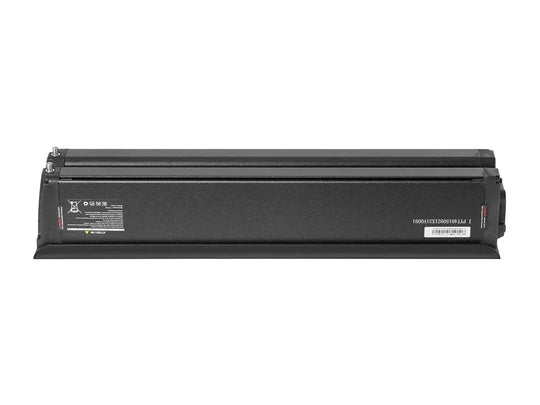
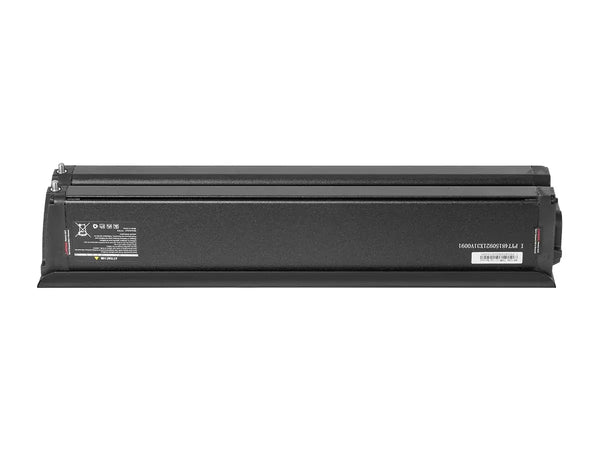
To get a true sense of an e-bike's potential, ignore the promises and look at the battery's specification, specifically its Watt-hours (Wh). This is the most important metric for capacity. Think of Watt-hours as the size of your car's gas tank. The bigger the tank (the more Wh), the more potential energy you have to draw from.
A bike with a 720Wh battery has 50% more "fuel" than one with a 480Wh battery, regardless of what the marketing claims. According to experts, how battery capacity is measured is by multiplying Volts (V) by Amp-hours (Ah). A 48V battery with 15Ah has a capacity of 720Wh. This number is your true starting point for range estimation.

Real-World Range Factors
Once you understand that Watt-hours are your fuel tank, the next step is to know what drains that tank faster. A single range number is impossible because everyone's riding conditions are different. Here are the eight key factors that actually determine how far your battery bicycle for adults will take you.
Total Weight: This includes the rider, the bike itself, and any cargo you're carrying (groceries, a child, work gear). The more weight the motor has to move, the more power it consumes. A 220-lb rider will get significantly less range than a 150-lb rider on the same bike.
Terrain: Hills are the single biggest battery drainer. Riding up a steep incline requires the motor to work at or near its maximum output, consuming energy at a rapid rate. A ride with constant rolling hills can easily cut your range in half compared to a ride on flat ground.
Assist Level & Throttle: Your e-bike's pedal assist system (PAS) lets you choose how much help you get from the motor. Riding in PAS 1 or 2 sips power, while riding in PAS 4 or 5 guzzles it. Using a throttle-only function, where you don't pedal at all, is the fastest way to drain your battery.
Riding Speed: Wind resistance doesn't increase in a straight line; it increases exponentially with speed. The energy required to go from 15 mph to 20 mph is far greater than the energy needed to go from 10 mph to 15 mph. Riding at a top speed of 25 mph will deplete your battery much faster than cruising at 18 mph.
Wind: Riding into a strong headwind is like riding uphill. The motor has to work harder to maintain the same speed, which directly reduces your range. Conversely, a strong tailwind can slightly increase your range.
Tire Pressure & Type: Just like on a car, tire pressure matters. Under-inflated tires create more rolling resistance, forcing the motor to use more energy. Furthermore, wide, knobby fat tires designed for off-roading have much more friction than the smooth, narrow tires found on a commuter battery bicycle for adults.
Temperature: Batteries are chemical devices, and their performance is affected by temperature. In cold weather, their efficiency drops. Lithium-ion batteries can lose 20-30% of their effective capacity in freezing temperatures (below 32°F / 0°C).
Riding Style: City riding with frequent stops and starts is less efficient than maintaining a steady pace on a suburban bike path. Every time you accelerate from a stop, the motor draws a surge of power to get you up to speed.
Estimate Your Real Range
Now you can move beyond the marketing and create a personal, realistic range estimate. This simple self-assessment helps you translate theory into a practical number for your own situation.
A Self-Assessment
Start with the bike's advertised maximum range (or better yet, a realistic baseline of 1 mile per 15-20 Wh of battery capacity). Then, go through this checklist and subtract a percentage for each factor that applies to your typical ride.
Start with the advertised range (e.g., 60 miles). Now, adjust:
- My Total Weight is over 200 lbs / 90 kg: Subtract 10-15%
- My Typical Ride has Many Hills: Subtract 20-40%
- I Love Using High Assist or the Throttle: Subtract 25-50%
- I Plan to Ride in a Windy Area or on the Coast: Subtract 10-20%
- I Will Be Riding in a City with Lots of Stops: Subtract 15%
- My Bike Has Fat Tires for Off-Roading: Subtract 10-20%
- I Often Ride in Temperatures Below 40°F / 5°C: Subtract 20%
A Quick Example
Let's see how this works. Imagine you're looking at a battery bicycle for adults with a 720Wh battery and an advertised range of "up to 60 miles."
You weigh 220 lbs, your commute has some significant hills, and you prefer using PAS 3 to keep up with traffic.
- Start with 60 miles.
- Subtract 15% for weight (60 * 0.15 = 9 miles). Remaining: 51 miles.
- Subtract 30% for hills (60 * 0.30 = 18 miles). Remaining: 33 miles.
- Subtract 25% for using a medium-high assist level (60 * 0.25 = 15 miles).
Your estimated realistic range isn't 60 miles. It's closer to 60 - 9 - 18 = 33 miles. The assist level adjustment suggests it could be even lower on days you push it harder. This is a far more useful number for deciding if that bike meets your daily needs.
Spotting Misleading Claims
With this knowledge, you can become a much savvier shopper. When comparing different models, watch for these red flags that suggest a brand is overstating its performance.
- Vague Claims: Beware of phrases like "ride all day" or "long-range performance" that aren't backed by a specific Watt-hour (Wh) number for the battery. If a company hides the core specs, they are not being transparent.
- No Test Conditions Mentioned: Trustworthy brands are often upfront about how they test range. They might state that their maximum range was achieved with a 160-lb rider on PAS 1 on flat ground. A lack of any context is a red flag.
- Range Quoted Without Battery Size: An "80-mile range" claim is meaningless without knowing the battery's Wh capacity. A bike with a massive 1000Wh battery might achieve that, but it's highly suspect for a bike with a 500Wh battery.
- Ignoring E-Bike Class: In the U.S., there are the three classes of electric bicycles. A Class 3 e-bike (assisting up to 28 mph) will naturally get less range than a Class 1 e-bike (assisting up to 20 mph) if they have the same battery, because higher speeds consume much more power. If a brand claims the same high range for both classes, be skeptical.
A Tale of Two Rides
To see how dramatic the difference can be, let's look at two real-world rides we took on the same battery bicycle for adults, which has a 500Wh battery. The bike's advertised range is "45 miles."
The Easy Sunday Ride
Last Sunday, we took a ride along a flat, paved river path. The weather was a perfect 70°F with no wind. We kept the bike in PAS 2, averaging about 15 mph. After riding for 35 miles, we still had nearly 40% of the battery left. The bike's onboard computer estimated we could have easily passed 50 miles in total. In these near-perfect conditions, we actually exceeded the advertised range.
The Challenging Commute
Two days later, we used the same fully charged bike for a 9-mile commute to the office. This route involves several steep hills, about 20 stops for signs and traffic lights, and we faced a 10 mph headwind. To keep up with the flow of traffic on the inclines, we had to use PAS 4 and 5.
By the time we arrived at the office, we had already used 45% of the battery. The round trip of 18 miles would have completely drained it. In these challenging but realistic conditions, the bike's true range was less than 20 miles—not even half of its advertised potential.

Making a Smart Choice
Choosing the right battery bicycle for adults isn't about finding the biggest range number on a spec sheet. It's about understanding your personal needs and matching them to the right technology. Ignore the "up to" claims and focus on the battery's Watt-hour (Wh) capacity—your true fuel tank.
Use the checklist to estimate what you'll realistically get based on your weight, your terrain, and your riding style. By arming yourself with this knowledge, you can confidently select an electric bike that delivers the performance you need, ride after ride.
Frequently Asked Questions
Q: How accurate are the range estimates on electric bike displays?
A: The range estimates on your bike's display are usually too optimistic. They base calculations on your current power usage, but they can't predict hills, wind, or changes in your riding style ahead. Use them as a general guide, but don't rely on them for trip planning.
Q: Can I increase my electric bike's range without buying a bigger battery?
A: Yes, several strategies can help extend your range. Keep your tires properly inflated, use lower assist levels when possible, maintain a steady speed around 15-18 mph, and pedal more actively to reduce motor dependence. These changes can increase your range by 20-30%.
Q: Why does my electric bike's range seem shorter in winter?
A: Cold temperatures reduce battery efficiency significantly. Lithium-ion batteries can lose 20-30% of their capacity in freezing weather. Additionally, you might use higher assist levels to maintain speed, and thicker clothing adds weight, all contributing to reduced range.
Q: Should I completely drain my electric bike battery before charging?
A: No, modern lithium-ion batteries actually prefer partial charges over complete drain cycles. Charge your battery when it reaches 20-30% capacity and avoid letting it completely die. This practice will help maintain battery health and longevity.
Q: How do I know if a manufacturer's range claim is realistic?
A: Look for specific test conditions in the product description, check the battery's Watt-hour capacity, and be wary of claims that seem too good for the battery size. A good rule of thumb is 1 mile per 15-20 Wh under normal riding conditions. If the claimed range significantly exceeds this ratio, be skeptical.



Leave a comment