



Can You Carry a Child on an Electric Bike? What Parents Should Know
Can you carry a child on an electric bike? Yes, you can carry a child on an electric bike. It can change how your family takes trips and runs errands, making everything more fun and easier. But you must do this safely with the right gear, the right bike, and a strong focus on keeping everyone protected. A regular ebike won't work for this job, since you need a bike built specifically to carry passengers.
This guide helps parents like you learn everything you need to know. We share advice based on real experience from families who ride together regularly. The topics we cover include basic safety rules and age limits, how to choose the right bike and child seat, a step-by-step guide to your first ride, and the legal rules you need to follow.
Before Riding With a Child
A child passenger adds extra weight and changes the way an e-bike feels. Before heading out, give the child seat a quick check and make sure the straps fit snugly. Your child should also wear a properly fitted helmet. Do the same check before every ride, even a short one.
Requirements for Your Passenger
Your child's readiness depends on more than just age. Physical development matters most, and every child grows at their own pace.
Age and Physical Readiness: Most experts agree that 9-12 months is the youngest safe age. Your child must hold their head up steadily while wearing a helmet for the entire ride and sit upright without assistance. Wait longer if your child still seems wobbly or tends to slump over during normal activities.

The Electric Bike Helmet is Mandatory: Both you and your child must wear properly fitted helmets on every ride. A good helmet should fit snugly, sit level on the head, and rest low on the forehead about one to two finger-widths above the eyebrows, and it should never rock back and forth or side to side. Look for a CPSC (Consumer Product Safety Commission) sticker inside the helmet, which means it meets federal safety standards in the United States. You can learn more by checking the CPSC bicycle safety guidelines.
The Right Gear
Not every ebike is well-suited to carrying children. You need a bike designed to handle extra weight and keep passengers safe, which is why utility electric bikes work best for families.
Why Choose a Utility E-Bike
A utility ebike starts to show its value when you add weight to the back. Put a child seat on the rear, for example, and the bike can feel very different when you stop, turn, or pull away. A utility frame is made to handle that extra load without making the bike feel unstable.
Key features to look for include:
High Payload Capacity: These bikes have stronger, reinforced frames that safely support the combined weight of the rider, child, seat, and other items, such as groceries or backpacks. Always check the manufacturer's total weight limits and make sure they're well above what you plan to carry, giving you a good safety margin.
Stable Frame Design: Many utility e-bikes feature low-step-through or mid-step frames. This makes getting on and off much easier and safer, especially when your child is already in the seat, since you won't need to swing your leg over your child's head.
Integrated Racks: A strong rear rack that's welded or bolted directly to the frame is vital for safety. Weak, add-on racks that bolt on later aren't strong enough for this job, but an integrated rack becomes part of the bike's main structure, giving you the strength needed to mount an electric bike with a child seat securely.

Front vs. Rear Seats
You need the right seat once you have the right bike. Front-mounted and rear-mounted seats are the two main types, and each works better depending on your child's age and how you like to ride.
|
Child Age/Weight
|
Approx. 9 mos - 2.5 yrs / up to 33 lbs (15 kg) | Approx. 9 mos - 6 yrs / up to 48 lbs (22 kg) |
|
Pros
|
Child is between your arms, allowing for easy interaction and supervision. Better weight distribution for bike handling. | Higher weight and age capacity, accommodating growing children. Less interference with pedaling and handlebars. |
|
Cons
|
Lower weight limit means it's outgrown faster. Can make pedaling awkward and interfere with steering. Offers less weather protection. | Harder to interact with the child. Shifts the bike's center of gravity to the rear, which can affect balance, especially at low speeds. |
A Practical Example
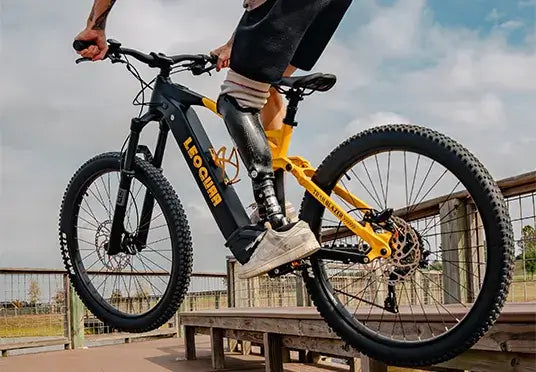
The Leoguar Sprint Fat Tire Utility Ebike shows what parents should look for in a family bike. This model has a high weight capacity made specifically for family use, and the fat tires create a wide, stable base that helps you feel confident when riding with a child who might move around. The bike works as a full-fledged electric bike with a child-seat solution that keeps everyone safe.
The Leoguar Rack Mount Child Bike Seat is made for children from 9 months to 6 years old. It pairs with the matching Leoguar rear rack, so there’s no guesswork about whether the seat will fit the bike correctly. That makes setup simpler and gives parents one less thing to worry about before heading out.
Make Sure the Seat Belongs on Your eBike
Not every rear rack is built for a child seat. Check the rack label against the seat manual and make sure the mounting width, attachment style, and load limit all line up. If the brackets sit crooked, leave a gap, or need to be forced into place, the seat is not a good match for that bike.
Check the Manual: The manufacturer should clearly state whether the bike is designed to carry passengers or to mount child seats. Don't use the bike for this purpose if the manual doesn't mention passengers or warns against carrying them, as this is a major safety warning.
Understand Weight Limits: You need to know two important numbers: the total electric bike weight capacity (rider + bike + child + cargo) and the rear rack's specific weight limit. The rack limit matters most for rear-mounted seats and is often much lower than the total bike capacity so that a utility e-bike might handle 400 pounds total but only 150 pounds on the rack. Make sure the child seat and your child's weight stay well under the rack's limit.
Examine the Rack Mounts: Check if the rack is built into the frame or bolted on separately. Frame-integrated racks are much stronger and show that you have a true utility electric bike, and each bolt should be tight with no signs of bending or stress.
Test the Kickstand: A regular, single-sided kickstand is too unstable and dangerous for loading children safely. Your bike needs a strong, wide, dual-leg kickstand for Toyclesor bicycles, which keeps the bike perfectly upright and lets you use both hands to secure your child in the seat.
Inspect the Brakes: Extra weight requires more stopping power to stay safe. Hydraulic disc brakes work best for this job because they provide stronger, more consistent braking in all weather conditions than mechanical disc or rim brakes.
Ensure Wheel Protection: Your child's feet, fingers, or clothing must stay completely away from the spinning rear wheel. Good child seats have built-in foot guards, and many utility e-bikes include wheel skirts or guards that cover the upper part of the rear wheel for extra protection.
Your First Ride Together
Practice and preparation build confidence for safe family rides. Don't make your first ride with your child a trip to a busy store or across town, since starting in a safe, controlled area works much better.
The Pre-Ride Routine
Practice with a Dummy Load: Put an equivalent weight in the seat before you ever carry your child on the bike. A 25-pound bag of rice or dog food works well for testing, and this helps you learn how the bike handles, starts, and stops with extra weight on the back.
Master the Mount and Dismount: Practice mounting and dismounting with the bike on its dual-leg kickstand. A low step-through frame makes this simple and safe; then practice lifting your child into the seat and buckling them in securely until it becomes a smooth, calm process.
Perform the "ABC Quick Check": Check the Air in your tires, the Brakes to make sure they work properly, and the Chain to ensure it's clean and oiled before every single ride. This two-minute safety check should become an automatic habit that could prevent serious problems.

Getting Used to the Extra Weight
With a child on the back, the bike will feel different when you pull away, brake, or turn. For the first few rides, keep the assist low and give yourself a little more room to stop. Once you get used to the added weight, increase the assist when needed and avoid sudden changes in speed.
Brake Early, Brake Gently: Added weight significantly increases your stopping distance. Start braking earlier than normal and apply both brakes smoothly and evenly to avoid sudden stops that could throw you off balance. Since the bike handles differently with a passenger, you will need to lean your body more and take wider turns at slower speeds to remain stable. Do not make any sharp or sudden movements, as this could cause problems. Could cause problems.
Communicate: Talk to your child throughout the ride. Tell them when you're about to start, stop, or turn, so they know when to hold on tight and stay engaged.
Comprehending Local Rules
Laws about carrying children on bikes vary widely by state, county, and city. You must learn and follow the rules in your area since ignorance of local laws won't protect you if something goes wrong.
General Legal Guidelines
Most places have similar basic electric bike rules, though the details can vary quite a bit:
Regarding helmet laws: in many areas, helmets are required for child passengers and, in many cases, for adult riders. In some places, the rules vary by age, so you should check which rules apply to your family.
Age Minimums: Some areas set legal minimum ages for passengers, which usually corresponds to the 1-year-old physical readiness guideline. These laws exist to protect children who aren't developmentally ready to ride a bike.
Proper Seating: Laws almost always require children to be in proper, securely fastened child seats. Just letting a child sit on the rack is illegal and extremely dangerous, so always use approved safety equipment.
Visit your state's Department of Transportation website and your local city or county government website to find the specific rules for your area, as these may differ greatly.
Beyond the Law
Following the law is just the starting point for real safety. Best practices go far beyond minimum legal requirements to truly protect your family truly.
Be Seen: Use daytime running lights on both front and rear of your bike. Wear bright, high-visibility clothing, and consider adding it for your child too, since being visible to drivers and other cyclists helps prevent many accidents.
If part of your route runs along a busy road, check whether a quieter street or bike path runs nearby. Taking the street one block over may add a few minutes, but it can keep you away from fast-moving traffic when your child is riding with you.
Check the Weather: High winds, rain, or snow might significantly reduce your stability and visibility. Choose another way to travel on days with poor weather since the risks frequently outweigh the benefits of biking.
The Freedom of Family Biking
With your child riding along, even a short trip can feel a little different. On the way to the park or grocery store, you might stop for a snack, point out something along the road, or simply spend a few more minutes outside together. Those everyday rides can become part of your family routine.
Safety first: the right utility electric bike and child seat, plus good riding habits, unlock new freedom and fun for your family. The money you spend on proper equipment protects your reassurance and your child's safety, which makes it one of the best investments you can make. With good preparation and careful attention to safety, you and your child can enjoy many wonderful rides together on the open road.
FAQ
Q: When is a child old enough to ride on an electric bike?
A: Nine months can be a starting point, but age alone is not enough. Put the helmet on and see how your child sits in the seat. If they slump or their head tips forward, they are not ready yet. Also stay within the age and weight limits listed for the child seat.
Q: Must I have a particular kind of e-bike to carry a child?
A: Yes, you do need a utility electric bike that's made for carrying passengers since ordinary e-bikes aren't constructed to safely manage the extra weight and responsibility involved in taking a child. You should choose one that has a high payload capacity, integrated racks, and a stable frame design.
Q: What's the difference between front-mounted and rear-mounted child seats?
A: Front-mounted seats work for younger children (9 months to 2.5 years, up to 33 lbs) and let you interact with your child easily, but they have lower weight limits. Rear-mounted seats accommodate older children (up to 6 years, 48 lbs) and don't interfere with pedaling, but make communication harder.
Q: Are there legal requirements for carrying children on e-bikes?
A: Yes. Local rules can vary, especially when it comes to helmet use, a child’s age, and approved child seats. Before carrying a child on your e-bike, look up the rules that apply in your state or city.
A: Load the child seat with something close to your child’s weight and ride a few laps in an empty parking lot. You’ll quickly notice how stopping and low-speed turns feel different with the added weight. Before your child gets on, give the tires, brakes, and chain a quick check.


Leave a comment