




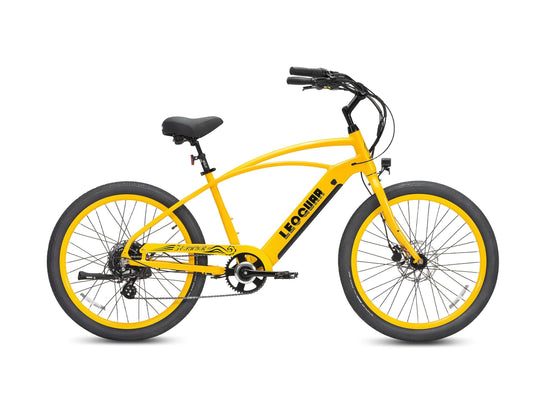


Portable Electric Bike: Why “Lightweight” Isn’t the Only Goal
You're looking for a portable electric bike. The first thing you probably typed into Google was "lightweight." We get it. The idea of a feather-light e-bike you can tuck under your arm sounds great. But as industry veterans who have tested, folded, and carried hundreds of these bikes, we can tell you this: focusing only on weight is the fastest path to buyer's remorse.
Weight is important. But it's only one piece of a much larger puzzle. True portability isn't a single number on a spec sheet. It's a dynamic balance of multiple factors that determine how a bike fits into your actual, day-to-day life. The real measure of a portable electric bike comes down to a combination of its weight, its folded size, its folding mechanism, and its overall carry-ability. By the end of this guide, you'll have a complete framework to choose a portable electric bike that truly fits your life, not just one that looks good on paper.
More Than Just Weight
To find the perfect portable electric bike, we need to break down the very idea of "portability." It's not about finding the absolute lightest bike. It's about finding the bike that's least difficult for your specific needs. Let's break down the four pillars of true portability.
Weight: The Starting Point
Weight is the most obvious factor. It matters most when you have to lift the bike vertically. Think carrying it up three flights of stairs to your apartment or hoisting it into the trunk of an SUV.
To give you some context, the market for a portable electric bike varies widely. Ultra-light, basic carbon fiber models can weigh under 35 lbs (16 kg). However, most strong, feature-rich folding e-bikes with decent power and range will land in the 55-70 lbs (25-32 kg) range. Anything over 70 lbs is genuinely heavy and should only be considered if you rarely need to lift it.
Folded Size: The Space Saver
This is arguably more important than weight for many users. A heavier bike that folds into a tiny, dense, and clean rectangle can be far more "portable" than a lighter bike that remains a large, sprawling, and awkward shape.
Think of it as the difference between carrying a small, heavy dumbbell versus a large, light, but unwieldy empty box. One is compact and manageable. The other gets caught on doorways and takes up the entire backseat. Measure the space you have—your car trunk, your office corner, your RV storage bay—and compare it to the bike's folded dimensions.
Folding: The Time Saver
How fast and easily does the bike fold and unfold? This is the convenience factor. There's a world of difference between a smooth, 10-second, three-step fold and a clunky, minute-long ordeal that requires you to wrestle with greasy parts and consult the manual.
From experience, this matters most when you're in a rush. Imagine standing on a crowded train platform with your train pulling in. A quick, seamless fold is a moment of calm. A difficult one is a frantic, stressful struggle in front of an audience, especially if it starts to rain.
Carrying: The Real Test
Once folded, how do you actually carry it? The ergonomics of the folded bike are critical. Does it have a well-placed handle or a frame section that's comfortable to grip? Is the weight balanced, or does it try to flip over in your hand?
Many poorly designed bikes leave you with no option but to awkwardly grab a frame tube, often getting chain grease on your clothes. The best designs are balanced and feel secure in your hand, making a 50-pound bike feel more manageable than a poorly balanced 40-pound one.
The Lightweight Trap
Chasing the lowest possible weight on a spec sheet often leads to significant, real-world compromises. For every pound shed, something is usually given up. Before you fall for the "world's lightest" marketing claim, understand the trade-offs you're likely making.
Motor Power & Hill Climbing: Ultra-light ebikes almost always use smaller, less powerful hub motors. A 250W motor might feel zippy on a flat bike path, but it will leave you struggling and sweating on any significant incline. Heavier bikes often accommodate 500W or 750W motors that can flatten hills and make your commute effortless.
Battery Range: This is the biggest sacrifice. The battery is one of the heaviest components, so reducing weight almost always means reducing battery capacity (measured in Watt-hours, or Wh). A bike with a small 250Wh battery might only give you 15-20 miles of realistic range, while a model with a more standard 500Wh battery can deliver 30-40 miles or more. A dead e-bike is just a heavy, inefficient bicycle.
Ride Quality & Stability: To save weight, manufacturers often use smaller wheels (16-inch vs. the more stable 20-inch) and narrower tires. This combination can result in a twitchy, jarring ride that transmits every crack and bump in the pavement directly to your body. Larger wheels and wider tires provide more stability and comfort, inspiring confidence on less-than-perfect city streets.
Durability & Features: Weight is often saved by using less robust frame materials or by stripping away practical features. Things like integrated cargo racks, fenders to keep you dry, and suspension forks for comfort all add weight. As expert reviews often highlight that many of the best folding bikes prioritize features and ride quality over minimal weight, making them far more practical for daily use.
Your Portability Scorecard
To move beyond a single-minded focus on weight, we've developed this simple scorecard. Use it to evaluate any portable electric bike you're considering. Instead of just picking the lightest one, you can compare models side-by-side to see which offers the best overall balance for you. Rate each factor on a scale of 1 (poor) to 5 (excellent) for each bike.
| Portability Factor | What to Look For | Your Rating (1-5) |
|---|---|---|
| Weight | How easy is it to lift? Under 40 lbs is great. 40-55 lbs is manageable. 55+ lbs is a real workout. | |
| Folded Size | Will it fit where you need it to? (Measure your car trunk, closet, or under-desk space first). Is the final shape neat and compact? | |
| Folding Speed & Ease | Can you fold it in under 30 seconds without a manual? Are the latches smooth and secure? | |
| Carrying Ergonomics | Is there a dedicated handle? Is the weight balanced when you lift it, or is it awkward and unwieldy? | |
| Rolling When Folded | Can you roll the bike like a piece of luggage, or must it be carried at all times? (This is a huge bonus). |
Match Bike to Your Life
The "best" portable electric bike is different for everyone. Your lifestyle dictates which portability factors you should prioritize. Here are three common user profiles to help you identify what matters most for your situation.
The Multi-Modal Commuter
You ride part of the way and take a train, bus, or subway for the rest. You're constantly folding and unfolding your bike in public, often in a hurry.
Priorities: Folding Speed and Folded Size are your top concerns. A bike that collapses in seconds into a tight, clean package is a non-negotiable. It needs to be small enough not to bother fellow passengers. A perfect ebike for subway commutes, as some have noted, needs to be compact and easy to manage in tight spaces.
Weight is: Important, but secondary. A slightly heavier bike that folds brilliantly is better than a super light one that is a pain to fold on a crowded platform. We've seen people miss their train while fumbling with a complex folding mechanism—it's a truly frustrating experience.
The Apartment Dweller
You live in a walk-up building or have limited storage space. Your primary challenge is getting the bike in and out of your home.
Priorities: Weight is the undisputed king here. Every pound matters when you're hauling a bike up several flights of stairs after a long day. Carrying Ergonomics is a very close second; a balanced bike with a good handle is much easier to manage on a narrow staircase.
Folding is for: Storage, not speed. A slightly slower fold is perfectly acceptable because you're likely only doing it once or twice a day inside your apartment. The main goal of the fold is to make it small enough to fit in a closet or hallway.
The RV or Boat Owner
You're a traveler who wants an e-bike for exploring new towns or running errands from the campsite or marina. Storage space is at a premium, but you're not carrying it long distances.
Priorities: Folded Dimensions are the most critical factor. The bike must fit into a specific, often tight, storage bay or locker. You'll want to measure that space precisely before you even start shopping.
Weight is: Less critical. You might only lift it a few feet from the storage bay to the ground. In this case, sacrificing low weight for better performance is a smart trade. A heavier bike with a bigger motor, longer-range battery, and even fat tires for varied terrain (like gravel paths or sandy trails) is often a much better choice for the adventurous traveler.
Features That Matter
Beyond the four main pillars, several smaller features can have an outsized impact on a bike's real-world portability and convenience. These are the details that separate a good design from a great one.
Removable Battery: This is a game-changer, especially for apartment dwellers and office commuters. Instead of lugging the entire 60-pound bike inside to charge, you can lock the frame up and carry only the 7-pound battery to your desk or outlet. It dramatically reduces the daily hassle.
Integrated Rolling Wheels: Some of the best-designed folding bikes feature small, integrated "roller" wheels that allow you to push or pull the folded bike like a piece of rolling luggage. We cannot overstate how much this improves the experience. The difference between rolling a 50 lb bike effortlessly through a massive train station versus having to dead-lift it the entire way is night and day.
Folding Pedals and Handlebars: These elements are often overlooked. Pedals that fold flat and handlebars that tuck in neatly make the folded package significantly slimmer and less likely to snag on your clothes, furniture, or car upholstery. It's a small touch that shows the designers were thinking about the complete user experience.
Clean, Protected Drivetrain: A greasy chain exposed on a folded bike is a recipe for stained pants, hands, and car interiors. Look for models with chain guards, internally geared hubs, or carbon belt drives. A belt drive is the ultimate solution: it's grease-free, silent, and requires virtually no maintenance, making it perfect for a bike that lives indoors.

Making Your Choice
The search for the perfect portable electric bike shouldn't be a quest for the lightest number. It should be a thoughtful evaluation of how a bike will integrate into your specific routines and spaces.
True portability is personal. It's a balance between weight, folded size, folding ease, and carrying ergonomics. A 60-pound bike with a brilliant, compact fold and roller wheels might be far more "portable" for a train commuter than a 35-pound bike that's awkward to carry and takes a minute to fold.
Revisit the personas we outlined. Which one sounds most like you? Use the Portability Scorecard to objectively compare your options. By focusing on this holistic view, you can move beyond the marketing hype and choose a portable electric bike that doesn't just look good on a spec sheet, but feels right in your hands, fits in your life, and empowers your journey.
Frequently Asked Questions
Q: What is the ideal weight for a portable electric bike?
A: The ideal weight depends on your specific needs. Under 40 lbs is excellent for daily carrying, 40-55 lbs is manageable for most people, and anything over 55 lbs should only be considered if you rarely need to lift the bike. Remember that weight is just one factor - a well-balanced 50 lb bike can feel more manageable than a poorly designed 40 lb one.
Q: How important is folded size compared to weight?
A: For many users, folded size is actually more important than weight. A heavier bike that folds into a compact, neat package is often more practical than a lighter bike that remains large and awkward when folded. Consider where you'll be storing or transporting the bike and measure those spaces before making your decision.
Q: What should I look for in a folding mechanism?
A: Look for a folding mechanism that can be completed in under 30 seconds without consulting a manual. The latches should be smooth and secure, and you shouldn't need to wrestle with greasy parts. Test the folding process in person if possible, as this is something you'll be doing regularly.
Q: Are ultra-lightweight electric folding bikes worth the extra cost?
A: Ultra-lightweight bikes often require significant compromises in motor power, battery range, ride quality, and features. Unless weight is your absolute top priority (like for apartment dwellers who climb stairs daily), you'll likely get better overall value from a slightly heavier bike with better performance and features.
Q: What features make carrying a folded electric bike easier?
A: Look for bikes with dedicated carrying handles, balanced weight distribution when folded, and integrated rolling wheels that let you pull the bike like luggage. Folding pedals and handlebars also make the package more compact and less likely to snag on clothing or furniture. A removable battery can significantly reduce the weight you need to carry for charging.


Leave a comment