




Best Electric Assist Bicycles: What Most Buyers Get Wrong
The Electric Bike Boom Creates Confusion
Electric bikes are everywhere now. That growth is real. Consumer Reports says 11% of Americans rode an e-bike in the prior year in its nationally representative survey. More people are trying e-bikes, but many first-time buyers still choose based on speed claims instead of where and how they actually ride.
But this popularity has filled the market with confusing terms and competing claims that make buying decisions harder. For many people, the fun of getting their first e-bike turns into a stressful research project. We're here to cut through that noise. As industry experts who have ridden, tested, and fixed countless models, we see the same expensive mistakes happen over and over again.
This guide will focus on the three most common problems:
1. Not understanding what "assist" really means and how it feels (The Sensor).
2. Falling for the "bigger is better" motor myth.
3. Focusing on specs while ignoring the total ride experience.
By the end of this guide, you won't just know which bikes are good. You'll understand why they are good for you specifically.
Understanding E-Bike Basics
Before we talk about mistakes, let's build a clear foundation. The term "electric assist bicycle" itself can confuse people. It's important to understand the different ways a motor can help you and how laws control those differences.
Pedal Assist vs. Throttle
The main difference in how an e-bike feels comes down to pedal assist versus a throttle.
- Pedal Assist (Pedelec): This is the heart of most electric assist bicycles. Recent Consumer Reports guidance makes this distinction especially clear. A Class 1 e-bike only provides assist while you are pedaling, and that assist cuts off above 20 mph. That is why electric assist should feel like support, not like the bike is doing the ride for you. The motor only works when you are actively pedaling, making your effort stronger. It doesn't do the work for you; it makes your work more effective. The feeling is like having super strong legs or a constant wind pushing you forward.
- Throttle: A throttle, usually a twist-grip or thumb-lever, lets the motor move the bike without you pedaling. This works more like a scooter or moped.
Many e-bikes offer both options, giving you the choice to pedal for exercise or use the throttle when you need a break. Understanding this difference is the first step in choosing the right ride feel for your needs.
Understanding E-Bike Classes
To keep riders safe and ensure access, e-bikes are put into classes. These groups, based on rules supported by organizations like PeopleForBikes, decide the bike's top assisted speed and whether it has a throttle. This directly affects where you can legally ride.
| Class | How it Works | Max Assisted Speed | Allowed on Most Bike Paths? |
|---|---|---|---|
| Class 1 | Pedal Assist Only | 20 mph | Yes |
| Class 2 | Pedal Assist + Throttle | 20 mph | Usually, but check local rules |
| Class 3 | Pedal Assist Only | 28 mph | Often restricted |
Knowing these classes is vital. Buying a Class 3 bike for its speed might be useless if your local trails and bike paths only allow Class 1. This also helps correct one of the most common myths around electric assist bicycles. PeopleForBikes notes that Class 1 e-bikes cut off assist at 20 mph, and that on flat or uphill terrain they often average only two to three miles per hour faster than traditional bikes. For many buyers, the bigger issue is not that e-bikes are too fast. It is that they buy more speed than their routes actually require.
Mistake #1: Ignoring the Sensor
This is the single biggest—and most overlooked—factor that determines ride quality. If the motor is the e-bike's muscle, the sensor is its brain. It's the part that tells the motor when and how much to help. There are two types, and they create very different experiences.
Why the Sensor Matters
The sensor is the communication link between you and the motor. A poor sensor results in a ride that feels jerky, unpredictable, and unnatural. A great sensor makes the motor feel like a smooth extension of your own body. It's the difference between a blunt tool and a precise instrument.
The Cadence Sensor: On/Off
A cadence sensor is the simpler and more common type on budget e-bikes. It works like an on/off switch: it detects that the pedals are turning and tells the motor to deliver a set amount of power for your chosen assist level. It does not know how hard you are pedaling. The feeling is often sudden. There's a slight delay when you start pedaling, followed by a sudden burst of power. When you stop pedaling, the power cuts out just as suddenly. This can work fine for casual riding on flat ground, but it feels clumsy when you need careful control, like going through a crowded path or starting on a steep hill.
The Torque Sensor: Smart Control
A torque sensor is the heart of a premium-feeling electric assist bicycle. It works like a smart control switch by measuring your pedaling force. It provides matching assistance: pedal lightly, and you get a little help; push harder on the pedals, and the motor delivers more power. The feeling is natural, smooth, and organic. With a good torque sensor, you'll often forget there's a motor at all.
Climbing a steep hill feels like you've been training for months—it's still you doing the work, but the bike is boosting your effort perfectly. In contrast, a cadence-based system can lurch forward unexpectedly when you're just trying to position your pedals at a stoplight, which can be scary. This natural response is a key safety and performance factor highlighted by many expert reviewers.
Our Verdict on Sensors
For commuting, fitness riding, hill climbing, or any situation where you want an engaging and controlled ride, a torque sensor is worth the upgrade.
For most everyday riders, the best electric assist bicycles are not the most powerful ones. They are the ones that feel easy to live with on a normal Tuesday. For commuting in 2026, that usually means a stable frame, predictable pedal assist, integrated lights, and a battery that covers your round trip without constant range anxiety.
If your riding is mostly city streets, bike lanes, and short errands, a smooth Class 1 or Class 2 setup is often the smarter buy than a faster Class 3 model. The goal is not maximum speed. The goal is comfort, control, and a bike you will actually want to ride every day.
While it typically costs more, the improvement in ride quality, safety, and enjoyment is huge. A cadence sensor is acceptable for budget-focused buyers who ride mostly on flat ground and want raw power over smooth performance.
Budget matters, but the smartest buyers judge value by ride quality, not by the biggest spec sheet. That is also why buying the absolute cheapest model often backfires. FavoriteBikes notes that many reliable entry-level e-bikes fall in the $1,200 to $2,500 range, not at the very bottom of the market. A lower sticker price can still cost more later if the bike is too heavy, poorly tuned, or hard to service. Under $1000, you will usually find more basic electric assist bicycles with cadence sensors, heavier frames, and simpler brakes. That price tier can work for short, flat rides, but it often comes with bigger compromises in control and comfort.
Around $1500 to $2000 is where many of the best electric assist bicycles start to make more sense for daily use. This is the range where you are more likely to find better tuning, safer braking, and a ride feel that does not get tiring after a few weeks. If your budget allows it, this is often the better long-term value than buying the cheapest option first and upgrading later.
Mistake #2: The Motor Myth
Many brands market their bikes based on motor wattage, leading to the "bigger is better" myth. Buyers focus on finding a 750W motor, believing it guarantees performance. This is a major error. Wattage is only part of the story, and often not the most important part.
Watts Aren't Everything
Watts (W) measure the rate of energy use by the motor, not necessarily its performance output. While higher wattage often means a more powerful motor, it doesn't tell you how efficiently that power is used.
In the United States, 750W is the legal power limit for a bike to still be classified as an electric bicycle in many areas, which is why it has become a common marketing number. A well-designed 250W or 500W motor with a good drivetrain can easily beat a poorly designed 750W motor.
The Real Hero: Torque (Nm)
The real champion of hill climbing and acceleration is torque, measured in Newton-meters (Nm). Torque is the rotational force of the motor—its "strength." It's what gets you moving from a stop and pulls you up a steep hill. When judging an e-bike's motor, torque is a much more useful measure than watts.
40-50 Nm: Good for moderate hills and general commuting.
60-85+ Nm: Excellent for very steep terrain or carrying heavy loads.
Motor Placement Matters
Where the motor is located greatly affects the bike's balance, performance, and maintenance. Many expert guides discuss the pros and cons of different motor systems.
| Feature | Hub-Drive Motor (in the wheel) | Mid-Drive Motor (at the pedals) |
|---|---|---|
| Ride Feel | Feels like being "pushed" (rear hub) or "pulled" (front hub). | More natural and balanced. Uses the bike's gears. |
| Performance | Good on flats, but can struggle on steep hills as it works separately from the gears. | Excellent on hills. By using the bike's gears, it stays in its best RPM range. |
| Maintenance | Harder to change a flat tire. The system is simpler overall. | Tire changes are normal. The drivetrain is more complex. |
| Cost | Generally less expensive. | Generally more expensive. |
A mid-drive motor paired with a torque sensor is the gold standard for a natural, efficient, and powerful ride, especially for hilly areas.
The best electric assist bicycle depends heavily on how and where you ride. For steep hills, prioritize motor torque and smooth power delivery over top speed claims. For errands and cargo, stability, braking, and frame strength matter more than a flashy motor rating. For seniors or comfort-focused riders, an upright position, easy step-through frame, and predictable assist are often more important than raw performance.
If you split your time between pavement and light trails, look for balanced geometry, wider tires, and assist that feels natural at lower speeds. In other words, the best electric assist bicycles are use-case specific. A bike that is great for fast commuting may feel awkward for grocery runs, and a bike built for cargo may feel excessive for simple neighborhood rides.
Mistake #3: The Ownership Experience
It's easy to get lost in spreadsheets comparing specs. But an electric assist bicycle is something you have to live with. Practical, day-to-day factors are just as important as technical specs for long-term happiness.
Understanding Battery Range
Manufacturers' range claims like "up to 60 miles" are optimistic, best-case scenarios achieved under perfect conditions (light rider, flat ground, low assist). As real-world range testing often shows, your actual mileage will vary based on:
Assist Level: Using a higher assist level drains the battery much faster.
Terrain: Hills are the biggest drain on a battery.
Rider & Cargo Weight: More weight requires more power.
Tire Pressure & Temperature: Under-inflated tires increase resistance. Cold weather can significantly reduce a battery's effective capacity.

The Weight Problem
Electric bikes are heavy. A typical model weighs between 50 and 75 pounds (23-34kg). That extra weight is real, but it is often misunderstood. PeopleForBikes argues that e-bikes are only somewhat heavier than regular bikes, and that riders often judge that weight without thinking about cargo, racks, or real daily use. The better question is not simply whether the bike is heavy. It is whether the weight still feels manageable for your stairs, storage, and riding routine.
Yes, you can ride an electric assist bicycle without the motor, but the experience depends a lot on the bike's weight, tire choice, and motor drag. A well-designed bike still feels manageable with the assist off, especially on flat ground. But a heavy model with chunky tires can feel slow and tiring if you expect it to ride exactly like a normal bicycle.
This matters more than many first-time buyers realize. If you may run out of battery, ride above the assist cutoff speed, or pedal home with the system off, make sure the bike still feels practical without power. One of the best electric assist bicycles is not just fun when the motor is working. It is still usable when the motor is not doing the work.
Before buying, consider your lifestyle. Do you live in an apartment up three flights of stairs? Do you plan to transport it on a car rack? We've wrestled 65-pound e-bikes onto racks and can confirm that a 10-pound difference is enormous in the real world.
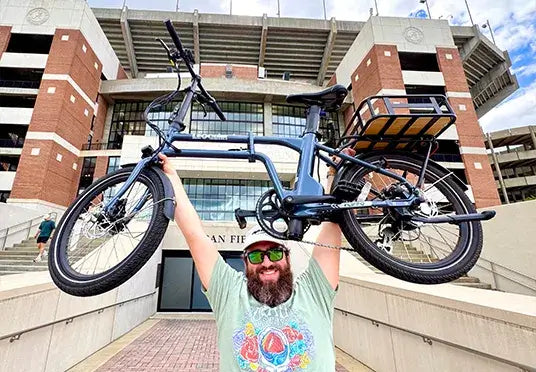
Test the weight in the store. If you can't comfortably lift the front end a foot off the ground, you may struggle with it at home.
Stopping Power is Essential
A heavier, faster bike requires more powerful brakes. This is a non-negotiable safety feature. Mechanical disc brakes are adequate, but we strongly recommend hydraulic disc brakes. They offer much better stopping power, better control, and require less hand strength, which is important for long descents or emergency stops.
Service and Support
Finally, consider where you'll get your bike serviced. Buying from a local bike shop provides valuable in-person support, professional assembly, and a go-to place for maintenance and repairs.
Direct-to-consumer brands often offer better value on paper, but you may be responsible for final assembly and finding a shop willing to work on a brand they don't sell can sometimes be a headache. Ask yourself if you're prepared to handle basic maintenance or if the peace of mind of a local shop is worth the extra cost.
FAQ
Q: What's the difference between pedal assist electric bicycles and regular e-bikes?
A: "Pedal assist electric bicycles" is just another term for e-bikes with pedal assist systems. These bikes only provide motor assistance when you're actively pedaling, unlike throttle-only e-bikes that can move without pedaling. Most quality e-bikes today use pedal assist as their primary or only mode of operation.
Q: How important is the torque sensor compared to other features?
A: The torque sensor is one of the most important features for ride quality. It makes the difference between a jerky, unnatural ride and a smooth, intuitive experience. If you plan to ride regularly or in varied terrain, a torque sensor is worth prioritizing over higher wattage or other specs.
Q: Can I ride a Class 3 e-bike on bike paths?
A: It depends on your local laws. Many bike paths and trails restrict or ban Class 3 e-bikes because of their higher speeds (up to 28 mph). Always check local regulations before purchasing, especially if you plan to use bike paths regularly.
Q: What class of electric assist bicycle is best for most riders?
A: For most people, a Class 1 or Class 2 electric assist bicycle is the most practical choice. Class 1 is a great fit if you want a natural pedal-assist feel and the widest access to bike paths and multi-use trails. Class 2 can make sense if you want the option of a throttle for stop-and-go traffic or occasional breaks. Class 3 is best for riders with faster commutes, but it is not automatically the best choice if local access rules are more restrictive.
Q: How much should I expect to spend on the best electric assist bicycles?
A: Quality electric assist bicycles typically start around $1,500-$2,000 for good entry-level models with torque sensors and reliable components. Premium models with mid-drive motors and high-end components can range from $3,000-$6,000 or more. Consider it an investment in transportation and recreation.
Q: What's the real-world battery range I can expect?
A: Expect about 50-70% of the manufacturer's claimed range under normal conditions. For example, if a bike claims 60 miles of range, plan for 30-40 miles in real-world use with moderate assist levels, some hills, and typical rider weight. Factors like terrain, assist level, rider weight, and weather significantly impact actual range.
Q: Are the best electric assist bicycles always the fastest ones?
A: No. For most riders, the best electric assist bicycles are the ones that match their daily use, local terrain, and comfort needs. A bike with smooth assist, good brakes, realistic range, and a manageable weight is often a better choice than a faster model that feels harsh or hard to live with.


Leave a comment