

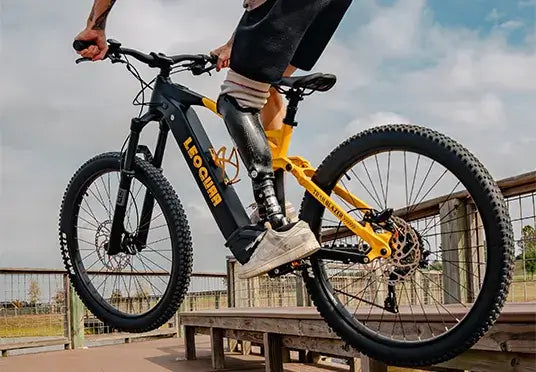


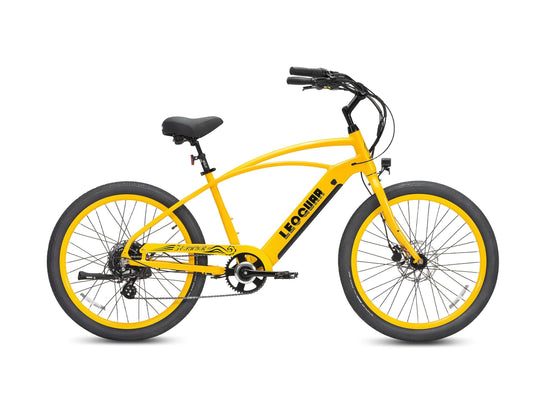


How To Make Your Electric Bike Street Legal: Must‑Have Features
Are Electric Bikes Street Legal?
Yes, electric bikes are street legal. They must meet specific rules to be legal. We know that e-bike laws can feel like a confusing mix of city, state, and federal rules that create problems for both new and experienced riders. It's frustrating to be unsure if your bike is legal. This guide will cut through that confusion and give you clear answers. We will provide a simple checklist of the features that make an electric street bike legal in the United States, so you can ride with confidence and peace of mind.
Understanding E-Bike Classes
To understand if an electric bike is street legal, we first need to look at the legal rules that control them. This system is the foundation for nearly all e-bike laws in the country.
The Federal Approach
To separate electric bikes from more powerful vehicles like mopeds and motorcycles, federal law created a three-class system. This is the foundation of e-bike rules. The key federal rules define an e-bike as a two- or three-wheeled vehicle with working pedals, an electric motor of less than 750W (1 horsepower), and a maximum assisted speed of 28 mph.
This framework has been a game-changer, and today, over 35 states have adopted a version of this system to provide clear guidelines for riders, manufacturers, and law enforcement.
The 3 Classes Explained
An e-bike's class is important because it determines where you can ride and the specific rules you must follow. A manufacturer must put a label on the bike that clearly states its class. Understanding these categories is the first step to making sure you are riding legally.
| Feature | Class 1 | Class 2 | Class 3 |
|---|---|---|---|
| Motor Assistance | Pedal-assist only. The motor engages only when you pedal. | Pedal-assist and throttle. The motor can be engaged by pedaling or by a throttle. | Pedal-assist only. The motor engages only when you pedal. |
| Top Assisted Speed | 20 mph | 20 mph | 28 mph |
| Throttle? | No | Yes | No |
| Common Use Case | Bike paths, bike lanes, city streets. Widest range of access. | Commuting, recreational riding. Great for areas with stop-and-go traffic. | On-road commuting, road cycling. Often restricted from multi-use paths. |
It's important to remember what an e-bike is not. If a vehicle has a motor more powerful than 750W or lacks working pedals, it is not legally an electric bike.
Instead, it falls into the category of an e-moto or moped. As PeopleForBikes explains, an electric bike is a clearly defined vehicle type, and vehicles outside this definition are subject to different rules, including registration, licensing, and insurance requirements.
The Essential Checklist
Now that we've covered the legal framework, let's look at the physical parts and specifications. We've created a simple checklist you can use to check any electric street bike to make sure it meets the core requirements for being legal.
1. A Legal Motor
The heart of an e-bike's legal status is its motor. Under federal law, the motor on an electric bike cannot exceed a power output of 750 watts. It is important to understand that this refers to the motor's continuous power rating or normal power. Many motors can produce higher peak power for short bursts, like when speeding up or climbing a hill, and this is generally okay. However, any electric bike sold with a motor rated for more than 750W of continuous power is not legally classified as an e-bike and is instead considered a motor vehicle.
2. A Speed Limiter
A street legal electric bike must be programmed to stop providing motor help once it reaches a certain speed. This is a required safety and legal feature. For Class 1 and Class 2 e-bikes, the motor must cut off at 20 mph. For Class 3 e-bikes, the motor must stop helping at 28 mph. You can pedal the bike faster than these speeds using your own power, but the motor cannot help you beyond these limits. This speed cap is what mainly separates e-bikes from mopeds in the eyes of the law.
3. Working Pedals
This point may seem obvious, but it is one of the most important distinctions. To be an electric bicycle, it must have the ability to be powered by human power through working pedals. If a two-wheeled electric vehicle does not have pedals, it cannot be classified as an e-bike. It automatically becomes a moped, scooter, or electric motorcycle, which falls under a completely different and stricter set of rules requiring a license, registration, and insurance.
4. Manufacturer's Label
Good manufacturers are required to attach a permanent label to the frame of any e-bike they sell. This sticker is your proof of compliance. It must clearly state the bike's Class (1, 2, or 3), its top assisted speed, and its motor wattage. This label is not just for show; it is an official statement to consumers and law enforcement that the bike was made to meet all federal and state requirements for its class. When shopping for an electric street bike, the absence of this label is a big red flag.
5. A Working Speedometer
While a speedometer is not always explicitly listed as a required part in federal law, it is a practical necessity for legal riding. To comply with the speed limits of your bike's class and local traffic laws, you must be able to monitor your speed accurately. Most modern e-bikes come with an integrated digital display that shows your speed, battery level, and assist level. We consider this an essential feature for any rider who wants to operate their electric street bike safely and responsibly on public roads.
Rider Compliance and Laws
Owning a legally compliant electric street bike is only half the equation. As the rider, you also have a responsibility to operate it according to local laws. These rules can change from state to state, and even city to city, so it's vital to know the specific rules in your area.
Age Restrictions
Not everyone is legally allowed to ride every class of e-bike. While many states have no minimum age for Class 1 and Class 2 e-bikes, the rules often change for Class 3 models. Due to their higher top assisted speed of 28 mph, many areas, including California, require riders to be at least 16 years old to operate a Class 3 e-bike. Before you or a family member hops on, we strongly advise you to check your state and local transportation department websites for any age-related restrictions.
Helmet Laws
Helmet rules for electric bikes are different across the country. Some states require helmets for all e-bike riders, regardless of age or class. Others only require them for riders of Class 3 e-bikes. A more common approach is an age-based requirement, where helmets are required for any rider under a certain age, typically 18.
Regardless of the law, we consider wearing a properly-fitted helmet to be the single most important safety measure you can take. Your brain is irreplaceable, and a certified helmet is a small price to pay for protection.
Path and Road Access
"Where can I ride my electric bike?" is one of the most common questions we hear. The answer depends almost entirely on your bike's class.
- Class 1 and Class 2 e-bikes are generally allowed on any infrastructure where traditional bikes are allowed. This includes streets, bike lanes, and multi-use paths shared with pedestrians and other cyclists.
- Class 3 e-bikes face more restrictions. Because of their higher speed capabilities, they are often banned from multi-use paths and trails to prevent conflicts with slower-moving users.
They are typically restricted to on-street infrastructure like bike lanes and public roadways. Furthermore, rules for riding on federal lands can be unique. The National Park Service, for instance, has a policy that allows park superintendents to determine where e-bikes are permitted, and access varies from park to park. Always look for local signage and check the website of the park or municipality you plan to visit before you ride.
The "Off-Road Mode" Area
Many powerful electric street bikes are marketed with an "off-road mode" or "unlocked" setting that allows them to exceed the legal speed and power limits of their class. It is crucial to understand the legal implications of using this feature.
The moment you modify your e-bike, or switch it into a mode that allows it to go faster than 28 mph or use a motor more powerful than 750W on a public road, it is no longer a street legal electric bike. Legally, you are now operating an unlicensed and unregistered motor vehicle. This carries significant risks. You could face hefty fines, have your bike taken away, and, most importantly, be held personally liable in an accident without the protection of insurance.
These high-power modes are intended strictly for use on private property with the owner's permission. If you choose to ride a bike with these capabilities, it is your responsibility to keep it within its legal class settings whenever you are on public roads, paths, or trails.

Conclusion
Navigating the world of electric street bikes doesn't have to be complicated. By focusing on the basic principles, you can ensure every ride is a legal one. The key pillars are the class system, the 750W motor limit, the presence of working pedals, and the speed caps that define each class. If a bike meets these hardware requirements and has a manufacturer's compliance label, you're on the right track.
Just as important, however, is your own compliance as a rider. Always check local laws regarding age, helmets, and where each class of e-bike is permitted to operate. By understanding both your bike and your responsibilities, we can all contribute to a safer and more enjoyable environment for everyone on the road. Now you have the knowledge to choose the right bike and ride it with confidence.
Frequently Asked Questions
Q: Can I ride my electric bike on sidewalks?
A: This depends on your local laws. Most cities prohibit bikes, including electric bikes, on sidewalks in business districts. Check your local regulations before riding on sidewalks.
Q: Do I need a license to ride an electric bike?
A: No, you do not need a license to ride a legal electric bike in most states. However, some states require riders to be at least 16 years old for Class 3 e-bikes.
Q: What happens if my electric bike doesn't have the required manufacturer's label?
A: Without the proper label, law enforcement cannot verify that your bike meets legal requirements. This could result in fines or having your bike confiscated. Always buy from reputable manufacturers who include proper labeling.
Q: Can I modify my electric bike to go faster than the legal limits?
A: While you can modify your bike, using it on public roads with modifications that exceed legal limits makes it an unlicensed motor vehicle. This can result in fines, confiscation, and liability issues.
Q: Are electric bikes allowed in national parks?
A: E-bike access in national parks varies by location. Each park superintendent determines where e-bikes are permitted. Always check the specific park's website and look for posted signs before riding.


Leave a comment