




Electric Folding Cycles: Are They As Good As Non‑Foldable Ebikes?
The Rise of Electric Bikes
Electric bikes have changed how we move around. Within this change, buyers face a key choice: should I pick a compact, portable electric folding cycle, or a traditional, full-size e-bike? The idea of a bike that fits in a car trunk or closet sounds great. But people worry about giving up power, comfort, and lasting quality.
We have a direct answer for you. It depends on what you need, but for many riders today, the answer is yes-a modern electric folding cycle works just as well as a non-folding bike. The key is to stop asking which is "better" and start asking which is "better for you." This guide will cut through the marketing noise to give you expert insights. We will compare them head-to-head on performance, look at real-world situations where each type works best, and give you a clear checklist of what to look for when you buy.
Portability vs. Performance
To understand the choice, we first need to see the basic trade-offs. Each design focuses on a different part of the user experience. Here's a quick look at the main strengths of each.
Folding E-Bike Advantages
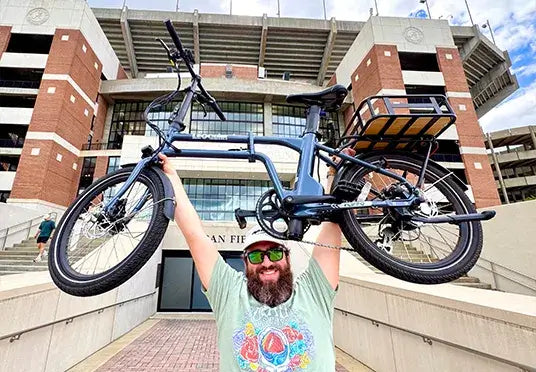
The ability to fold makes these bikes special. You can fold the bike in seconds, making it possible to take on trains, put in a car trunk, or carry up stairs. For people in apartments, office workers, or anyone without a garage, a folding e-bike solves storage problems. It can be tucked away in a closet or under a desk, safe from theft and weather. They are the best tool for the "last mile" problem. You can drive or take a train part of the way and bike the rest, creating a smooth and efficient trip.
Non-Folding E-Bike Advantages
Larger frames and wheels (usually 26 inches and up) give a more stable, comfortable ride over long distances and rough surfaces. They absorb bumps better than smaller wheels. While the gap is closing, the most powerful motors and biggest batteries are often found on specialized, non-folding frames built for extreme performance. The non-folding market offers many purpose-built bikes, from tough electric mountain bikes and heavy-duty cargo haulers to sleek road e-bikes.
A Head-to-Head Battle
Let's move beyond general ideas and put these two types of e-bikes in a direct feature-by-feature comparison. The technology behind electric folding cycles has improved a lot, closing performance gaps that existed just a few years ago.
| Feature | Folding Electric Cycle | Non-Foldable E-bike | The Verdict |
|---|---|---|---|
| Ride Comfort | Smaller wheels (16-20") are agile but can be harsher. Many use suspension to compensate. | Larger wheels (26-29") offer a smoother ride over bumps and better stability at speed. | Non-Foldable wins for pure comfort, but modern folders are surprisingly smooth. |
| Power & Hill Climbing | Typically uses compact hub motors (500W+ is common) that are powerful for urban hills. | Often uses mid-drive motors for superior torque, balance, and climbing efficiency. | Non-Foldable (with mid-drive) has the edge on steep, long climbs. Folders are more than enough for most city use. |
| Battery Range | Often slightly smaller batteries to save weight, but 40-60 mile ranges are now standard. | Can accommodate larger, heavier batteries, sometimes offering ranges of 80+ miles. | Non-Foldable has a higher potential ceiling for range, but the average folder's range is sufficient for most riders. |
| Frame Durability | High-quality hinges from reputable brands are engineered for thousands of folds and are extremely robust. | A single, solid frame has fewer potential points of mechanical failure by design. | A Tie. A well-made folder is as durable for its intended use as a well-made standard bike. Quality is key. |
| Weight & Portability | Designed for portability, but the motor and battery add weight. Typically 40-70 lbs (18-32 kg). | Generally heavier (50-80+ lbs) and not designed to be carried. Requires a vehicle rack for transport. | Folding is the clear winner. Even a heavy folder is vastly more portable than a non-folder. |
| Price Range | Wide range, from $800 to $4,000+. The folding mechanism adds some cost. | Extremely wide range, from $600 to $10,000+. More options at the very low and very high ends. | A Tie. Quality models in both categories overlap significantly in price. |
Ride Quality and Comfort
The biggest difference comes from the wheels. The smaller 16-inch or 20-inch wheels on most electric folding cycles make them very nimble and quick to speed up. This is a major advantage in stop-and-go city traffic. The trade-off is that they can feel rougher over potholes and cracks compared to the large 26-inch or 27.5-inch wheels on a standard e-bike, which roll over bumps more smoothly. However, many premium folders now fix this by including front suspension forks, suspension seat posts, and wider "fat" tires that provide excellent cushioning. You can learn more about the handling characteristics of different wheel sizes to see how this impacts the ride.
Power and Performance
A common myth is that folding e-bikes lack power. This is no longer true. Most quality folders today come with 500W or even 750W hub motors, delivering more than enough power to handle urban hills and get you up to speed quickly. While high-end non-folding e-bikes often use advanced mid-drive motors that provide better weight balance and better torque for extreme off-road climbing, a modern hub motor on a folder is a powerful and reliable workhorse for 95% of riders.
Battery and Real-World Range
Range worry is a real concern for any e-bike buyer. To keep weight down, some entry-level folders may have smaller batteries. However, most mid-range and premium models now offer batteries that deliver 40, 50, or even 60+ miles of real-world range on a single charge. This is similar to many standard commuter e-bikes. When you research, it's important to know what to consider with motors and batteries, as how they work together defines your bike's performance and range.
Durability and Maintenance
"Is the hinge a weak point?" This is the number one durability question we hear. On a cheap, no-name bike, it can be. But on any model from a good manufacturer, the folding mechanism is a feat of engineering. These hinges are made from strong alloys and are designed to handle thousands of folding cycles without any looseness or weakness developing. Furthermore, the essential e-bike parts—the motor, battery cells, brakes, and gears—are often the exact same parts from trusted brands like Bafang, Shimano, and Tektro that are used on non-folding bikes. Good insights on folding bike frame materials and build quality show that a well-engineered frame is key, regardless of whether it folds.
Beyond the Specs: Who Are They For?
Technical specs only tell half the story. The best way to choose is to match the bike's strengths to your actual lifestyle. Let's look at a few common rider profiles.
The Urban Apartment Commuter
This is Sarah. She lives in a third-floor walk-up apartment and commutes six miles to her office in a busy downtown core. She sometimes takes the subway to skip the worst traffic. For Sarah, a folding electric cycle is not just a good option; it's life-changing. The daily struggle of wrestling a 65lb full-size e-bike into a small elevator or, worse, leaving it locked outside where it might be stolen, is replaced by the ease of carrying a 45lb folder up the stairs and tucking it safely under her desk. Its nimbleness is perfect for dense traffic, and the ability to take it on the train makes her commute truly multi-modal.
The RV or Boating Fan
Meet Mark and Susan. They spend their weekends and holidays exploring the country in their RV. They want to explore new towns, ride down to the lake, and make quick trips to the local grocery store without having to unhitch their vehicle. Trying to mount two heavy, full-size e-bikes onto a rack is hard work. A pair of electric folding cycles is the perfect solution. They fit easily into an external storage bay or even the trunk of a tow car, protected from weather and ready to use in minutes upon arrival at a new destination.
The Suburban Fun Rider
This is David. He lives in a house with a two-car garage and plenty of storage. His main use for an e-bike is for long, easy rides on weekends along paved bike paths and light gravel trails. He values maximum comfort and a stable, planted feel over long distances. For David, a non-folding hybrid or cruiser e-bike is likely the better choice. Since portability and compact storage are not priorities, he can benefit from the larger wheels, more relaxed frame geometry, and potentially larger battery that a full-size frame allows, making his experience better for pure ride enjoyment. There are a variety of use cases for folding e-bikes, but this is one situation where a standard bike often shines.
What to Look for in a Quality Folder
If you're leaning towards the convenience of an electric folding cycle, here are the key factors to check to ensure you get a quality machine. The folding mechanism is crucial - not all folds are equal. Look for a mechanism with strong, secure latches that are easy to use. A good bike should fold or unfold in under 30 seconds. Test it if you can to make sure it feels solid with no creaks or flex.
Be realistic about what you can carry when it comes to total weight. Most quality folding e-bikes weigh between 40-70 lbs (18-32 kg). If you need to carry it up several flights of stairs daily, every pound matters. Check the spec sheet and compare it to your needs. Look past the frame and check the parts for component quality. The presence of name-brand parts like Shimano gears, Tektro brakes, and Bafang or Bosch motors is a strong sign of overall build quality and reliability.
A manufacturer's warranty is a statement of confidence in their product. Look for a strong warranty, especially on the frame, motor, and battery (the most expensive parts). It's also wise to check for a responsive customer support team by checking real-world owner experiences on community forums.

The Final Verdict
So, should your next e-bike be a folder? The era of viewing electric folding cycles as a niche product with major performance problems is over. Modern engineering has produced machines that are powerful, durable, and a joy to ride.
The decision comes down to a simple look at your life. If your daily routine involves limited storage space, multi-modal travel like trains or buses, or the need to frequently transport your bike in a vehicle, a folding e-bike isn't just as good—it's much better. The convenience it provides is a performance feature in itself.
If, however, you have plenty of storage and your riding consists mainly of long-distance fun journeys where comfort is the absolute top priority, a traditional non-folding e-bike may still be the more tailored choice. Look at your space, your commute, and your priorities, and the right answer will become clear.
Frequently Asked Questions
Are folding electric bikes as durable as regular e-bikes?
Yes, quality folding electric bikes from reputable manufacturers are just as durable as regular e-bikes. The hinges are engineered to withstand thousands of folds, and they use the same trusted components like Shimano gears and Bafang motors that you'll find on non-folding bikes.
How much do folding electric bikes typically weigh?
Most quality folding e-bikes weigh between 40-70 pounds (18-32 kg). While this is still substantial due to the motor and battery, it's much more manageable than the 50-80+ pounds of a standard e-bike when you need to carry or transport it.
What's the typical range of a folding electric bike?
Modern folding electric bikes typically offer 40-60 miles of real-world range on a single charge. This is comparable to many standard commuter e-bikes and sufficient for most daily riding needs.
Can folding electric bikes handle hills as well as regular e-bikes?
Yes, most quality folding electric cycles come with 500W or 750W hub motors that provide plenty of power for urban hills and quick acceleration. While some high-end non-folding bikes with mid-drive motors may have an edge on extremely steep, long climbs, folders handle 95% of real-world hill climbing situations just fine.
How long does it take to fold and unfold an electric folding bike?
A well-designed folding electric bike should fold or unfold in under 30 seconds. The best models can be folded in 10-15 seconds with practice, making them very practical for daily use in situations where you need to quickly transition between riding and carrying.


Leave a comment