




E-Bike Torque vs Watts: What’s the Difference?
When you shop for an electric bike, the spec sheet can feel overwhelming. You see terms like watts and torque, but what do they mean for your ride? The ebike torque vs watts debate confuses many riders who wonder if they need high torque for hills or high watts for speed. This guide makes it simple. We'll explain torque and watts in easy terms, helping you understand how the torque vs watts ebike numbers affect real-world riding, hill climbing, and speed.
Quick Answer: Pull vs Sustain
Think of it this way: torque gets you going, and watts keep you going. They are two sides of the same power coin, but they feel very different on the bike.
Torque is your PULLING power. This is the immediate grunt or twisting force you feel from a standstill. It's what gets you moving when a traffic light turns green and what pulls you up a steep hill without strain. High torque is about raw, initial strength.
Watts are your SUSTAINING power. This is the rate at which the motor delivers energy over time. It's the horsepower that helps you maintain high speed on flat roads or fight headwinds. High wattage is about endurance and keeping momentum.

Watts vs Newton-meters
To get more technical, torque is the shove that gets you moving, while watts are the endurance that keeps you going. Both are critical parts of an e-bike motor's performance, measured in different units and responsible for different aspects of your ride.
Torque is measured in Newton-meters (Nm). It is a measurement of rotational force. In an e-bike, it controls how well the motor can turn the wheel, especially under load. This is why it's the key measurement for acceleration and climbing.
Watts (W) measure power, which is the rate of energy transfer. Power is basically torque multiplied by rotational speed (RPM). This is why watts are more important for your bike's ability to hold high speed. You can learn more about the science behind how e-bike motors work to understand this relationship better.
Here's a simple breakdown:
| Feature | Torque (measured in Nm) | Watts (measured in W) |
|---|---|---|
| What it feels like | The initial "kick" or "grunt" when you accelerate. | The ability to hold a high speed on a flat road. |
| Primary Use Case | Starting from a standstill, climbing steep hills, hauling cargo. | Commuting at speed, maintaining momentum against wind. |
| Analogy | The strength of a powerlifter doing one heavy lift. | The endurance of a marathon runner maintaining a steady pace. |
What Is E-Bike Torque?
Torque is the most important factor for how powerful an e-bike feels from a dead stop. Measured in Newton-meters (Nm), it is the pure twisting force the motor applies to the wheel. This force is most critical at low speeds or when you're trying to overcome inertia, like starting on a hill. A bike with high torque will feel responsive and strong right when you push the pedals.

Here's where torque makes the biggest difference:
Better Acceleration from a Standstill: High torque delivers that satisfying surge of power that gets you up to speed quickly. In stop-and-go city traffic, this means you can get ahead of cars safely and efficiently. An e-bike with 85 Nm of torque will launch from a stoplight much faster than one with 50 Nm, even if both have the same 500W motor.
Easier Hill Climbs: This is where torque is king. It's the force that directly counters gravity. More torque means the motor can take on more of the workload, allowing you to climb steep grades without having to stand up on the pedals and strain. For anyone living in a hilly area, prioritizing a high Nm rating is essential.
Greater Hauling Capacity: If you are a heavier rider or plan to carry cargo—like groceries, a child seat, or delivery packages—torque is essential. It provides the low-end grunt needed to get a heavy load moving from zero. A low-torque motor will struggle and strain under weight, reducing speed and draining the battery quickly.

What Are E-Bike Watts?
While torque is about the initial shove, watts (W) are about how much power the motor can sustain over time. Watts define the motor's overall work capacity and directly relate to its ability to maintain speed. However, not all watt ratings are created equal, and this is where many buyers get confused. It's crucial to understand the difference between a motor's peak power and its continuous power.
Continuous vs Peak Watts
When you see a motor advertised as 750W, you need to ask whether that's its continuous or peak rating.
Continuous Watts (also called Nominal Watts) represent the maximum power the motor can consistently produce for an extended period without overheating. Think of this as your comfortable, all-day jogging pace. This is the most honest and reliable number for judging an e-bike's true cruising capability. Most e-bikes in the US have a continuous rating between 250W and 750W.
Peak Watts represent the maximum power the motor can output in short bursts, typically for a few seconds. This is your all-out sprint to get up a short, steep ramp or to accelerate quickly. While a high peak watt number is nice for these moments, it's not a power level the motor can hold. Some manufacturers prominently advertise a high peak watt number (e.g., 1200W) while the more important continuous rating is much lower (e.g., 750W).
For a realistic assessment of an e-bike's power, always look for the continuous watt rating. It's a much better indicator of real-world performance.

Torque vs Watts: Your Needs
So, in the matchup of ebike torque vs watts, which one should you prioritize? The answer depends entirely on how and where you ride. Don't fall for the bigger number is better trap. Instead, match the specs to your needs.
Hills or Heavy Loads
If your daily route involves steep hills, if you are a heavier rider (over 220 lbs / 100 kg), or if you plan on hauling cargo, prioritize torque (Nm) above all else.
We've tested bikes with high watts but low torque (e.g., a 750W hub motor with 50 Nm) on steep city hills, and they can struggle to get going from a stop. The motor whirs but lacks the grunt to overcome the incline. In contrast, a bike with moderate watts but high torque (e.g., a 500W mid-drive motor with 85 Nm) will feel like a goat, confidently climbing the same hill. For serious hill climbing, look for a motor with at least 80 Nm of torque.

Fast Commuting on Flats
If your main goal is a fast commute on relatively flat roads, then continuous watts (and gearing) matter more.
Once you're up to cruising speed, torque becomes less of a factor. Your challenge is no longer getting started; it's maintaining momentum against air resistance. A motor with a higher continuous watt rating (e.g., 500W or 750W) will be better at holding a high speed (like 20-28 mph) for your entire commute without feeling strained. Here, a bike's gearing also plays a huge role in helping you and the motor stay in an efficient power band.
Trails and City Riding
For mixed-terrain trail riding or dynamic, stop-and-go city riding, you need a balance of responsive torque and sufficient watts.
On technical mountain bike trails, you need instant torque to pop over roots and rocks from low speed. In the city, that same responsive torque is what helps you dart away from traffic lights. In these scenarios, it's not just about the peak numbers, but also how the power is delivered. A motor paired with a well-tuned controller and a torque sensor will provide smooth, intuitive power that feels like a natural extension of your own pedaling, which is far superior to a jerky, all-or-nothing system.
The Hidden Piece: Controller & Gearing
The motor's torque and watt ratings are only part of the story. Two other components have a massive impact on how an e-bike feels: the controller and the gearing.
The controller is the brain of the e-bike. It dictates how much electrical current (measured in amps) flows from the battery to the motor. A motor's potential torque can be limited by a low-amperage controller. For example, upgrading an electric bike controller from 15 amps to 25 amps can significantly increase the felt torque and acceleration, even with the same motor.
Gearing is a torque multiplier, especially on mid-drive motors. Because a mid-drive motor powers the crankset, it takes advantage of the bike's existing gears. Shifting to a lower gear on a hill is like giving the motor a lever, multiplying its torque to make climbing feel effortless. Hub motors, which are located in the wheel, do not benefit from the bike's gears in the same way.
Quick Reading Guidelines
When looking at a spec sheet, don't get overwhelmed. Follow these simple rules to assess an e-bike's power system:
- Check Torque (Nm) First: For climbing and hauling, 80+ Nm is excellent, 60-70 Nm is good for moderate hills, and 50 Nm or less is best for flat terrain.
- Verify Continuous Watts: Look for the nominal or continuous watt rating, not just the peak. 500W-750W continuous is powerful for most US riders.
- Note the Battery Voltage: A higher battery voltage system (e.g., 48V or 52V) is generally more efficient at delivering power than a 36V system.
- Do the Math (Optional): You can estimate peak watts by multiplying the battery voltage (V) by the controller's max current (Amps). A 48V battery with a 20A controller can deliver up to 960 peak watts.

Common Myths to Avoid
The ebike torque vs watts conversation is full of myths. Let's bust a few.
Myth 1: More watts is always better. False. A well-engineered 500W motor with 90 Nm of torque and a smooth torque sensor will feel far more powerful on a hill than a poorly designed 750W motor with only 50 Nm of torque. The application of power (torque) often matters more than the raw power number itself.
Myth 2: High torque kills battery range. Not necessarily. Torque is the force available, not the force you're always using. On flat ground, a high-torque motor may use very little energy. Range is determined by how you ride. Constantly accelerating hard and climbing steep hills at max assist will drain any battery fast, but a high-torque motor used efficiently can have excellent range.
Myth 3: Big riders need a 1000W+ motor. Often, what they really need is high torque. A 750W motor with 100+ Nm of torque will be far more effective at getting a heavy rider up a hill than a 1000W motor with 70 Nm. Focus on the Nm rating for hauling capacity.
Conclusion
Torque gets you moving, while watts keep you moving. Understanding the difference between ebike torque vs watts helps you match the motor to your riding needs—high torque for hills, heavy loads, and quick starts, or higher continuous watts for maintaining speed on longer, flatter rides.
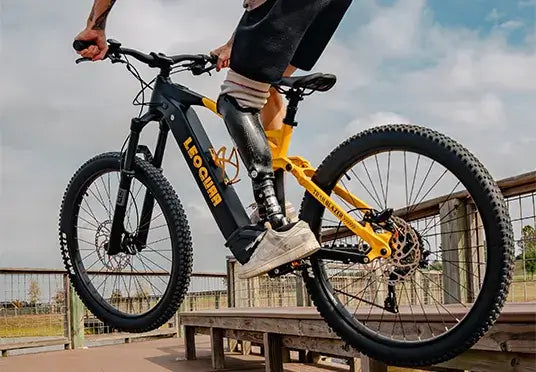
For riders who want both strong climbing ability and steady power, a balanced system makes the biggest difference. Bikes like the Trailblazer Mid-drive Motor EMTB, with a 500W mid-drive motor and 100 Nm of torque, show how the right mix of torque and watts can deliver responsive starts, confident hill climbing, and smooth power on real trails.
Frequently Asked Questions
Is it better to have more power or more torque?
It depends on your primary need. For climbing hills and starting from a stop, more torque is better. For maintaining high speeds on flat ground, more sustained power (watts) is better.
How much torque do I need for hills?
For gentle, rolling hills, 50-60 Nm is adequate. For moderate, sustained climbs, look for 60-80 Nm. For very steep hills or if you're a heavier rider, 80 Nm or more is highly recommended.
What's the difference between peak and continuous watts?
Continuous watts are the power a motor can sustain without overheating—this is its true, reliable power rating. Peak watts are a higher number the motor can only hit for a few seconds during intense acceleration or climbing.
Does a controller upgrade change torque?
Yes. The controller regulates the amperage sent to the motor. A higher-amperage controller allows the motor to draw more current, which can significantly increase its torque output and acceleration.
Which is more important for heavy riders: torque or watts?
Torque is typically more important for heavy riders. High torque provides the initial force needed to get moving from a stop and climb hills with extra weight. Look for motors with 80+ Nm of torque if you're over 220 lbs or plan to carry cargo regularly.


Leave a comment