




E-MTBs on Shared Trails: Access Rules, Class Limits, and Trail Etiquette
E MTBs shared trails are legal only when the land manager allows your bike class on that exact route, and trail manners matter as much as the sign. The short rule: check access first, ride Class 1 when in doubt, slow down around people, and treat every shared trail like access could be lost by one bad pass.
E-MTB Access Rules
E-MTBs are allowed on shared trails only when the land manager permits that class on that exact route. Class 1 pedal-assist bikes get the most access; Class 2 throttle bikes and Class 3 28 mph bikes face more limits. If the sign says non-motorized, don't assume an e-MTB is included.
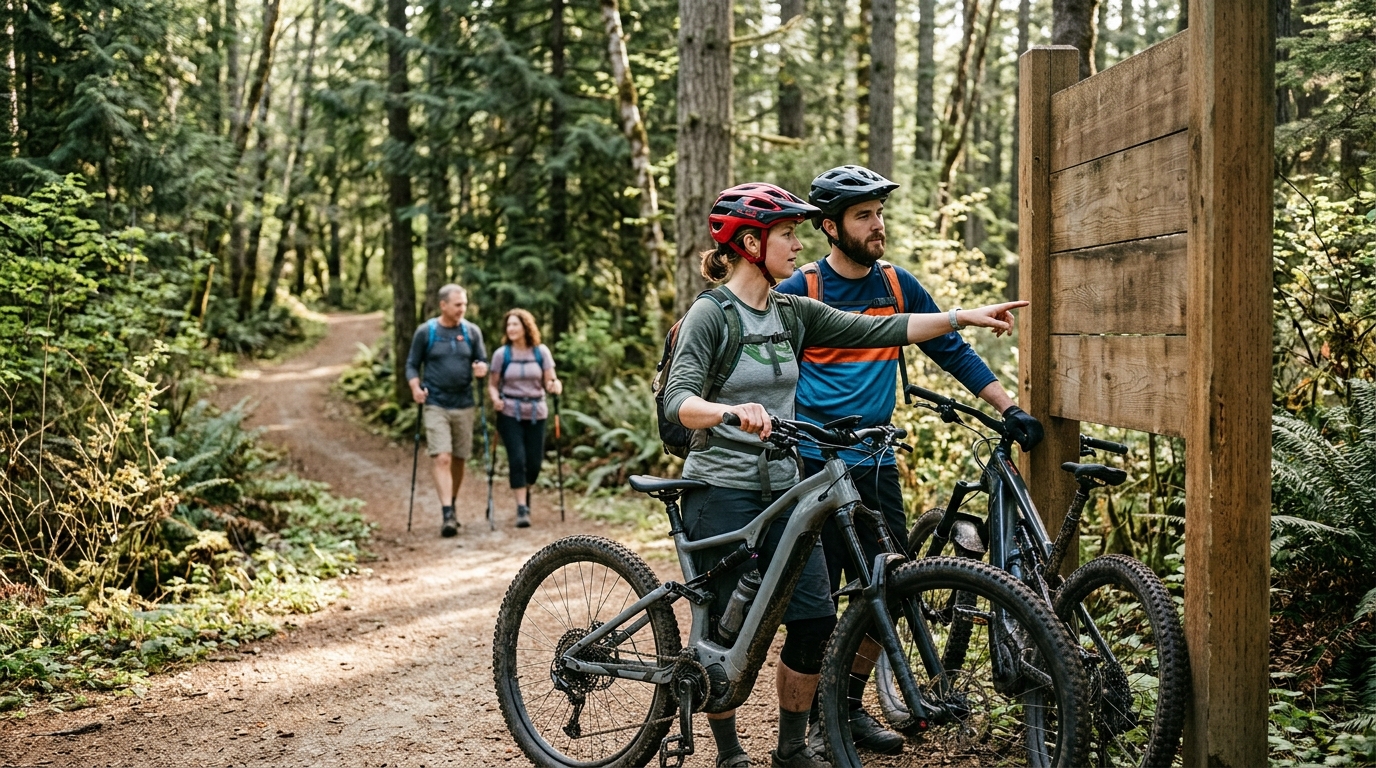
The confusion comes from overlapping rulebooks. A city trail, state park, national forest, bike park, and county open space can all sit within one weekend ride plan, and each may define e-bikes differently. The National Park Service e-bike rule, effective December 2, 2020, lets park superintendents allow e-bikes where traditional bikes are allowed, but it also lets them limit specific classes by road or trail.
National forests work differently. The U.S. Forest Service e-bike guidance says Class 1, 2, and 3 e-bikes are allowed on motorized trails and roads, while e-bike access on non-motorized trails needs a local designation process. So a singletrack trail marked "bikes allowed" may still be closed to e-MTBs unless the local forest has opened it.
| Trail manager | What to check | Practical e-MTB read |
|---|---|---|
| City or county park | Posted signs, trail map, local ordinance | Often Class 1 only, sometimes no e-bikes |
| State park | State e-bike law plus park rule | Access can change by trail surface |
| National park | Superintendent rules for that park | Bikes must be allowed first |
| National forest | Motorized vs non-motorized designation | Motorized routes are the safer assumption |
| Private bike park | Ticket rules and waiver language | Usually clearer, but speed rules still apply |
If the map is vague, call the land manager or local trail association. Social apps help with ride planning, but they aren't legal authority. A Trailforks comment from 2024 won't save your Saturday if the kiosk changed in 2026.
E-Bike Class Limits
The class label is your access passport. It doesn't guarantee entry, but without it you're guessing.
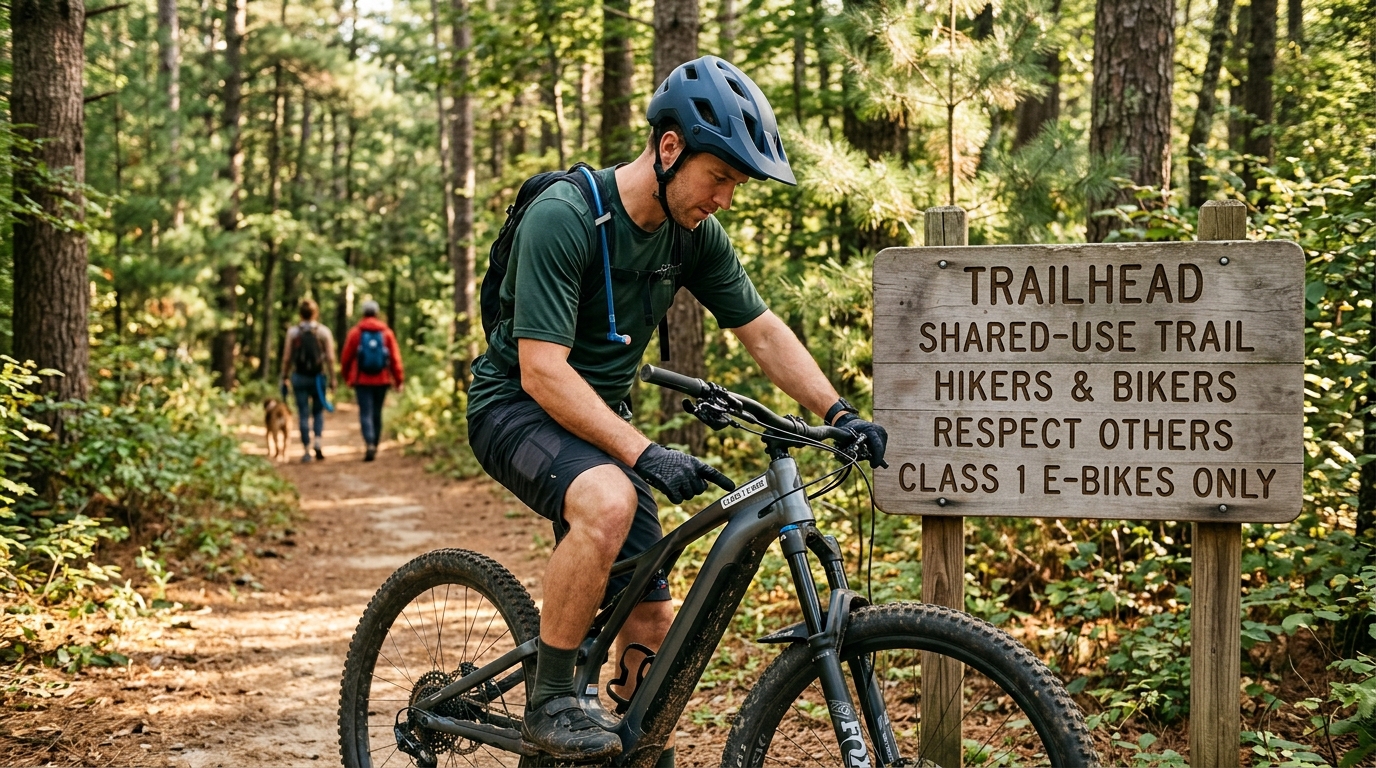
Class 1 is the cleanest choice for shared natural-surface trails because it only assists while you're pedaling and stops assisting at 20 mph. Class 2 adds throttle operation up to 20 mph, which is useful on pavement and starts, but it raises more concern on narrow singletrack. Class 3 assists up to 28 mph, and that extra speed is exactly why shared paths and dirt trails often exclude it.
| Class | Assist type | Max assisted speed | Shared trail reality |
|---|---|---|---|
| Class 1 | Pedal assist only | 20 mph | Most accepted e-MTB class |
| Class 2 | Throttle or pedal assist | 20 mph | Often limited on singletrack |
| Class 3 | Pedal assist | 28 mph | Better for roads, rarely ideal for dirt |
| Out-of-class | Higher speed or power | Varies | Treat like motorized equipment |
When you're comparing geometry, battery size, and motor feel across an Off-Road electric mountain bike lineup, check the class label before you picture the ride. A slack head angle and long range are great on legal backcountry loops. They don't override a local "no e-bikes" sign.
Here is the blunt recommendation: for shared mountain bike trails, Class 1 works better than Class 2 or Class 3. It gives you climb support without making other riders wonder whether you're on a small electric motorcycle. That perception matters. Access decisions are often made after public meetings where one land manager, two hikers, four mountain bikers, and a few bad stories can shape policy.
Shared Trail Etiquette
When riders ask about e MTBs shared trails, they usually want a yes-or-no answer. The better question is: "How do I ride so nobody has a reason to complain?"
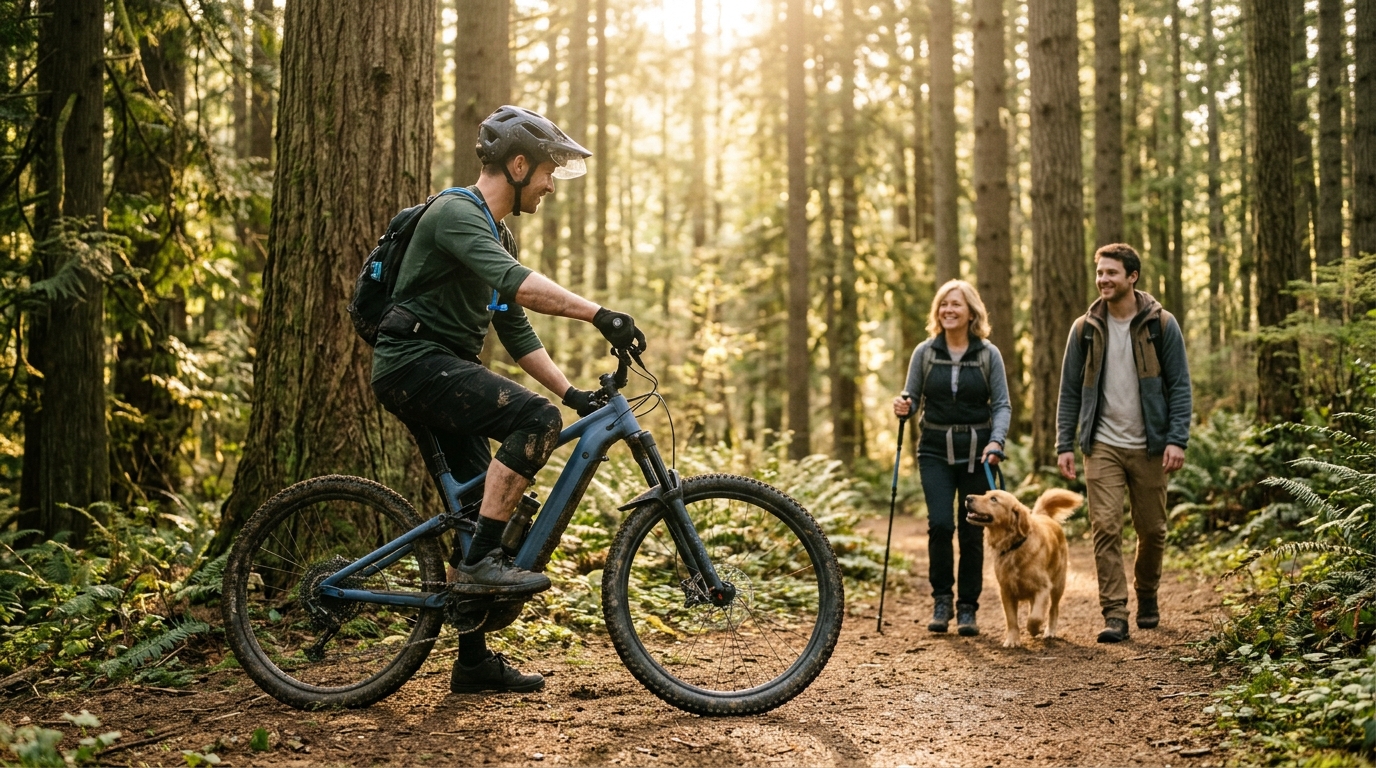
Start with speed. On a shared trail, 20 mph assist doesn't mean 20 mph riding. If you're passing hikers, horses, dogs, or a parent walking with a kid, your best assist mode is often "off" for five seconds. Coast. Say something early. Pass wide when the trail allows it. If it doesn't, wait.
A normal mountain bike already surprises people on blind corners. An e-MTB can close the gap faster uphill, which is where traditional riders don't expect to be caught. That's the friction point. You aren't doing anything wrong by climbing well, but if you buzz a rider who is grinding up a narrow switchback, they won't remember your class label. They'll remember the pass.
Use this field rule:
- Downhill riders yield when posted direction or local custom says so.
- Bikes yield to hikers and horses unless the trail is bike-only.
- Faster riders wait for a clear pass instead of forcing one.
- Uphill e-MTB riders announce early because closing speed feels strange from behind.
- Nobody rides muddy trails just because the motor makes it easier.
Horses deserve extra space. Stop, put one foot down, speak in a calm voice, and ask the rider what they prefer. Some horses want you to keep talking as you pass. Some riders will ask you to move to the downhill side. Do it. This is one of those moments where being technically right is worth less than being predictable.
Group rides need restraint too. Four e-MTBs climbing in Trail mode can feel like a small race train to everyone else. Keep the group small on crowded loops, leave gaps, and don't regroup in the middle of a trail junction.
Trail Checks Before Riding
The best access check happens before the bike is on the rack.
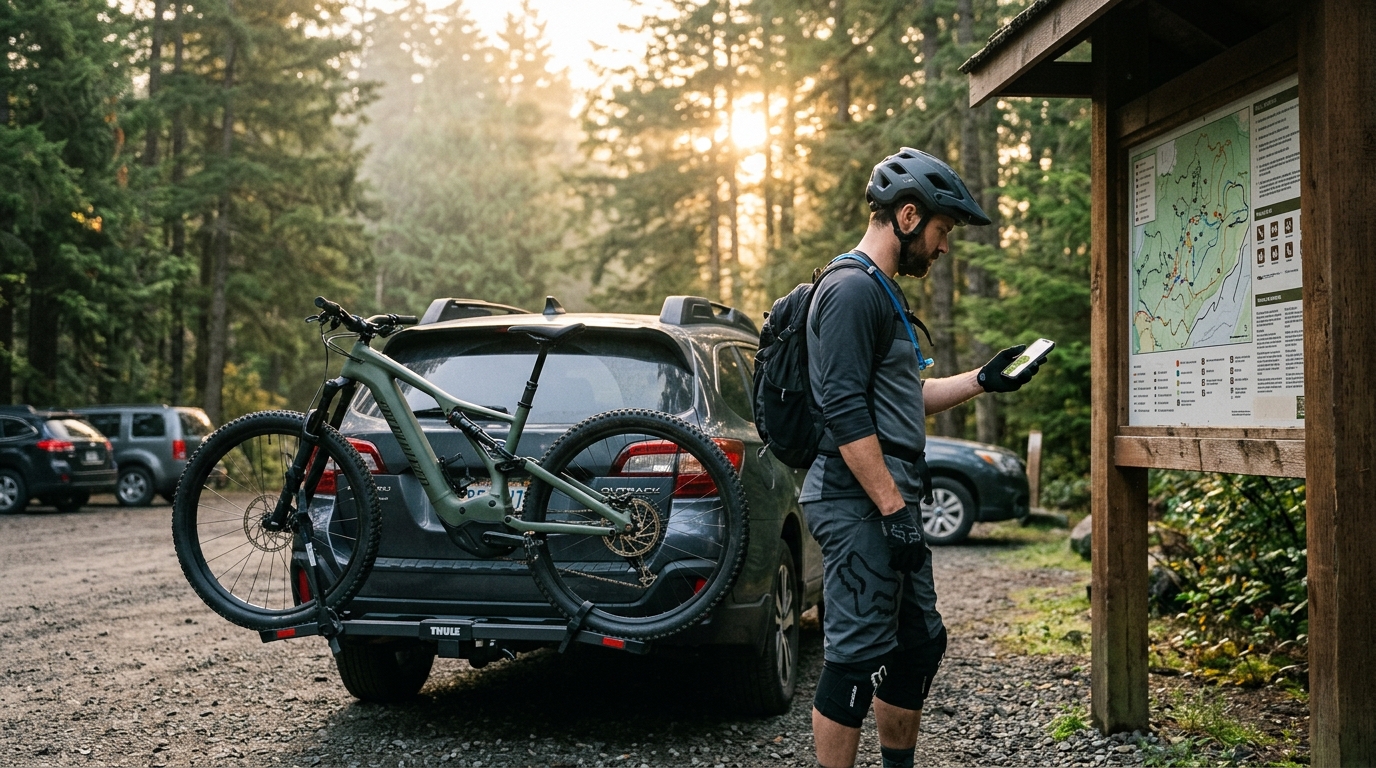
Look for four pieces of information: bike class, trail designation, current closures, and local etiquette notes. If any one of those is missing, slow the plan down. Pick a route with clear e-bike permission or ride a motorized trail system that welcomes e-MTBs. Guessing is how riders get yelled at in parking lots.
A clean pre-ride check takes two minutes:
- Open the official trail or park page.
- Search for "e-bike," "electric bicycle," "Class 1," and "motorized."
- Read the actual trail listing, not only the park homepage.
- Check seasonal closures, wet-weather rules, and direction-of-travel days.
- Screenshot the rule page if reception is poor.
This advice doesn't apply the same way at lift-served bike parks, private ranch trails, OHV systems, or races. Those places set their own rules, and some are built for higher speeds. Trailblazer winning first place at the 2025 E-Dirty Cross eMTB race shows what a performance e-MTB can do in competition; shared public trails are a different setting. Before riding Trailblazer or any higher-performance eMTB on natural-surface routes, confirm the local class and assist-speed rule instead of assuming race capability equals trail permission.
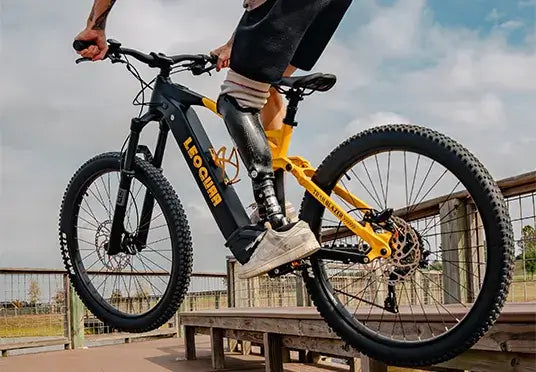
Battery range can also change your decision-making. A high-capacity eMTB such as Leoguar Trailblazer can pull you deeper into trail systems where signage becomes less obvious. Range is freedom, but it also puts more responsibility on route planning. Bring a map. Know the exit roads. Don't assume the far side of the loop has the same access rule as the trailhead.
E-MTB Setup Matters
Bike setup won't make a closed trail open, but it can make your ride calmer, safer, and less annoying to everyone around you.
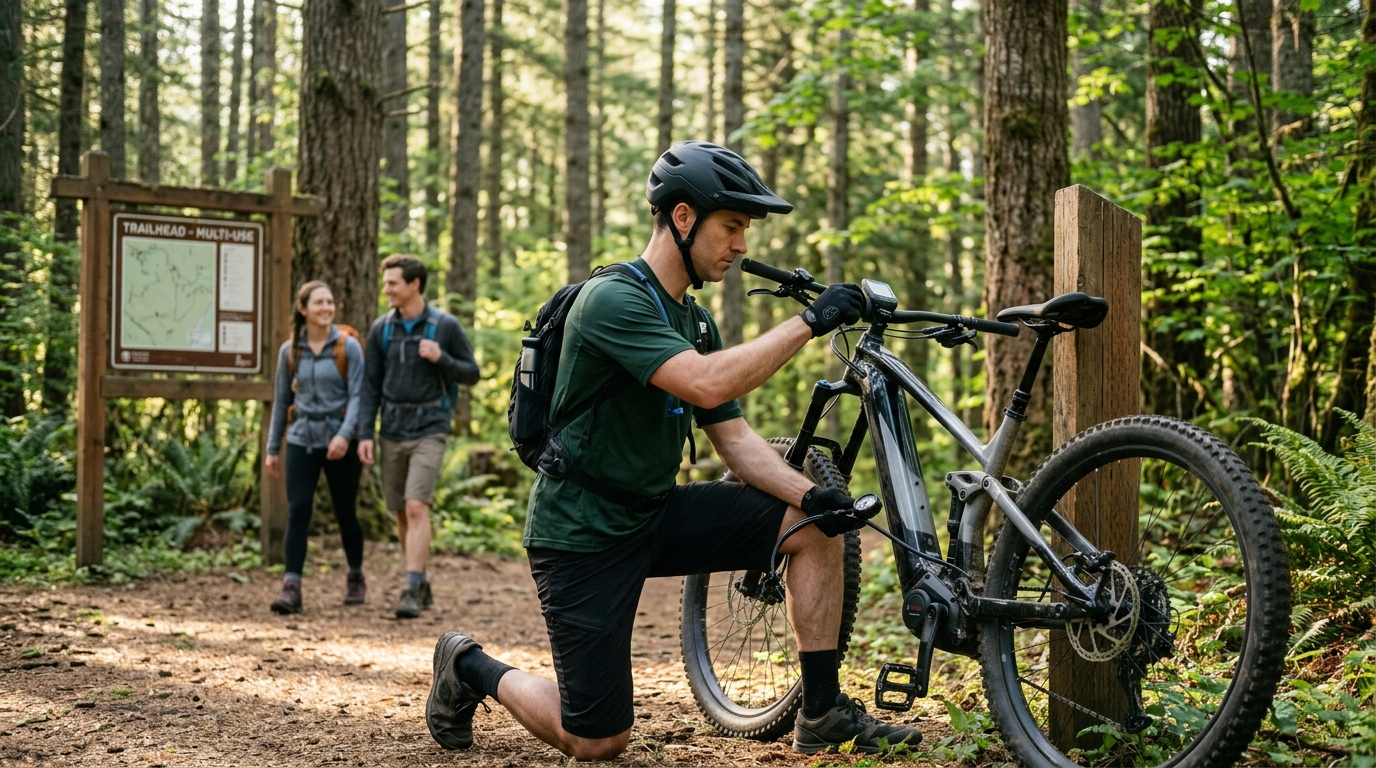
Use lower assist on crowded singletrack. Eco mode smooths your torque, reduces rear-wheel spin, and makes passing feel less jumpy. High assist has its place on steep legal climbs, fire roads, and long backcountry connectors. On tight shared trails, it can make your timing sloppy. The motor isn't the problem. Poor throttle or assist judgment is.
Mid-drive motors usually feel better for technical mountain biking because they keep weight centered and work through the drivetrain. Hub motors can be fine for city paths and simple dirt roads, but on rocky climbs a mid-drive eMTB gives more natural traction control. If you're comparing motor layouts, the best mid drive ebike guide is a better next read than a generic commuter-bike roundup.
Safety certification belongs in this conversation too, but it is separate from trail access. UL language should be checked on the current product page for the exact model and certification scope. A listed battery or electrical-system certification can matter when you charge in a garage, apartment, camper, or hotel room before a ride, but it is not a trail-permission shortcut and it does not override class limits.
If you're still shopping and want model context before choosing a class-compliant eMTB, our trail-tested eMTB rankings compare the bikes through the lens that matters off-road: control, climbing, braking, battery size, and how the bike behaves when the trail gets rough.
FAQ
Are e-MTBs legal on trails?
E-MTBs are legal only on trails where the land manager allows them. Class 1 e-MTBs get the broadest access, but every park, forest, and local trail system can set its own rule.
Which e-bike class is best?
Class 1 is best for shared mountain bike trails because it uses pedal assist only and stops assisting at 20 mph. Class 2 and Class 3 bikes face more trail limits.
Can Class 2 e-MTBs use trails?
Sometimes, but many natural-surface trail systems limit e-bike access to Class 1. If your bike has a throttle, verify the local rule before riding singletrack.
Do e-MTBs damage trails?
A responsibly ridden Class 1 e-MTB doesn't automatically damage trails more than a traditional mountain bike. Skidding, riding muddy trails, cutting corners, and poor passing cause the real problems.
How fast should I ride?
Ride slower than the posted limit when other people are nearby. On blind corners, climbs, trailheads, and mixed-use sections, control matters more than your motor's top assisted speed.
Leoguar Bikes builds eBikes for riders who care about speed, control, safe batteries, and sane trail manners. Keep learning before your next dirt ride: check the posted class rule, choose the lowest assist that works, and save full-power efforts for trails or events that clearly welcome them.


Leave a comment