






The 15-25 Mile Commute Problem: How Much Range Buffer Does an E-Bike Really Need?
For a 15-25 mile one-way commute, an e-bike needs more range than the map says: plan for the full round trip plus a 30-50% battery buffer. The 15-25 mile commute problem is that the ride home is where range gets ugly: headwind, cold air, high assist, a grocery stop, one missed overnight charge. Rated range is useful. Real commuting is not a showroom loop.
Range Buffer Beats Range
For the 15-25 mile commute problem, plan for your e-bike to use only 50-70% of its advertised maximum range in real commuting. A 30-mile round trip needs about 40-45 miles of usable range. A 50-mile round trip needs 65-75 usable miles, or workplace charging.
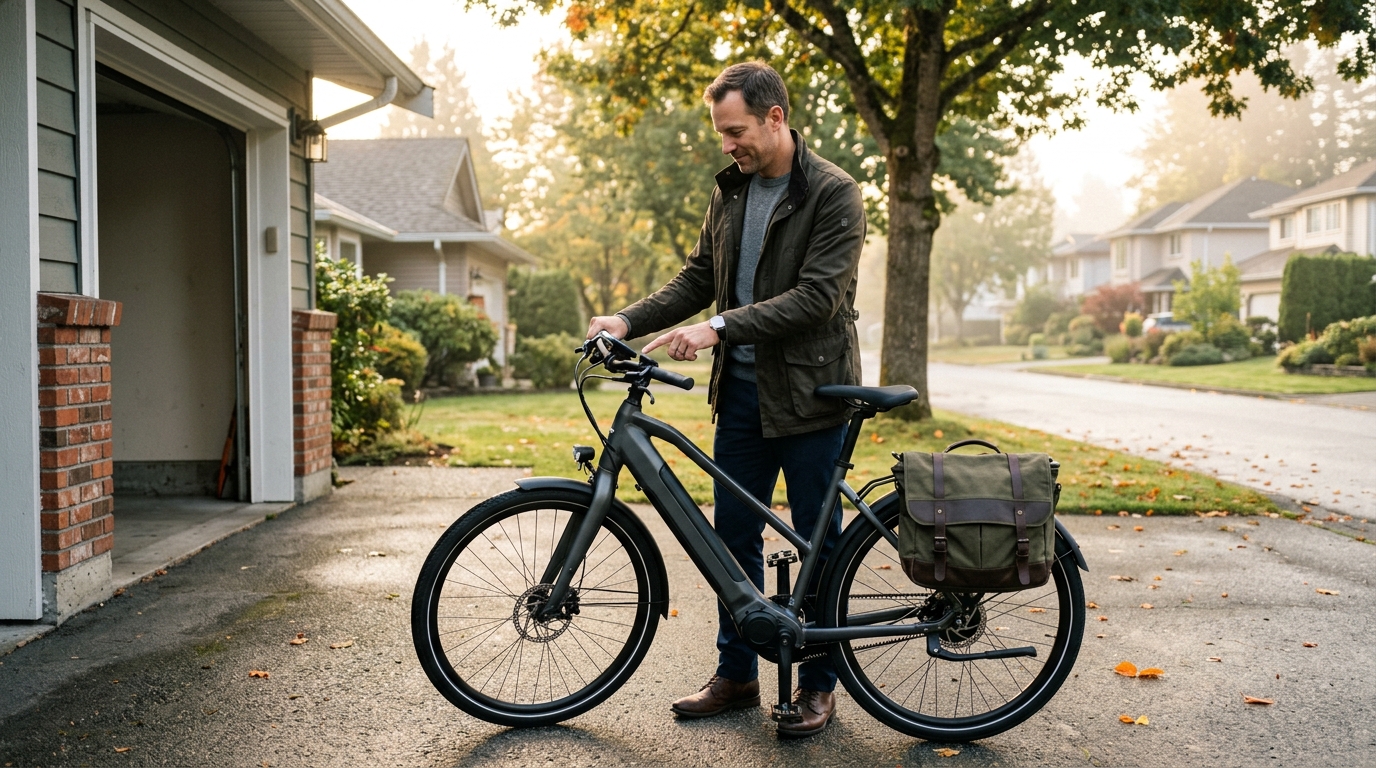
Think in usable range, not maximum range. If a bike is rated "up to 60 miles," that number usually means low assist, steady speed, warm weather, and a relatively light load. Your commute might mean pedal-assist Level 4 or 5, 20 mph cruising, a laptop bag, stoplights, hills, and winter clothes.
Same battery. Very different day.
| Commute distance | Daily miles | Usable range target | Better buying plan |
|---|---|---|---|
| 15 miles one-way | 30 round trip | 40-45 miles | 60-mile rated bike or work charger |
| 20 miles one-way | 40 round trip | 52-60 miles | Bigger battery, lower assist, or work charging |
| 25 miles one-way | 50 round trip | 65-75 miles | 100-mile class range or charge at work |
The buffer is the battery percentage you never plan to use. Empty isn't zero. Empty is the point where you stop trusting the last hill, the last mile of traffic, or the last blinking bar on the display. When choosing an ebike for commuting, start with your worst regular day, not your prettiest Sunday ride.
15-25 Mile Commute Math
A 15-mile one-way ride sounds easy because 30 miles round trip fits inside many e-bike range claims. At high assist, though, 30 miles can be right on the edge. Leoguar Sprint range testing shows 28.36 miles at pedal-assist Level 5 and 36.72 miles at Level 4, compared with an "up to 55 miles" rating. That doesn't make the rating useless. It tells you Level 5 at 20 mph spends battery like a commuter who wants to get home.

The break point is 20 miles one-way. At 40 miles daily, you either ride moderate assist, charge at work, or choose a bike with a bigger buffer. Leoguar Zephyr testing shows 41.26 miles at Level 4 and 51.08 miles at Level 3. That is the difference between arriving relaxed and watching the display too closely.
A 25-mile one-way commute is a different decision. If you're doing 50 miles every weekday with no workplace charger, don't buy a 60-mile rated commuter and expect peace. Use lower assist, plan charging at work, or move into higher real-world range. Leoguar Trailblazer logged 82.25 miles in Trail mode and 102.36 miles in Eco testing, but Trailblazer is a mid-drive eMTB. Great for rough routes and climbs. Overbuilt for a flat office route? Often, yes.
Range Ratings Get Discounted
The discount changes with assist level. Leoguar Bikes publishes real-world range tests, which is more useful than a single glossy number because commuters don't all ride the same way.
| Leoguar model | Battery | Rated max range | PAS 3 test | PAS 5 test |
|---|---|---|---|---|
| Sprint | 614Wh | Up to 55 miles | 45.25 miles | 28.36 miles |
| Zephyr | 720Wh | Up to 60 miles | 51.08 miles | 31.27 miles |
| Fastron | 720Wh | Up to 60 miles | 49.92 miles | 29.35 miles |
At moderate assist, those models return roughly 82-85% of the rated max. At high assist, they return about 49-52%. That is the number range-anxious commuters should remember.
Use this quick discount table before you fall in love with a spec sheet:
| Riding style | Use this share of rated range |
|---|---|
| Low assist, steady pace, warm weather | 80-90% |
| Moderate assist, normal traffic | 70-85% |
| High assist, 18-20 mph, hills | 50-65% |
| Cold, headwind, cargo, throttle-heavy riding | 40-55% |
For a 15-mile one-way commute, Sprint can work well if you ride Level 3 or 4 and charge nightly. For a 20-mile one-way commute, Zephyr gives more room because its 720Wh battery holds Level 3 range above 50 miles. For a 25-mile one-way commute, Fastron or Zephyr can make sense with workplace charging, but riding 50 miles round trip at max assist every day is asking too much from a 60-mile rated commuter.
Weather Steals Battery
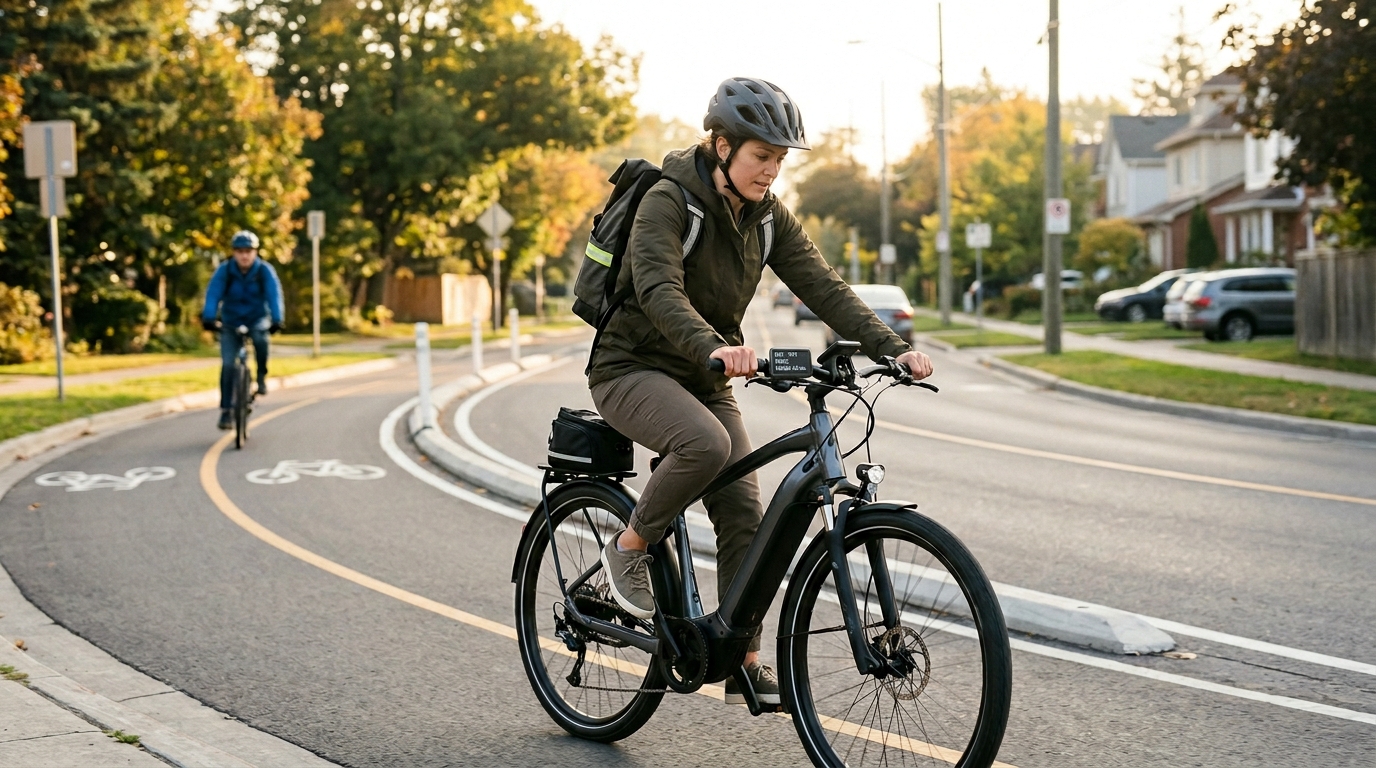
Picture the ride home. It is 42 F. The wind shifted while you were at work. Your backpack is heavier because you stopped for groceries. You bump assist up one level because you are tired, and now the last eight miles are into a headwind.

That is the part Reddit commuters obsess over, and they are right.
Cold affects lithium-ion battery performance, and higher speed raises energy use fast. The U.S. Department of Energy's FuelEconomy.gov notes that cold weather reduces vehicle efficiency; e-bikes use much smaller battery packs than electric cars, so the range hit shows up quickly. Add soft tires, winter clothing, a child seat, or a loaded rear rack, and the math moves again.
Use a smaller buffer only when the route is short and predictable. If your commute is 8 miles each way, you charge nightly, and you ride in mild weather, a 100-mile e-bike is more range than you need. If your commute is 22 miles each way across open roads in January, buy range like the wind is going to be rude.
Quick buffer check: if you arrive home under 20% battery twice in one week, your setup is too close to the edge. Drop one assist level, add a work charger, raise tire pressure, or choose a bike with more real-world range.
Sprint, Zephyr, Fastron
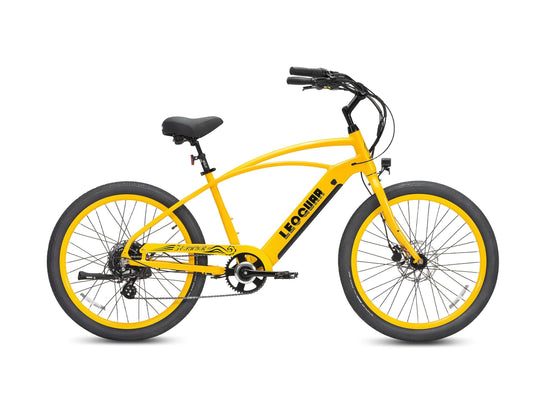
Sprint is the practical 15-mile commuter pick. The commuter ebike setup makes sense if you carry gear, do school drop-offs, or want a stable utility frame without buying more motor than your route needs. Leoguar Bikes customer reviews call out school runs, passengers, all-weather riding, and the 55 lb weight. Those are real commuting details, not catalog fluff.
Zephyr is the comfort pick for 15-20 mile one-way rides. The 720Wh battery, upright cruiser posture, 26 x 2.35 inch tires, and hydraulic disc brakes make it better for riders who want a calm ride and a little speed in reserve. If your route is paved and you care about arriving with your back and wrists in decent shape, Zephyr works better than a fat-tire bike for pure efficiency.
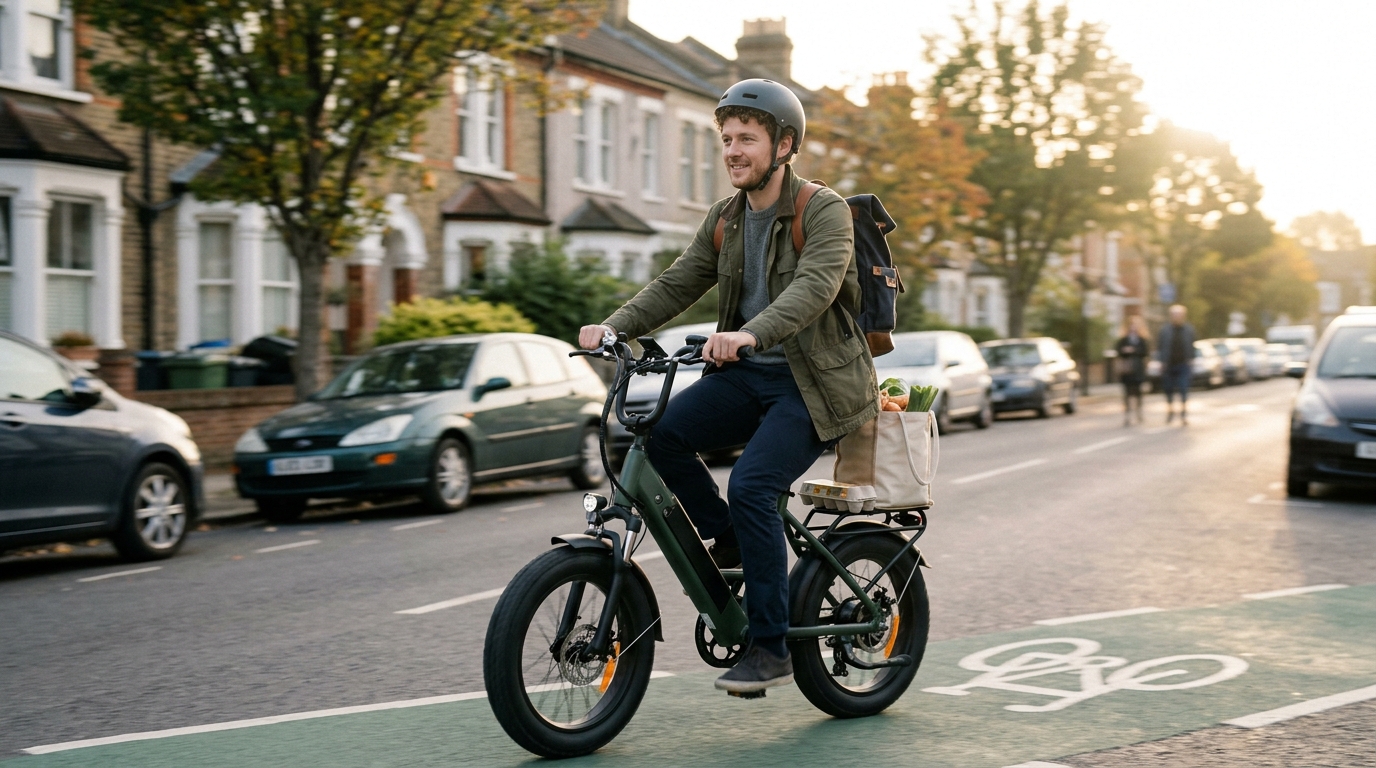
Fastron is the rough-road pick. Its 26 x 4.0 inch tires, 750W motor, 85Nm torque, and hydraulic brakes are useful on broken pavement, gravel shoulders, wet paths, and heavier weekend rides. The tradeoff is range at high assist. Bigger tires and stronger acceleration feel great, but they don't sip battery. For a broader model comparison, Leoguar's best commuter ebikes guide is useful before you lock in a range target.
| Model | Best fit | Watch the limit |
|---|---|---|
| Sprint | 15-mile one-way utility commute | Level 5 range is tight for 30 miles |
| Zephyr | 15-20 mile paved commute | 25 miles one-way needs charging discipline |
| Fastron | Rough pavement, power, traction | Fat tires draw more power at speed |
UL Safety And Charging
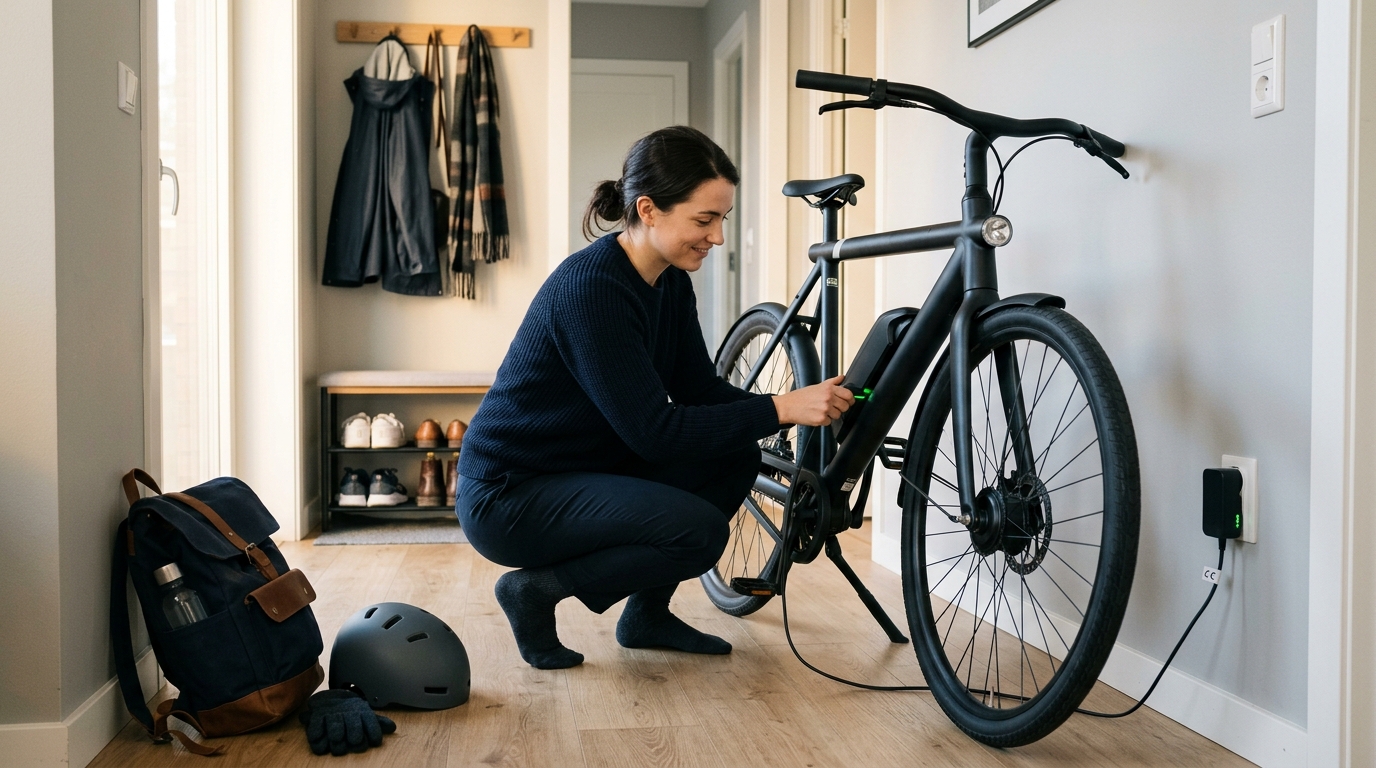
Range and charging safety belong in the same conversation. A 15-25 mile commuter may plug in five to ten times per week, often at home, in an apartment, a garage, or near office storage. That is why certification details matter as much as a big claimed battery number. Check each model's product page for its current UL listing: some e-bike systems are evaluated under UL 2849, while batteries may be certified under UL 2271.
UL Solutions' UL 2849 covers e-bike electrical systems, while UL 2271 covers batteries. For commuters, the point is not just the largest pack you can buy. The battery, charger, controller, display, wiring, and motor have to work together every day, so verify the certification shown for the exact model you are considering. A huge uncertified battery is not a shortcut when you store and charge it near people.
Leoguar Bikes also gives commuters a practical reason to compare models inside one lineup instead of chasing one range number. Sprint, Zephyr, Fastron, and Trailblazer are built for different route profiles, so the better choice depends on pavement quality, assist level, payload, and whether you can charge at work. Treat performance claims and race results as model-specific context, not as a replacement for checking the range and certification details on the product page you plan to buy.
For commuters, the takeaway is simple: buy enough range, then charge like you plan to keep the bike for years. Use the supplied charger. Avoid damaged batteries. Don't leave range so tight that every ride ends with a deep discharge.
FAQ
How Much Range For 15 Miles?
For 15 miles each way, plan for 40-45 miles of usable range if you charge only at home. If you can charge at work, 25-30 usable miles per leg can work with a healthy buffer.
Is 40 Miles Enough?
For a 20-mile round trip, yes. For a 40-mile round trip, 40 miles is too tight unless the bike delivers that range at your real assist level and you have a charger waiting.
Does Cold Reduce E-Bike Range?
Yes. Cold slows lithium-ion battery performance, and riders often use more assist in winter wind and heavier clothing. Use a 30-50% buffer in cold months instead of a 20% fair-weather buffer.
Should I Charge At Work?
Charge at work if your one-way commute is 20-25 miles, you ride high assist, or you arrive home under 25% battery. A second charger at work is cheaper than buying too little range.
Before you choose, write down four numbers: one-way mileage, round-trip mileage, the fastest assist level you expect to use, and whether workplace charging is real. Bring that to Leoguar Bikes, then match your route to Sprint, Zephyr, or Fastron based on the day you actually ride.


Leave a comment