





One Year Ebike Commuting Lessons for Better Rides in 2026
After one year ebike commuting, the biggest lesson is that the gear you keep is boring, repeatable, and route-specific. The shiny accessories fade fast. The bike, battery, brakes, lights, lock, fenders, and cargo setup decide whether you ride again tomorrow or quietly go back to the car.
One Year Ebike Commuting Gear
After a full year, the best ebike commuting setup is a certified, properly fitted bike with full fenders, a rear rack, bright lights, a secure lock, and one flat-repair plan. Skip comfort gadgets until your route exposes a real problem. Buy for weather, storage, range buffer, and safety before speed.
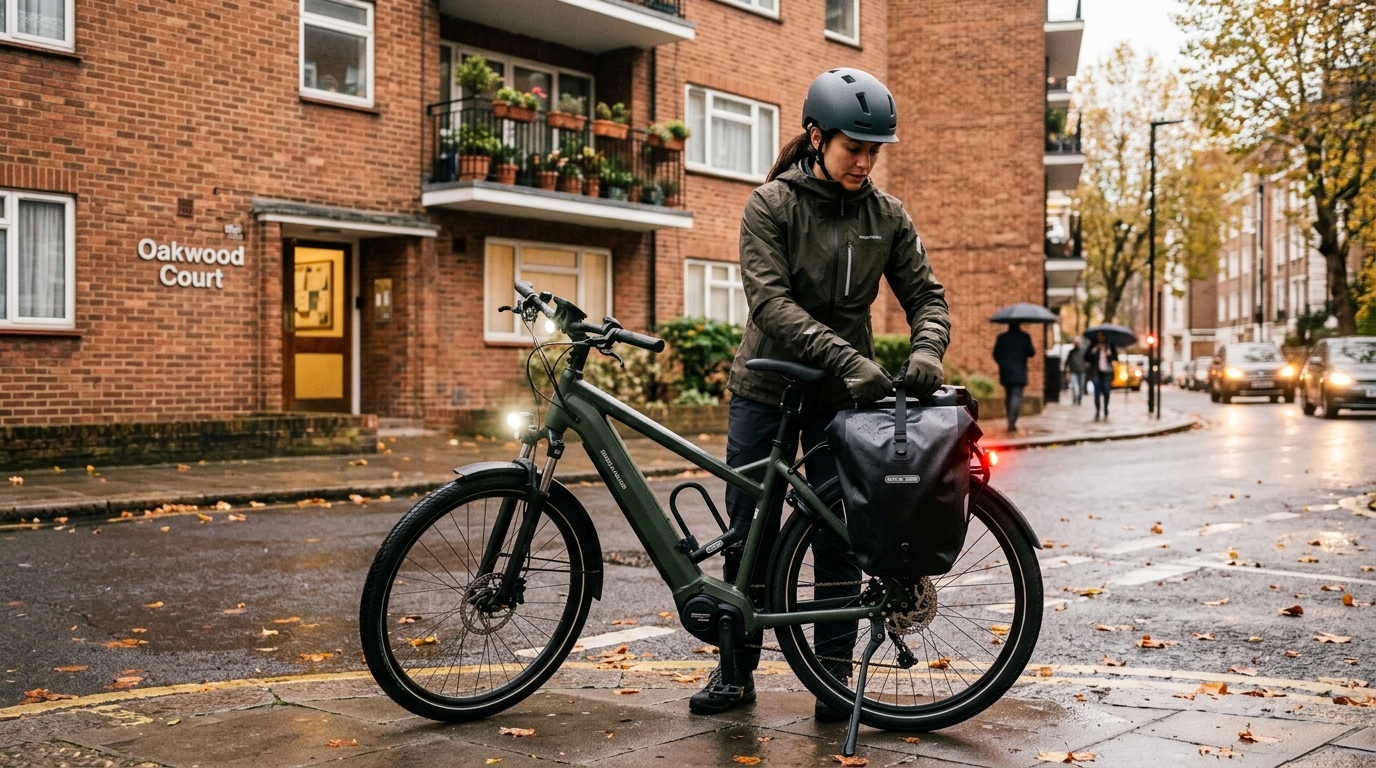
A new rider thinks about top speed. A year-in rider thinks about the 7:40 a.m. left turn across wet paint, the grocery stop after work, the battery percentage on a 38-degree morning, and whether the lock setup adds 90 seconds or five annoying minutes.
Here’s the keeper filter:
| Decision | Keep | Cut |
|---|---|---|
| Daily safety | Helmet, front light, rear light, mirrors if your route has fast traffic | Decorative light strips that don’t improve visibility |
| Weather | Full fenders, water-resistant bags, gloves | Tiny clip-on fenders that spray your shoes anyway |
| Cargo | Rear rack, pannier, crate, or trunk bag | Oversized backpack for a 12-mile round trip |
| Security | Rated lock, fixed parking routine, removable battery habit | Cable-only lock for street parking |
| Range | 30-40% buffer after the round trip | Buying only for the advertised max range |
The legal and safety side matters more in 2026 because cities, campuses, apartment buildings, and bike shops are paying closer attention to battery quality and speed classes. Federal bicycle rules in 16 CFR Part 1512 define a low-speed electric bicycle as having fully operable pedals, a motor under 750 watts, and motor-only speed under 20 mph with a 170-pound rider. State rules still vary, so check your local class, helmet, sidewalk, and trail rules before you buy.
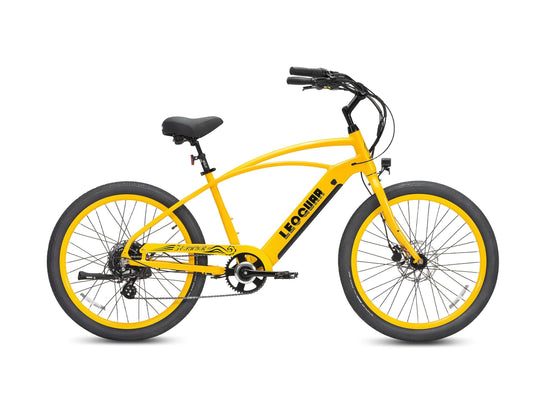
This is where certification moves from “nice spec” to daily trust. When Leoguar lists full-bike UL certification for a model, look for that model-level claim instead of assuming a certified battery alone covers the whole bike. A commuter bike is a system: battery, charger, controller, wiring, motor behavior, and frame fit all have to work together every day.
One Year Ebike Commuting Accessories
The first accessory to buy is full fenders. Not a phone mount. Not a horn with twelve sounds. Fenders.
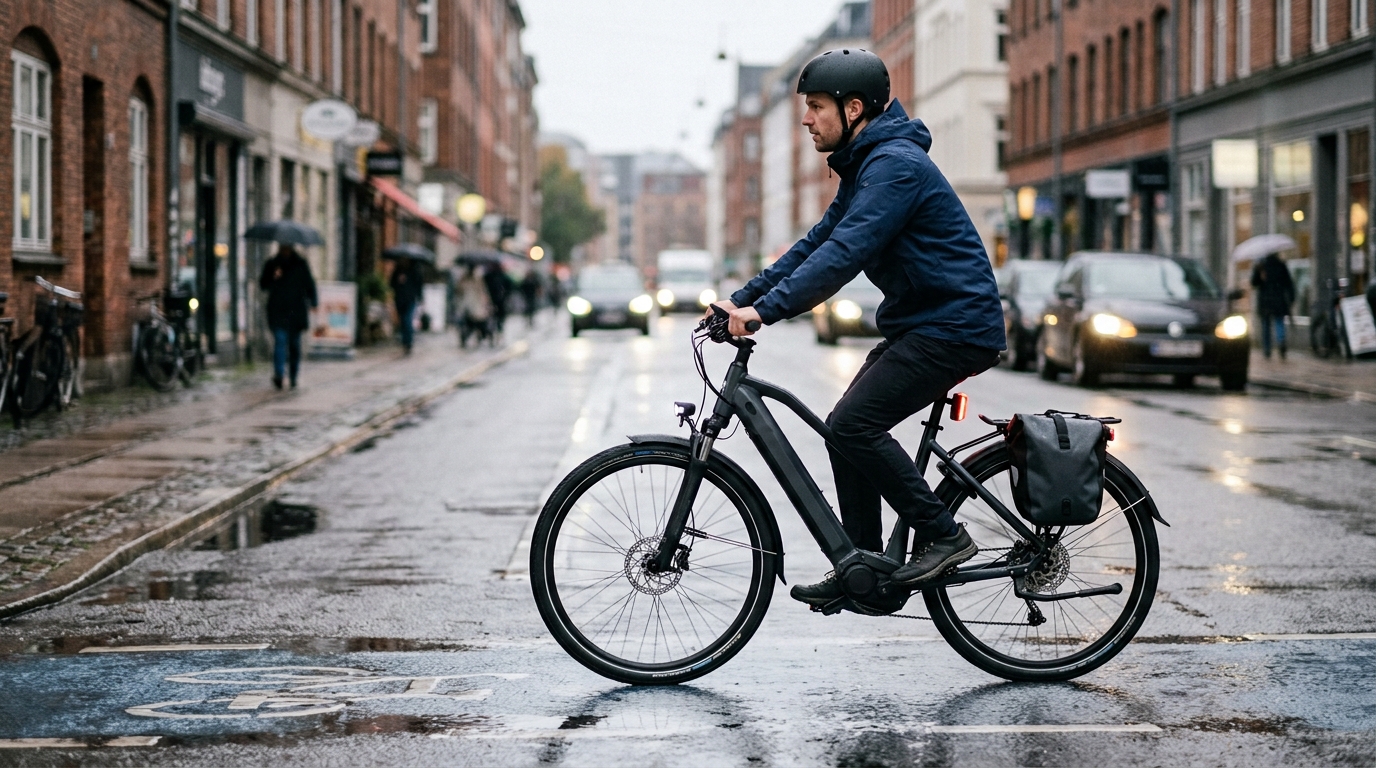
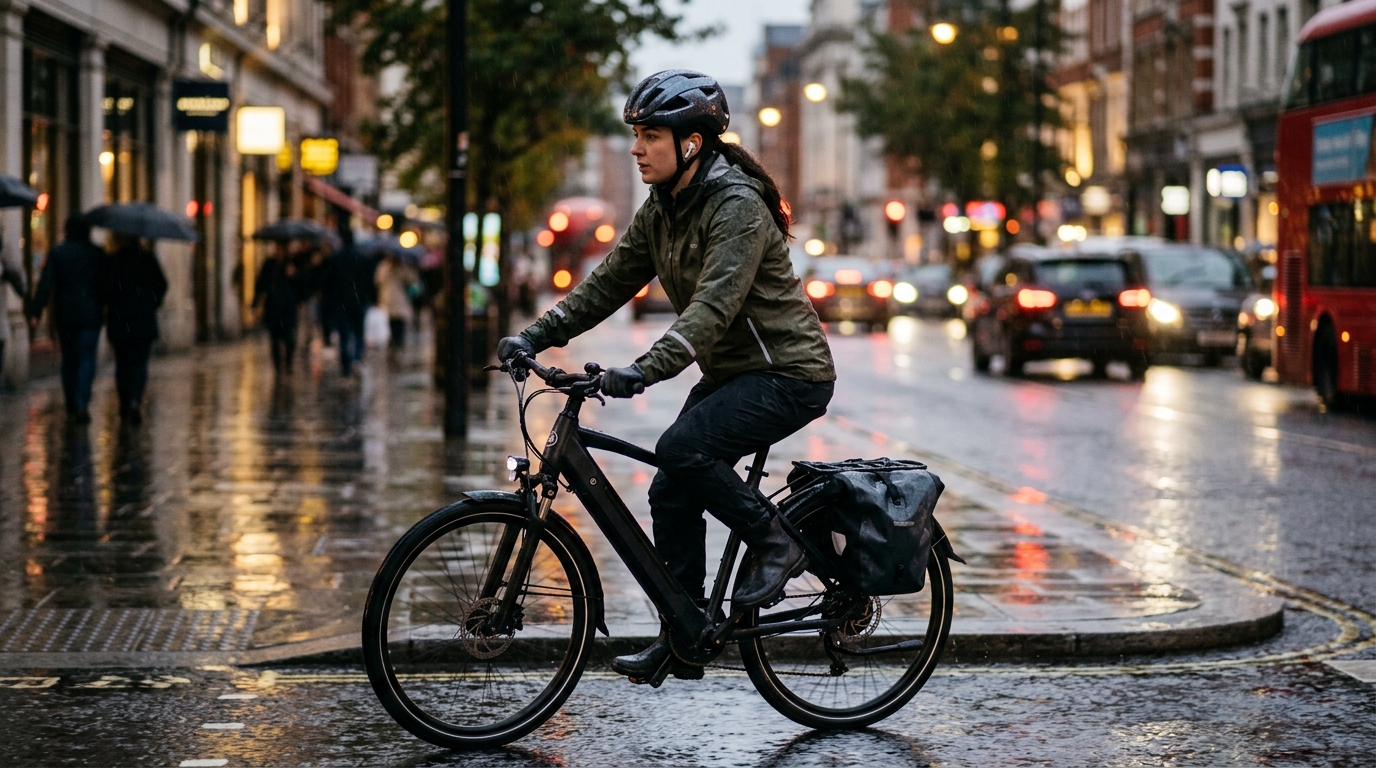
A wet stripe up your back is annoying on a Saturday ride. On a Tuesday commute, it’s a meeting problem. Full fenders also protect the drivetrain, battery area, shoes, and bags from gritty spray. If your commute includes wet shoulders, sprinkler runoff, winter slush, or gravel paths, clip-on fenders are usually the accessory you replace after month two.
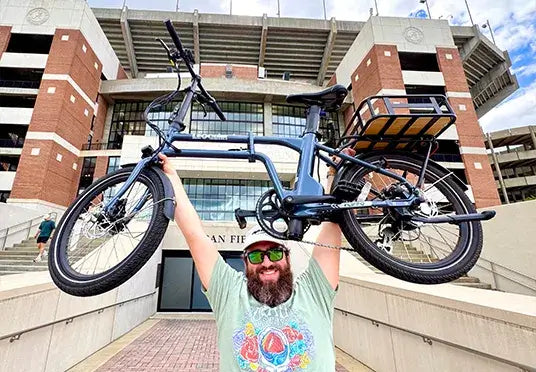
Second: a real cargo setup. A backpack works for short rides, but once the round trip crosses 10 miles, your back becomes the suspension. A rear rack with a pannier or trunk bag keeps weight low and makes spontaneous errands normal.
Lights belong in the keeper pile even if your bike ships with them. The National Highway Traffic Safety Administration reported 1,103 bicyclists killed in traffic crashes in 2024 and says bicyclists should use a white front light, red rear light, reflectors, bright clothing, and reflective gear when visibility is poor. That isn’t commuter paranoia. That’s the morning ride in November.
A mirror is route-dependent. If your commute is mostly protected lanes, skip it at first. If you ride shoulders next to 35-45 mph traffic, a left-side mirror helps you read traffic without turning every five seconds. You still shoulder-check before changing lane position.
Match the lock to parking risk. Indoor office storage may only need a compact U-lock. Street parking in a dense city calls for a high-security U-lock plus a chain or folding lock, with the frame locked to a fixed object and the battery removed if possible. A cable lock can secure a front wheel or helmet, but it shouldn’t be the main lock for a $1,500-$3,000 ebike.
Ebike Accessories To Skip
The phone mount gets too much love. If you know your route, you don’t need your phone glowing in the rain. If you don’t know your route, use audio directions, a simple handlebar bag window, or stop when you need to check the map. A cheap phone mount also turns potholes into a stress test for a $900 device.
Suspension seatposts are mixed. They help on broken pavement, but they’re often used to cover up the wrong tire pressure, wrong saddle height, or wrong bike fit. Fix those first. If your route still beats you up after 30 days, then look at a quality suspension post.
The big accessory mistake is buying for an imaginary ride. You picture a 30-mile weekend loop, a picnic blanket, a speaker, a top tube bag, a camera mount, and a sunny bridge crossing. Then real life happens: eight miles to work, two stop signs you hate, one sketchy intersection, one parking rack, and no desire to carry five removable gadgets into the office.
Use this order instead:
- Ride your commute for two weeks with only safety gear.
- Write down the repeated annoyance.
- Buy one accessory that removes that annoyance.
- Keep it only if you use it three days in a normal week.
A throttle can be useful at stop signs, hills, and loaded starts, but don’t buy a bike only because the throttle feels fun in the parking lot. For commuting, frame comfort, braking feel, battery safety, rack support, and service access matter more after the first month. If you’re comparing models now, our guide to the best commuter ebikes gives a cleaner starting point than a giant accessory cart.
Ebike Range And Charging
The advertised range is the best-case headline. Your commute happens in wind, cold, hills, traffic, stop-and-go riding, and sometimes with a loaded bag. A rider who weighs 155 pounds on flat pavement in Eco mode gets a different number than a 215-pound rider climbing home in Sport mode with groceries.
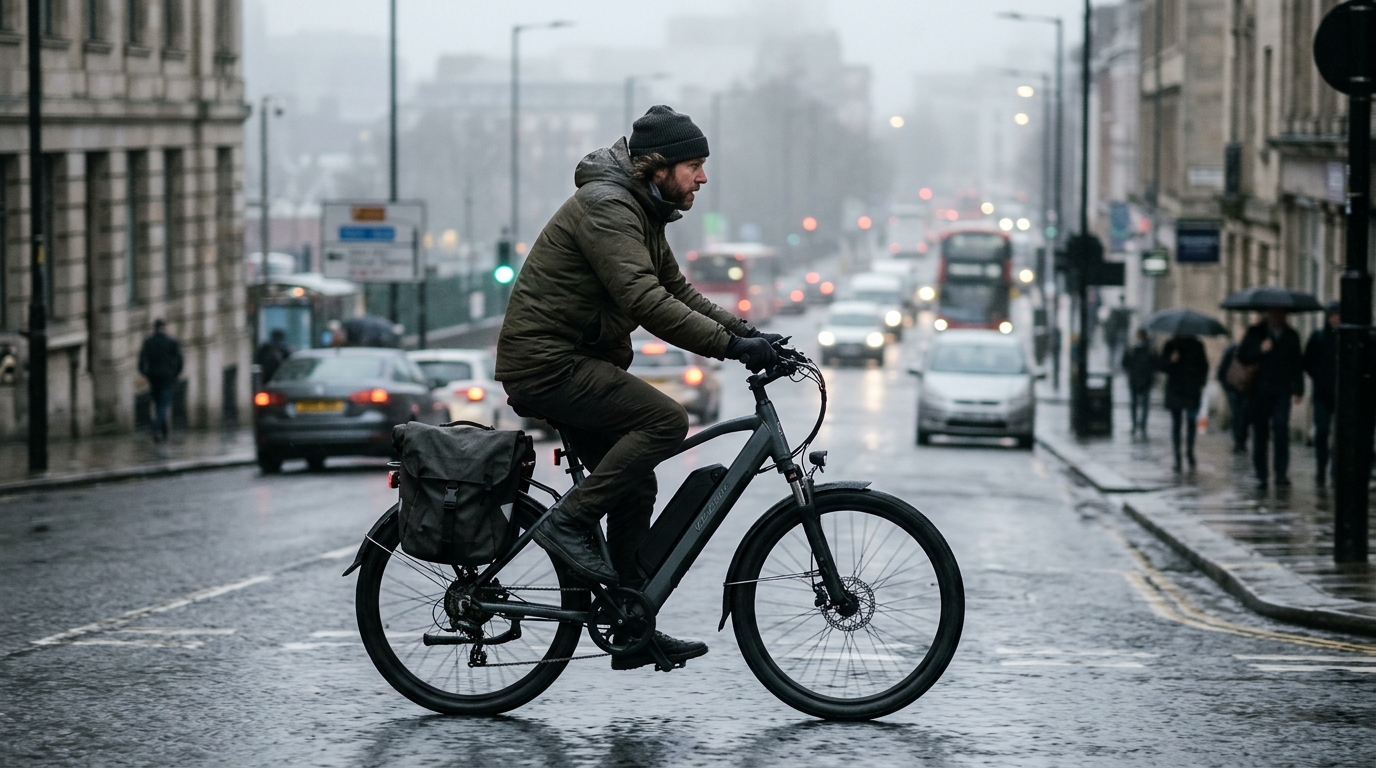
A simple range rule works better: your normal round trip should use no more than 60-70% of the battery. If your commute is 18 miles round trip, shop like you need 26-30 real-world miles. If your commute is 30 miles round trip, the range buffer becomes the whole buying decision. We break that math down in the 15-25 mile commute problem, because that distance is where a lot of “40-mile range” bikes start feeling tight.
Charging is habit design. Keep the charger somewhere boring and visible. Don’t bury it behind camping gear. Don’t wait until the display says 8% unless you enjoy morning negotiations with yourself.
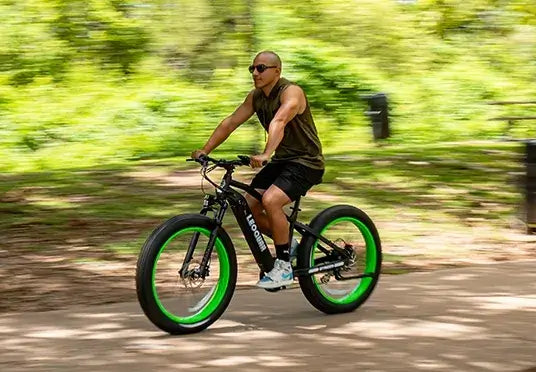
Weather changes the bike you want. Fat tires feel calmer over potholes, utility frames handle racks better, and step-through frames make stop-and-go riding easier with work clothes. If you’re choosing an ebike for commuting, test the bike with your actual bag weight or at least imagine the worst version of your weekday: wind in your face, late start, damp road, and one extra stop.
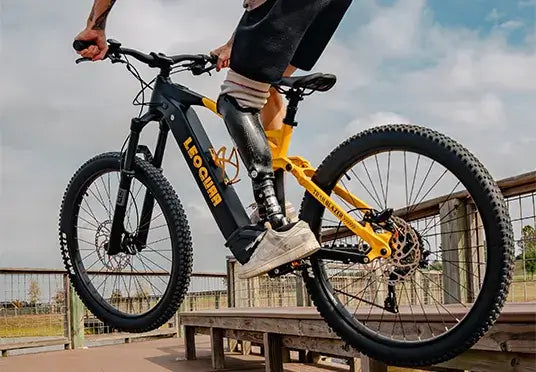
Leoguar’s Trailblazer sits at the long-range end of the lineup with a 720Wh battery and a stated range of up to 100 miles under favorable conditions. Most commuters don’t need that much capacity. But if you want one bike for weekday rides and bigger weekend routes, the extra battery headroom can reduce how often you think about charging.
Commuter Ebike Choice
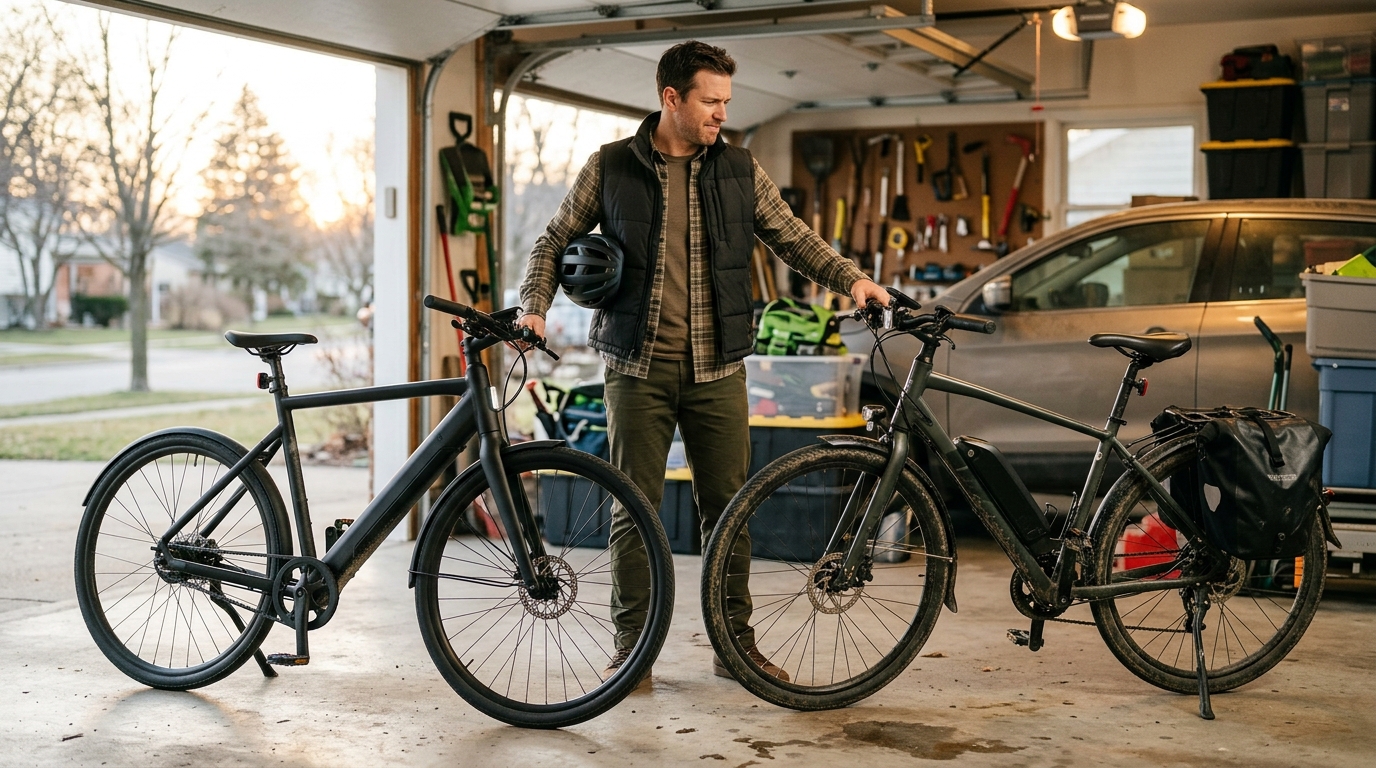
One year ebike commuting changes what “good” means. A good commuter ebike starts every morning, brakes with confidence, carries real stuff, fits your body, and doesn’t feel sketchy at 18-25 mph. Speed without control gets old fast.
Look for these buying signals:
| Feature | Why it matters after a year |
|---|---|
| Full-bike UL certification | The electrical system is tested as a bike, not just as loose parts |
| Hydraulic disc brakes | Better control under load and in wet conditions |
| Rack and fender support | Commuting accessories fit cleanly without weird adapters |
| Serviceable parts | Tires, brake pads, chain, and battery access shouldn’t be a mystery |
| Real range buffer | Cold mornings and headwinds don’t ruin the ride |
| Stable frame geometry | Confidence matters when traffic gets close |
Leoguar Bikes says it supports product development with aluminum alloy frame manufacturing and electronic control system R&D, which helps explain the focus on frame feel, assist tuning, and commuter-ready parts. Treat those as brand-side claims to verify on the specific model page before buying. What matters on the road is simple: pedal assist should come on predictably from a stop, the bike should stay composed with cargo, and the electrical system should feel consistent day after day.
Race results don’t automatically make a commuter bike better. Trailblazer’s reported 1st-place result at the 2025 E-Dirty Cross eMTB race is best read as a performance signal, not proof that every commuter model rides like a race bike. Commuting is easier than racing, but daily use still punishes weak frames, sloppy control tuning, and underbuilt electrical systems.
This advice doesn’t apply the same way if your commute is under two miles, fully flat, and you store the bike inside at both ends. In that case, buy lighter, simpler, and cheaper. But for a 6-18 mile round trip with mixed traffic, weather, and errands, the bike should be treated as transportation first.
Fun comes after reliability.
FAQ
Is ebike commuting worth it?
Yes, if your route is safe enough and your round trip fits the bike’s real-world range. The best value shows up when an ebike replaces short car trips, parking fees, fuel, or rideshare costs several times per week.
How much ebike range is enough?
Plan for your round trip to use only 60-70% of the battery. That buffer covers cold weather, hills, wind, cargo weight, battery aging, and the day you forget to charge fully.
Which ebike accessories matter first?
Buy a helmet, full fenders, bright lights, a rated lock, and a rack or bag setup before comfort extras. Those accessories solve the daily commuter problems: safety, wet roads, theft risk, and carrying work gear.
Are ebikes safe for commuting?
Ebikes can be safe for commuting when the bike fits, the brakes work well, the electrical system is certified, and the rider follows local traffic rules. Full-bike UL certification, when listed for the specific model, adds trust because the electrical system is evaluated as a complete bike.
How often should ebikes be serviced?
Check tire pressure and brakes weekly if you commute daily. Plan a shop service every 500-1,000 miles, sooner if you ride in rain, carry cargo, hear brake noise, or feel chain skipping.
Before buying accessories, choose the bike that makes daily use feel normal. Start with Leoguar Bikes’ commuter collection, compare range buffer against your actual route, then add only the gear your weekday ride proves you need.


Leave a comment