



Mid-Drive Electric Bike Motors: What to Know Before You Upgrade
The Heart of Performance
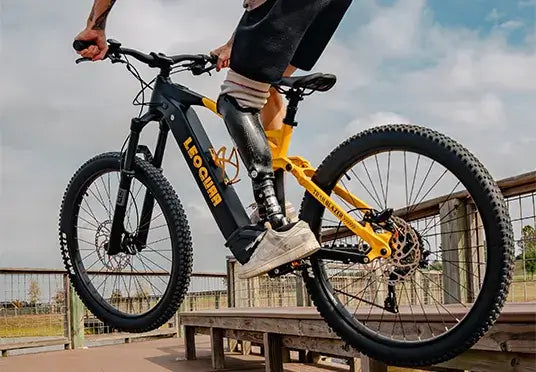
Have you ever struggled up a steep hill and wished for more power? Or maybe your e-bike feels like it pushes you suddenly instead of matching your effort. If you want a smoother ride, a mid-drive motor is often the answer because it sits at the centre of the bike.
A mid-drive motor is a power unit placed at the bike's crankset, where the pedals are. Instead of only spinning a wheel, it sends power straight to the drivetrain, giving you better control and output. Here, you'll learn how this technology works, how it compares to other options, and how to choose between buying a complete mid-drive e-bike or upgrading your current bike with a mid-drive kit.
The electric motor on an e-bike helps move the bike forward by giving you pedal assistance. This makes it easier to ride up hills and go longer distances. Whether you have a hub motor or a mid-drive, the motor’s quality affects how much torque you get, how efficient the bike is, and how long the battery lasts.
We’ll look at why this system seems so natural to ride, why it is more efficient, and why it climbs hills better than other options.

The Technical Advantage
To see why mid-drive systems are so popular for performance e-bikes, it helps to know how they work. Their design is quite different from other motors, and that difference creates their main benefits.
Powering the Drivetrain
The main characteristic of a mid-drive motor is that it drives the crankset rather than the wheel directly; you can imagine it as attaching a very powerful pair of legs that work in unison with your own. It is because of this that the motor can use the bicycle's existing gears.
When you shift into a lower gear to climb a hill, the motor also takes advantage of that gear, increasing its torque and making steep climbs much easier. That is why mid-drive motors are known for their climbing power. For example, an 80 Nm mid-drive motor with a 0.5:1 gear ratio can produce over 160 Nm at the rear wheel, which is two to three times more torque than a similar hub motor. This advantage not only helps on steep hills but also lets the motor run at its best speed, making it more capable and helping the battery last longer.
In contrast, a hub motor, located in the hub of the front or rear wheel, powers the wheel directly. It operates independently of your gears, so it can't leverage mechanical advantage on hills and can struggle under high load at low speeds.
Torque vs Cadence Sensors
The reason behind the famous "natural feel" of a mid-drive system is its sensors; advanced systems do not simply detect whether you are pedalling but know how hard you are pedalling.
Torque sensor: This sensor detects the force you exert on the pedals, the amount of assistance given by the motor being directly related to the effort you make. If you pedal lightly, you will receive a slight boost.
If you press hard, the motor will then provide a great deal of power; the result is an intuitive and fluid experience as if you were simply a much stronger version of yourself.
Cadence sensor: The sensor picks up on the moment you begin to turn the pedals. As soon as it detects that movement, it provides you with a fixed amount of assistance. At times, however, this can seem less responsive, with a small delay or as if the motor is engaging rather than smoothly matching your input.
Most high-quality mid-drive systems from brands like Bosch and Shimano use sophisticated torque sensors, which value a smooth and reliable user experience over raw power specs alone.
Hub Motors vs Mid-Drive Motors
A hub motor is different from a mid-drive motor in that it is built into the wheel and drives it directly. Although hub motors are simpler and quieter, they provide less torque when going up hills and may not respond as smoothly when you pedal. Yet for riding in flat cities they are reliable and inexpensive.
When it comes to technical design, selecting a mid-drive e-bike also fits the preferences of the majority of performance riders nowadays. Recent market data shows that mid-drive motors make up more than 66% of premium e-bike models, mainly because of their excellent balance, their hill-climbing torque (which usually ranges from 50 to 85 Nm), and their smooth pedal-assist performance. For riders who have to deal with changing terrain or are carrying loads, the fact that the motor is located at the central crank position makes the bike more stable and responsive than one with a hub motor.
Actual Scenarios
Specs only tell part of the story. To really see the difference, it helps to look at how mid-drive and hub-drive systems work in real-life situations. After riding both, we’ve found that the way they feel matters most.
A mid-drive provides a smooth and steady feel, whereas a hub drive tends to push you from behind.
| Riding Scenario | Mid-Drive Motor Performance | Hub Motor Performance |
|---|---|---|
| Starting on a Steep Hill | Excellent. Leverages low gears for immense starting torque. Power application is smooth and controlled, allowing you to start from a dead stop with confidence. | Can struggle significantly. Without the benefit of gearing, the motor may not have enough torque to get you moving. Often requires a running start or intense leg power before the motor engages effectively. |
| Technical Trail Riding | Superior. The motor's weight is low and centered in the frame, providing excellent balance and nimble handling. The predictable, torque-based power delivery is crucial for navigating roots, rocks, and tight corners. | Can make the bike feel unbalanced, with a heavy rear wheel that can get bogged down or break traction. Power delivery can feel jerky or surge unexpectedly, making precise control difficult on technical terrain. |
| High-Speed Commuting | Efficient and stable. The motor integrates smoothly with your pedaling cadence at all speeds, providing consistent assist as you shift through the gears. Feels planted and secure. | Can be very effective on flat ground, providing a "tailwind" sensation. However, it may feel less efficient at higher pedaling speeds and the weight in the wheel can contribute to a less stable feeling at speed. |
| Battery Range on Hilly Routes | More efficient. By using the bike's gears, the motor can operate in its optimal RPM range, much like a car's engine. This conserves energy and maximizes battery range, especially on varied terrain. | Less efficient. The motor is forced to work harder at low speeds on hills, drawing more current and draining the battery much faster. The range difference can be substantial on a route with significant elevation changes. |
| Maintenance & Tire Changes | Simple. Both the front and rear wheels are standard bicycle wheels. Changing a flat tire is no different than on a non-electric bike, as there are no motor cables connected to the wheel. | More complex. The rear wheel is connected by power cables and often secured with heavy-duty axle nuts. Removing the wheel to fix a flat is more involved and requires disconnecting the motor. |
Bikes with mid-drive motors supply more torque and are better at handling various types of terrain, but a lot of entry-level e-bikes use hub motors since these are easier to fit in and are cheaper. The drawback is that hub motors have difficulty when going down hills and do not always keep up with your pedalling.
Complete Bike or DIY Kit?
After you have decided that a mid-drive system is suitable for you, the following question becomes how to obtain one. There are two primary options: to buy an electric bicycle that has been specifically designed with a mid-drive or to convert your existing bicycle using an electric bicycle mid-drive kit.
The Case for a Complete Bike
If you wish to have a smooth, reliable and easy experience, then it is generally best to buy a complete mid-drive e-bike. Companies such as Trek, Specialized and Ride1Up design all the parts so that they work well together, the frame is strong enough to cope with the motor's power, the brakes are built for higher speeds and the drivetrain is strong enough to handle the extra force.
You also have a full warranty that extends to the motor, the battery, and the frame, which gives you peace of mind should you merely want to ride without having to concern yourself with repairs. When your budget is about $3,000 you can find a number of mid-drive e-bikes that provide good value along with strong performance; for example, the Mokwheel Basalt or those commuter models fitted with Bafang motors have 750W motors, 400–625Wh batteries and are capable of travelling 30 to 70 miles on a single charge. These bikes are well suited for commuting, weekend rides, or touring.
Many riders opt for a ready-made electric bicycle conversion kit rather than buying a complete mid-drive bike. These kits are compatible with most standard bottom brackets and include everything needed to electrify your existing ride, making them one of the easiest ways to start your e-bike journey.
The Attraction of a DIY Kit
The DIY route has considerable appeal for the hands-on cyclist. The main benefits are cost savings and ultimate customisation. If you already own a quality bike you love, a conversion kit lets you add electric power at a fraction of the cost of a new premium e-bike. If you’re converting your existing bicycle into an electric one, an e-bike motor kit delivers a convenient solution. These kits contain the motor, controller, display, throttle, and necessary wiring, perfect for hobbyist builders who want to build their own electric ride at a lower cost.
This is an excellent choice if you enjoy building things and want to construct a bike that meets your specific requirements, whether it's the motor power or the battery size. If you have a good kit, you'll end up with a ride that has the same natural feel as a lot of pre-assembled e-bikes.
Many people upgrade their bikes with easy-to-install e-bike motor kits, which include everything you need, like the motor, controllers, and wiring. These kits let you customise your bike and usually cost less than buying a new e-bike. If you’re wondering if you can turn your current bike into a mid-drive e-bike, the answer is often yes, especially with kits like the Bafang BBS02 or BBSHD. These work with many standard frames and offer strong performance from 500W to over 1000W. The upfront cost is usually $500 to $1500, but you get a lot of customisation and power for your money. If you already have a good bike and some basic tools, a motor kit can be the easiest way to try mid-drive power.
Choosing the Right Kit
If you’re thinking about a DIY conversion, picking the right mid-drive kit can feel overwhelming. Planning and choosing parts that fit your bike and riding style is key. Keep these main things in mind.
Bike Compatibility
This is the key step; if the motor doesn't fit your bike it won't function, and you'll have wasted your money.
Bottom Bracket: You must measure your bike's bottom bracket shell width and determine its type. The vast majority of kits are designed for a standard threaded BSA bottom bracket with a shell width of 68-73 mm. Measure this carefully.
Some kits fit wider fat bike bottom brackets, which measure 100mm or 120mm.
When it comes to the frame material and geometry, care should be taken with carbon fiber frames since most of them aren't designed to have a motor clamped onto the bottom bracket shell. Aluminum and steel frames are usually the best choice. Furthermore, it is important to check the clearance in the vicinity of the bottom bracket to make sure the motor casing will fit without coming into contact with the chainstays.
If you want detailed compatibility charts, it's advisable to consult e-bike conversion experts before making a purchase.
When selecting the right electric motor for your e bike, you need to check that it is compatible with the voltage of your battery and with your frame's specifications. The majority of electric bicycle conversion kits provide standard choices including 36V, 48V, or 52V. While choosing a motor kit, ensure that it satisfies your power needs and also adheres to the legal requirements in your area.
Power and Torque (Watts & Nm)
Forget about aiming for the highest figures; think about your own requirements and the laws in your area.
For commuting, general fitness, and climbing moderate hills, a power output between 250W and 500W is sufficient. Kits with a power output between 750W and 1000W or more are intended for heavy-duty use, serious off-roading, cargo hauling, or for riders who desire extreme performance.
The torque, measured in newton metres, indicates the twisting force and is important for both acceleration and climbing; the available kits usually go from 80 Nm (a figure comparable to that of many Bosch or Shimano systems) up to 160 Nm or higher on high-performance models such as the Bafang BBSHD.
When you are choosing the best mid-drive e-bike system, it is necessary to select the appropriate torque and battery capacity. For climbing, you should look for a torque rating of at least 50Nm. If you're planning long rides, then a 400Wh battery is a good idea to start with. Moreover, you should consider the type of sensor: torque sensors seem more natural and react quickly, whereas cadence sensors may not provide as smooth a ride on difficult trails.
Battery Specifications
The battery is similar to your fuel tank, the capacity and specifications of the battery determining the amount of power you have and how far you can travel.
The voltage (V) indicates the degree to which power is delivered. The voltages usually found are 36V, 48V, and 52V. Generally speaking, a higher voltage means greater power and greater efficiency.
Amp hour (Ah) refers to the capacity, that is, how long the battery can maintain a current flow. The higher the amp hour rating, the greater the range.
The unit used is the watt hour (Wh): this is the most suitable way of measuring a battery's total energy, since it can be calculated by multiplying the volts by the amp hours (V x Ah = Wh), and for most people a 500Wh battery is a good starting point.
Brand Reputation and Support
Since you're using a do-it-yourself kit, it's very important to have support from the community.
The reason why brands such as Bafang (famous for its BBS02 and BBSHD models) and Tongsheng (which is known for its torque-sensing TSDZ2) are popular is that they have a well-established record and enjoy large online communities.
Among DIY riders, complete e-bike kits are growing in popularity since these ready-made sets make it simpler to convert your bike and ensure that all the parts work well together. When you want to customise both the appearance and performance of your bike, it is usually the best idea to start with a good kit.
Before making a purchase, take a look at the DIY e-bike forums to read some real-world reviews and get troubleshooting advice. Additionally, you can read detailed reviews of mid-drive bikes in order to identify the features you may want for your own bike.
The DIY Reality Check
There can be a great deal of satisfaction in converting your bicycle into an e-bike, but the process is more complicated than simply fitting a motor on. Since we want you to be successful, it's essential that you understand the entire process before you begin.
Essential Tools and Skills
If you are to successfully install the kit, you'll need more than just some basic tools; you'll need a crank puller and a bottom bracket tool which fits your bike in order to remove the old parts, as well as a chain breaker and some good wrenches.
You should also have a knowledge of basic bike mechanics, for example how to adjust the derailleurs, and possess a basic understanding of how to connect simple color-coded wires.
Drivetrain Durability
The mid-drive motor places considerably more stress on the bike's drivetrain than the rider's legs do, so the chain, cassette, and chainring will wear out more quickly and will need to be replaced more frequently. As a result, a lot of people choose to upgrade to stronger components that are specific to e-bikes in order to cope with the extra power, particularly when using 750W or 1000W systems.
Cable Management and Aesthetics
The main difference between a neat build and a disorderly one lies in cable management. You'll have a number of new wires to route—including those from the battery to the motor, from the motor to the handlebar display, and to the various sensors and throttle. It is important to take the time to neatly route these cables using zip ties or adhesive guides not only for aesthetic reasons but also for safety, since this helps avoid the cables getting caught in branches or interfering with steering.
Troubleshooting and Support
The good thing is that there is a large and useful online do-it-yourself community; you'll have to carry out some research, ask questions, and teach yourself how to solve problems.
Buying Guidance for Beginners
If you're new to electric biking and finding it difficult to choose among the various options, checking out the best e-bikes in the category—you might be looking for one for mountain biking, commuting, or touring—can help you decide which motor and drivetrain to select. A number of high-end bikes have integrated mid-drive systems made by Bosch or Shimano. For those who are new to e-biking and don't know where to start, looking at mid-drive e-bikes with good ratings within your price range can provide useful advice. Reviews of models that use Bosch, Shimano, or Bafang systems usually include information about real-world range, the amount of torque experienced, and maintenance. Rather than just looking at the specifications, think about the type of terrain you'll be riding on and how natural the pedal-assist feels when you try the bikes on test rides or in videos.
- The torque output for mid-drives is generally about 70 to 85 Nm, with peak figures going above 100 Nm—which makes them fit for climbing—while hub motors are usually below 50 Nm.
- By using the bike's gear system during mid-range riding, the RPM is kept at an optimal level, which improves battery life by as much as 25% when the terrain is hilly.
- The ride feel is such that the torque sensors in the mid-drive system vary the power output in accordance with the amount of effort you're putting in, which results in a smoother and more natural form of assistance.
- There is a maintenance trade-off since mid-drive units place greater strain on the chain and drivetrain and therefore demand more frequent servicing than hub motors.
- Because the motor is placed at the centre of the frame, mid-drive systems provide improved balance and handling, particularly when going off-road or at high speeds.
Frequently Asked Questions
1. What is the difference between a mid-drive and an electric bike hub motor?
The bike is equipped with a mid-drive motor which operates through the crankset and provides greater torque and climbing power—this makes it suitable for use on hilly ground and during trail riding. On the other hand, an electric bike with a hub motor drives the wheel directly, resulting in a simpler and quieter operation but with less responsiveness when torque is required.
2. Is a mid-drive e bike electric motor better for commuting?
Yes, the electric motor on a mid-drive e-bike offers smoother power delivery and greater efficiency on different types of terrain, particularly when it has a number of gears. This renders it an excellent option for long-distance commuters who want a well-balanced performance and range.
3. Can an e bike motor kit be fitted to any ordinary bicycle?
The motor kits for most e bikes are made to fit standard bottom bracket sizes (for example 68–73mm). In the case of a bike with a carbon frame or one that has non-standard geometry, there may be a compatibility problem. It is necessary always to measure your frame and check the specifications of the kit before buying.
4. Is it true that mid-drive electric motors are more powerful than rear hub motors?
In most cases the answer is yes; a mid-drive motor uses the bike's gears to multiply torque and is therefore well suited to hills and difficult terrain. Although rear hub motors are easier to fit, they do not take advantage of gear leverage and might have difficulty when climbing steep slopes.
5. How long will a mid-drive motor system last?
With proper maintenance, a high-quality e motor bike system can last over 10,000 miles. Brands like Bosch and Shimano offer reliable, weather-resistant components. Regular servicing of the chain, cassette, and drivetrain is key to maintaining performance.
Related Product


Leave a comment