




Electric Bikes For Seniors: What’s The Best And Easiest One To Ride?
We recently helped a customer named Carol, a 76-year-old grandmother who hadn't been on a bicycle in over two decades. She was worried about her balance and whether she could keep up with her grandkids on the local bike path. After we fitted her to the right bike, she took her first ride in the parking lot. The smile on her face said everything. She felt free again. This story is why we believe so strongly in the power of electric bikes for seniors.
The best and easiest electric bike for a senior is not a specific brand or model. Instead, it is a bike defined by a combination of three essential features: a low step-through frame for easy mounting, an upright riding position for all-day comfort, and simple controls for safety and confidence. This guide is designed to walk you through what these features mean, help you understand your own needs, and ultimately choose a bike that brings you joy, health, and a renewed sense of independence.
Why Choose an E-Bike?
For many seniors, an electric bike is nothing short of a game-changer. It represents a powerful tool for taking back mobility, improving health, and reconnecting with the world. The gentle push from the motor flattens hills and turns headwinds into whispers. This removes the common barriers that once made cycling feel like a chore.
The benefits go far beyond just making pedaling easier:
Low-Impact, Joint-Friendly Exercise: Traditional exercise like running can be hard on the knees and hips. Cycling, especially with an electric assist, is a low-impact activity that gets your heart rate up without straining your joints. You control the effort, choosing a lower assist level for a workout or a higher one when you need a boost.
Improved Health and Well-being: Staying active is crucial for heart health, strength, and balance. A study on older adults and e-biking, including research from institutions like the University of Colorado Boulder, has shown significant benefits. Participants often ride longer and more frequently than on traditional bikes. This leads to measurable improvements in fitness and brain function.
Renewed Independence and Freedom: An electric bike can be your ticket to running errands, visiting friends, or simply exploring your neighborhood without relying on a car. It breaks the cycle of isolation that can sometimes come with age. This opens up new opportunities for social engagement and adventure.
Keeping Up with Loved Ones: Whether it's riding with a spouse, children, or grandchildren, an e-bike is the great equalizer. It allows you to set the pace and comfortably enjoy time with family, creating memories on the bike path instead of watching from the sidelines.
Three Core E-Bike Features
When we talk about electric bikes for seniors, we focus on design, not just technology. The right bike should feel like a natural extension of your body, inspiring confidence from the moment you approach it. Let's break down the three most important features.
Low Step-Through Frame
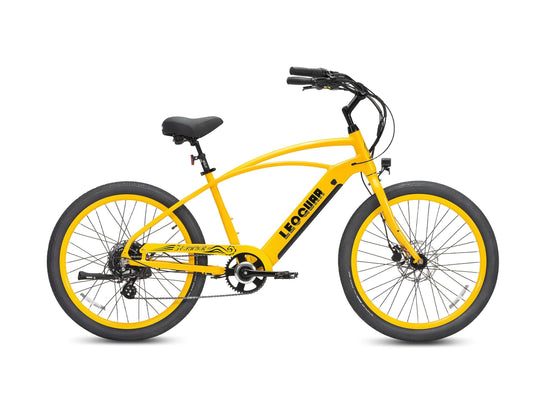
A low step-through frame is arguably the single most important feature for a senior-friendly e-bike. This design eliminates the high top bar found on traditional bikes, which you have to swing your leg over. Instead, it features a low, open frame that you can simply step through.
Think of it like the difference between a walk-in shower and a high-walled bathtub. One is accessible, safe, and easy to get into, while the other presents a physical barrier and a potential tripping hazard. For anyone with hip pain, knee issues, or reduced flexibility, a step-through frame is non-negotiable. We've seen countless customers, some of whom hadn't ridden in 30 years, feel immediate relief and confidence just by being able to get on and off the bike with ease. Look for models with a step-over height of 17 inches or less for maximum accessibility.
Upright Riding Position
Comfort is king, especially on longer rides. An upright riding position keeps your body in a relaxed, natural posture. This is achieved through a combination of swept-back handlebars that come toward you and an adjustable stem that allows you to raise the handlebars higher.
This posture prevents strain on your back, shoulders, neck, and wrists. Unlike the aggressive, hunched-over position of a racing bike, an upright stance gives you a clear, commanding view of the road ahead. You can see traffic, pedestrians, and obstacles more easily, which significantly enhances your safety and awareness. The feedback from our senior riders is consistent: an upright posture is the difference between a short, 15-minute ride that ends in discomfort and a leisurely 2-hour adventure. A wide, cushioned saddle and comfortable hand grips further enhance this comfort, making every ride a pleasure.
Simple Controls and Power
The electric part of an e-bike should be simple and predictable. A good senior e-bike delivers power smoothly, not with a sudden, unnerving jolt. The controls should be easy to understand and operate, even with gloves on. Most e-bikes offer two types of assistance:
Pedal-Assist System (PAS): This is the most common system. The motor provides assistance as you pedal, amplifying your effort. Most bikes have several levels (e.g., 1-5). Level 1 might feel like a gentle tailwind, while Level 5 can make you feel like a superhero conquering a steep hill. It keeps you engaged in the ride and provides exercise.
Throttle: A throttle provides power on demand without any pedaling required, similar to a scooter. It's usually a thumb paddle or a twist grip. Throttles are incredibly useful for getting started from a complete stop (especially on a hill), getting a quick burst of speed to cross an intersection, or for taking a break from pedaling on a long ride.
For seniors, we recommend a bike with a large, backlit LCD screen that clearly shows your speed, battery level, and assist level. Simple "+" and "-" buttons to change assist levels are ideal. Critically, all certified e-bikes have motor cutoff sensors in the brake levers, meaning the moment you squeeze the brakes, the motor instantly disengages for safe, controlled stopping.
E-Bike vs. E-Trike
One of the most common questions we get is about stability. For many, the fear of falling is the biggest hurdle. This is where the choice between a two-wheeled e-bike and a three-wheeled e-trike becomes important.
| Feature | Electric Bike (Two Wheels) | Electric Trike (Three Wheels) |
|---|---|---|
| Stability | Requires active balancing by the rider. | Inherently stable; no balancing needed. |
| Best For | Riders with good to moderate balance who want a traditional cycling feel. | Riders with balance concerns, vertigo, or those who never learned to ride a bike. |
| Maneuverability | Agile and easy to navigate in tight spaces or on narrow paths. | Wider and less nimble. Requires wider turns and more space. |
| Storage | Lighter and takes up less space. Easier to fit on a car rack or in a garage. | Heavier and bulkier. Can be difficult to transport or store. |
| Riding Feel | You lean into turns, just like a regular bicycle. | You must steer through turns while remaining upright. Feels different than a bike. |
| Cargo | Can be equipped with racks and baskets for moderate capacity. | Often comes with a large rear basket, perfect for groceries and heavy loads. |
We often have customers test ride both. The choice becomes very personal, very quickly. It is not about which is "better," but which one makes you feel the most secure and confident. If you feel steady on two wheels, an e-bike offers a more nimble and familiar experience. If balance is a primary concern, an e-trike removes that worry entirely, offering a rock-solid platform for your rides.
Essential Safety Accessories
Once you have your bike, a few key accessories are essential for ensuring every ride is as safe and enjoyable as possible.
- Helmet: This is non-negotiable. Modern helmets are lightweight, comfortable, and life-saving. Look for models with MIPS (Multi-directional Impact Protection System) technology, which provides added protection against rotational forces in certain impacts.
- Mirror: A handlebar-mounted mirror is one of the best safety investments you can make. It allows you to see traffic approaching from behind without having to turn your head and potentially lose your balance.
- Lights: Being seen is as important as seeing. Many senior-focused e-bikes come with integrated front and rear lights that run off the main battery. If not, invest in a bright, rechargeable set. Flashing modes are excellent for daytime visibility.
- Bell or Horn: A simple way to politely alert pedestrians and other cyclists of your presence on shared paths.
- Basket or Rack: A front basket or a rear rack with pannier bags adds immense utility. It gives you a secure place for a purse, groceries, a jacket, or a water bottle, freeing you from wearing a cumbersome backpack.
Your Pre-Purchase Checklist
Feeling prepared to choose? Ask yourself these seven questions to narrow down the perfect electric bike for your needs.
- Where will I be riding? Are you sticking to smooth, paved bike paths, or do you want to explore gentle gravel trails? This will influence the type of tires you need (smoother for pavement, knobbier for trails).
- How important is stability to me? This is the core e-bike vs. e-trike question. Be honest with yourself about your balance and confidence.
- What is my physical condition? Do you have any knee, hip, or back limitations? This will confirm the need for a low step-through frame and an upright riding position.
- How much weight can I manage? E-bikes are heavier than regular bikes (typically 50-70 lbs). Make sure you can comfortably walk the bike or maneuver it in your garage. Lighter models are available but may have smaller batteries or motors.
- Do I need to transport the bike? If you plan to drive to a trail, you'll need to consider the bike's weight for lifting it onto a car rack. Some folding e-bikes can be a great, transportable solution.
-
What is my budget? Quality electric bikes for seniors are an investment in your health and freedom. While budget options exist, don't compromise on the core features of safety and comfort. Expect to spend between $1,500 and $3,000 for a reliable, well-built model.
-
Can I test ride it? This is the most crucial step. You can read reviews all day, but you won't know if a bike is right for you until you sit on it. A test ride tells you how the frame fits, how the power feels, and how confident you are on the bike.

Your First Safe Ride
Congratulations on your new electric bike! The adventures are about to begin. For your first outing, set yourself up for success.
First, find a large, empty, and flat space, like a school parking lot on a weekend. Before you even turn the power on, ride the bike around a bit. Get a feel for the balance, the brakes, and the steering. Next, turn the power on and select the very lowest pedal-assist level (Level 1). Pedal gently and feel how the motor smoothly kicks in to help you. Practice starting and stopping. Feel how the motor cuts off as soon as you touch the brakes. Ride in wide circles, practicing gentle turns. If your bike has a throttle, try it from a standstill to feel how it engages.
Spend 15-20 minutes in this safe space building confidence. Once you feel comfortable, you're ready for the bike path. A new world of freedom, fun, and fitness is waiting for you.
Frequently Asked Questions
Q: What is the best electric bike for seniors who haven't ridden in years?
A: The best electric bike for seniors who haven't ridden in years is one with a low step-through frame, upright riding position, and simple controls. Look for models with a step-over height of 17 inches or less and swept-back handlebars for comfort and confidence.
Q: Should seniors choose an e-bike or e-trike for better stability?
A: If you have good to moderate balance, an e-bike offers more maneuverability and a traditional cycling feel. If balance is a concern or you have vertigo, an e-trike provides inherent stability without requiring active balancing from the rider.
Q: How much should seniors expect to spend on a quality electric bike?
A: Quality electric bikes for seniors typically range from $1,500 to $3,000. While budget options exist, it's important not to compromise on core safety features like reliable brakes, smooth motor assistance, and a comfortable frame design.
Q: What safety accessories are essential for senior e-bike riders?
A: Essential safety accessories include a helmet (preferably with MIPS technology), a handlebar-mounted mirror, front and rear lights, a bell or horn, and a basket or rack for carrying items. These accessories enhance visibility, awareness, and convenience.
Q: How can seniors prepare for their first e-bike ride safely?
A: Start in a large, empty, flat space like a school parking lot. Practice riding without power first, then turn on the lowest assist level and practice starting, stopping, and turning. Spend 15-20 minutes building confidence before heading to bike paths.


Leave a comment