

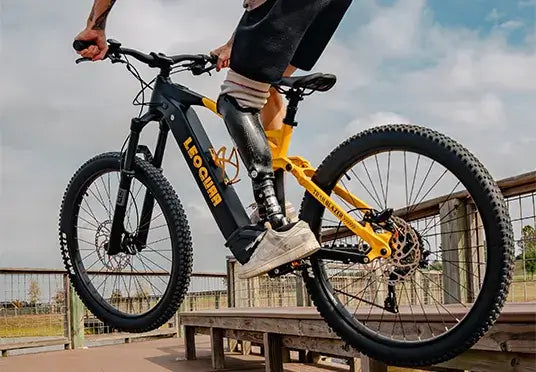



Electric Bike Range Explained: How Far Can You Go Per Charge?
Quick Answer: The average electric bike range is about 25 to 70 miles per charge, but it can vary widely. Your actual electric bike range depends on battery size, terrain, rider weight, speed, and weather. Long-distance e-bikes can reach 100 miles or more in ideal conditions, while hills or heavy loads can cut that range in half.
The real range of your e-bike changes based on many different factors. This guide will explain those factors clearly, so you know what to expect from your bike. We will cover battery specs, terrain, rider input, and weather conditions to help you predict and get the most distance per charge.
Advertised vs Real-World Long Range Electric Bike Performance
You need to look beyond the marketing numbers to become a smart rider. Manufacturers' range claims give you a baseline, but knowing what creates those numbers helps you judge an e-bike's true ability.
Understanding Watt-hours (Wh)
Knowing the battery’s Wh helps you judge what electric bike has the longest range and how to choose the best long range electric bike for your needs. The most important number for determining an ebike range is its battery capacity, measured in Watt-hours (Wh). Think of it like the size of a fuel tank. A bigger Wh number means more stored energy and longer potential range. You can figure this out with a simple formula:
Volts (V) x Amp-hours (Ah) = Watt-hours (Wh)
A standard 48V 10Ah battery has a capacity of 480Wh. This usually gives you about 25-45 miles in real-world riding. Here's a guide to different battery sizes:
- Light/Portable: 250-400 Wh
- Standard Commuter: 400-600 Wh
- Long-Range/Cargo: 600-1000+ Wh
How to Calculate Your Electric Bike Range
Understanding your electric bike range starts with a simple calculation. Here’s an easy way to estimate it:
Take your battery’s voltage (V) and amp-hours (Ah) to find watt-hours (Wh). Then divide by the bike’s average energy use per mile.
Example:
A 48V 10Ah battery gives you 480Wh (48 × 10 = 480). If your bike uses around 20Wh per mile, you can expect an average range of about 24 miles per charge (480Wh ÷ 20Wh).
Keep in mind, real-world factors like terrain, rider weight, and wind can change this number. For riders comparing the average range of electric bikes, this quick check helps you understand what electric bike has the longest range and which setup suits you best.
Estimated Electric Bike Range by Battery Size
| Battery Size | Average Range |
|---|
| 250Wh | 15–25 miles |
| 500Wh | 30–45 miles |
| 750Wh | 50–70 miles |
The "Up To" Clause
When looking for the best long range electric bike, always check what ‘up to’ means in the specs. Companies figure out their advertised "up to" range numbers under perfect lab conditions. These tests almost always use a very light rider, completely flat ground, no wind, and the lowest pedal assist setting. As shown in many real-world e-bike range tests, your actual results will almost certainly be lower. Think of the advertised range like a car's official gas mileage rating - useful for comparison, but not a promise of your everyday performance.
7 Key Factors That Impact Ranger Electric Bike Range and Real-World Distance
Your advertised electric bike range is where you start when comparing the best long range electric bikes. These seven key factors will decide how far you actually travel on one charge.
-
Pedal Assist Level & Throttle Use. This is the biggest factor you control. Using a low-power "Eco" mode uses little energy and maximizes your distance. A high-power "Turbo" or "Boost" mode gives more speed and climbing power but drains the battery much faster. Using throttle-only function, where you don't pedal at all, is the fastest way to empty your battery.
-
Rider Weight & Cargo. The total weight the motor has to move directly affects energy use. A heavier rider, or someone carrying full bags with groceries or work gear, will need more power from the motor to keep speed, reducing overall range.
-
Terrain & Elevation. Hills are battery life's worst enemy. The motor must work much harder to push you uphill, using lots of energy. A 40-mile ride on flat coastal path is very different from a 40-mile ride through rolling hills.
-
Wind Resistance & Speed. Fighting strong headwind is like riding up a constant, gentle hill. Also, wind resistance goes up fast with speed. Doubling your speed from 10 mph to 20 mph doesn't just double the resistance - it makes it four times harder, needing much more power to keep the higher speed.
-
Tire Pressure & Type. Properly filled tires roll with less resistance, so the motor works less. Low tire pressure creates a wider contact area and more friction, draining the battery. Also, wide, bumpy mountain bike tires have more rolling resistance than smooth, narrow road or commuter tires.
-
Riding Style (Starts & Stops). Frequent stops and starts, common in city riding, use more energy than keeping a steady pace. Each time you speed up from a stop, the motor uses lots of power to get you up to speed. Smooth, steady pedaling is much more efficient.
-
Outside Temperature. Lithium-ion batteries, which power almost all e-bikes, don't like cold weather. In near-freezing temperatures, a battery can temporarily lose 20-30% of its working capacity. The chemical reactions inside the battery slow down, reducing its ability to give out energy efficiently.
What Impacts Your Electric Bike Range the Most?
- Riding Style & Assist Level: 50%
- Rider Weight & Cargo: 20%
- Terrain & Wind: 15%
- Tire Pressure & Type: 10%
- Temperature & Other: 5%
How Electric Bike Range Varies in Real-World Scenarios
To see how these factors work together, let's look at how the same 500Wh e-bike might perform for three different riders. This shows how one bike can have very different range results based entirely on use and conditions.
| Rider Persona | Riding Style & Conditions | Estimated Electric Bike Range from 500Wh Battery |
|---|---|---|
| Commuter Clara | Flat city route, minimal stops, uses low pedal assist (Eco), 150 lbs rider, tires properly inflated. | 45-55 Miles |
| Weekend Explorer Will | Rolling hills, mix of pavement and light gravel, uses medium assist (Tour/Normal), 190 lbs rider + 10 lbs gear. | 30-40 Miles |
| Thrill-Seeker Tom | Steep hills, strong headwind, uses high assist (Turbo/Boost) and throttle frequently, 220 lbs rider. | 18-25 Miles |
Examples of the Best Long Range Electric Bikes
If you’re searching for the best long range electric bikes this year, here are some popular models known for excellent distance per charge:
- Rad Power Bikes RadRover 6 Plus: Up to 45 miles on mixed terrain.
- Juiced Bikes Hyper Scrambler 2: Dual battery setup, up to 100+ miles — one of the longest ranges available.
- Leoguar Trailbalzer: High-efficiency pedal assist, up to 100 miles.
Actual ranger electric bike performance always depends on how you ride, road conditions, and proper maintenance.
Does Riding in the Rain Affect Your Electric Bicycle’s Range?
A key question for anyone thinking about a long distance electric bicycle is about how well it works in bad weather. After all, what good is a 70-mile range if a sudden rain shower can damage your bike? This brings us to an important question: are electric bikes waterproof?
Water-Resistant vs. Waterproof
The direct answer is no, almost no electric bike is truly waterproof. However, most quality e-bikes from good brands are water-resistant. The difference is important.
- Waterproof means a device can be completely underwater for some time without damage. Your e-bike cannot do this.
- Water-resistant means the device is built to handle water exposure, like splashes or rain, without breaking. This is the standard for the e-bike industry.
Riding in rain is generally fine, but you should never ride through deep puddles that could cover the motor hub or battery housing.
Decoding IP Ratings
To measure water resistance, companies use the Ingress Protection (IP) rating system. This is usually a two-digit code, like IP65. The first digit rates protection against solids (dust), and the second rates protection against liquids (water). For riding in rain, the second digit matters most.
- IPX4: Protects from splashing water from any direction. This is the industry standard for many good e-bike brands and works fine for riding in most rain conditions.
- IPX5: Protects from low-pressure water jets from any direction. This offers stronger protection and is great for riding in heavy rain.
- IPX6/7: These offer even higher levels of protection but are less common on e-bikes. Even with these ratings, you should not treat the bike as fully waterproof.
Tips for Wet Riding
To keep your ebike safe in wet conditions, follow a few simple rules. First, never use a high-pressure washer to clean your bike, as it can force water past the seals and into sensitive electronics. After riding in rain, use a dry cloth to wipe down the bike, paying special attention to the battery case, controller, and all electrical connection points to prevent rust.

How to Maximize Your Electric Bicycle Distance Per Charge
You have lots of control over your e-bike's range. By using a few smart habits, you can go farther and get the most out of every charge.
-
Be Smooth. Gentle speeding up works better than sudden, jerky starts. Try to see stops coming and coast when possible, keeping your momentum instead of braking hard and speeding up again from zero.
-
Shift Gears Wisely. Your bike's gears are there for a good reason. Use them just like you would on a regular bicycle. Start in a lower (easier) gear from a stop and shift up as you gain speed. This reduces the first strain on the motor, saving lots of energy.
-
Check Your Tires. This is the easiest and most effective way to improve efficiency. Use a pump with a gauge to fill your tires to the recommended pressure (PSI) printed on the tire's side. Check it at least once a week.
-
Lighten the Load. Before a long ride, ask yourself if you need to carry everything in your bag. Removing unnecessary weight means the motor has less work to do.
-
Strategic Battery Care. A healthy battery works efficiently. Don't store it for long periods either fully charged or completely empty. The best storage level is between 40-80%. Store it in a cool, dry place away from extreme temperatures.
-
Plan Your Route. When distance matters most, use mapping tools to find routes that are flatter and have fewer traffic lights or stop signs. A slightly longer but flatter route will often use less battery than a shorter, hillier one.
Battery Care Tips to Maximize Electric Bike Range
Taking care of your battery is the easiest way to keep your electric bike range strong over time. Simple tips include:
- Store your battery at 50–80% charge if you won’t ride for a while.
- Keep it away from extreme hot or cold temperatures.
- Use only the charger recommended by the manufacturer.
- Check your battery’s health at least once a year.
- Avoid fully draining the battery each ride — partial charges are fine.
Good battery habits can make the difference between an average range of electric bikes and the best long range electric bike performance. Read our guide on electric bike battery care.
Conclusion: Your Ride, Your Range—But Be Smart About It
An electric bike's range is not a fixed number printed on a box. It's a changing potential that you ultimately shape. While the battery's Watt-hour capacity sets the upper limit, your riding style, the terrain you choose, and how you maintain your bike determine the final result. By understanding how pedal assist, weight, hills, and even tire pressure affect performance, you are no longer just along for the ride but actively in control. You have the knowledge to get maximum distance, turning that advertised "up to 70 miles" into a reliable reality for your daily commute or next long distance adventure.
Frequently Asked Questions About Electric Bicycle Distance
Q: How accurate are the range estimates that manufacturers provide for electric bikes?
A: Manufacturer range estimates are calculated under ideal lab conditions with lightweight riders, flat terrain, no wind, and minimum assist levels. Your real-world range will typically be 20-40% lower than advertised, so it's best to use these numbers only for comparing different bikes rather than expecting them in daily use.
Q: Can I ride my electric bike in the rain without damaging it?
A: Yes, most quality e-bikes are water-resistant and can handle rain riding safely. Look for bikes with at least an IPX4 rating, which protects against water splashes from any direction. However, avoid riding through deep puddles and never use high-pressure washers to clean your bike.
Q: What's the single most important factor that affects my e-bike's range?
A: The pedal assist level you choose has the biggest impact on range. Using eco or low-assist modes can double or even triple your distance compared to high-power turbo modes. The throttle-only function drains the battery fastest, so pedal along with the motor assistance for maximum efficiency.
Q: How much does rider weight affect electric bike range?
A: Rider weight significantly impacts range because the motor must work harder to move more weight. A 200-pound rider will typically get 15-25% less range than a 150-pound rider under the same conditions. Adding cargo like groceries or work gear further reduces range proportionally.
Q: Do electric bike batteries lose capacity in cold weather?
A: Yes, lithium-ion batteries can temporarily lose 20-30% of their capacity in near-freezing temperatures. The chemical reactions inside slow down, reducing the battery's ability to deliver power efficiently. This capacity loss is temporary and returns when the battery warms up, but plan for shorter rides in winter conditions.


Leave a comment