



Is Bike Frame Protection Worth It for Everyday E-Bike Use?
Found a fresh scuff after you'd locked your e-bike outside the grocery store? Bike frame protection can be well worth the purchase if your lock, your bag straps or your shoes are all rubbing on the same painted spot. For regular use, we'd normally go in for a few well-placed patches rather than pay to wrap the whole frame.
You don't need a mountain trail to mark the paint. You don't need to cover every tube just because you're riding it every day. The real question is: what actually comes into contact with your frame and can you stop that contact before you go and buy anything?
Where Everyday Bikes Pick Up Frame Wear
Start where you park. Put the bike alongside your normal rack and simply check which painted section is in contact with the metal. A bit of movement as you're going to unlock it can cause that section to be dragged repeatedly across the same rough edge. If you can do it without making the bike unstable or compromising the lockup, then change your parking position.
Then check the things you carry. A frame-bag strap may stay in one place while the loaded bag rocks beneath it. Dust caught at that contact point can leave a dull patch. Take the bag off rather than judging the paint around its edges; the worn area may be hidden underneath.
At the front of the bike, turn the handlebars slowly with the bike stationary. Watch whether a cable housing touches the head tube. If it does, a patch may help with surface rub, but a tight, kinked, or badly routed cable needs attention first. Don't tape a cable to the frame to stop it moving.
Right at the end, check where your shoes pass the back of the frame and where your foot crosses the step-through opening. A scuff in that area is a reason to go back and re-assess the fit and how you're getting on the bike, not a reason to go around and tape up every bit of surface in the vicinity.

Match Frame Protection to the Contact
Clear adhesive film is a replaceable layer that goes over the paint. You can get small pre-cut patches to cover a single rubbing spot or larger kits to cover a greater area of the frame. A raised chainstay guard is a different proposition to a thin clear patch, so don't just assume that any product that's labeled as a 'protection' product is the same.
|
Contact Point |
First Response |
Protection Option |
|
Cable housing against paint |
Check routing and free steering |
Small film patch on the painted contact area |
|
Bag strap against a tube |
Secure the bag and remove trapped dirt |
Film beneath the strap footprint |
|
Shoe brushing the frame |
Check riding fit and mounting movement |
Patch over the affected painted area |
|
Frame resting against a parking rack |
Change position where practical |
Film where repeated light contact remains |
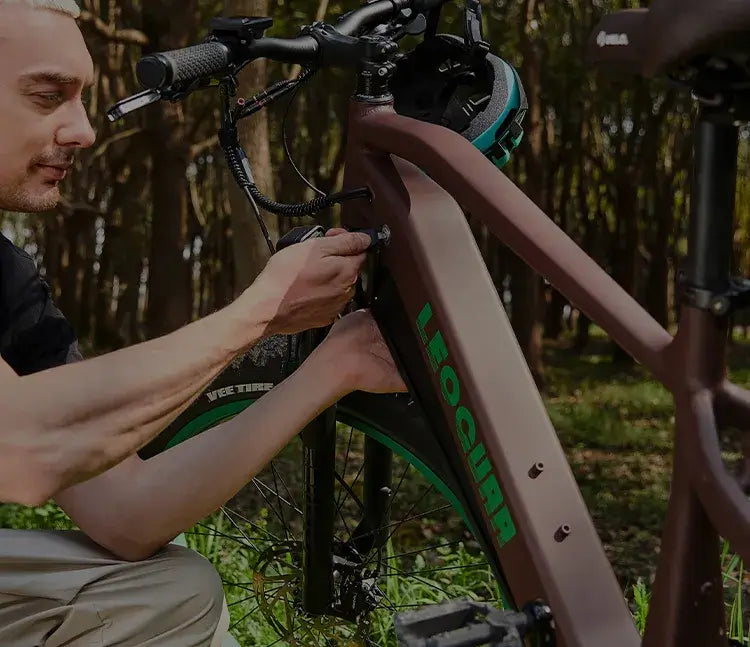
Check what your bike already has. Leoguar lists a chainstay guard on the Trailblazer Mid-drive Motor EMTB for chain slap and surface marks in that area. That doesn't mean the rest of the frame is covered, or that every Leoguar model has the same guard.
Film has its limits. A patch won't stop a loaded bike tipping into a metal post, won't make an inappropriate transport clamp any safer and won't fix a crack. If you've got a dent, a crack, or loose paint as a result of an impact, then have it checked before you go any further. A clean-looking patch is no guarantee that the frame underneath is in any way sound.
Spend on Protection Where You'll Use It
We'd buy the smallest set that will cover the contact that you can actually identify. If one bag strap is rubbing on one tube, then a full frame kit adds cost and fitting work without necessarily doing any more for your actual day-to-day ride than a properly placed patch would.
More coverage starts to make sense when you have several recurring contact points, use shared bike storage, or carry the bike frequently. You might also simply care a lot about keeping the finish tidy. That's a fair reason to spend more, provided you're paying for appearance rather than expecting crash protection.
Compare the fitted total rather than just the kit price. Find out if the price includes preparation, installation and fixing of the lifted edge. With a DIY kit in particular, you need to check what the kit actually includes and whether you'd be looking at replacing just one piece or buying the whole set again if you made a mistake.
And keep your spending priorities in order. If the lock you've got isn't appropriate for your parking situation, then sort that out first. Our bike-locking guide focuses on locking the bike; the film doesn't provide any additional theft protection.
You can also skip the purchase. If nothing rubs, you park carefully, and a few cosmetic marks won't bother you; clean the frame and keep checking it. There's no need to buy a wrap to prove you're taking care of your e-bike.
Fit Bike Film Without Blocking Service
Before you go and peel a backing sheet, make sure the adhesive is appropriate for your bike's finish. If you've got a freshly painted bike, you're peeling clear coat, you've got a textured surface, or you're adding decals, then you need a specific answer from the bike/film maker. A small test patch won't necessarily mean that when you go to remove it later you'll have weak paint.
Clean the bike first (our e-bike washing guide deals with that separately). Then go by the film's own instructions for preparation (including any restrictions on cleaners or existing polish). Don't just assume that the spray you use after washing is acceptable under an adhesive.
Application methods differ. Use the instructions supplied with the actual product you buy, not a water-and-soap recipe copied from another type of film.
Lay each piece against the frame with the backing still on. Check the edges against the battery opening, charging port, fasteners and cable entry points. Leave access to the service covers and ensure the identification and safety labels are readable. On a folding bike, don't bridge a hinge, latch or joint with film.
Trim only as the kit maker instructs (away from the bike). Don't run a knife along the paint to try to fit a universal patch. Once the patch is fitted, turn the handlebars and check that the battery can still be removed and reinstalled as the bike manual states. If there's any interference, move the patch before you ride.
Care for Frame Protection After Fitting
After a wet commute, check the edges underneath the bag straps when you take the bag off. If you're finding dirt building up right by a lifting edge, then stop rubbing it with the strap and go with the manufacturer's repair or replacement advice. Simply pressing the dirty film back down is not a permanent solution.
Use cleaners appropriate for both the film and the frame finish. Don't aim a pressure jet at an edge and don't scrub the grit across the surface with a dry cloth. The film still requires care and it doesn't turn the bike into something you can just wash however you like.
Removal is just as important as fitting. Removal can reveal flaws in the base paint or clear coat. If the finish is already lifting, then get advice. Don't just assume that the heat or solvent instructions for another brand will work with your patch.
Take a photo of each protected area prior to fitting. You'll have a record of any existing marks and a clear reference point if at some stage you subsequently need to go to a shop and ask them about a change underneath. If damage appears after a fall or impact, then get the bike checked rather than just hiding it under another layer.
Bike Frame Protection FAQ
Will a universal kit fit my e-bike?
Check the actual piece sizes against the tubes and contact points you're trying to cover. A label saying 'e-bike' doesn't in any way guarantee clearance around your battery, your frame joints or your cable ports and a kit cut for another model may well leave you with the wrong gaps.
Should I buy matte or gloss film?
Ask for a sample or a close-up showing that film on a similar finish before ordering a large kit. Clear film can still change the surface's appearance, so decide whether a visible patch edge or a change in sheen would bother you.
Can I use car paint protection film?
Don't buy a roll just because it costs less per square foot. Ask the supplier whether that film and its removal method suit your bike's finish and tube shapes, then compare how much usable material you'll need with a bike-specific patch kit.
Can I replace just one worn patch?
Ask before you buy, as availability of replacement pieces varies from supplier to supplier and kit. Keep the product name and order number so that you can request the exact same material and finish rather than having to work from an old photo.
Will protection affect my bike's warranty?
Get model-specific advice prior to applying adhesive over questionable paint or removing a factory guard. Send Leoguar support a photo and the product details; don't assume that all film is approved, and don't assume that every adhesive automatically cancels coverage.


Leave a comment