




E Bike vs Motorcycle: Cost, Speed, and Daily Use Compared
Choosing Your Perfect Two-Wheeled Ride
Picking your next bike is harder than ever. Electric power is changing everything, making the lines between regular bikes and motorcycles less clear. Do you need something for daily trips to work, weekend fun, or both? This guide will help you compare e-bikes, electric motorcycles, and gas motorcycles. We'll give you the facts you need to choose wisely. Here's how these three options compare at a glance.
| Feature | E-Bike | Electric Motorcycle | Gas Motorcycle |
|---|---|---|---|
| Best For | City trips, fun rides, fitness | Highway travel, fast riding | Long trips, raw power |
| Typical Speed | 20-28 mph (with help) | 45-100+ mph | 45-120+ mph |
| Purchase Cost | $1,000-$5,000 | $8,000-$25,000+ | $5,000-$20,000+ |
| Licensing | Usually not needed | Motorcycle license needed | Motorcycle license needed |
This table gives you the quick facts. But the real choice depends on the details. Let's look deeper at what makes these vehicles different, their true costs, how they perform, and what it's like to own each one.
Understanding Each Type of Bike
Much confusion comes from not knowing what these bikes really are. Some high-power e-bikes look like motorcycles. Some low-power electric motorcycles look like big bicycles. Let's make this clear.
What Makes an E-Bike Different
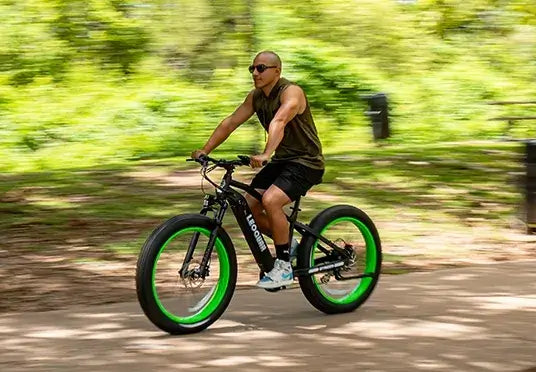
An e-bike is still a bicycle first. The key feature is working pedals. It has a small electric motor and battery to help your pedaling, not replace it completely.
Most places use a common e-bike system to control them:
- Class 1: Help only when pedaling, stops helping at 20 mph.
- Class 2: Has a throttle but still stops at 20 mph.
- Class 3: Help only when pedaling, stops helping at 28 mph.
These bikes work best on bike lanes and slow roads. They mix human power with electric help.
What Makes an Electric Motorcycle Different
An electric motorcycle has no pedals. The electric motor does all the work. In terms of power, rules, and build quality, it matches a regular gas motorcycle perfectly. It's built with a strong frame, good suspension, and brakes that can handle highway speeds safely. Don't think it's weak because it's quiet-these are powerful machines.
What About Gas Motorcycles
The classic gas motorcycle is our comparison point. Its gas engine represents the old standard for two-wheeled power, range, and speed. When we compare an e-bike to a motorcycle, we mean both the classic gas type and the new electric type.

Real Cost of Ownership
The price tag is just the start. The true cost shows up when you add fuel, repairs, and insurance over many years. Motorcycles cost much more than e-bikes in almost every way.
What You Pay Upfront
The starting cost varies a lot, but the groups are clear. Based on 2026 prices, here's what new vehicles cost:
- E-Bikes: A good starter e-bike costs about $1,000. Mid-range and nice models cost $2,000 to $5,000. High-performance mountain e-bikes can cost more.
- Electric Motorcycles: These cost a lot. Basic city models start around $8,000. Highway bikes from Zero or LiveWire quickly jump to $15,000 to $25,000 and up.
- Gas Motorcycles: The range is wide here. A new small bike perfect for beginners costs $5,000. Popular mid-range models cost $8,000 to $15,000. High-performance and touring bikes easily cost over $20,000.
Monthly and Yearly Costs
This is where e-bikes show their biggest money advantage.
- Energy and Fuel: An e-bike costs pennies to charge, less than $0.01 per mile. Electric motorcycles are also efficient, costing $0.03 to $0.05 per mile. Gas motorcycles cost $0.10 to $0.15 per mile, depending on gas prices.
- Repairs and Care: E-bikes need simple care like regular bikes-chain oil, brake pads, and new tires. Electric motorcycles don't need oil changes but still need professional work on electrical systems, brakes, and suspension. Gas motorcycles need the most care, with regular oil changes, valve work, and other engine services.
- Insurance and Registration: Most places don't require registration or insurance for e-bikes, saving hundreds per year. All motorcycles need a license, registration, and insurance, which can cost a lot each year, especially for new riders.
Here's what you can expect to pay each year:
| Cost Factor | E-Bike | Electric Motorcycle | Gas Motorcycle |
|---|---|---|---|
| Fuel/Energy (2,000 miles) | ~$20 | ~$80 | ~$250 |
| Maintenance | $50 - $150 | $150 - $400 | $300 - $700 |
| Insurance | $0 | $300 - $1,000+ | $300 - $1,000+ |
| Registration Fees | $0 | $50 - $150 | $50 - $150 |
| Total (Per Year) | $70 - $170 | $580 - $1,630+ | $700 - $1,980+ |
Speed and Power Differences
Beyond cost, choosing between an e-bike and motorcycle often comes down to one question: How fast and far do you need to go? The performance gap between these types is huge and decides where and how you can ride.
Top Speed and Getting Up to Speed
An e-bike gives gentle help. Its motor helps you speed up and climb hills, but it's limited to 20 or 28 mph in most places. Getting up to speed feels smooth, like you suddenly have super-strong legs.
Motorcycles are in a different league. They keep up with car traffic, with top speeds from 45 mph on small city bikes to over 100 mph on performance models. Getting up to speed is the most exciting difference. The instant, quiet power of an electric motorcycle can be surprisingly quick, often faster than gas bikes from a stop. This isn't help-it's raw power on demand.
How Far You Can Go and Charging
Worrying about running out of power is real for any electric vehicle.
- E-Bikes: Usually go 20 to 70 miles per charge. This depends a lot on rider weight, hills, and how much motor help you use. Using less help saves battery but requires more work from you.
- Electric Motorcycles: Go farther, from 60 miles on city bikes to over 200 miles on expensive long-range models.
Charging is also different. You can remove an e-bike battery and charge it from any wall outlet in a few hours. Electric motorcycles can charge from wall outlets too, but take much longer (8+ hours). For daily use, most owners want a Level 2 charger, which fills the battery in 2-4 hours.
How They Handle and Feel
Controlling these machines feels completely different. An e-bike weighs 40-80 pounds and handles just like a bicycle. It's quick to turn, easy to control at slow speeds, and lets you squeeze through tight city spaces. Motorcycles weigh 300-500+ pounds. This weight makes them feel very stable on the road, especially at highway speeds. They lean into turns and need deliberate steering moves. While less nimble in parking lots, that weight gives a feeling of safety and presence that a light e-bike can't match.
A Day Using Each Type
Numbers are helpful, but they don't tell the whole story. To really understand which vehicle fits your life, let's imagine using each for common daily tasks. This is where the real pros and cons become clear.
Getting to Work in the City
Picture a 5-mile trip through busy city streets.
Using the E-Bike: You leave your apartment and roll your bike into the elevator. You stick mostly to bike lanes, passing cars stuck in traffic. A steep hill on your route isn't a sweaty challenge anymore-you just turn up the motor help and spin up it easily. You arrive at work, bring the bike inside, and park it by your desk. The whole trip is stress-free, gives you light exercise, and you never worried about parking.
Using the Motorcycle: The trip involves joining 45 mph traffic, and the motorcycle's power makes this feel safe and easy. You keep up with traffic flow with no problem. But the last half-mile crawls along slowly. When you arrive, you spend ten minutes driving around looking for motorcycle parking, which is rare and expensive. You have to wear a full helmet, jacket, and gloves, which you now have to carry around. For a short city trip, it feels like using a hammer to crack an egg.
Running Weekend Errands
Now picture a Saturday afternoon with quick stops: the post office, grocery store, and hardware store.
Using the E-Bike: Each trip is fun. You hop on, wearing just a helmet, and ride a few blocks. At the grocery store, you park right by the entrance. A basket on your bike easily holds groceries. The frequent stops and starts are easy, and you can take shortcuts through parks that cars can't use.
Using the Motorcycle: Getting ready for a 5-minute ride to the post office feels like work. Helmet, jacket, gloves, and finding the key-just for a quick trip. Parking is a problem at each stop. While motorcycles can carry more stuff with bags, they're much less convenient for quick, frequent trips. It's a machine that wants to be on open roads, not stopping every few blocks.
Weekend Fun and Exploring
Finally, it's a beautiful Sunday with no plans but to explore.
Using the E-Bike: You head to a state park. You ride on paved roads to get there, then switch to gravel trails and scenic paths inside. You explore deep into woods, reaching viewpoints and picnic spots that cars can't reach. Your adventure is quiet, letting you hear nature, limited only by your energy and battery. It's about discovery on a personal level.
Using the Motorcycle: This is where motorcycles really shine. You don't just go to a local park-you decide to ride 100 miles to a scenic spot in the next county. The highway is your territory. The power, stability, and range mean the journey itself is the adventure. You lean into sweeping curves, feel the rush of speed on straight roads, and cover huge distances with confidence. This is freedom on a grand scale, connecting towns and landscapes in a way an e-bike never could.
Making Your Choice
There's no single "better" option in the e-bike vs motorcycle debate. The best choice matches your budget, daily routes, and the type of freedom you want. An e-bike wins for city travel and low-cost transport. If you travel mostly within 10 miles, on roads with speed limits under 45 mph, and you value flexibility, exercise, and low running costs, the e-bike is almost certainly right for you.
A motorcycle-electric or gas-is better for speed, range, and capability. If your commute involves highways, you plan long trips, or you want the performance and road presence of a real motor vehicle, then you need a motorcycle. You must be ready for higher costs, licensing needs, and extra planning that comes with it. To find your answer, ask yourself these key questions:
- Where will I do 90% of my riding? (City streets and bike paths, or highways and country roads?)
- How fast and far do I need to go on a typical day?
- What's my total budget, including purchase, insurance, and maintenance?
- Do I want the option to exercise, or do I want purely motorized transport?
Answering these honestly will point you in the right direction. Whether you choose the handy utility of an e-bike or the powerful freedom of a motorcycle, you're choosing a more efficient and engaging way to travel.
FAQ
Q: Do I need a license to ride an e-bike?
A: In most places, you don't need a license for Class 1, 2, or 3 e-bikes. However, some areas have age requirements (usually 14-16 years old) and helmet rules. Always check your local laws before riding.
Q: How long do e-bike batteries last before needing replacement?
A: Most e-bike batteries last 3-5 years or 500-1000 charge cycles before losing significant capacity. Replacement batteries typically cost $300-800 depending on the bike model and battery size.
Q: Can I ride an e-bike in the rain?
A: Yes, most e-bikes are designed to handle light rain and wet conditions. However, avoid riding through deep puddles or heavy downpours, as water can damage electrical components. Always dry your bike thoroughly after wet rides.
Q: What's the main advantage of electric motorcycles over gas motorcycles?
A: Electric motorcycles offer instant torque for quick acceleration, much lower operating costs (no gas or oil changes), and silent operation. However, they currently have limited range compared to gas bikes and take longer to "refuel" through charging.
Q: How much does motorcycle insurance typically cost?
A: Motorcycle insurance varies widely based on your age, location, riding experience, and bike type. New riders might pay $500-1500+ per year, while experienced riders with good records might pay $200-600 annually. Sport bikes and high-performance models cost more to insure than cruisers or standard bikes.


Leave a comment