




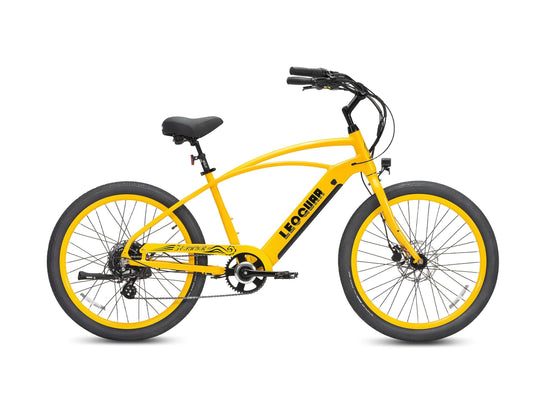


City Commuter Electric Bike: What Actually Makes a Bike City-Friendly
Moving Beyond Power
We've all been there: stuck in traffic, watching the minutes tick by. You calculate the cost of gas or a rideshare and know you might arrive flustered and sweaty. The promise of a city commuter electric bike is appealing—it bypasses gridlock and saves your time. But the market floods you with options, all shouting about bigger motors and huge batteries. We're here to cut through that noise and help you understand what really matters.
A truly great city commuter electric bike isn't just about raw power. It's a smart tool designed for the unique challenges of city streets. True city-friendliness rests on four key pillars: Agility, Practicality, Portability, and Security. Understanding these will help you choose a bike that doesn't just get you from A to B, but makes the entire journey smarter, safer, and more fun.
The Urban Rider's Toolkit
More Than a Bike
First, let's change how we think about this. A city commuter electric bike isn't a toy or a weekend trail machine. It is a purpose-built transportation tool designed to solve specific urban problems: traffic jams, high costs, gaps in public transit, and the need for efficient personal mobility. It's your key to a more fluid and flexible way of moving through your city.
Key Differences at a Glance
Not all e-bikes are the same. Understanding the basic differences helps you know what you're looking for.
| Attribute | City Commuter E-Bike | Hardtail E-MTB | Folding E-Bike |
|---|---|---|---|
| Primary Use | Daily Commuting, Errands | Trail Riding, Rough Terrain | Ultimate Portability, Multi-Modal Commutes |
| Tires | Narrow/Slick (1.5-2.0") | Knobby/Wide (2.2"+) | Small/Compact (16-20") |
| Riding Position | Upright, Comfortable | Aggressive, Forward-Leaning | Variable, Often Compact |
| Core Strength | All-Weather Efficiency & Comfort | Off-Road Durability & Traction | Compactness for Transit & Storage |
Know the Rules
E-bikes fall into three classes, which decide where and how you can ride. This matters for urban riders who need to use different streets and bike paths.
- Class 1: Pedal-assist only (the motor helps only when you pedal). The help stops at 20 mph. These are usually allowed wherever regular bicycles are.
- Class 2: Has a throttle that can power the bike without pedaling, plus pedal-assist. The motor help (both throttle and pedal-assist) stops at 20 mph. Rules can be slightly stricter than Class 1 in some areas.
- Class 3: Pedal-assist only, but the help continues up to 28 mph. These are often limited to on-street bike lanes or roads, and may not be allowed on shared paths.
Always check your local city and state laws, as rules can vary.
The Four Pillars
To judge a city commuter electric bike like an expert, we use a simple system. These four pillars represent the core features that separate a truly great urban e-bike from the rest.
Pillar 1: Agility
The urban environment changes quickly and without warning. Your bike needs to be an extension of your body, letting you react fast and with confidence.
- Frame Geometry & Riding Position: A proper city bike promotes an upright riding posture. This isn't just for comfort; it raises your head, giving you a clear view of traffic, pedestrians, and potential dangers. You can see and be seen more easily, which is vital for safety.
- Handlebars & Steering: Look for flat or swept-back handlebars. Unlike the dropped bars on a road bike, these provide a more relaxed grip and allow for quick, natural steering changes. This makes weaving through slow-moving traffic or making tight turns at intersections feel natural and controlled.
- Wheel and Tire Size: The sweet spot for urban riding is typically 700c or 26-inch wheels paired with medium-width (1.5-2.0 inch) slick or semi-slick tires. This combination offers the best balance: it's efficient enough to roll fast on pavement, wide enough to absorb cracks and bumps for a comfortable ride, and strong enough to offer good puncture resistance.
Pillar 2: Practicality
A commuter bike has a job to do, day in and day out. Practicality means the bike comes equipped from the factory to handle daily use without needing a long list of add-on parts.
- Integrated Fenders & Racks: These are not optional extras; they are must-haves. Full-coverage fenders keep you and your work clothes clean and dry from road spray after rain. A sturdy rear rack is essential for carrying a laptop bag, groceries, or a change of clothes in panniers, freeing you from a sweaty backpack.
- Built-in Lighting: Integrated lights powered by the bike's main battery are a game-changer. You never have to worry about charging them separately or forgetting them at home. They are always ready, significantly boosting your visibility and safety during dawn, dusk, and nighttime rides.
- Chain Guards & Belt Drives: A simple chain guard or a fully enclosed chain case prevents your pants from getting caught or stained with grease. For the ultimate in low-maintenance, clean commuting, consider a model with a Gates Carbon Belt Drive. It's quiet, durable, and requires almost no upkeep. Top-tier designs focus on integrating features that allow bikes to move seamlessly between modes of transport, making the commute much smoother.
Pillar 3: Portability
Your commute doesn't always start and end at your front door. Portability is about how easily the bike fits into the other parts of your life.
- Weight: This is a major consideration for anyone living in an apartment or needing to carry their bike upstairs at work. While e-bikes are naturally heavier than standard bikes, a well-designed city commuter electric bike should aim to stay under 55 lbs (25 kg). A lighter bike is simply easier to manage when you're not riding it.
- Frame Design: A step-through or "low-step" frame is incredibly practical for stop-and-go city riding. It allows you to get on and off quickly and easily, regardless of what you're wearing—be it a suit, a dress, or tight jeans.
- Folding Mechanisms: For the ultimate multi-modal commuter who combines cycling with a train, bus, or car ride, a folding e-bike is the peak of portability. They collapse into a compact package that can be stored under a desk or in a luggage compartment.
Pillar 4: Security
An e-bike is a significant investment, and in a city, it's a target for theft. Security features are not just about preventing loss, but also about ensuring your safety.
- Removable Battery: This is a must-have feature. It allows you to charge the battery easily indoors at your home or office. More importantly, removing the battery makes the bike much less attractive to thieves, as the battery is the most expensive single part.
- Built-in Locks: Many European-style city bikes come with a "cafe lock" or frame lock built into the rear wheel. This is perfect for securing the bike for a quick stop at a coffee shop or store, preventing opportunistic roll-away theft.
- Modern Security Tech: Look for advanced features like built-in alarms that are triggered by movement, or integrated GPS tracking that can help you locate your bike if it is stolen.
- Electrical System Safety: Security also means safety from malfunction. Insist on a battery and electrical system that is certified to UL 2271 and UL 2849 standards. This independent certification ensures the system has been rigorously tested to prevent fires, a critical safety measure for a device you'll be charging in your home or office.
Motor, Battery, and Brakes
The Powertrain Explained
The heart of any city commuter electric bike is its powertrain. Understanding the basics will help you match the bike's performance to your city's terrain.
Hub vs. Mid-Drive Motors: You'll encounter two main types. Hub-drive motors are located in the center of the front or rear wheel. They are generally simpler, more affordable, and provide a "pushing" or "pulling" sensation. They are perfectly adequate for flatter cities. Mid-drive motors are located at the pedals and apply power directly to the drivetrain. They offer a more natural, intuitive feel that mimics your own pedaling effort, and they excel at climbing hills efficiently.
The Battery: Range & Longevity: Don't get fixated on the biggest number. For most urban commutes, a battery that provides a realistic range of 30-50 miles (50-80 km) is more than sufficient. "Real-world" range is always less than the advertised maximum and is affected by your weight, terrain, and the level of assist you use. Most importantly, ensure the battery uses cells from a reputable manufacturer (like Samsung, LG, or Panasonic) and is UL certified for safety and reliability.
Stopping Power: Brakes: E-bikes are heavier and faster than regular bikes, so they require superior braking. Hydraulic disc brakes are the gold standard. They provide powerful, consistent stopping power in all weather conditions with minimal hand effort. Mechanical disc brakes are a good budget-friendly alternative, but they may require more frequent adjustment.

Making the Right Choice
Test Ride Before You Buy
Specifications on a page can only tell you so much. The feel of a bike—its balance, the responsiveness of the motor, the comfort of the saddle—is deeply personal. We strongly recommend test riding your top choices. A 15-minute ride can reveal more than hours of online research.
Budget for the Full Cost
Your investment doesn't end with the bike itself. To commute safely and effectively, you need to budget for essential accessories. A high-quality lock (or two), a certified helmet, and a good set of pannier bags for your rack are not afterthoughts; they are part of the total cost of creating a reliable transportation system.
Local Support vs. Online
Buying from a local bike shop provides invaluable benefits: expert assembly, professional fitting, and a go-to place for service and repairs. Buying online can often offer more competitive pricing and a wider selection. There's no single right answer, but weigh the long-term value of local support against the initial savings of an online purchase. A city commuter electric bike is a workhorse, and having a trusted mechanic can be priceless.
Frequently Asked Questions
Q: What's the difference between a city electric bicycle and other types of e-bikes?
A: A city commuter electric bike is specifically designed for urban transportation with features like upright riding position, integrated fenders and racks, built-in lights, and puncture-resistant tires. Other e-bikes like mountain or road e-bikes are optimized for different terrains and riding styles.
Q: How far can I expect to travel on a single charge with a city commuter electric bike?
A: Most quality city commuter electric bikes provide a realistic range of 30-50 miles on a single charge. However, your actual range depends on factors like your weight, terrain, weather conditions, and how much motor assistance you use.
Q: Do I need a special license to ride a city commuter electric bike?
A: In most areas, Class 1 and Class 2 e-bikes (which assist up to 20 mph) don't require a license and can be ridden wherever regular bicycles are allowed. Class 3 e-bikes (which assist up to 28 mph) may have some restrictions. Always check your local laws as regulations vary by location.
Q: How much should I budget for a quality city commuter electric bike and accessories?
A: A quality city commuter electric bike typically costs between $1,500-$4,000. Don't forget to budget for essential accessories like a good lock ($100-$200), certified helmet ($50-$150), and pannier bags ($100-$300) for a complete commuting setup.
Q: What maintenance does a city commuter electric bike require?
A: Regular maintenance includes keeping tires properly inflated, cleaning and lubricating the chain (or no maintenance for belt drives), checking brakes, and ensuring the battery is properly cared for. Most city e-bikes require less maintenance than traditional bikes due to features like chain guards and integrated components.


Leave a comment