

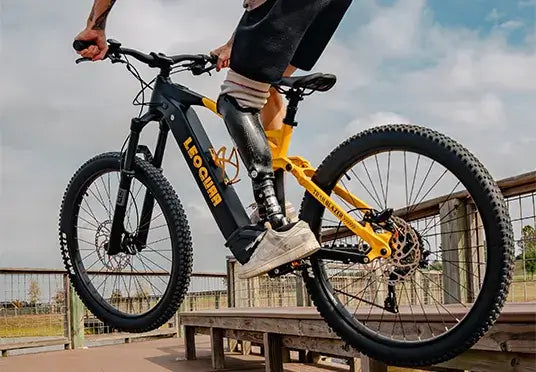


What Is the Fastest Electric Bike You Can Ride Without a License?
What Is the Fastest Electric Bike You Can Ride Without a License
Let's get right to the point. When people ask what's the fastest electric bike, the real answer depends on what you can legally ride as a bicycle—because once you cross the legal line, you're no longer shopping for an e-bike, you're shopping for a motor vehicle. The fastest electric bike you can legally ride without a license, registration, or insurance isn't a specific model—it's a legal classification: the Class 3 e-bike.
The top assisted speed for this class is 28 mph (approximately 45 km/h). For riders chasing the fastest electric bike they can ride without extra paperwork, 28 mph pedal assist is the ceiling that keeps you in the bicycle category. For anything faster with motor power, the rules, enforcement, and liability shift fast—often faster than the bike itself.
This is the legal limit where the motor will provide assistance while you are pedaling. Anything designed to go faster with motor assistance typically falls into a different vehicle category, like a moped or an electric motorcycle, which comes with all the legal requirements of a motor vehicle.
You came here looking for speed, but you also want to stay on the right side of the law. We understand that balance perfectly. In this guide, we'll break down exactly what "Class 3" means, what technical components create a truly "fast" feeling ride, and what you need to look for to buy a powerful e-bike that is fully street-legal.
In 2026, you'll see production-level machines marketed at 50, 60, even 80+ mph, and they can be wildly impressive on paper. Real-world speed tests confirm that high-speed e-bikes using 72V or higher systems with 5,000W+ motor setups can sustain flat-ground runs in the 40–55 mph range in controlled environments, but these figures exceed what the bicycle classification allows on public roads. Part of that disparity is due to wind resistance and heat buildup at sustained high speeds—conditions that quickly reveal the limitations of components not designed for prolonged high-output use.
But that kind of speed lives outside the e-bike rulebook in most places—so the moment you use motor power to reach it on public roads, the “fastest e-bike” conversation turns into a licensing and classification conversation.
Understanding E-Bike Classes
To understand why 28 mph is the magic number, we need to look at the legal framework. Most states in the US have adopted a three-class system to define and regulate electric bikes. At shows like CES, it's common to see “e-bikes” that break 50 mph, but the legal three-class system is exactly what separates a fast bicycle from a lightweight electric motorcycle.
Recent CES 2026 showcases like the Hezzo 9 K9 (claimed ~43 mph on flat pavement) demonstrate a growing interest in carbon-frame speed-oriented e-bikes, but those figures still sit outside the legal assist limits in most jurisdictions. Highlighting these emerging trends helps riders separate what’s buzzworthy from what’s actually street-legal. This system ensures that vehicles with different capabilities are used in appropriate places, keeping riders, pedestrians, and drivers safe.
This classification is the single most important factor in determining where and how you can ride. All three classes are generally limited to a motor power of 750 watts (or 1 horsepower). The primary differences are the top assisted speed and whether the bike can be propelled by a throttle alone.
For maximum clarity, here is how the three classes break down:
| Class | Top Assisted Speed | Throttle? | Pedal Assist Required? |
|---|---|---|---|
| Class 1 | 20 mph (32 km/h) | No | Yes, motor assists only when you pedal. |
| Class 2 | 20 mph (32 km/h) | Yes | No, can be propelled by throttle alone. |
| Class 3 | 28 mph (45 km/h) | No* | Yes, motor assists only when you pedal. |
Note: Some states and municipalities allow Class 3 e-bikes to have a throttle, but it must cut off at 20 mph, with pedal assist continuing up to 28 mph.
As you can see, Class 3 is the clear answer for the rider seeking the highest speed while remaining classified as a bicycle. When you see “40+ mph fastest e-bike” lists online, the fine print is usually the same: those speeds are achieved with unrestricted motor output, off-road setups, or classifications that don’t ride under standard e-bike rules. That’s why the Class 3 label matters more than the headline speed number. While this system is widely adopted, local laws can vary. It's crucial to check your local regulations. For detailed information, you can review state electric bicycle laws.

Beyond the Speed Limit
Here's an industry secret: the 28 mph limit is only half the story. The spec sheet tells you the bike's legal top assisted speed, but it doesn't tell you how it feels to get there. The difference between a sluggish e-bike and a thrilling one lies in components that deliver power quickly and efficiently. This is what truly makes a Class 3 e-bike feel "fast."
Motor Power and Torque
While the legal nominal power limit is 750W, this number doesn't capture the whole picture. You need to look at two other factors: peak wattage and torque.
Nominal wattage is the motor's continuous power output. Peak wattage is the maximum power the motor can draw for short bursts, like during acceleration. A bike with a high peak wattage will launch you from a standstill much more aggressively.
Torque (Nm) is the most important metric for acceleration. Torque, measured in Newton-meters (Nm), is the rotational force the motor produces. High torque is what gets you up hills without bogging down and what gives you that exhilarating push when the light turns green. Think of it like this: top speed is a marathoner's sustained pace, but torque is a sprinter's explosive start. For a truly fast-feeling bike, look for a motor with 80 Nm of torque or more.
The Role of the Battery
A bike's battery isn't just about range; it's a critical performance component. The key metric here is voltage (V). Most quality e-bikes use 48V systems, which are a great standard. However, performance-oriented bikes often use a 52V system. A higher voltage battery allows the entire system to deliver power to the motor more efficiently. This translates to less heat, less stress on the components, and noticeably snappier acceleration. It's a premium feature that performance enthusiasts actively seek out.
At the same time, the fastest electric bike experience always comes with a tradeoff: range drops sharply when you ride near the assist limit for long stretches. Industry data shows that while higher voltage systems like 52V improve acceleration and efficiency, they often shift the practical range down by 10–20% when riders hold near the assist cutoff on mixed terrain, compared with riding at moderate speeds around 20–25 mph. That’s why some performance e-bike reviews emphasize real-world range numbers alongside peak speed figures. Cruising efficiently at moderate speeds can feel effortless for miles, but holding a Class 3 close to 28 mph with frequent stops, hills, and headwinds will drain a battery much faster than most riders expect.
Gearing and Drivetrain
Don't forget that an e-bike is still a bicycle. A quality drivetrain with a wide range of gears is essential on a fast electric bike. It allows you to pedal effectively along with the motor, especially as you approach and exceed the 28 mph assist cutoff. A poor gear range can leave you "ghost pedaling"—spinning your legs with no resistance—at high speeds, making it difficult to maintain momentum or push past the limit under your own power.
The 28 MPH Experience
If what's the fastest electric bike you can ride without a license is your main question, this 28 mph Class 3 ride feel is exactly what you're shopping for. So, what does it actually feel like to ride a well-equipped Class 3 e-bike? It's a game-changer.
The first thing you notice is the immediate surge of acceleration. From a dead stop at a traffic light, a high-torque motor gets you up to speed instantly, often ahead of the cars around you. This isn't just fun; it's a safety feature, allowing you to quickly clear intersections and establish your place in the flow of traffic.
Your commute transforms. That 5-mile ride that used to be a sweaty, 30-minute chore becomes a breezy, 12-minute joyride. You're no longer battling traffic; you're flowing with it. The difference between the 20 mph limit of a Class 1 or 2 bike and the 28 mph of a Class 3 is monumental in a real-world urban environment. That extra 8 mph is the difference between cars constantly passing you and you keeping pace effortlessly.
As you pedal harder and the speedometer climbs toward 28 mph, you feel the powerful, consistent support from the motor. Then, as you cross that threshold, the assistance smoothly tapers off. You're now under your own power, but you're already moving at a significant speed. It feels less like hitting a wall and more like a gentle hand-off, encouraging you to push a little further if you want. It's a seamless blend of human and electric power.
Your Fast E-Bike Checklist
When you're ready to buy, it's easy to get lost in marketing terms and flashy designs. Use this practical checklist to cut through the noise and identify a truly high-performance (and legal) e-bike.
- Verify the Class 3 Sticker: This is your first and most important check. A legitimate manufacturer will have a sticker on the frame clearly stating the bike's class, top assisted speed, and motor wattage. If it's not there, walk away.
- Demand High Torque: Don't just look at the wattage. Find the torque specification. For that quick, powerful feeling, look for a motor rated at 80 Nm or higher. Look for a responsive pedal-assist system: a good torque-sensing setup makes a 28 mph bike feel quicker, smoother, and more controlled than a speed-focused spec sheet ever will. This ensures strong acceleration and excellent hill-climbing ability.
- Prioritize a High-Voltage Battery: A 48V system is the minimum standard for a performance bike. If you see a model with a 52V battery, you know the manufacturer is serious about performance. It's a clear indicator of a premium, efficient power system.
- Insist on Hydraulic Disc Brakes: More speed requires more stopping power. Period. Mechanical disc brakes are not sufficient for the speeds and weight of a Class 3 e-bike. Hydraulic brakes offer far superior power, modulation, and reliability in all weather conditions. This is a non-negotiable safety feature.
- Inspect the Frame and Tires: A fast electric bike needs a solid foundation. Look for a sturdy, well-constructed frame. Wider, high-quality tires from a reputable brand will provide the stability and grip you need for confident control at 28 mph.
- Consider Suspension: While not strictly necessary for all riding, a front suspension fork will dramatically improve comfort and control on imperfect city streets. It absorbs bumps and jolts, keeping your front wheel planted and your ride smooth, which is especially important at higher speeds.
A Note on Unlocked Bikes
In your search, you will inevitably encounter bikes advertised with speeds of 40, 50, or even 70+ mph. You will also find videos and guides on how to "unlock" or "de-restrict" a Class 3 e-bike to go faster. We strongly advise against both. These ultra-fast machines are not legally considered bicycles. On public streets, that difference affects everything from where you’re allowed to ride to what happens after a crash—especially when speed becomes part of the report.
They are unlicensed electric motorcycles. Riding one on public roads, bike paths, or trails can lead to significant fines, vehicle impoundment, and personal liability in case of an accident.
Furthermore, modifying a certified Class 3 bike to bypass its speed limiter is incredibly dangerous. The bike's frame, brakes, and other components were not designed or tested for those higher speeds. Doing so voids your warranty, creates a massive safety hazard, and puts you in legal jeopardy. For more on this topic and community discussions, forums like the one on Electric Bike Review offer valuable perspectives.

Your Ride, Your Speed
The fastest electric bike you can ride without a license is a Class 3, topping out at an exhilarating 28 mph of motor assistance. It represents the pinnacle of speed, performance, and utility within the legal framework of a bicycle.
However, true speed is more than just a number on a sticker. It's born from a combination of a high-torque motor, an efficient high-voltage battery, and robust, reliable components. By understanding these elements, you can choose a bike that is not only fast and legal but also safe, thrilling, and perfectly suited to your needs.
Ultimately, what's the fastest electric bike for everyday riders is the one that hits the legal limit confidently—because the fastest ride is the one you can actually use anywhere, anytime. Ride fast, ride smart, and enjoy the freedom of the road.
FAQ
Q: Do I need a license to ride a 28 mph electric bike?
A: No, you do not need a license to ride a Class 3 e-bike that tops out at 28 mph. These bikes are legally classified as bicycles, not motor vehicles, so they don't require registration, insurance, or a driver's license.
Q: What's the difference between a Class 2 and Class 3 electric bike?
A: Both Class 2 and Class 3 e-bikes have 750W motors, but Class 2 bikes are limited to 20 mph and can have a throttle for propulsion without pedaling. Class 3 bikes can reach 28 mph but require pedal assist and typically don't have throttles (or throttles are limited to 20 mph).
Q: Can I modify my e-bike to go faster than 28 mph?
A: While technically possible, modifying your e-bike to exceed 28 mph is not recommended and may be illegal. It voids your warranty, creates safety risks since components aren't designed for higher speeds, and may reclassify your bike as a motor vehicle requiring registration and licensing.
Q: What should I look for in a high-performance Class 3 e-bike?
A: Look for high torque (80 Nm or more), a high-voltage battery (48V minimum, 52V preferred), hydraulic disc brakes, quality frame construction, good tires, and proper Class 3 certification stickers. These features ensure both performance and safety at higher speeds.
Q: How much faster is a 28 mph e-bike compared to a 20 mph e-bike in real-world riding?
A: The 8 mph difference is significant in practice. A 5-mile commute that takes about 15-18 minutes on a 20 mph bike can be completed in about 12 minutes on a 28 mph bike. The higher speed also helps you keep pace with traffic flow more effectively.


Leave a comment