




Pedal E Bike Guide: Everything About Electric Bikes
The Best of Both Worlds
Are you curious about electric bikes but feel lost by all the choices? You've come to the right place. The world of e-bikes can seem hard to understand, but one term stands out for its pure, cycling approach: the pedal e-bike. This guide will explain what a pedal e-bike is. It will also show you how it works and why it might be the perfect way to make your riding better.
What is a Pedal E-Bike?
A pedal e-bike, often called a pedelec, is a bicycle that gives you motor help only when you pedal. There's no throttle to twist or button to push for a free ride. The motor helps you, not does the work for you. Think of it like having a gentle wind at your back all the time. This makes hills feel easier and long rides feel shorter.
This is the main difference between a pedal e-bike and a throttle-based e-bike. Throttle bikes work more like scooters, moving forward without any rider effort. A pedal e-bike keeps the true feeling of cycling. In this article, we'll look at the technology that makes this happen. We'll also explore the unique riding experience it creates, the legal rules you need to know, the fitness benefits, and how to choose the perfect pedal e-bike for your needs.
How Pedal E-Bikes Work
You don't need an engineering degree to understand the magic of a pedal e-bike. The system is a smart partnership between three main parts that work together to boost your effort smoothly. When you understand these parts, you'll feel more confident looking at different models.
Three Key Components
Every pedal e-bike uses a simple, effective system. This system makes the experience feel natural and easy to use.
The Motor: This is the "engine" that gives you the push. Motors are usually located in one of two places. A hub motor is built into the center of the front or rear wheel and is common on many commuter and cheaper e-bikes. A mid-drive motor sits in the center of the bike frame where the pedals connect. It provides excellent balance and a more direct transfer of power, making it popular for electric mountain bikes and premium models.
The Battery: This is the "fuel tank" for the motor. It's a rechargeable battery that decides your e-bike's range—how far you can go on a single charge. Battery capacity is measured in Watt-hours (Wh), and a higher number usually means a longer range. Most modern e-bike batteries can provide a range of anywhere from 20 to over 100 miles. This depends on the bike, terrain, and level of assist used.
The Sensor: This is the "brain" of the operation and the key piece that defines a pedal e-bike. The sensor detects that you are pedaling and tells the motor to provide help. There are two main types of sensors—cadence and torque—and they create very different riding experiences. We'll explore these in detail next.
Pedal-Assist vs. Throttle
The difference between pedal-assist and throttle is the most important concept for a new e-bike rider to understand. While some bikes have both, pedal e-bikes are defined by their pedal-assist nature.
| Feature | Pedal-Assist (Pedelec) | Throttle |
|---|---|---|
| Activation | Motor engages only when you pedal. | Motor engages with a twist grip or button, like a scooter. |
| Rider Effort | Pedaling is always required to move. | Pedaling is optional; the motor can do all the work. |
| Riding Feel | Natural and intuitive, like an amplified version of you. | On-demand power, feels more like a motorized vehicle. |
| Legality | Generally accepted in more places, like bike paths. | Often has more restrictions on where it can be used. |
The "Feel" of the Ride
Not all pedal e-bikes feel the same. The biggest factor that affects the ride "feel" is the type of sensor the bike uses: a cadence sensor or a torque sensor. This often-overlooked detail is the difference between an assist that feels like a simple "on" switch and one that feels like a natural part of your own body. Understanding this will help you choose a bike that matches your personal riding style.
Cadence Sensors: The "On/Off"
A cadence sensor is the simpler of the two technologies. It works by detecting whether or not the pedals are turning. As soon as you start rotating the pedals, the sensor tells the motor to deliver a pre-set level of power based on your chosen assist setting. It doesn't matter how hard you are pedaling—whether you're spinning the pedals lightly or pushing with all your might, the motor provides the same amount of help.
The experience of riding a cadence-sensor bike is often described as a noticeable "kick" or "surge" of power. The moment you start pedaling, you feel the motor engage and start to pull you along. It's a very clear and direct form of help. This type works well for riders who want straightforward, simple power, especially for easy cruising on flat ground. It's also a great option for riders with knee pain or limited strength, as it requires minimal effort to keep the motor engaged. You'll usually find cadence sensors on more budget-friendly e-bikes.
Torque Sensors: An Extension of You
A torque sensor is a more advanced piece of technology that provides a remarkably natural and refined riding experience. Instead of just detecting if you are pedaling, a torque sensor measures how hard you are pedaling. It measures your pedaling force, or torque, hundreds of times per second.
The result is a seamless and balanced response. If you pedal gently, the motor provides a small amount of help. If you push harder to climb a hill or speed up from a stop, the motor instantly provides more power to match your effort. This makes the bike feel like a natural extension of your own strength. There's no sudden surge or feeling of being pulled; it just feels like you on your best day, with super strong legs. This dynamic response also makes the bike more efficient, as it only uses as much power as needed, which can help extend battery range. Torque sensors are the standard for mid-drive motors and are found on most mid- to high-end e-bikes, especially electric mountain bikes where precise control is most important.
Which Sensor is Right for You?
The choice between a cadence and torque sensor comes down to personal preference and intended use. Neither is universally "better," but they are better for different types of riders. If you want a relaxed, cruise-control-like experience where the bike does most of the work, a cadence sensor is a great, cost-effective choice. If you are a performance-oriented cyclist, a mountain biker, or simply someone who wants the e-bike to feel as much like a traditional bike as possible, a torque sensor is an investment that pays off on every ride.
Legal Classes Explained
As e-bikes have grown in popularity, a classification system has been developed to regulate their use and ensure safety for everyone on roads and trails. In the United States and many other regions, a 3-class system is the most common framework. Understanding these classes is crucial because they determine where you can legally ride your e-bike. Most pedal e-bikes fall into Class 1 or Class 3.
The 3-Class System
This system groups e-bikes based on their top assisted speed and whether they have a throttle.
Class 1: These are strictly pedal-assist e-bikes. The motor provides help only when the rider is pedaling, and that help cuts off once the bike reaches a speed of 20 mph. Class 1 e-bikes do not have a throttle. Because they most closely resemble traditional bicycles, they are generally permitted in the same places, including most bike lanes and multi-use paths.
Class 2: These e-bikes are equipped with a throttle that can power the bike up to 20 mph without the rider needing to pedal. They may also have a pedal-assist system that also cuts off at 20 mph. Because of the throttle, they are sometimes subject to more restrictions than Class 1 bikes.
Class 3: These are the fastest pedal-assist e-bikes. Like Class 1, they are typically pedal-assist only (some may have a throttle that only works up to 20 mph). However, the pedal assistance continues until the bike reaches a speed of 28 mph. Due to their higher speed, Class 3 e-bikes often face the most restrictions and may not be allowed on certain bike paths or multi-use trails. They are primarily intended for on-road commuting.
Why Class Matters
Knowing your e-bike's class is essential for responsible riding. A Class 1 pedal e-bike offers the most versatility, granting you access to the widest range of places to ride. A Class 3 bike can be a fantastic tool for replacing car trips, but you'll need to be more mindful of where you can ride it at top speed. Before you buy, it is always a good idea to check your local and state regulations, as well as the rules for any specific trails you plan to ride. This ensures you choose a bike that fits not only your riding style but also the environment where you'll be using it.
Are Pedal E-Bikes Good Exercise?
One of the most common questions about e-bikes is whether they're "cheating." The answer, backed by a growing body of research, is a definitive no. A pedal e-bike is a powerful fitness tool that encourages people to ride more often and for longer distances, ultimately leading to significant health benefits.
It's Still a Workout
Riding a pedal e-bike is not a passive activity. You are always pedaling, and your body is always working. Studies have shown that e-bike riders can achieve a moderate-intensity workout, similar to brisk walking. While your heart rate may not spike as high as it would on a conventional bike during a steep climb, you are still using your muscles and burning calories.
The real benefit comes from what experts call "increased volume." Because pedal assist makes cycling less scary, it removes major barriers like steep hills, strong headwinds, and long distances. As a result, people with e-bikes tend to ride more frequently and cover more ground than they would on a regular bike. Getting a good workout three times a week on an e-bike is far better for your health than letting a conventional bike gather dust in the garage.
You Control the Intensity
Modern pedal e-bikes offer multiple levels of assistance, typically from a low "eco" mode to a high "turbo" or "boost" mode. This puts you in complete control of your workout intensity. If you want to get your heart rate up and break a sweat, you can simply lower the assist level or even turn it off completely on flat sections. When you reach a challenging hill or start to feel tired, you can increase the assistance to get the support you need to keep going. This ability to customize the effort makes pedal e-bikes an incredibly versatile fitness tool for people of all ages and ability levels, from seasoned athletes recovering from an injury to beginners just starting their fitness journey.
Choosing Your First Pedal E-Bike
With a clear understanding of how pedal e-bikes work, you're ready to consider which one is right for you. The key is to match the bike's features to your specific needs and riding style. Thinking through these factors will help you narrow down the vast market to a few perfect choices.
Define Your Riding Style
First, ask yourself: where and how will I be riding? The answer will point you toward a specific category of e-bike.
Commuting: If you plan to ride to work or run errands, look for a commuter e-bike. Key features include durability, built-in lights for visibility, fenders to keep you dry, and a rear rack for carrying a bag or groceries. A reliable motor and a battery with enough range for your round trip are essential.
Mountain Biking (eMTB): For off-road adventures, you'll want an electric mountain bike. These feature strong frames, powerful mid-drive motors with smart torque sensors for precise control on technical terrain, and quality suspension to absorb bumps.
Recreation and Cruising: For comfortable, easy rides around the neighborhood or on paved paths, a cruiser or hybrid e-bike is ideal. These focus on comfort with upright riding positions, wide, cushioned saddles, and easy-to-use controls. A simple cadence sensor often works perfectly for this style of riding.
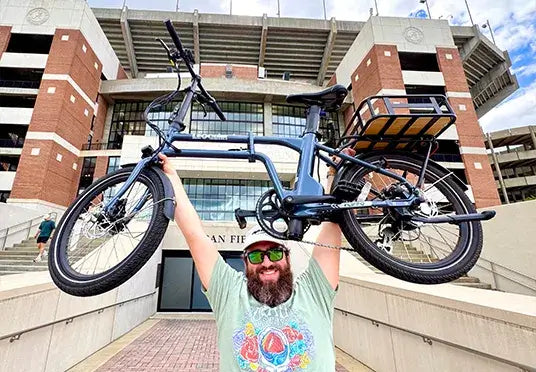
Folding: If you have limited storage space at home or want to combine cycling with public transit, a folding e-bike is a brilliant solution. They are designed to be compact and portable without sacrificing the benefits of electric assist.

Motor and Sensor Considerations
As we've discussed, the motor and sensor combination defines the bike's character. For a quick recap:
- A mid-drive motor with a torque sensor offers a premium, balanced, and natural ride feel. It excels on hills and is the top choice for performance-oriented riders and eMTBs.
- A hub motor with a cadence sensor provides a more straightforward, "on/off" power delivery. It's a highly effective and cost-efficient system that is perfect for cruising, flatter commutes, and riders who want a simple, assistive experience.
The Importance of a Test Ride
You can read reviews and compare spec sheets all day, but nothing replaces the experience of actually riding a bike. The "feel" of an e-bike is incredibly personal. A test ride allows you to feel the difference between a cadence and a torque sensor, assess the bike's comfort and handling, and confirm that it's the right fit for your body. Your local bike shop is an invaluable resource. They can offer expert advice, let you test ride different models, and provide crucial after-sales support and service.
Budget and Long-Term Value
E-bike prices can range from around $1,000 to over $10,000. While it can be tempting to go for the cheapest option, it's wise to think about long-term value. Investing in a bike from a reputable brand with a solid warranty, good customer support, and readily available parts can save you a lot of money and frustration down the road. A well-built e-bike is a significant investment in your health, transportation, and fun for years to come.
Your Ride, Amplified
A pedal electric bike isn't about replacing the rewarding effort of cycling; it's about amplifying the experience. It's a tool that empowers you to ride farther, explore new routes, and conquer the hills that once stood in your way. It makes cycling more accessible, more practical, and for many people, more fun. By keeping you in the active role of pedaling, it preserves the connection between rider and machine, offering the best of both worlds: your power, wonderfully amplified.
Frequently Asked Questions
Q: Can I ride a pedal e-bike without pedaling?
A: No, pedal e-bikes require you to pedal to activate the motor assistance. The motor only provides help when you're actively pedaling, which is what makes them different from throttle-based e-bikes.
Q: How far can I ride on a single battery charge?
A: Most pedal e-bikes can travel between 20 to 100 miles on a single charge. The actual range depends on factors like battery capacity, terrain, your weight, assist level used, and weather conditions.
Q: Do I need a license or insurance to ride a pedal e-bike?
A: In most places, Class 1 and Class 3 pedal e-bikes don't require a license or insurance since they're classified as bicycles. However, regulations vary by location, so check your local laws before riding.
Q: Are pedal e-bikes too heavy to ride without motor assistance?
A: While pedal e-bikes are heavier than regular bikes (typically 40-70 pounds), you can still ride them without motor assistance. However, the extra weight will make pedaling more challenging, especially on hills.
Q: How long does it take to charge a pedal e-bike battery?
A: Most e-bike batteries take 3-6 hours to fully charge from empty. Many riders charge their bikes overnight or during work hours to ensure they're ready for the next ride.


Leave a comment