




What Is the Best Electric Bike for Commuting Every Day?
To be honest, the journey to work each day can be the worst part of your day. You're either stuck in traffic, crammed into a full train, or cycling normally only to get to work drenched in sweat and exhausted. It's as if you're carrying out a task twice a day. Yet what if it didn't have to be like this?
Ebike commuting is now well beyond being just a small, fashionable trend. Global and American market forecasts indicate strong long-term growth, which shows that an increasing number of riders are choosing e-bikes as a practical means of daily transport rather than merely using them on weekends. Because of this, it has more than ever become important to select the best commuter e-bike; an electric bike can turn this daily nuisance into a positive experience, restoring you with time, energy, and even a bit of fun.
The guide shows how to select the best commuter ebike for your way of life. When looking for the best commuter ebike in 2026, there isn't one model that suits all riders. Currently, the best commuter ebikes generally have these characteristics: a reliable range, useful commuter features, comfortable geometry, and minimal daily inconvenience. The correct choice will depend on whether your journey is short and takes place in an urban area, long and hilly, or a mix involving public transport.
We're not going to simply mention a number of popular models; rather, we're providing you with a straightforward method of working out what you need, so that you can choose the best ebikes for commuting and find one that is exactly right for your daily journey.
The Three Main Ideas
Let us start by simplifying the matter. A top-quality commuter e-bike that doesn’t turn into yet another chore is based on three key principles: it performs well, is pleasant to use, and actually helps you in real situations. Any bike you consider should be assessed according to these criteria.
It functions well because your commuter e-bike has to work every single day; it therefore needs robust components capable of withstanding daily use, a reliable battery from a reputable company, and a motor that provides consistent power without interruption. When it functions well, your ride becomes stress-free. A good commuter e-bike doesn't mean abandoning physical activity either; research has shown that e-bike commuting can still involve meaningful physical exercise, and even shorter commutes can achieve a healthy level of exercise intensity. This helps to explain why the best commuter e-bike feels easier than a conventional bike yet still contributes real movement to your week.
There's a pleasant sensation about it: when a bicycle is uncomfortable to ride, you won't choose to use it; comfort is achieved by sitting straight so that you have a good view of the traffic, by having a seat that supports you during longer rides, by having handles that suit your hands, and in some cases by fitting springs which help to compensate for cracked roads and holes.
It actually does help in practical ways: a good quality bike is designed with the real world in mind. It includes the key features that make life easier for you, such as built-in guards to keep you dry, a rack on the back for carrying your bag or food, and integrated lights so that you can see and be seen. Moreover, it involves considering the weight of the electric bike, since this is important if you need to carry it up some stairs.
Know Your Trip
Unless you know how you plan to use it, the idea of the "best" e-bike is of no value at all. Money is also a factor. For example, if you are looking for the best e-bike for commuting and have a budget of under $1500, you should concentrate on simple models that are suitable for city use, having a hub motor, a reasonable battery, and basic fittings such as lights and fenders. On the other hand, if your budget is nearer to that of the best e-bike in the under $2000 range, you can generally count on a better ride quality, stronger brakes, a bigger battery, and a greater number of useful everyday features.
The commuter ebike that is best suited for a two-mile flat ride in the city is completely different from one that is appropriate for a 15-mile hilly journey in the suburbs. This difference is important in real life since many ebike trips are not simply additional rides; owner survey data indicates that e-bikes frequently replace car trips, the average distance of such replaced driving being about 9.3 miles per trip. Therefore, if your usual commute is about eight to ten miles each way, a commuter ebike can reasonably be incorporated into your normal method of transport.
If you want to get the right kind of bike, you should start by working out what type of trip you need. The principle of matching a bike to the way you'll use it is something that experts support, as Consumer Reports' buying guide demonstrates the various kinds of bikes—such as folding or cargo bikes—meeting different real-life needs. Then consider which one sounds most like your own situation.
Type 1: The City Rider
The journey is short and straightforward, typically involving a distance of less than 5 miles each way on mainly level streets in the city. You will have to navigate heavy traffic, use bike lanes, and might be required to take your bicycle into an office, use an elevator, or carry it up the stairs to your home.
The things that matter are having the ability to move quickly through traffic, weighing as little as possible so that you can carry it, and being small in size.
When it comes to bike features, look for one with a light frame (a weight of under 55 lbs is good), consider a folding design since this makes it easier to carry, and go for thinner, faster tyres. A smaller battery (in the range of 350 to 400Wh) is usually sufficient for the shorter distances you'll be covering, which in turn helps to keep both the weight and the cost low.
For most riders, the best lightweight commuter e-bike for use in the city isn't the one that has the most powerful motor or the largest battery; it's the one that is easy to move, easy to park, and which you can ride through traffic without having the sensation of being in control of a heavy machine. When it comes to everyday use in the city, less weight tends to be more important than extra power.
Type 2: The Long-Distance Rider
Your journey will cover a greater distance, usually 10 miles or so each way, and your route is probably going to include substantial hills, various kinds of roads, and lengthy sections where you have to maintain a speed.
The things that matter are having sufficient battery power so that you can complete a round trip without any worries, powerful motors that make climbing hills easy, and comfort when riding for a long time.
The best bike features include a large battery (500Wh or more) as a necessity. A more powerful motor, particularly one that is a mid-drive system, will make going up hills seem easy. You should look for things such as front springs, a padded seat, and wider tyres so that you have a smooth and comfortable ride on any road.
Type 3: The Mixed Transport Rider
For your journey you combine the advantages of both options by using your e-bike for some of the trip and public transport—such as a train or a bus—for the remainder.
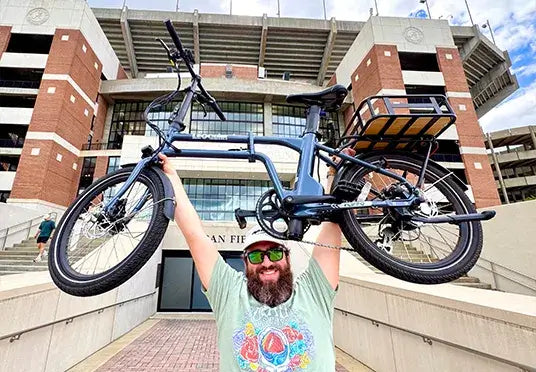
The most important thing is that the bike should be easy to carry. You need a bike which is light enough to carry and small enough to store conveniently on a crowded train or under a desk.
One of the most important features of a bike is having a good folding mechanism. The best folding commuter e-bike for use in commuting or public transit should deal with a real storage issue rather than introduce a new one; it needs to fold quickly, lock securely when folded, and should be easy to handle on stairs, platforms, and in the tight corners of apartments. If the bike remains bulky and awkward even when folded, it will soon become a source of frustration. It is essential that the bike be both easy and quick to fold and unfold. Keeping the weight low (ideally under 50 lbs) is very important, and features such as built-in wheels or a frame that is easy to grasp and carry make a big difference to your everyday life.
Understanding the Technology
When looking for the best commuter ebike, you should begin with the fundamentals that have the greatest impact on everyday use: a battery lasting for your actual round trip, a motor configuration suitable for the type of terrain you'll be riding on, simple charging, low-maintenance components, and some useful commuter features that you actually intend to use. Things of this sort are more important than the flashy specifications listed on a product page.
It can be difficult to understand the technical details, but they have a direct effect on how the bike feels and on whether it becomes something enjoyable or just a chore. The following points explain what you need to know in practical terms.
Hub vs. Mid-Drive
The motor is the key component of your ebike, and the position of the motor affects the way the entire ride feels.
| Feature | Hub Motor | Mid-Drive Motor |
|---|---|---|
| Feel | A "pushing" feeling. The motor is in the wheel hub (front or rear) and moves the bike forward on its own from your pedaling. | An "boosting" feeling. The motor is at the pedals, adding power through the gear system. It feels like your own strength is made bigger. |
| Cost | Usually less expensive. | Usually more expensive. |
| Care | Simpler system. Changing a flat tire can be harder. | More complex system, but makes wheel removal easier. |
| Best Use | Great for City Riders on flat ground. | Great for Long-Distance Riders who need to climb hills well. |
Torque vs. Cadence
The sensor acts as the brain of your ebike since it determines when the motor should provide assistance, and the kind of sensor you have is the key to a smooth journey. It is one of the most important features yet is often ignored. According to our experience, a cadence sensor works just like a simple on/off switch: as soon as you begin to pedal, the motor starts at a predetermined power level and the ride can seem jerky and unnatural, particularly in situations involving stop-and-go traffic.
The torque sensor on an electric bike does, however, feel natural. It works by detecting how hard you press on the pedals and then provides the corresponding amount of power immediately. If you press on the pedals lightly, you receive a mild boost; when you push harder while going up a hill, the motor supplies more power. It's as if your legs have suddenly become immensely strong. The presence of a torque sensor is usually an indication that the e-bike is of higher quality and is a better choice for commuting.
The Battery
Do not merely go by the advertised "miles" of range, since this can be misleading. The correct way to measure battery size is in watt-hours (Wh). If you're making a daily journey of any substantial length, we recommend having a battery with at least 400 to 500Wh to prevent any concern about the battery dying. This can be regarded as a good starting point for most riders. Survey data from real-world usage indicates that e-bike trips typically replace car trips of about 9 miles, so a commuter who is doing a normal city round trip does not always need a battery that is excessively large. What is more important is making sure you have enough actual range for the whole day, with a buffer to account for wind, hills, and colder weather.
Also consider practicality—can the battery be removed? This is something that matters to anyone who is unable to take their entire bike inside to charge. Lastly and most importantly, check for safety approval. A battery that has UL 2849 approval has been thoroughly tested for fire safety, since this standard is becoming the industry benchmark for the best e-bikes for commuting.
Hidden Tasks
Two points which are frequently neglected are weight and care. In fact, an ebike that weighs 70 pounds is something that has to be lifted onto a car rack, carried up a few steps, or moved around in a tight area. You should look at the weight stated, particularly if you are a City Rider or Mixed Transport Rider.
Looking after the bike can also turn into a nuisance. When it comes to daily commuting, low maintenance is indeed a quality of life advantage. Features such as hydraulic disc brakes, puncture-resistant tyres, complete fenders, and a belt drive can save you time in the long term. For someone who rides to work frequently, the best commuter e-bike is generally the one that requires the least amount of effort from you between rides.
A conventional bike chain has to be cleaned and oiled if it is to operate smoothly and may leave grease stains on your trousers. If you want a truly 'set it and forget it' solution, then you should consider one that has a Gates Carbon Belt Drive. This system makes use of a carbon-fibre belt rather than a chain and is almost silent, requires no oil and lasts a lot longer than a chain, thus eliminating one of the most common maintenance tasks.
Our Suggestions
Having established the framework, let's go on to associate it with different kinds of bikes; in this case, the particular brand is less important than choosing a bike that has the features corresponding to your type.
For the City Rider
You ought to consider lightweight single-speed or geared e-bikes since these models prioritize simplicity and a low weight rather than having a large battery or a powerful motor; folding e-bikes also belong in this category and manufacturers in this field aim to produce bikes that are quick and easy to handle in narrow city spaces.
For the Long-Distance Rider
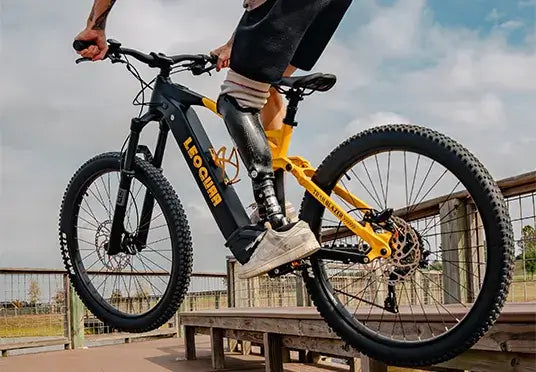
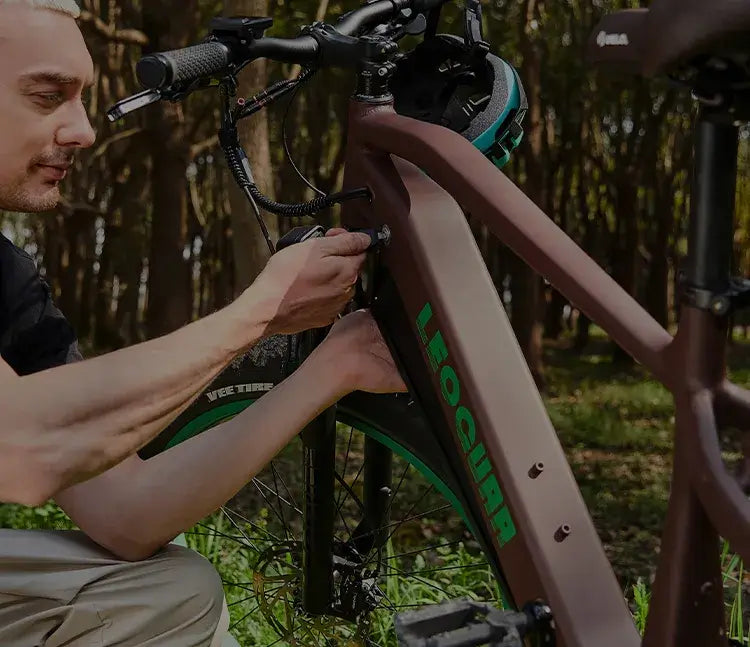
The kind of bike that is ideal for you is probably a Class 3 e-bike (one that provides assistance up to 28 mph), featuring a mid-drive motor, a big battery, and all the helpful additional features; such bikes are usually referred to as "commuter" or "hybrid" e-bikes and are designed for both distance and power. For instance, the Leoguar Trailblazer EMTB, mentioned in Wirecutter's review of the best e-bikes for commuters, fully matches this description since it combines a strong motor with excellent cargo space, thus making it a real replacement for a car.
For the Mixed Transport Rider
When looking for a folding ebike you should concentrate on those that are purpose-built. Attention must be paid to the hinge system since it needs to feel solid and secure. Make sure that the folded size will fit on the train or bus that you use locally and verify that the weight is something that you are actually able to carry. The best ebikes of this type do not compromise their ride quality just because they are foldable.

Must-Have Extras
A great commuter ebike is only one of the things you need if you want your ride to be both safe and useful, so don't forget about these important extras; in fact, many of the best commuter ebikes come with some of them already.
Certainly. Here is the rewritten text in English, adhering strictly to all the rules provided:
- Guards are absolutely necessary since they prevent water, mud, and dirt from the road getting splashed onto your clothes, thus ensuring that you reach your destination clean and dry.
- The Back Rack: Having a good rack makes a big difference since it enables you to use bags to carry your laptop, your change of clothes, or your food, thus taking the weight off your back and making your journey more comfortable.
- Lights built in: an essential feature for safety. These lights are powered by the bike's main battery, so you never have to worry about them losing your charge. The bright headlight helps you to see the road, and the taillight ensures that other traffic can see you.
- Your e-bike is a valuable purchase so protect it using a solid U-lock or a heavy-duty chain lock.
- A helmet is the single most important item of safety equipment that you can own, and you should always wear one.
Frequently Asked Questions
What is the best range for a commuter e-bike?
For the average person, a battery capacity of 400 to 500Wh will give sufficient range for daily commuting without any concerns. The range it offers will be between 20 and 40 miles, depending on the terrain, the weather conditions, and how hard you pedal. In the case where your round trip exceeds 30 miles, it would be advisable to choose a bigger battery.
Should I buy a folding ebike or a regular ebike?
If you need to take the folding ebike up a staircase, store it in small areas, or bring it on public transport, then go for a folding model; but if you have secure parking and want the greatest possible comfort and performance during longer rides, choose a standard ebike.
How much money should you anticipate having to spend on a good commuter ebike?
Typical quality commuter e-bikes have a price range of between $1,200 and $3,500; budget versions in the $1,200 to $1,800 range are suitable for shorter city trips, whereas the premium models priced from $2,500 to $3,500 come with better components, a longer range, and more features for serious daily commuting.
Do I need dedicated bike lanes to ride an ebike to work?
E-bikes can just as well use regular roads as traditional bikes. They do, though, tend to be safer and more pleasant to commute in bike lanes. It's important to check the local laws since in some places there are particular rules concerning where the various types of e-bikes are allowed to ride.
How long does it take to charge an ebike battery?
Most ebike batteries take 3-6 hours to fully charge from empty. Many riders charge overnight or during their work day. Some batteries can be removed for convenient indoor charging, which is especially helpful if you can't bring the whole bike inside.
Should I choose a lightweight commuter ebike or a fully equipped one?
Choose a lightweight commuter ebike if you carry your bike upstairs, bring it indoors, or ride shorter city routes. Choose a more fully equipped model if you want better comfort, a bigger battery, and built-in commuter features like racks, fenders, and stronger lights. The best commuter ebike for daily use is the one that fits your routine with the fewest compromises.
Is the best commuter ebike under $1500 good enough for daily use?
Yes, for many riders it is. A good commuter ebike under $1500 can work very well for shorter and flatter trips if it has reliable basics and useful commuter features. If you commute farther, climb hills often, or want a smoother ride feel, moving closer to the under $2000 range usually gives you a better long-term experience.


Leave a comment