




Electric Bike for Trail Riding: What Actually Works on Real Trails
Finding the Right Electric Bike for Trail Riding
So, you're looking for an electric bike for trail riding. You've been hit with tons of tech specs, marketing talk, and hundreds of different models that all say they're the best.
It's really overwhelming when you're just trying to find something that works. Our goal here is simple: to cut through all the noise and show you what actually works on different types of trails. This isn't about which bike has the biggest numbers on paper. It's about real-world performance and finding the right tool for the job.
The best electric trail bike is the one that feels natural beneath you, making your ride better without getting in the way. This guide will give you the tools to choose a bike that meets your specific needs, based on years of experience testing, riding, and fixing these machines.
Beyond the Spec Sheet
The first step is to stop comparing spec sheets and start thinking about performance. The biggest numbers don't always mean the best ride. Let's clear up a few common myths before we dive in.
- Myth 1: More motor torque (Nm) is always better. The way a motor delivers its power matters way more than the peak number.
- Myth 2: The biggest battery is a must-have. A huge battery adds a lot of weight, which hurts how the bike handles and makes it feel slow and hard to turn in tight spots.
- Myth 3: Any e-bike can handle "trails." A commuter or fat-tire e-bike made for pavement and light gravel is not an electric mountain bike.
A jerky, overpowering motor can spin you out on a technical climb, while a smoother, more natural electric bike motor gives you usable grip. Range is important, but being able to move quickly is key to having fun. True trail e-bikes have specific frames, suspension, and parts built to handle the unique forces of off-road riding. Instead of focusing on individual specs, judge every feature based on how it helps with the three pillars of a great trail experience: Control, Capability, and Confidence.
Does this feature help you stay in control over rough terrain? Does it expand the capability of where and what you can ride? Does it give you the confidence to tackle new challenges?

The Trail Spectrum
The term "trail" means different things to different people. A bike that works great on a smooth fire road will struggle on a rocky, technical descent. Matching your bike to your main riding area is the single most important decision you'll make. Here's a breakdown of what works where.
| Trail Type | Terrain Description | What Actually Works |
|---|---|---|
| Graded Paths & Fire Roads | Smooth dirt, crushed gravel, gentle slopes, and old rail trails. Very few obstacles. | Hardtail e-bikes are perfect here. They are efficient and lighter. Look for comfort-focused geometry and tires with less aggressive tread. A motor focused on efficiency over raw power is ideal. |
| Flowy Singletrack | Winding dirt paths with rolling hills, smooth turns, and moderate climbs and descents. | This is the sweet spot for a versatile electric bike for trail riding. A short-travel (120-140mm) full-suspension bike gives the perfect mix of efficiency and control. Quick geometry and a responsive mid-drive motor are key. Expert reviews often praise a trail bike's versatility in this category. |
| Technical & All-Mountain | Steep climbs and descents, filled with rocks, roots, and drops. Needs precise handling and maximum grip. | Here, you need a purpose-built machine. A mid-to-long travel (140-160mm) full-suspension e-bike is essential. Look for slack geometry for stability, powerful motors with high torque for punchy climbs, and strong, reliable brakes. |
The Core Four Tech
Once you've identified your trail type, you can decode the technology. Four main parts define how an electric bike performs on the trail. Understanding them moves you from a confused buyer to an informed rider.
Motor: Power vs. Polish
The motor is the heart of the e-bike, but not all motors are created equal. For any real trail riding, a Mid-Drive Motor is a must-have.
These motors sit at the bike's cranks, giving a low center of gravity and a natural pedaling feel. They apply power through the bike's drivetrain, letting you use the gears to your advantage on steep climbs. Hub drives, located in the rear wheel, add weight that really hurts suspension performance and grip on rough terrain. When it comes to power, don't get stuck on the peak Torque (Nm) number.
Most modern full-power trail e-MTBs offer between 85Nm and 95Nm of torque, while lightweight models are typically in the 50-60Nm range. What matters more is how that power is delivered. Is it smooth and predictable, matching your pedal input, or does it lurch forward unexpectedly? A well-tuned, natural motor gives you more control and, ultimately, makes you a faster, more confident rider.
Suspension: Control and Comfort
Suspension is what separates a true mountain bike from everything else. For smoother trails, a Hardtail (front suspension only) can work fine.
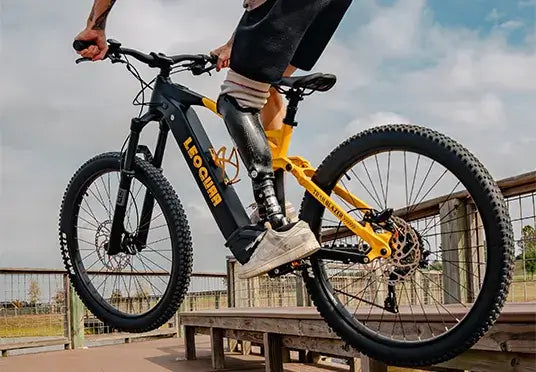
But for anything involving roots, rocks, or descents, Full Suspension (front and rear) is essential for keeping control and grip. Suspension Travel (the amount the wheel can move, measured in mm) should match your trail type. As we saw in the Trail Spectrum, 120-140mm is a great all-rounder for flowy trails, while 140-160mm (or more) is needed for technical, all-mountain riding. However, quality beats quantity.
As many in-depth group tests show, a bike with well-designed suspension and a high-quality, properly tuned shock will beat a bike that simply has more travel but lower-quality parts. It's the difference between a controlled, planted feel and a pogo-stick-like ride.
Geometry: The Unsung Hero
If the motor is the heart, geometry is the bike's posture. It's the most overlooked but arguably most important factor in how a bike feels. Modern trail geometry is designed to make bikes more stable at speed and more capable on steep terrain. Two key numbers to understand are:
- Head Tube Angle: This is the angle of the front fork relative to the ground. A "slacker" (lower number) angle pushes the front wheel further out, increasing stability on fast, steep descents.
- Seat Tube Angle: This is the angle of the seat post. A "steeper" (higher number) angle positions your body more directly over the pedals, which is a much more efficient and powerful position for climbing.
You don't need to be a geometry expert, but you should know that a modern trail bike will feel more confident and balanced than a bike with old, nervous geometry, especially when the trail gets challenging.
Battery and Weight
Battery capacity is measured in Watt-hours (Wh). It's a simple equation: more Wh equals more potential range. Many full-power e-bikes now come with 600Wh to 750Wh batteries, with some even pushing 900Wh or more. But this brings us to the most critical trade-off in the e-MTB world: range versus handling.
A huge battery is heavy. That weight makes the bike harder to turn, harder to pop off small jumps, and more tiring to manage on long, twisty trails. For many riders, a lighter bike with a smaller battery (e.g., 500-625Wh) is a much better choice. It feels more like a regular bike—playful, quick, and responsive.
We've tested bikes where a rider on a lighter, smaller-battery e-bike had more fun and was less tired on a twisty trail than a rider on a heavier, long-range "monster truck" e-bike, simply because the bike was easier to handle. Ask yourself honestly: do you need to ride 50 miles in the mountains, or would you rather have more fun on a 25-mile ride?

Real-World Rider Scenarios
Let's put this all together. Theory is great, but seeing how these choices apply to real riders makes it click. Find the type that best fits you.
The Weekend Explorer
You Ride: Mostly graded paths, fire roads, and are curious about trying some light, flowy singletrack. You value comfort, reliability, and enjoying the scenery.
What Works for You: A quality hardtail or short-travel (120mm) full-suspension electric bike for trails. A motor with a smooth, natural feel is more important than maximum torque. A battery in the 500-625Wh range provides more than enough range for your adventures without adding unnecessary weight.
The Aspiring Trail Shredder
You Ride: You're hooked. You want to improve your skills and tackle more challenging singletrack with rocks, roots, and steeper sections. Your priority is building confidence and control when the trail gets rough.
What Works for You: This is the heart of the market. A full-suspension all-mountain e-bike with 140-160mm of travel is your perfect tool. It has the ability to handle rough terrain while still being efficient enough for all-day rides. Modern geometry, powerful brakes, and a strong frame are must-haves. This is the classic electric bike for trail riding in challenging terrain, and the kind of bike that shines in tough side-by-side testing.
Choosing the right e-bike is about an honest look at your riding, not a race to the biggest specs. By focusing on control, capability, and confidence—and matching the bike's design to your chosen trail—you'll find a machine that truly makes your ride better.
FAQ
Q: What's the difference between a mid-drive and hub-drive motor for trail riding?
A: Mid-drive motors are located at the bike's cranks and work through the bike's gears, giving better weight distribution and more natural power delivery on trails. Hub-drive motors are in the rear wheel and add weight that hurts suspension performance and traction on rough terrain.
Q: How much battery capacity do I really need for trail riding?
A: For most trail riders, 500-625Wh is plenty and keeps the bike lighter and more fun to handle. Bigger batteries (750Wh+) add significant weight that can make the bike feel sluggish on twisty trails. Consider your typical ride length versus how the bike handles.
Q: Is full suspension necessary for all trail riding?
A: Not always. Hardtails work great on smoother trails, fire roads, and graded paths. But for trails with rocks, roots, steep descents, or technical features, full suspension is essential for maintaining control and traction.
Q: What suspension travel do I need for different types of trails?
A: For smooth trails and fire roads, 100-120mm works fine. Flowy singletrack rides best with 120-140mm travel. Technical and all-mountain trails need 140-160mm or more to handle the rough terrain safely.
Q: How important is bike geometry for trail riding?
A: Very important but often overlooked. Modern trail geometry with a slacker head tube angle and steeper seat tube angle makes bikes more stable on descents and more efficient on climbs. Old geometry can make a bike feel nervous and less confident on challenging trails.


Leave a comment