

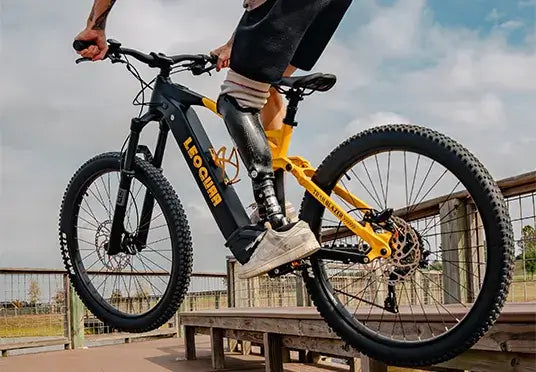


Best E Bike Motor for Uphill Riding: Which Specs Actually Matter?
Why Your E-Bike Struggles
It's a familiar story for many e-bike riders: you're cruising along a flat path, feeling unstoppable, but as soon as the road tilts upward, the motor whines and your speed drops. You pedal harder, but the bike feels heavy and slow. This problem is common, and it comes from not understanding what makes an e-bike a great climber.
The secret to beating hills isn't just about raw power (watts). The true answer lies in the type of power, which is torque, and where the motor sits. For great uphill performance, you need to understand the difference between a mid-drive motor and a hub motor, and why torque matters more than watts for climbing. This guide will explain these ideas and help you choose the best e bike engine for your needs.
The First Big Choice
When picking an e-bike for hilly areas, your first and most important decision is the motor type. This choice affects how the bike feels, how well it works, and how it climbs. The two main options are hub motors and mid-drive motors. For anyone who regularly faces hills, one type is a clear winner.
What is a Hub Motor?
A hub motor sits in the center of the front or rear wheel. It works on its own, separate from the bike's gears, directly spinning the wheel it's in. This creates a feeling of being "pushed" (from a rear hub) or "pulled" (from a front hub). Hub motors are common because they are simple and usually cost less to make. While they work fine for flat ground and medium hills, they can struggle on steep or long climbs because they can't use the bike's gears for help.
What is a Mid-Drive Motor?
A mid-drive motor sits in the center of the bike's frame, right where the pedals connect. Instead of turning the wheel directly, it sends power to the chain and gears. This means the motor's power goes through the bike's gear system, just like the power from your legs.
Why Mid-Drives Beat Hills
Mid-drive motors are the clear winners for climbing for one simple reason: they use the bike's gears. Think of it like a car's transmission. When you face a steep hill in a car, you shift into a lower gear to let the engine spin faster and make more force at a lower wheel speed. A mid-drive motor does the same thing, letting it work at its best speed and deliver high power even when the bike moves slowly uphill. This gives a natural pedaling feel and better results. A hub motor, on the other hand, is stuck with one gear ratio.
On a steep climb, as the wheel slows down, the hub motor is forced out of its best working range, causing it to overheat and lose power right when you need it most.
| Feature | Hub Motor | Mid-Drive Motor |
|---|---|---|
| Hill Performance | Good on moderate hills, can struggle on steep/long climbs | Excellent, leverages bike's gears for efficiency |
| Ride Feel | Feels like being pushed or pulled | Natural, balanced, feels like an extension of your own power |
| Weight Distribution | Can unbalance the bike (front or rear heavy) | Central and low, improving stability and handling |
| Drivetrain Wear | Less wear on chain/cassette | More wear on chain/cassette due to higher forces |
The "Big Two" Specs
When you look at e-bike specs, you see numbers for watts (W) and torque (Nm). Companies often highlight high wattage, but for a rider focused on beating hills, this can be misleading. Understanding the difference between these two numbers is key for choosing a motor that won't let you down.
What are Watts? Think Speed
Watts (W) measure the motor's power output over time. Think of it like horsepower in a car. It shows the motor's ability to keep working. Higher wattage can help you keep higher speeds on flat ground or gentle slopes.
A 750W motor will usually feel faster than a 250W motor, but this number doesn't tell the full story about its ability to get you up a steep hill from almost stopped. Power comes from torque times rotational speed, so a high watt number can come from either high torque or high speed.
What is Torque? Think Force
Torque, measured in Newton-meters (Nm), is the turning force of the motor. It's the immediate "grunt" or twisting power that gets you moving from a stop and pushes you up a steep hill. This is the force that fights gravity and your body weight when the hill gets steep. While watts decide how fast you can go, torque decides how strongly you can speed up and climb. When it comes to uphill battles, torque is the number that really matters.
The Jar Lid Example
To make this clear, let's use an example. Imagine trying to open a very stuck jar lid. The first, strong, twisting force you use with your hand to break the seal is torque. Once the lid is loose, the ability to spin it off quickly is power (watts).
To get up a steep hill, you need that first, powerful twisting force to beat the resistance. Without enough torque, you simply won't be able to turn the pedals, no matter how many watts the motor is rated for. This is why torque is generally measured and advertised as a key performance sign for climbing.
Real-World Torque Numbers
To put this into practice, here are some guidelines for what to look for:
* 40-50 Nm: This is enough for city riders and people who face mostly flat ground with occasional, medium hills.
* 60-70 Nm: This range offers strong, confident performance for touring, carrying cargo, and tackling regular, long climbs.
* 85 Nm and above: This is the gold standard for serious electric mountain bikes (eMTB) and riders who want to tackle the steepest, most technical ground without breaking a sweat. Motors in this group provide strong power on demand.
It's a System
A powerful motor is only one piece of the puzzle. The best e bike engine won't work to its potential if the parts supporting it aren't up to the task. To truly judge a bike's climbing ability, you must look at it as a complete system. The sensors that tell the motor what to do and the battery that powers it are just as important as the motor itself.
The Sensor's Role
E-bike motors use sensors to decide when and how much help to give. The two main types are cadence and torque sensors, and they create very different ride experiences, especially on hills.
* Cadence Sensors: A cadence sensor is a simple on/off switch. It detects if you are pedaling and, if so, gives a pre-set level of power. It doesn't matter how hard you pedal; as long as the cranks are turning, the motor is on. This can feel jerky and unnatural, especially on a technical climb where you need exact control. On a steep hill start, a cadence sensor can lurch forward when you just want a little help.
* Torque Sensors: A torque sensor is a "smart" system. It measures how hard you are pressing on the pedals and gives a matching amount of help. If you pedal lightly, it gives you a little boost. If you push hard to get up a hill, it gives maximum power. The experience feels natural and smooth; the motor feels like a super-powered version of your own legs. This is the much better choice for any kind of changing or hilly riding.
The Battery's Job
A high-torque motor uses a lot of energy. Climbing hills demands a huge amount of energy from the battery. A motor rated for 85 Nm of torque is useless if the battery can't deliver the required voltage and power to keep that output going.
This is why you should look for bikes with high-quality battery cells from good companies like Samsung, LG, or Panasonic. The electric bike battery capacity, measured in Watt-hours (Wh), is also important. A higher Wh rating means a larger "gas tank," giving you the range to complete long, hilly rides without fear of the help cutting out.
For a bike with a powerful climbing motor, we recommend a battery of at least 500Wh, with 625Wh or 750Wh being ideal for long days in the mountains. There is a good sense of how those ebike systems compare when you look at the motor, battery, and controller as one package.
Top Motor Brands
While many companies make e-bike motors, a few key players have become industry leaders known for performance, reliability, and excellent climbing ability. When you see these names, you can be confident you are getting a quality system.
Industry Leaders
Bosch: Perhaps the most recognized name in the industry, Bosch is the benchmark for performance and reliability. Their Performance Line CX motor is legendary among eMTB riders, offering 85 Nm of torque, smart "eMTB mode" help, and a strong service network. For anyone serious about climbing, a bike with a Bosch and Shimano system is a top-tier choice.
Shimano: A giant in the cycling world, Shimano brings decades of drivetrain knowledge to their STEPS (Shimano Total Electric Power System) motors. Known for their compact size and very natural ride feel, motors like the EP8 (and its newer EP801 version) deliver 85 Nm of smooth, predictable power that works perfectly with Shimano's own electronic shifting systems.
Brose: Brose motors are prized for their powerful and very quiet operation, thanks to an internal carbon belt drive. Models like the Drive S Mag produce up to 90 Nm of torque, making them one of the strongest climbers on the market, all while being nearly silent.
Yamaha: As one of the pioneers of mid-drive systems, Yamaha has a long history of making powerful and reliable motors. Their PW-X series is known for its instant power delivery, providing high torque from the very first pedal stroke, which is a great asset on technical climbs.
Other powerful contenders like the DJI Avinox are also pushing the boundaries of what's possible in terms of power-to-weight ratio.

Your Final Checklist
Choosing the best e bike engine for climbing doesn't have to be hard. By focusing on the right specs and understanding how the system works together, you can find a bike that flattens hills and inspires confidence on any ground.
To sum up, here are the key takeaways:
1. Choose a Mid-Drive Motor: Its ability to use the bike's gears is essential for serious hill-climbing efficiency and performance.
2. Focus on Torque (Nm) over Watts (W): Torque is the raw force that gets you up the hill. Look for 60 Nm for general use and 85 Nm or more for the steepest ground.
3. Demand a Torque Sensor: For a natural and controlled ride, a torque sensor is essential. It makes the bike feel like an extension of your own body.
4. Check the Whole System: Make sure the motor is paired with a quality, high-capacity battery from a good brand to keep power throughout your ride.
By following this expert advice, you can move beyond the marketing hype and select an e-bike that truly meets the demands of the hills, turning scary climbs into an enjoyable part of your ride.
Frequently Asked Questions
What's the difference between a 750W hub motor and a 250W mid-drive motor for hills?
A 250W mid-drive motor will typically outperform a 750W hub motor on steep hills because it can use the bike's gears. The mid-drive motor stays in its efficient operating range while the hub motor struggles as wheel speed decreases on climbs.
How much torque do I really need for steep hills?
For occasional moderate hills, 50-60 Nm is sufficient. For regular steep climbs or mountain biking, look for 70-85 Nm or higher. The steeper and longer your climbs, the more torque you'll appreciate.
Can I upgrade my hub motor e-bike to climb better?
Unfortunately, you cannot easily convert a hub motor bike to mid-drive. Your best options are to ensure proper tire pressure, reduce weight, use lower gears effectively, and maintain your battery in good condition for maximum power output.
Why does my e-bike motor cut out on steep hills?
This usually happens due to overheating protection or insufficient battery power. Hub motors are particularly prone to overheating on long climbs. Make sure your battery is fully charged and consider taking breaks on very long climbs to let the motor cool down.
Are expensive motor brands like Bosch worth the extra cost?
Yes, premium brands like Bosch, Shimano, and Brose offer better reliability, smoother power delivery, extensive dealer networks for service, and often better integration with other bike components. For serious hill climbing, the investment typically pays off in performance and longevity.


Leave a comment