




Moped Style Electric Bike vs Ebike: Power, Design & Legal Differences
The moped style electric bike is quickly becoming one of the most eye-catching and talked-about choices for new riders—but what exactly sets it apart from a regular ebike? You're ready to buy an electric bike, but the choices are overwhelming. What's the deal with these cool-looking moped style electric bikes? You've come to the right place for a clear, expert answer.
The main differences are in design style, how you sit, and legal rules. A moped-style e-bike focuses on throttle power and comfort with a motorcycle-like frame. In contrast, a traditional e-bike is built to boost your pedaling power with a familiar bicycle design. This guide will walk you through the key differences in design, performance, and legality, helping you choose the perfect ride for your needs.
A Quick Comparison
Before we dive deep, here's a side-by-side look at what sets these two popular e-bike types apart. This table offers a high-level understanding for those who need a fast answer.
| Feature | Moped Style Electric Bike | Traditional Electric Bike |
|---|---|---|
| Primary Use Case | Casual cruising, utility, stylish urban travel | Fitness, commuting, trail riding, long-distance touring |
| Design & Frame | Motorcycle-style, long bench seat, often step-over | Diamond, step-thru, or folding bicycle frame |
| Riding Posture | Upright, relaxed, scooter-like | Active, forward-leaning, or upright cruiser style |
| Power Delivery | Often throttle-dominant | Primarily pedal-assist |
| Pedaling Experience | Often secondary, can be awkward due to low seat | Central to the experience, ergonomically efficient |
| Passenger-Friendly? | Often, with a long seat and optional footpegs | Rarely, requires special racks and accessories |
| Typical Speed Class | Often Class 2 or 3, sometimes "unclassified" high-power | Typically Class 1 or 3 |
Design and Build Differences
The visual appeal is obvious, but the design of each bike type impacts comfort, usability, and the entire feel of your ride. It's about much more than just looks.
Frame Style and Seating
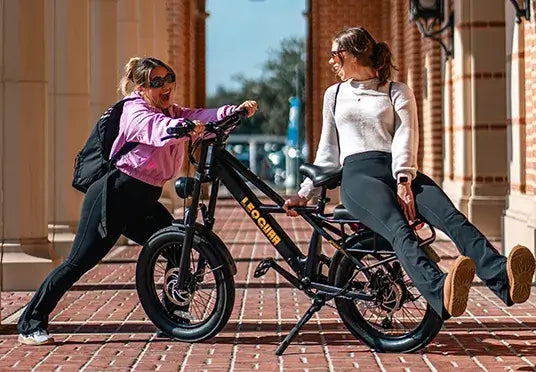
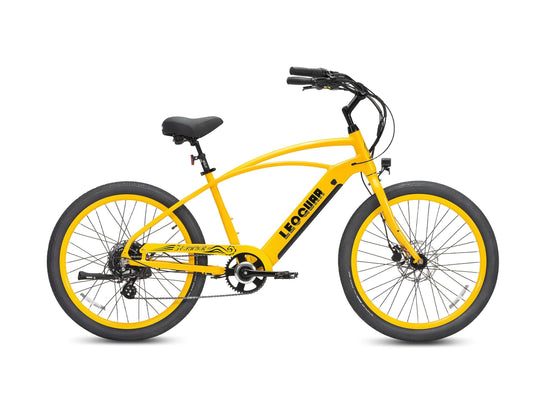
The most striking difference is the frame. A moped style electric bike features a low-slung, motorcycle-inspired frame, often with a long, padded bench seat. This design puts comfort first for cruising. The seat is plush and wide, but it's typically not adjustable in height. This makes for a relaxed, feet-forward posture but can make active pedaling hard or awkward over long distances. The extended seat, however, is a major draw for many, as it often allows for carrying a passenger, turning a solo trip into a shared ride.
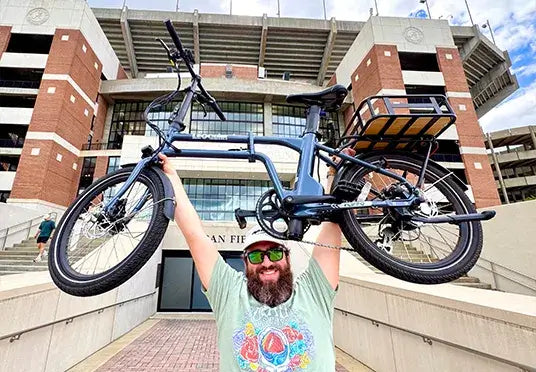
A traditional e-bike, on the other hand, uses familiar bicycle frame geometry. Whether it's a classic diamond frame, an accessible step-thru, or a compact folding ebike design, the focus is on creating a good position for efficient pedaling. The saddle is designed not just for sitting, but for supporting the rider and enabling effective power transfer through the pedals. You can adjust it, allowing riders to dial in the perfect seat height and handlebar position for comfort and performance.

Wheels, Tires, and Suspension
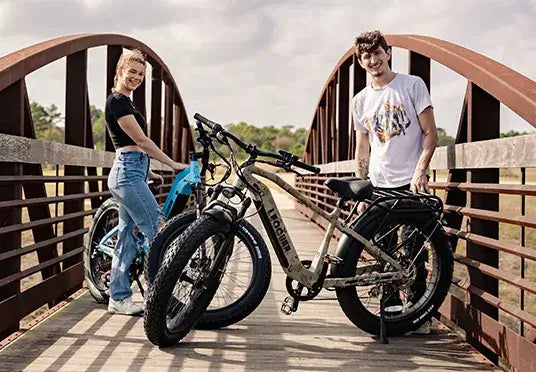
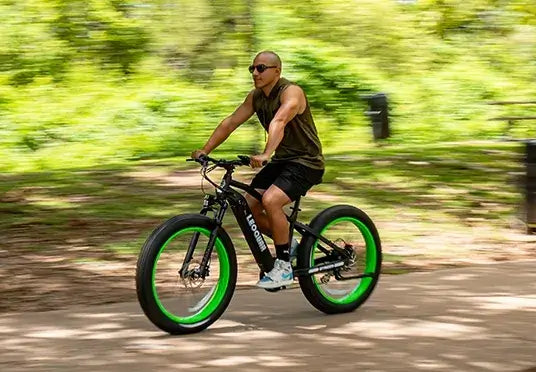
Moped-style e-bikes almost always come equipped with fat tires, typically 4 inches wide. These large tires, combined with strong suspension forks and sometimes rear shocks, provide a very cushioned ride. They soak up potholes, cracks, and bumps in the urban landscape, creating a smooth, gliding sensation. This setup is built for comfort and stability on paved surfaces, not for nimble handling or high-performance cornering.
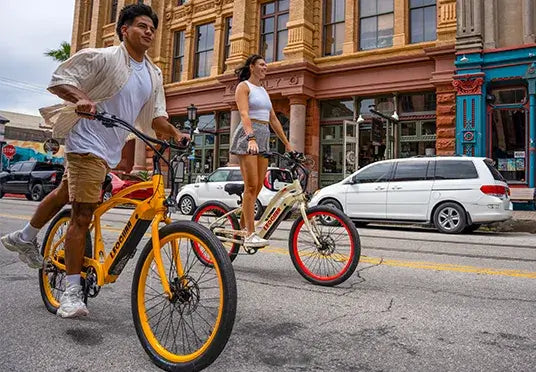
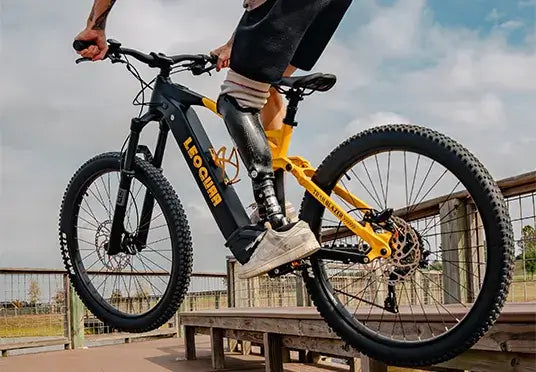
Traditional e-bikes offer a much wider variety of wheel and tire options tailored to their intended use. A road-focused commuter e-bike might have narrower, more efficient tires for speed on pavement. A hybrid will have a medium-width tire for versatility. An electric mountain bike will feature knobby tires designed for maximum grip on dirt trails. Suspension is also purpose-built, ranging from none on a lightweight road e-bike to highly advanced front and rear systems on a trail bike.
The Riding Experience
This is where the differences become real. Riding a moped-style e-bike feels like you're gliding. The upright position and plush seat encourage you to relax, twist the throttle, and let the motor do the work. It's a fun, low-effort way to get around town, feeling more like a quiet, lightweight scooter. The experience is less about the workout and more about the journey's style and ease.
On a traditional e-bike, you feel connected to the machine and the ride. The pedal-assist kicks in smoothly as you push on the pedals, amplifying your own effort. It feels like riding a regular bike, but with a superpower that flattens hills and fights headwinds. You are still the engine; the motor is your assistant. This creates an engaging, active experience that can be a great form of exercise.
Power, Performance, and Range
The engine room of these bikes reveals critical differences in how they deliver power, how fast they go, and how far they can take you on a single charge.
Throttle vs Pedal-Assist
This is the core control difference. Most moped style electric bikes are built around a throttle. This is usually a twist-grip or thumb-lever that allows you to accelerate without pedaling at all, just like a motorcycle. While they are required to have functional pedals to be legally classified as e-bikes, the riding experience is often throttle-dominant. This makes them fall into the Class 2 category.
Most traditional e-bikes, by contrast, are primarily pedal-assist (also called pedelec). The motor only engages when you are actively pedaling. Advanced systems use torque sensors to measure how hard you're pedaling and deliver a proportional amount of assistance, creating a seamless and intuitive feel. These bikes are typically Class 1 or Class 3, and this pedal-assist system is often a requirement for access to bike trails and multi-use paths.
Motor Power and Speed
In the United States, federal law defines an electric bicycle as having a motor of less than 750 watts (1 horsepower). This is a critical number. Many moped-style e-bikes feature 750W motors, which provide strong acceleration, especially from a standstill. However, a growing segment of the market features bikes with motors that are far more powerful, sometimes advertised with peak wattage of 1500W or more. These bikes push or exceed legal definitions, placing them in a regulatory gray area.
Traditional e-bikes almost always adhere strictly to the legal e-bike classes:
- Class 1: Pedal-assist only, with a maximum assisted speed of 20 mph.
- Class 2: Throttle-assisted, with a maximum motor-powered speed of 20 mph.
- Class 3: Pedal-assist only, with a maximum assisted speed of 28 mph.
Battery and Real-World Range
The range of any e-bike is determined by battery capacity (measured in Watt-hours or Wh), but real-world distance is heavily influenced by how you ride. Other factors include rider weight, terrain, and tire pressure.
Here's the key takeaway: heavy reliance on the throttle, which is common on moped-style bikes, will drain the battery significantly faster than using a low level of pedal-assist. For example, a bike with a 750Wh battery might give you 25-30 miles of range using the throttle exclusively. That same bike, ridden with a low-to-moderate level of pedal-assist, could easily achieve 50 miles or more. If maximum range is your priority for a long commute, a pedal-assist-focused traditional e-bike is the more efficient choice.
Navigating E-Bike Laws
This is one of the most important yet overlooked considerations when choosing an e-bike. Understanding the legal landscape isn't just about following rules; it's about your safety and your right to access roads and paths.
Understanding the 3-Class System
To standardize regulations, many states have adopted the three-class system for electric bikes. It's essential to know which class your bike falls into:
- Class 1: The motor provides assistance only when you pedal and cuts off at 20 mph.
- Class 2: The bike has a throttle and can propel the bike up to 20 mph without pedaling. It may also have pedal-assist.
- Class 3: The motor provides assistance only when you pedal and cuts off at 28 mph. These are typically not allowed for riders under 16 and may require a helmet.
The Moped-Style Gray Area
Here lies the most critical issue for prospective buyers. Many powerful moped-style bikes are marketed as e-bikes, but they may not legally qualify. If a bike can exceed 28 mph with motor assistance or has a motor more powerful than 750W, it may be legally considered a moped, motor-driven cycle, or even a motorcycle.
The danger here is significant. Riding one of these unclassified vehicles could require a driver's license, vehicle registration, and insurance in your state. Law enforcement is increasingly aware of the crucial difference between a legal e-bike and an unregulated electric motor vehicle. Ignorance of the law is not a valid defense in a traffic stop or after an accident.
Where Can You Ride?
Where you can ride depends heavily on the bike's class. Generally, Class 1 and Class 2 e-bikes are allowed on most streets, bike lanes, and multi-use paths where traditional bicycles are permitted. However, Class 3 e-bikes and powerful, unclassified moped-style bikes are often restricted from bike paths and trails. They are typically limited to roadways and on-street bike lanes. Always check your local and state regulations before you buy and ride.
A Practical Decision Guide
So, after all that information, which bike is right for you? Let's translate the features into a clear if-then framework to help you decide.
A moped style electric bike is likely for you if:
- You prioritize comfort and a relaxed, cruising ride over exercise.
- You plan to use the throttle more than you pedal for effortless travel.
- You love the retro motorcycle aesthetic and want to make a style statement.
- You want the ability to easily carry a passenger for short trips around town.
- Your primary use is for fun, stylish urban travel on streets.
- You are not planning to ride on dedicated bike paths or mountain bike trails where these bikes may be restricted.
A traditional electric bike is a better fit if:
- You want to get exercise and value an authentic cycling experience, enhanced by a motor.
- You need to tackle long commutes and want to maximize range from your battery.
- You plan to ride on a variety of surfaces, including bike paths, greenways, and trails where Class 1 bikes are permitted.
- You need a lighter bike that is easier to carry up stairs or mount on a car rack.
- You prefer a more active and engaged riding posture.
- You want a bike that is easily serviced at any standard bicycle shop.

Final Considerations
To complete your decision, let's briefly touch on two practical aspects of ownership.
Initial Purchase Price
Prices for both types of e-bikes can overlap significantly. You can find entry-level models of both styles starting around $1,000. However, the high-performance end of the moped-style market, with its powerful motors and large batteries, can quickly climb to $3,000 or more. At the same time, a wide variety of excellent, well-made traditional e-bikes are available in the $1,500 to $2,500 range.
Maintenance and Repairs
This is a practical point that is easy to overlook. Traditional e-bikes are built using a high percentage of standard bicycle components—wheels, brakes, chains, and gears. This means that nearly any reputable bike shop can perform routine maintenance and repairs.
Moped-style e-bikes often use more proprietary parts, especially their frames, long seats, integrated lights, and sometimes unique wheel sizes. While major electronic components (motor, battery) are often from large manufacturers, finding a replacement for a damaged frame part or a torn seat may require going directly to the original brand, which can be more challenging and time-consuming.
Frequently Asked Questions
Q: Can I ride a moped style electric bike on bike trails?
A: It depends on the bike's classification and local laws. Many moped-style e-bikes are Class 2 or higher, which may be restricted from certain bike trails. Class 1 e-bikes typically have the most trail access. Always check your local regulations before riding on trails or bike paths.
Q: Do I need a license to ride a moped style electric bike?
A: If the bike meets legal e-bike requirements (under 750W motor, max 28 mph), no license is needed. However, some powerful moped-style bikes exceed these limits and may legally require a license, registration, and insurance. Check your bike's specifications and local laws.
Q: Which type of electric bike has better battery range?
A: Traditional e-bikes with pedal-assist typically offer better range because they use battery power more efficiently. Moped-style bikes that rely heavily on throttle power drain batteries faster. A traditional e-bike might get 50+ miles while a throttle-heavy moped-style bike might get 25-30 miles with the same battery.
Q: Are moped style electric bikes heavier than traditional e-bikes?
A: Yes, moped-style e-bikes are generally heavier due to their robust frames, fat tires, suspension systems, and often larger batteries. They typically weigh 65-80 pounds compared to 40-60 pounds for most traditional e-bikes. This makes them harder to carry or transport.
Q: Can I get exercise on a moped style electric bike?
A: While you can pedal a moped-style e-bike, they're not designed for efficient exercise. The seating position and frame geometry make pedaling less comfortable and effective compared to traditional e-bikes. If fitness is a priority, a traditional e-bike with pedal-assist is a better choice.


Leave a comment