

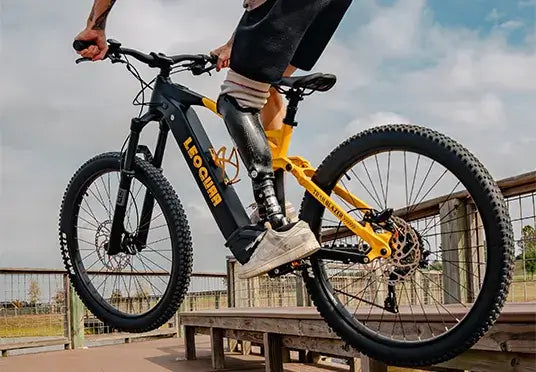


How Do You Choose and Set Up a Fishing E-Bike?
If you want to do fishing using ebikes, you need to check the following aspects: how rough is the ride to your fishing spot? How heavy is the gear you're carrying? And how often will you need to get on and off the bike?
A big-fat-tire bike such as the Leoguar Fastron is the better choice if your route includes gravel, ruts, or loose dirt since it provides better traction and has a larger battery; but if you mainly ride on paved trails or smooth paths and require a built-in rack, then the compact Sprint is the more sensible option.
The guide will help you to choose the bike, then you can put together a setup with which you will be able to ride comfortably.
Which fishing e-bike works best for your trip?
Before considering the motor sizes, try to picture a typical day of fishing. Is the journey three miles to a nearby lake, or are you traveling twenty miles on gravel? Does your equipment consist of just one rod and a shoulder bag, or do you take multiple rods, a cooler, water, and a tackle box?
For a short journey on good road conditions, it is necessary to concentrate on easy handling and on having useful cargo space; but if the trip is longer or bumpier then you should aim at good tire grip, sufficient battery capacity, effective braking performance, and a frame that is suitable for you when the bike is loaded.
What is it that makes an e-bike suitable for fishing?
You aren't obliged to have a fishing e-bike if you want to be the fastest in the range; what matters is that it should be able to carry your equipment without becoming cumbersome.
Enough range for the loaded ride
When comparing bikes, use the advertised range rather than using it to plan your final mile. Items such as your cooler, the tackle you carry, climbing hills, encountering a headwind, and using higher assist levels all result in greater energy consumption. Make sure to select a battery that has a capacity exceeding that needed for a typical round trip, particularly since the ride home involves climbing away from the water.
Tires that match your route
Wide tires are useful on gravel, hard-packed earth and rough access roads since they provide better grip and cushioning; however, they are not necessarily better for every angler, as on a smooth tarmac road smaller tires can appear lighter and easier to handle.
A real place to carry gear
Seek out a factory rack, an integral rear platform, or the mounting points suitable for the particular model. It is not a good idea to buy a general-purpose rod holder or basket first and then hope that it will fit. Make sure you check the attachment method and the weight rating for both the rack and the bike.
Brakes and fit you can trust
The type of fishing gear affects how the bike starts, turns, and stops. You need to have your foot down easily, comfortable access to both brake levers, and be able to turn the handlebar without touching a rod or a bag.

Choose Your Leoguar Fishing E-Bike
Fastron ST for rougher access and easy stops
For anglers who anticipate having to navigate gravel, uneven terrain, or longer journeys, the Leoguar Fastron ST is the best all-round option available, featuring a step-through frame, 26 × 4.0-inch tires, hydraulic disc brakes, a 750W rear hub motor rated at 85Nm, and a 720Wh battery with an advertised range of up to 60 miles.
If you wear baggy clothes or waders, stop often, or if you just want to get on and off without having to swing your leg over a rear bag that is loaded, then go for the ST. The ST has a max weight limit of 300 lb, and the rear rack and basket are optional, so budget for them in your setup.
Fastron SO for a traditional frame
The Fastron SO provides a full-size fat-tire setup in a step-over design; it is more suitable for people who prefer a conventional top tube and who are already at ease with mounting a bike with cargo behind the saddle.
It is also equipped with a 720Wh battery, 26 × 4.0-inch tires, a 750W motor, and a total weight limit of 300 lb; the rack is available as an optional extra. When making your choice between the two Fastron frames, you should decide on the basis of how well it fits and how comfortable it is to mount.
Sprint for maintained paths and compact cargo
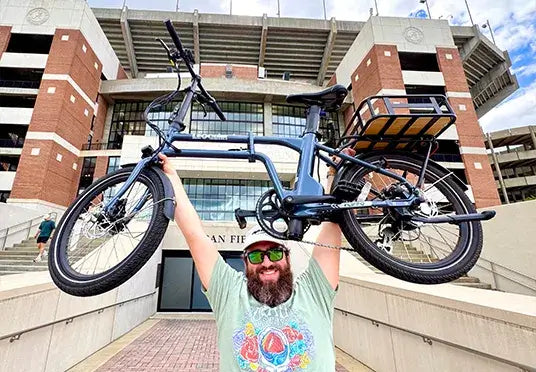
The Leoguar Sprint is a suitable choice when the roads to your fishing locations are paved or consist of park paths or softer mixed surfaces; it is fitted with 20 × 3.0-inch tires, a 614Wh battery that has a claimed range of up to 55 miles, and a rear hub motor rated at 350W.
If you're using the bike in the morning at the lake, the rear platform provides a place where you can secure a tackle bag or a small cooler without having to install an extra rack. Just remember these figures: the bike as a whole can carry 275 pounds, but the rear carrier alone is limited to 55 pounds. This means there is still enough space for a modest arrangement—such as your tackle, a cooler, and one or two rods—without overloading the back of the bike.
Keep the Bike Steady With Fishing Gear On Board
A heavy cooler or packed tackle box can quickly make a bike feel awkward, especially through turns. Secure it low and close to the center of the bike, where it is less likely to pull the steering off course. Skip the handlebars for anything heavy. If you use panniers, divide the gear between them and take a quick test ride—if the bike leans to one side, shift a few items before setting off.
Store your hooks and lures in a closed tackle box. For items that you use often—such as your phone, sunglasses, pliers, and a snack—put them in a small zippered bag so that you can access it after coming to a stop. Don't stack several bags one on top of the other on the rack since a tall load makes the bike feel unbalanced when moving at low speed.
The rack rating is only a maximum limit; you also have to remain under the bike's total weight limit after you have added your own weight, the water, the locks, the tools, the fishing equipment, and any fish you intend to take home.
Test Your Loaded Fishing E-Bike
Take a brief practice ride using the same gear that you intend to carry. Begin at a slow speed, perform a sharp turn, brake while moving at a moderate speed, go over a small bump, and then come to a stop on a gentle slope. If the bicycle leans to one side or the handlebar feels abnormally light, then move your weight lower and closer to the center.
After ten minutes, check the straps once more, since soft bags tend to settle, and a strap that seemed tight when you were in the driveway can become looser when the bike begins to move. Also ensure that the rods remain clear when you put a foot down or when you walk alongside the bike.
Begin with the pressure that is printed on the tires and then make small adjustments depending on the weight you are carrying and the surface you are on. The Leoguar fat-tire pressure guide describes how changes in pressure influence grip and the rolling sensation.
Fishing E-Bike FAQs
Which Leoguar e-bike is best for fishing?
The Fastron ST is the best all-round option for rough approaches, longer rides, and frequent stops. If you want an integrated rear cargo platform, then the Sprint is the better choice. The Fastron SO is suitable for people who would like full-size fat tires together with a traditional step-over frame.
What range should I expect from my electric fishing bike?
When selecting a bicycle, make sure the advertised range goes well beyond the distance you usually travel on a round trip. In reality, factors such as carrying cargo, riding up hills, wind, temperature changes, and the level of assistance all reduce range, so don't plan a journey that uses the full stated range.
Is a rear rack necessary if I'm fishing?
You could fish without it, but soon the equipment becomes difficult to carry. A rear rack will keep your tackle bag, panniers, or small cooler off your back and away from the handlebars. The Sprint comes with a rear platform, but Fastron riders will have to get a compatible rack.
How can I take my fishing rods on an e-bike?
Hold the rod at two points using a holder and ensure that the rod handles are kept away from the rear wheel, placing the tips in such a way that they do not interfere with your shoulders, the handlebars, or the nearby branches. Before fitting any further equipment, check the arrangement.


Leave a comment