



Bike Tire PSI Guide: Perfect Pressure for E-Bikes
Introduction: Unlocking Your E-Bike's Potential
Think of your e-bike's tires as the unsung heroes of every ride. They connect your bike to the ground, and the air inside them affects how your bike performs. Getting the bike tire psi right helps you unlock your e-bike's full potential.
It controls comfort, efficiency, grip, and even safety. E-bikes are heavier and faster than regular bikes, so standard advice often doesn't work. This guide helps e-bike owners learn how to set their tire pressure for the perfect ride every time.
Why E-Bikes Have Unique Needs
You can't use the same pressure you would on a regular bicycle. Electric bikes need a different approach to tire inflation.
The Weight Factor
The biggest difference is weight. An e-bike with its motor and battery can be 20-30 lbs heavier than a regular bike. This extra weight puts more load on the tires. You need the right pressure to support this load and protect your rims from damage. Running too low pressure on a heavy e-bike can cause problems.
The Speed and Torque Factor
E-bikes speed up faster and go faster than regular bikes. This puts special stress on the tire's structure. The right bike tire psi keeps the tire in the best shape when speeding up and riding fast. An underinflated tire can feel loose or wobbly in turns, which gets worse with e-bike speed and power.

The Comfort and Grip Factor
Your tires work like suspension, absorbing bumps and vibrations before they reach your body. There's a careful balance to find. Higher pressure reduces rolling resistance for better range but lets you feel more bumps.
Lower pressure gives more comfort and grip but can feel slow. On an e-bike, the motor helps overcome rolling resistance, so you can often run slightly lower pressures than on a regular bike without hurting battery life much.
Decoding Your Tire's Sidewall
Before you grab a pump, look at your tire first. Important information is molded into the rubber sidewall. You'll see numbers followed by "PSI" or "BAR"—like "Min 35 - Max 60 PSI."
This shows the manufacturer's safe operating range, not a specific pressure recommendation.
- PSI (Pounds per Square Inch): The standard unit in the United States.
- BAR: The common unit in Europe, where 1 BAR equals about 14.5 PSI.
Never inflate your tires below the minimum or above the maximum pressure on the sidewall. Under-inflation can damage your rim and hurt handling, while over-inflation creates a harsh ride and can cause tire blowouts.
The Core Factors for Your Ideal PSI
The range on your sidewall is wide for a reason. Your perfect pressure changes based on several key factors.
Total System Weight
This includes your weight plus your e-bike's weight plus any gear you carry. The heavier the total system, the more air pressure you need to support it properly. A 220 lb rider on a 55 lb e-bike needs much more pressure than a 150 lb rider on the same bike.
Tire Width and Volume
Tire width affects pressure in the opposite way—wider tires need less pressure. Wider tires hold more air and can support the same load at lower pressure.
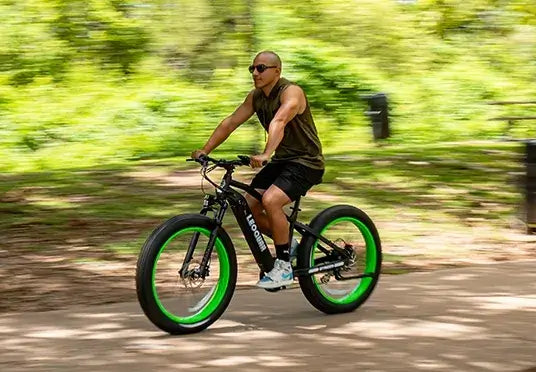
- Fat Tires (4.0" and wider): Run at very low pressures, often 5-25 PSI.
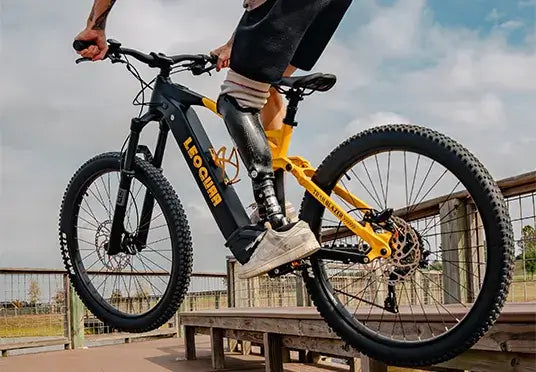
- E-MTB Tires (2.3" - 2.8"): Usually work best at 20-35 PSI.
- Hybrid/Commuter Tires (1.75" - 2.2"): Typically need 40-65 PSI.
Riding Surface and Terrain
Where you ride matters as much as what you ride. You should change your pressure to match the terrain for the best performance.
- Smooth Pavement: Higher pressures work best here, reducing rolling resistance and helping battery range.
- Rough Pavement or Gravel: Drop your pressure by 5-10 PSI so the tire absorbs bumps better.
- Off-Road Trails: Lower pressures help with traction since softer tires grip roots and rocks better.
Tubed vs. Tubeless Tires
Many modern e-bikes come with tubeless-ready wheels and tires. A tubeless setup removes the inner tube and uses liquid sealant to make the tire airtight. The biggest advantage is running lower pressures without risking pinch flats. You can safely run 3-5 PSI lower in tubeless tires compared to tubed ones, giving you better grip and comfort.
A Practical Starting Point: PSI Chart
Here's a general reference chart based on common e-bike types. Remember, this is just a starting point that you should adjust based on the factors we discussed.
| E-Bike Type | Common Tire Width | Rider Weight ~175 lbs (80 kg) | Recommended Starting PSI |
|---|---|---|---|
| Commuter / Hybrid E-Bike | 1.75" - 2.2" (45-56mm) | Tubed | 50 PSI |
| Commuter / Hybrid E-Bike | 1.75" - 2.2" (45-56mm) | Tubeless | 45 PSI |
| E-Mountain Bike (eMTB) | 2.3" - 2.6" (58-66mm) | Tubeless | 24 PSI Front / 26 PSI Rear |
| Fat Tire E-Bike | 4.0" - 5.0" (100-127mm) | Tubed/Tubeless | 12 PSI |
Note: For every 20 lbs of system weight above or below 230 lbs, adjust your starting pressure by about 2-3 PSI.
The Art of Fine-Tuning
Finding your perfect bike tire psi takes some testing. Here's a simple method to get it right.
Get the Right Tools
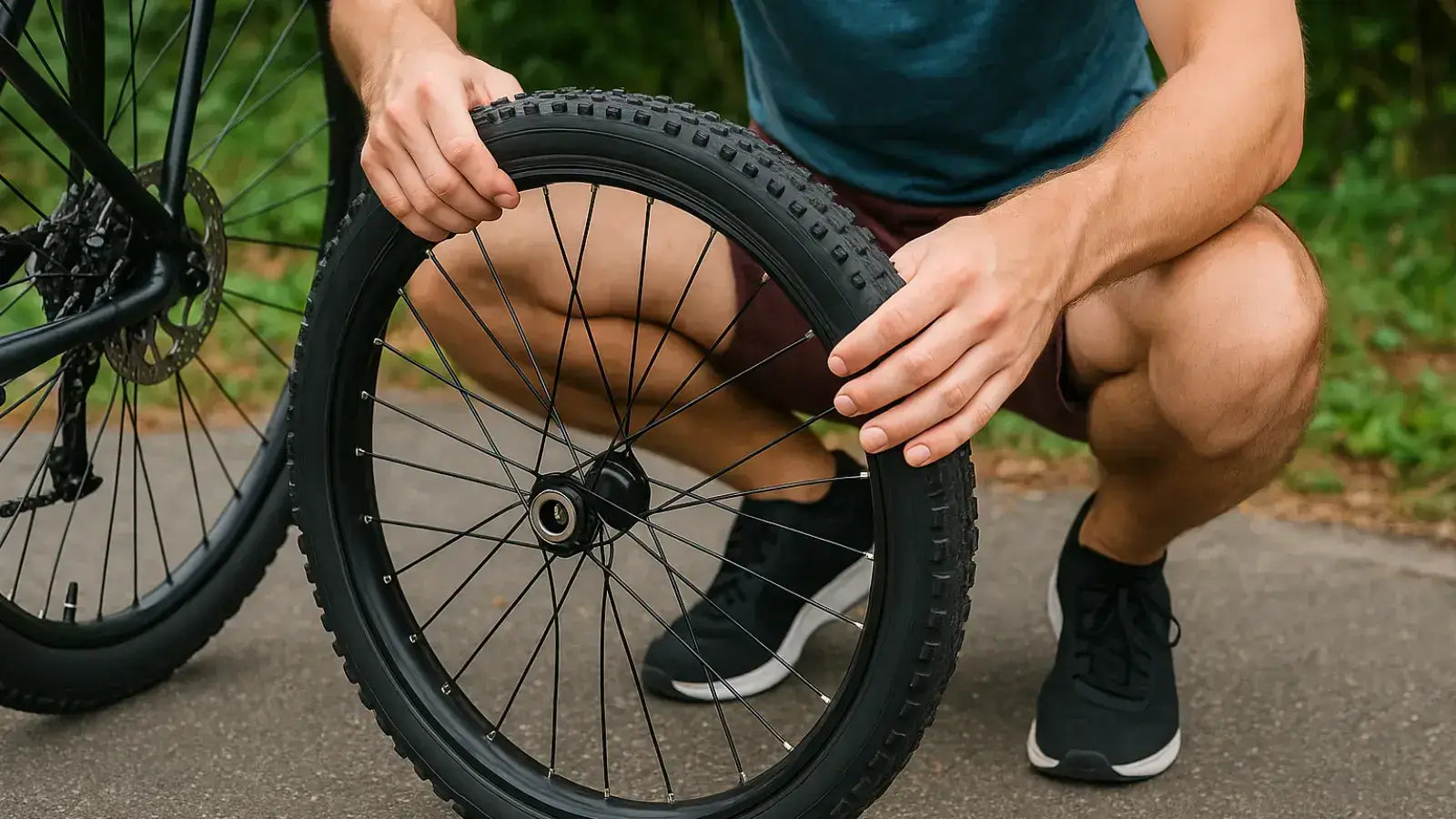
First, you need an accurate way to measure pressure. The "squeeze test" doesn't work and is completely unreliable. Buy a quality floor pump with a large, easy-to-read gauge. For the best accuracy, a separate digital pressure gauge is an excellent tool since they're more precise than pump gauges.
The Bracket Method
- Start in the Middle: Inflate your tires to the pressure from our chart or the middle of your tire's sidewall range.
- Go for a Ride: Take your e-bike for a short ride on your usual terrain, paying attention to how it feels.
- Adjust and Repeat: If the ride feels too harsh, let out 2 PSI and ride again. If the bike feels sluggish or you feel the rim hitting the ground, add 2 PSI.
Repeat this process, making small changes until the bike feels both comfortable and responsive.
Front vs. Rear Pressure
Your body puts more weight over the rear wheel. Because of this, run your rear tire with 2-5 PSI more than your front tire. This supports the heavier-loaded rear wheel while letting the front wheel be softer for better grip and steering.
Advanced Considerations and Pro Tips
Once you understand the basics, use these advanced tips to improve your pressure even more.
Using Online Calculators
Several tire companies offer detailed online calculators that give highly accurate starting points. These tools consider rider weight, bike weight, tire width, rim width, and tire type.
Use these calculators to get a precise recommendation, then apply the Bracket Method to fine-tune it to your preference.
The Impact of Weather
Your ideal pressure isn't fixed. In wet, rainy conditions, dropping your pressure by 3-5 PSI increases your tire's contact with the ground. This gives noticeably better grip on slick surfaces.
Also, watch out for temperature changes—if you inflate tires in a warm garage and ride in near-freezing temperatures, your tire pressure can drop several PSI.
Hookless Rims
More modern wheels, especially carbon models, use a "hookless" rim design. This technology has a strict maximum pressure limit, typically 72.5 PSI (5 BAR). You must identify if you have hookless rims and never inflate beyond this maximum, even if the tire is rated higher. Check your wheel manufacturer's specifications to be sure.

Common Pitfalls to Avoid
Avoiding these common mistakes will give you a better ride and longer tire life.
Over-inflation
Pumping tires to maximum pressure is a common mistake. This creates a harsh, uncomfortable ride where you feel every crack in the pavement. It also reduces traction since the tire is too hard to grip the ground properly.
Under-inflation
This is arguably more dangerous. An underinflated tire feels sluggish and unresponsive, draining your battery faster. In corners, it will feel unstable and wobbly. Most importantly, it greatly increases the risk of pinch flats and can permanently damage your tire's sidewalls and rims from hard impacts.
Ignoring Your Tires
Tires naturally lose air over time. The pressure you set Monday could be 5-10 PSI lower by Friday. Check your bike tire psi with a gauge at least once a week and before every long ride. It's the most important pre-ride maintenance you can do.
Conclusion: Your Perfect Ride Awaits
Mastering your bike tire psi is the fastest way to improve your e-bike experience. It costs nothing but a few minutes with a pump and gauge. By understanding weight, tire volume, and terrain, and using a careful approach to fine-tuning, you can transform your ride. Stop guessing and start measuring—a smoother, faster, more comfortable, and safer ride is just a few pumps away.
Frequently Asked Questions
Q: How often should I check my e-bike tire pressure?
A: Check your tire pressure at least once a week and before every long ride. Tires naturally lose air over time, and pressure can drop 5-10 PSI in just a few days.
Q: Can I use the same tire pressure for my e-bike as I would for a regular bike?
A: No, e-bikes are heavier and faster than regular bikes, so they need different tire pressures. You typically need higher pressure to support the extra weight of the motor and battery.
Q: What's the difference between PSI and BAR measurements?
A: PSI (Pounds per Square Inch) is the standard unit in the United States, while BAR is common in Europe. One BAR equals approximately 14.5 PSI.
Q: Should my front and rear tires have the same pressure?
A: No, your rear tire should have 2-5 PSI more than your front tire because more weight sits over the rear wheel. This provides proper support while keeping the front tire softer for better steering and grip.
Q: What happens if I ride with the wrong tire pressure?
A: Too high pressure creates a harsh ride and reduces traction. Too low pressure makes the bike feel sluggish, increases the risk of flats, and can damage your rims. Both extremes can be unsafe and reduce your bike's performance.


Leave a comment