




Electric Bike For Girls: Beginner-Friendly Options For Women Riders
Looking for an "electric bike for girls" can be confusing. Many times, this search is not about finding a child's bike, but about wanting an e-bike that feels more friendly, comfortable, and easier to handle for women. This guide helps you, especially if you are a beginner, find an electric bike that feels like it was made just for you.
The secret to a great riding experience is not a "girl's" label, but finding a perfect fit, easy-to-use features, and safety that builds confidence. We are here to make the process simple and give you the knowledge to choose the right e-bike.
Here's what we'll cover to help you find your ideal ride:
* Understanding women-friendly design features
* How to find the perfect bike fit for your body
* Understanding motor, battery, and other tech specs
* Important safety and comfort features to look for
What is a "Woman-Friendly" E-Bike?
The term "woman-friendly" in the cycling world is not about colors or marketing. It's about smart design choices that work with common body needs, making rides more comfortable and giving you better control. While anyone can ride any bike that fits them, understanding these differences gives you the power to find what will make your ride better. It's about finding a bike that works with your body, not against it.
Key Body-Friendly Differences
Many brands design bikes with female riders in mind, focusing on three main areas that greatly impact comfort.
Frame Shape (Standover Height): The most noticeable feature is often a step-through frame. This design removes the high top tube found on traditional "step-over" bikes. The benefit is huge: getting on and off is easy. You can simply step through the frame, which is a big confidence booster in stop-and-go city traffic, when wearing a skirt, or if you have any movement limits. Many popular models from brands like Aventon and Rad Power Bikes focus on this accessible design.
Seat Design: Comfort on the seat is a must. Due to body differences, women generally have wider-set sit bones than men. A "women-specific" seat is typically wider at the back to give proper support for these bones, preventing the discomfort and pressure that can come from a narrow, poorly fitting seat.
Control Area Sizing (Reach & Handlebars): The "control area" refers to the space including your handlebars, stem, and controls. Women, on average, have shorter torsos and narrower shoulders than men of the same height. To work with this, a woman-friendly bike may feature a shorter reach (the distance to the handlebars) and narrower handlebars. This prevents overreaching, which can cause strain in the back, shoulders, and neck on longer rides.
Fit Rules Everything
While these design parts are common, they are not strict rules. The main goal is to find a bike that gives you a perfect, personal fit. A "unisex" bike might fit you perfectly right out of the box. Also, a unisex frame can often be changed into your ideal ride with a few simple part swaps. Changing the seat to a wider model or replacing the stem to bring the handlebars closer are common, cheap adjustments a good bike shop can do. Remember, the best electric bike for you is the one you feel most comfortable and confident riding, regardless of its label.
Finding Your Perfect Fit
Beyond general design rules, finding the right size is the single most important step. A bike that is too large will feel hard to control and unsafe, while one that is too small can be uncomfortable and not work well.
Key Measurements to Know
Two measurements are critical: standover height and reach. Standover height is the distance from the ground to the top of the bike's frame. When you stand over the bike with your feet flat on the ground, there should be at least one to two inches of space between your body and the frame. This is a crucial safety feature, making sure you can get off quickly and safely without hitting the frame.
Reach is the horizontal distance from the seat to the handlebars. A reach that is too long will force you to stretch uncomfortably, leading to back and shoulder pain. A reach that is too short can make the bike feel cramped. Your ideal reach allows for a slight bend in your elbows while riding in a comfortable, relaxed position.
The Importance of a Test Ride
Numbers on a website can only tell you so much. Nothing replaces the real-world feel of a test ride. Visiting a local bike shop allows you to try different models and sizes. Pay attention to how it feels to get on and off the bike. Can you comfortably reach the handlebars and brakes? Does the riding position feel natural? Ride for at least 10-15 minutes if possible to see how your body feels. Test the bike on a small hill if you can to feel how the motor helps.
Thinking About Bike Weight
Electric bikes are heavier than regular bicycles due to the motor and battery. A typical e-bike weighs between 45 and 70 pounds (20-32 kg). This weight can be a big factor if you need to carry the bike up stairs, lift it onto a car rack, or move it in tight spaces. Lighter e-bikes, often made with carbon fiber or lighter aluminum frames, are available but usually cost more. Brands like Velotric and Urtopia focus on creating lighter models that are easier to handle for more riders.
Understanding E-Bike Tech
The "e" in e-bike can seem scary, but the main parts are simple. Understanding the motor and battery will help you choose a bike with the right power and range for your needs.
Hub Motors vs. Mid-Drives
E-bike motors come in two main types: hub-drive and mid-drive.
Hub-Drive Motors: These are located in the hub of the front or, more commonly, the rear wheel. They work by directly pushing the wheel forward. This creates a feeling of being pushed, which is very easy to understand. Hub-drive systems are generally cheaper and are found on many excellent entry-level and commuter e-bikes.
Mid-Drive Motors: These are located in the center of the bike frame where the pedals connect. They apply power directly to the drivetrain (the chain and gears). This results in a more natural, smooth feeling, as if your own pedaling power is being boosted. Mid-drive systems are typically more efficient, especially on hills, and offer better balance due to their low, central position. They are often found on higher-end commuter, touring, and mountain e-bikes.
Understanding Torque (Nm)
Torque, measured in Newton-meters (Nm), is the turning force the motor produces. It's what gets you moving from a stop and helps you climb hills. For general city riding and gentle terrain, a motor with 40-50 Nm of torque is plenty. If your routes include steep hills or you plan to carry heavy loads, look for a motor with 60 Nm or more. More torque gives stronger acceleration and better climbing ability.
Battery Range and Watt-Hours
The battery is your e-bike's fuel tank. Its capacity is measured in Watt-hours (Wh). A bigger number means a larger "tank" and, generally, a longer range. A typical battery is around 500Wh. The actual range you get depends on many factors: the assist level you use, terrain, wind, tire pressure, and your weight. A 500Wh battery might give 25 miles of range using high assistance with a throttle, or over 50 miles using a low level of pedal assist on flat ground. Many modern e-bikes feature a removable battery, which is convenient for charging indoors without bringing the whole bike inside.
Important Features for Women
Beyond the main parts, certain features can greatly improve your safety, comfort, and the overall usefulness of your electric bike.
Brakes, Lights, and Tires
Good brakes are a must for safety. Most quality e-bikes now use disc brakes, which offer better stopping power in all weather conditions compared to older rim brakes. Hydraulic disc brakes give the best performance, requiring less hand strength to operate. Built-in lights that run off the main battery are a great feature for visibility. They make sure you can see and be seen, day or night, without worrying about separate batteries.
Tires also play a big role. Wider or "fat" tires give more stability and cushioning, which can boost confidence for new riders. Narrower tires are more efficient and faster, better for smooth pavement and longer distances.
Comfort and Convenience
For a truly enjoyable ride, look for comfort-focused features. A suspension fork at the front or a suspension seatpost can absorb bumps and vibrations from the road, reducing tiredness. An upright riding posture, often found on cruiser and comfort bikes, puts less strain on your back and neck. Convenience features like fenders keep you clean and dry from road spray, while a rear rack is essential for carrying groceries, a work bag, or panniers for a weekend trip.
E-Bike Classifications
In the United States, e-bikes are typically grouped into three classes:
* Class 1: Pedal-assist only (the motor works when you pedal) with a maximum assisted speed of 20 mph.
* Class 2: Features a throttle that can power the bike without pedaling, up to 20 mph. Most also have pedal assist.
* Class 3: Pedal-assist only, with a higher maximum assisted speed of 28 mph.
Class 2 e-bikes are very popular with beginners because the throttle can give a helpful boost to get started from a stop. Be sure to check your local rules, as laws for where each class can be ridden may vary.
Popular E-Bike Styles
Electric bikes come in all shapes and sizes, designed for different purposes. Here are a few popular categories that are great for new women riders.
Cruisers and Comfort Bikes
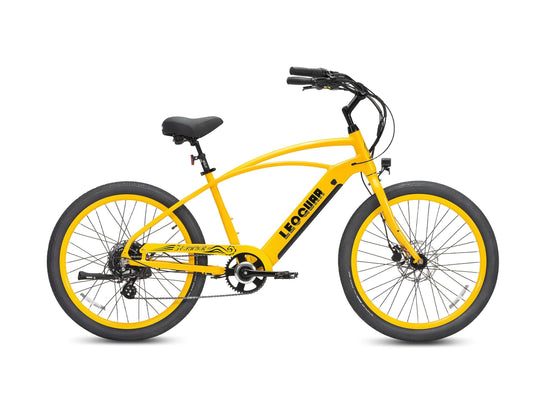
These bikes, like many models from sixthreezero or Electra, focus on a relaxed, comfortable experience. They feature an upright riding position, wide and cushioned seats, and swept-back handlebars. They are perfect for easy rides around the neighborhood, on bike paths, or to the beach. Their focus is on pure enjoyment rather than speed.
Commuter and Hybrid Bikes
These are the all-rounders of the e-bike world. They blend comfort with efficiency, making them ideal for getting to work, running errands, or for fitness rides. Brands like Aventon and Trek offer fantastic hybrid models that often come equipped with racks and fenders, ready for daily use in an urban environment.
Folding E-Bikes
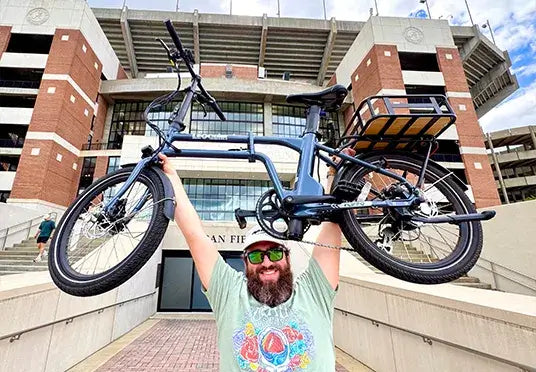
If you have limited storage space at home or want to combine cycling with public transit, a folding e-bike is a brilliant solution. Models like the popular Leoguar Flippo compact ebike can be folded down in seconds to fit in a car trunk, an office corner, or an apartment closet. They are incredibly practical for city living.

Your Final Checklist
Choosing your first electric bike is an exciting journey. By focusing on the right things, you can find a ride that will bring you years of joy and freedom. Keep this final checklist in mind:
- Focus on Standover Height: Make sure you have at least 1-2 inches of clearance over the top tube for safe and easy dismounting. A step-through frame is often the best choice for accessibility.
- Check the Control Area: Make sure you can comfortably reach the handlebars without straining your back or shoulders. The riding posture should feel natural.
- Think About the Bike's Weight: Consider how you will store and transport the bike. A lighter model will be easier to manage day-to-day.
- Match the Motor to Your Terrain: A 40-50 Nm motor is great for flat areas, but choose 60+ Nm if you have big hills on your regular routes.
- Don't Skip the Test Ride: This is the best way to know if a bike truly fits your body and riding style.
- Look for Safety and Comfort: Good hydraulic brakes, built-in lights, and a comfortable seat are essential for a positive experience.
Frequently Asked Questions
Q: What's the difference between electric bikes for women and regular e-bikes?
A: Electric bikes for women typically feature step-through frames, wider seats designed for women's anatomy, shorter reach to handlebars, and narrower handlebars. However, the most important factor is finding a bike that fits your body properly, regardless of how it's marketed.
Q: How much should I expect to spend on a good women's electric bike?
A: Quality electric bikes for women typically range from $800 to $3,000. Entry-level models with basic features start around $800-1,200, while mid-range bikes with better components cost $1,200-2,000. Premium models with advanced features can cost $2,000-3,000 or more.
Q: What's the ideal motor power for a beginner female rider?
A: For most beginner riders, a motor with 40-50 Nm of torque is sufficient for flat terrain and gentle hills. If you live in a hilly area or plan to carry heavy loads, look for motors with 60+ Nm of torque for better climbing ability.
Q: How far can I ride on a single battery charge?
A: Range varies greatly depending on battery size, terrain, assist level, and rider weight. A typical 500Wh battery can provide 25-50 miles of range. Using lower assist levels on flat terrain maximizes range, while high assist levels and hills reduce it.
Q: Do I need special gear or clothing to ride an electric bike?
A: You don't need special clothing, but a properly fitted helmet is essential for safety. Comfortable clothing that won't catch in the chain or wheels is recommended. Many women find step-through frames more convenient when wearing skirts or dresses.


Leave a comment