




Electric Bike Trailers: Must-Know Features in Dog Trailers for eBikes
E-Bike Towing Physics
Taking your dog on bike rides is fun. But using an electric bike to pull a dog trailer is different from using a regular bike. E-bikes are faster, heavier, and more powerful than normal bikes. This creates new challenges for safety. You can't just hook up any trailer to your e-bike. You need to understand how your e-bike, trailer, and dog work together as one system.
Speed and Torque
E-bikes let you ride faster for longer times. Speeds of 15-20 mph are easy to keep up on an e-bike, but this puts constant stress on your trailer's frame, hitch, and wheel parts. The motor also gives instant power when you start pedaling. A cheap trailer might bend or shake under this quick acceleration, making your dog uncomfortable and unsafe. Good electric bike trailers are built to handle these steady forces without breaking.
The Braking Problem
Stopping safely is just as important as going fast. An e-bike weighs 50-70 pounds, plus your weight, plus the trailer (20-35 pounds), plus your dog adds up to a lot of mass. All this extra weight makes it much harder to stop quickly. Adding an 80-pound load from your dog and trailer can make your stopping distance 20-30% longer at 15 mph. This means you really need good hydraulic disc brakes on your e-bike. They give you the strong, reliable stopping power you need to control all that extra weight safely.
Battery Drain Planning
More weight and drag means your battery dies faster. Pulling a dog trailer will definitely reduce how far your e-bike can go on one charge. How much depends on your dog's weight, the trailer design, the terrain, and how much motor assistance you use. When you first start towing, plan shorter trips and watch your battery level to learn your new range. It's always better to come home with battery left over.

E-Bike Compatibility Checks
Making sure the trailer fits your e-bike is one of the biggest challenges. E-bike frames and rear axles are much less standard than regular bikes. Before you look at trailer features, you must make sure it can attach securely to your specific bike. Follow this checklist carefully.
Step 1: Identify Your Rear Axle
The axle holds your rear wheel to the frame and is where most trailer hitches attach.
Thru-Axle: Modern e-mountain bikes and nice commuter bikes often use thru-axles. A thru-axle is a thick bolt (usually 12mm wide) that screws directly into the bike frame. Regular trailer hitches don't work with thru-axles. You will almost certainly need to buy a special thru-axle adapter from the trailer company or a specialist like The Robert Axle Project. These adapters replace your original axle and give you a place to mount the hitch.
Quick-Release Skewer / Bolted Axle: These are more traditional systems. A quick-release uses a lever to clamp the wheel in place, while a bolted axle uses nuts. Most standard trailer hitches work with these systems. But you still need to check that everything fits, especially with covered dropouts that might block the hitch plate.
Step 2: Check Drivetrain Interference
The type of motor on your e-bike can affect how the hitch mounts.
Rear Hub Motor: If your e-bike has a motor in the rear wheel hub, the motor casing and power cable can get in the way of the trailer hitch plate. You need to look closely at this area to make sure the hitch can sit flat and secure against the frame without pressing on wires or motor parts.
Mid-Drive Motor: A mid-drive motor sits at the bike's pedals, leaving the rear wheel area similar to a regular bike. This usually makes attaching a trailer hitch much easier since there's no motor hardware in the way.
Step 3: Assess Frame and Dropout Clearance
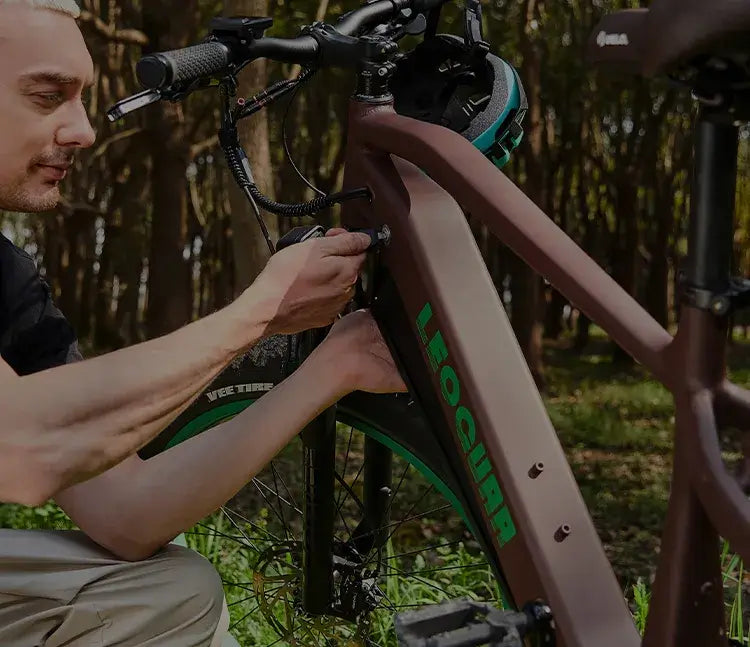
Look closely at the part of your bike frame where the rear wheel attaches (called the "dropout"). The hitch plate needs a flat, stable surface to mount against. Check for things in the way like frame tubes, disc brake parts, rack mounts, or your bike's kickstand. Hold the hitch plate in position to make sure it fits flush and secure. Many hitches claim to be universal, but e-bike frames have unique shapes, so you must physically check the fit. This hands-on check is important, as confirmed by sources that use rigorous testing methodologies for bike trailers.
Essential Trailer Features
Once you know the trailer fits your bike, you can focus on the trailer itself. For e-biking demands, certain basic features are absolutely necessary.
Frame Construction: Steel vs. Aluminum
Steel: A steel frame is very durable and absorbs some road vibration well. It's usually heavier and costs less. For riders on mostly paved roads who don't mind a few extra pounds, steel frames are strong and reliable.
Aluminum: An aluminum frame is much lighter and doesn't rust, making it great for people who need to lift the trailer often or ride in wet weather. The lighter weight also helps save a little e-bike battery life.
No matter what material, you need a solid, welded frame. Avoid trailers with frames bolted together from multiple pieces since they don't have the strength needed for e-bike speeds and power.
Wheels and Tires
The wheels connect your trailer to the road and are critical for a smooth, safe ride.
Size: Most dog trailers use 16-inch or 20-inch wheels. Larger 20-inch wheels roll over bumps and holes more easily, giving your dog a smoother ride and better handling for you.
Tires: This is one of the most important features. You must have pneumatic (air-filled) tires. They work as the main suspension, absorbing small bumps and vibrations much better than solid plastic or foam-filled tires, which create a harsh and bumpy ride.
Cabin Material and Weatherproofing
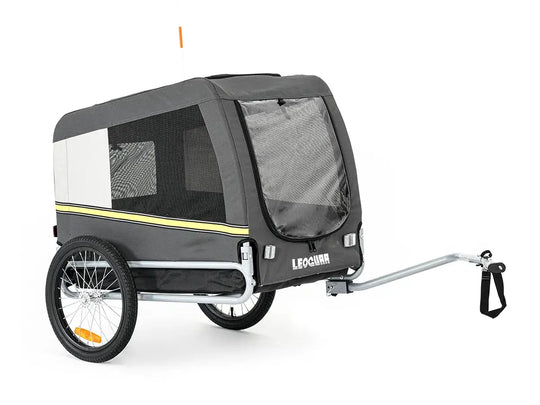
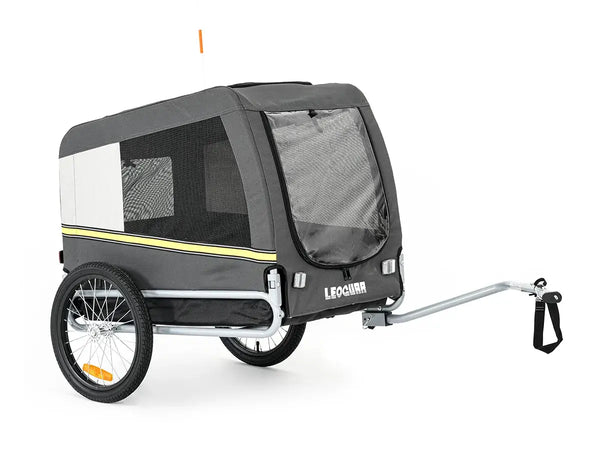
The cabin protects your dog from weather. Look for tough, rip-resistant fabrics like 600D polyester that can handle paws and claws. A key feature is a 2-in-1 weather cover-usually a combination of mesh windows for air flow and clear, roll-down vinyl covers for rain and wind protection. This keeps you ready for any weather.
Dog Comfort and Safety
A good trip requires your dog to feel safe and comfortable. These features directly affect your pet's well-being inside the trailer.
Ventilation and Visibility
Dogs can get too hot quickly, even on cool days. Great ventilation is a primary safety feature. Look for a trailer with large mesh windows on at least the front and sides for maximum air flow. A zippered sunroof is also a fantastic feature-it gives extra ventilation and lets your dog pop its head up (when stopped and safe) to see you, which can be very comforting.
Suspension: The Comfort Upgrade
While air-filled tires provide some cushioning, a real suspension system is the ultimate comfort upgrade. Especially when paired with a faster e-bike, suspension absorbs bigger bumps and jarring impacts from uneven pavement or trails. It changes the ride from tolerable to truly comfortable. For older dogs, dogs with joint problems, or anyone planning to ride on anything other than perfect pavement, suspension is a must-have. Pet experts agree on key considerations for your dog's comfort.
Interior Safety Features
Safety inside the cabin is most important. You absolutely must have an internal anchor point where you can attach a short safety tether. This tether should be short enough to let your dog sit or lie down comfortably but prevent them from jumping or falling out of the trailer. The floor should be firm, solid, and have a non-slip surface to help your dog feel stable, especially during turns. A removable, washable floor pad is a practical bonus that makes cleanup much easier.

Acclimatizing Your Dog
A gradual and positive introduction is the key to getting your dog to love their new electric bike trailer. Don't just put them in and go.
- Introduce at Home: Set up the trailer in your living room or yard. Leave the door open and let your dog sniff and explore it on their own. Toss some special treats inside to create a positive feeling. Make it their new den.
- Encourage Entry: Over a few days, encourage them to get inside. Praise and reward them for any interaction. Feed them a meal inside the trailer. Never force them in.
- Stationary Practice: Once they're comfortable inside, attach the empty trailer to your e-bike. Then, with the bike stopped, have your dog get into the trailer. Let them sit there while you stand with the bike, rewarding them for calm behavior.
- The First Roll: Start with a very short, slow roll in a safe, quiet area like your driveway or an empty parking lot. Just a few feet is enough for the first time. Keep the experience calm and positive.
- Gradual Increase: Slowly make your rides longer and faster. Talk to your dog in a reassuring voice. Always end on a high note with a treat or fun activity, so they connect the trailer with great outcomes.
Frequently Asked Questions
Q: Can I use any dog trailer with my electric bike?
A: No, not all dog trailers work with e-bikes. You need to check if the trailer hitch fits your specific e-bike's rear axle type and if there's enough clearance around your motor and frame components.
Q: How much does towing a dog trailer reduce my e-bike's battery range?
A: Towing typically reduces your range by 20-40%, depending on your dog's weight, the trailer design, terrain, and assist level. Start with shorter trips to learn your new range limits.
Q: What's the difference between steel and aluminum trailer frames for e-bikes?
A: Steel frames are heavier but more durable and absorb vibration better. Aluminum frames are lighter, don't rust, and help preserve battery life, but they cost more.
Q: Do I really need suspension on my dog trailer?
A: While not absolutely required, suspension greatly improves comfort, especially at e-bike speeds. It's essential for older dogs, dogs with joint issues, or riding on rough surfaces.
Q: How long does it take to train my dog to use a bike trailer?
A: Most dogs need 1-2 weeks of gradual introduction. Start by letting them explore the stationary trailer at home, then progress to short, slow rides. Never rush the process.



Leave a comment