






E Bike Brake Pads: How to Replace, Cost, and Best Options
When to Replace E-Bike Brake Pads
E bike brake pads are more than just parts you fix. They keep you safe. The extra weight and speed of an e-bike puts much more pressure on the brakes than a regular bike. This means your pads wear out faster. Strong braking isn't nice to have—it's needed for controlling a heavier, faster machine, especially in traffic or on steep hills. This guide will teach you everything about e-bike brake pads. We'll show you how to spot worn pads, how to pick the right replacements for your riding style, what they cost, and how to replace them yourself step by step. By the end, you'll know how to keep your e-bike stopping safely.
Knowing when to replace your e bike brake pads is the first step to staying safe while riding. Instead of guessing, you can learn to check your brakes using your eyes, ears, and hands. This way gives you clear signs to watch for. According to Shimano's official maintenance guide, checking your brakes regularly is key to safety. A general rule is to replace pads when the braking material is worn to 1.5mm or less, but some companies recommend replacement at a greater thickness, so always check your specific brake model's guidelines.
What to Look For
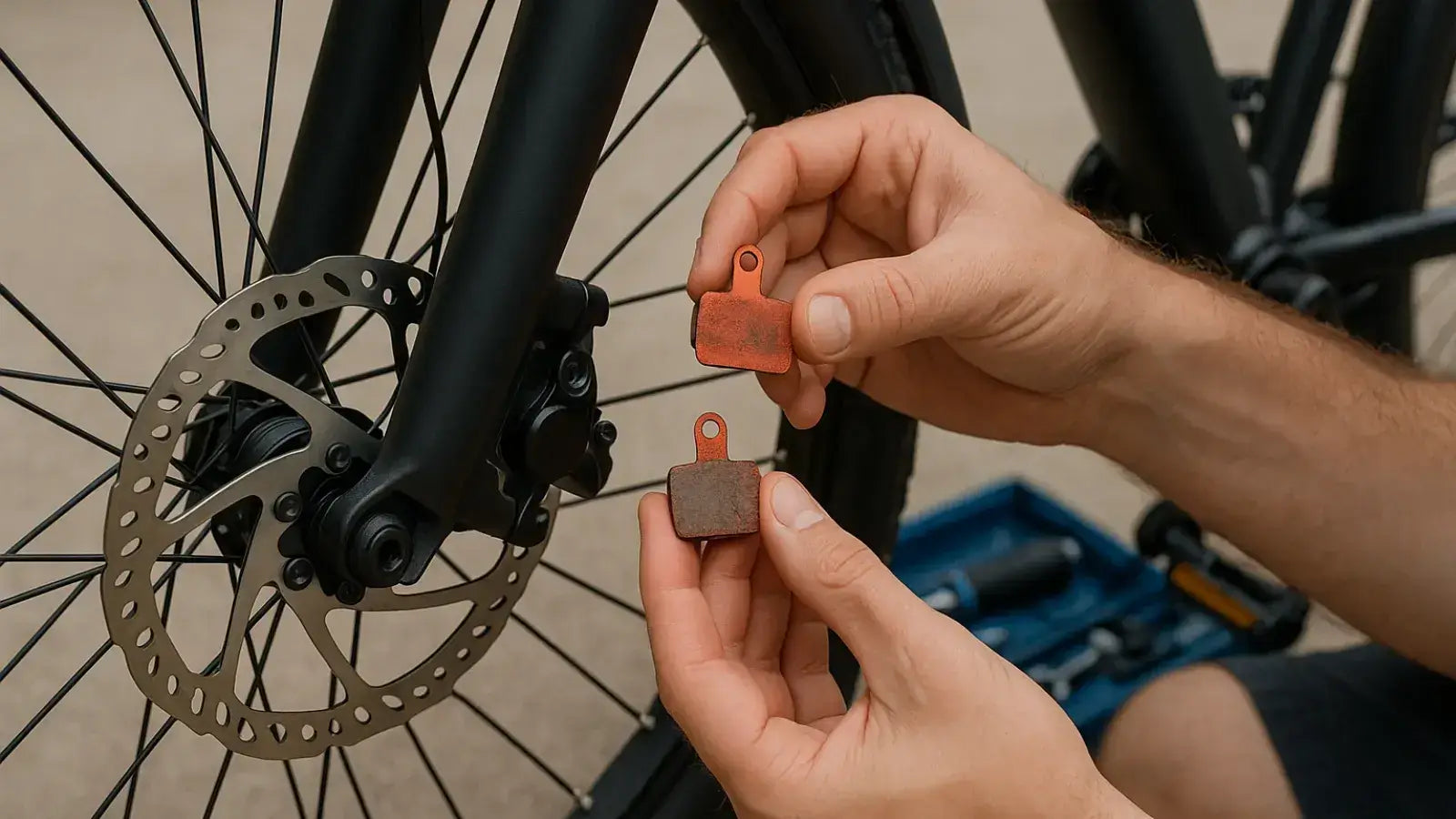
A visual check is your first line of defense. Grab a flashlight and look directly into the brake part where it sits over the disc rotor.
- Pad Thickness: You should see three layers: the metal backing plate of the pad, the pad material itself, and the rotor in the middle. If the friction material (the part that touches the rotor) looks very thin, it's time for a change. If it's less than 1.5mm, you definitely need to replace it.
- Uneven Wear: Do the pads on either side of the rotor look equally worn? If one is much more worn than the other, it could mean the brake part isn't lined up right and needs to be fixed.
- Glazed or Dirty Pads: If the pad surface looks too smooth, shiny, or glassy, it's "glazed." This happens from getting too hot and reduces stopping power. If you see dark, oily streaks, your pads have oil or brake fluid on them and must be replaced right away, as they will never work well again.
What to Listen For
Your ears can often catch problems before they become serious. Pay attention to new or strange sounds when you use the brakes.
- High-Pitched Squealing: A constant squeal can be a sign of glazed or dirty pads. It can also happen when the pads have worn down to the metal wear indicator on some models.
- Loud Grinding Noise: This is a serious warning. A harsh, grinding sound likely means you have worn completely through the pad material, and the metal backing plate is grinding against the rotor. You must stop riding right away to prevent destroying your brake rotor, which costs much more to fix.
What to Feel
Changes in how your brake levers feel tell you what's happening with your braking system.
- Spongy or Mushy Lever: If you have to pull the brake lever much closer to the handlebar than you used to for the brakes to work, your pads are likely worn. In a hydraulic system, this can also mean that the system needs a bleed, but worn pads are the most common cause.
- Less Stopping Power: This is the most obvious sign. If you feel that your e-bike is taking longer to stop, your pads aren't working well anymore.
- Shaking or Pulsing: A shuddering or pulsing feeling through the frame or brake lever during braking can mean a warped rotor or uneven pad deposits on the rotor, often coming from worn-out pads.
Choosing the Best Brake Pads
Picking the right e bike brake pads is about matching the pad material to your bike, your riding style, and your typical conditions. Using a standard, cheap pad on a heavy, high-speed ebike can lead to fast wear and dangerous brake fade. E-bike-specific pads are made with materials that better handle heat and provide steady power. As noted in expert reviews of different brake pad compounds, the material choice has a huge impact on how well they work.
Understanding Pad Types
There are three main types of brake pad materials, each with different features.
Resin (Organic) Pads: Made from a mix of organic fibers (like rubber and Kevlar) stuck together with resin. They are known for being quiet and offering a strong initial "bite" with less lever pressure. However, they wear out the fastest and can lose power (fade) on long, steep descents due to heat buildup.
Metallic (Sintered) Pads: Made from metal particles (like copper, steel, and iron) fused together under high heat and pressure. These pads last a very long time, handle high temperatures well, and work steadily in wet, muddy, and gritty conditions. Their downsides are that they can be noisier and need a longer "bed-in" period to reach full power.
Ceramic Pads: A premium hybrid option, ceramic pads mix ceramic fibers with copper fibers in a resin base. They aim to give you the best of both worlds: strong, quiet braking power like resin pads, but with the excellent heat resistance and durability closer to metallic pads. They cost the most.
The Right Pad for You
To make your choice easier, we've matched pad types to common e-bike rider profiles.
| Pad Type | Best For (Rider Profile & Conditions) | Pros | Cons | Typical Price (per pair) |
|---|---|---|---|---|
| Resin | The Urban Commuter: Mostly flat terrain, dry conditions, values quiet operation. | Quiet, great initial bite, easy on rotors. | Wears quickly, fades under high heat. | $15 - $25 |
| Metallic | The eMTB Downhiller / The Heavy Cargo E-Bike User: Steep descents, wet/muddy trails, heavy loads. | Excellent durability, great in all weather, resists heat fade. | Can be noisy, longer bed-in time, harder on rotors. | $20 - $35 |
| Ceramic | The Weekend Trail Rider / The Performance Enthusiast: Mixed terrain, values a balance of power, noise, and longevity. | Great power, low noise, excellent heat management, long-lasting. | Most expensive option. | $30 - $50+ |
The Cost of Replacement
The cost to replace your e bike brake pads can vary a lot depending on whether you do it yourself or have a bike shop handle it. Understanding the potential costs helps you budget and decide which route is best for you.
DIY Replacement Costs
Doing the job yourself is the cheapest option, especially in the long run. Your main costs are the pads and a few basic tools.
- Cost of Pads: This is your main repeating cost. A single set of pads (for one wheel) will typically range from $15 to $50.
- Resin Pads: $15 - $25
- Metallic Pads: $20 - $35
- Ceramic Pads: $30 - $50+
- Cost of Tools: If you don't already own them, you'll need a few tools. The good news is this is a one-time purchase. A basic set of hex keys ($15), nitrile gloves ($5), and a piston press/pad spreader ($10-$20) are all you really need. Often, a clean, wide flathead screwdriver or a plastic tire lever can work as a piston press.
Professional Bike Shop Costs
If you're not comfortable with bike maintenance or simply don't have the time, a professional bike shop is a great choice.
- Labor Charges: For a straightforward brake pad replacement, most shops charge between $25 and $50 per wheel. This price is for labor only; you will also have to pay for the cost of the brake pads themselves.
- When to Use a Pro: If your brakes feel very spongy, you likely need a brake bleed in addition to new pads. Bleeding hydraulic brakes can be tricky for beginners. In this case, paying for a professional service is often the safest and most efficient choice.
How to Replace Brake Pads
Replacing your own e-bike disc brake pads is a rewarding and straightforward task that any rider can learn. It saves you money and lets you take control of your bike's safety. This process generally takes about 15-20 minutes per wheel. For a visual guide, you can reference resources like a detailed guide to replacing disc brake pads or Park Tool's professional walkthrough.
1. Gather Tools and Pads
Before you start, lay out everything you need: your new brake pads, a set of hex keys, nitrile gloves, rubbing alcohol, a clean rag, and a piston press or a plastic tire lever. Make sure your new pads are the correct shape for your specific brake caliper model. Pro Tip: Take a photo with your phone of how the old pads and retaining spring are situated before you remove them. It's a perfect reference if you get confused.
2. Remove the Wheel
While not strictly necessary on all bikes, removing the wheel from the frame makes accessing the brake caliper much easier. It gives you a clear view and more room to work.
3. Remove Old Brake Pads
Look for a retaining pin or bolt that goes through the tabs at the top of the brake pads. It may be secured with a small cotter pin or a C-clip. Remove the clip, then unscrew and pull out the pin. The old brake pads should now be loose. You can often pull them out from the top or bottom of the caliper with your fingers or a pair of needle-nose pliers. Note how the metal spring clip was positioned between them.
4. Clean and Reset Pistons
With the old pads out, you'll see the circular pistons inside the caliper. They are likely dirty and extended. Spray rubbing alcohol on a clean rag and wipe away any brake dust and grime from the inside of the caliper. Then, use a piston press or the wide, flat end of a plastic tire lever to gently and slowly push the pistons back until they are flush with the inside of the caliper body. Crucial Tip: Never squeeze the brake lever while the pads are out, as this can push the pistons out too far, requiring a much more complex repair.
5. Install New Brake Pads
Take your new pads and sandwich the spring between them, making sure it's oriented the same way as the old one. The curved part of the spring should push the pads away from each other. Squeeze them together and slide them into the caliper. Align the holes in the pad tabs with the hole in the caliper body, and re-insert the retaining pin or bolt. Secure it with its clip.
6. Re-install and Align
Put the wheel back on the bike. Spin the wheel to make sure the rotor doesn't rub on the new pads. If it does, you may need to slightly loosen the two main caliper mounting bolts, squeeze the corresponding brake lever firmly to center the caliper over the rotor, and then carefully re-tighten the bolts while still holding the lever.

The Final, Important Step
You've installed your new e bike brake pads, but the job isn't finished. The final, must-do step is to "bed-in" your new pads. This process involves transferring a thin, even layer of pad material onto the brake rotor, which creates the perfect friction surface for maximum stopping power. Skipping this step will result in weak braking, loud squealing, and a shorter lifespan for both the pads and the rotor. This isn't just a suggestion from a bike shop; it's a mandatory step for safety and performance.
To bed-in your pads, find a safe, traffic-free area.
1. Get your e-bike up to a moderate speed (around 10-12 mph).
2. Apply one of the brakes firmly and consistently until you slow down to walking speed. Do not come to a complete stop or lock up the wheel.
3. Repeat this process 10-15 times for each brake (front and rear).
4. Next, get your bike up to a slightly higher speed (around 15-18 mph) and perform 5-10 more aggressive slowdowns.
You'll feel the braking power increase with each repetition. Once done, your brakes are ready for the trail or the street.
Frequently Asked Questions
1. How often do brake pads need to be replaced on an e-bike?
There is no single answer, as it depends heavily on your riding style, terrain, rider weight, and pad compound. A heavy rider on hilly terrain using resin pads might need a new set every 500-700 miles. A lighter rider on flat ground with metallic pads might get over 2,000 miles. The best approach is to ignore mileage and rely on regular inspections. Check your pad thickness every few hundred miles and replace them when they reach the manufacturer's wear limit (typically 1.5mm).
2. Can I use regular bike brake pads on my e-bike?
While some brake pads for regular bikes might physically fit your e-bike's calipers, it's not recommended. E-bike-specific pads are engineered with compounds designed to handle the higher temperatures and forces generated by the increased weight and speed. Using standard pads can lead to dangerously fast wear and brake fade, compromising your safety. Always opt for pads rated for e-bike use.
3. Are expensive ceramic brake pads worth it?
For many e-bike riders, yes. While they have a higher upfront cost, ceramic pads offer a superior blend of power, quiet operation, and excellent heat management. They often last longer than both resin and metallic pads, which can make them a better value over time, especially for frequent riders or those who ride in demanding conditions.
4. What causes my e-bike brake pads to wear out so fast?
Several factors contribute to accelerated pad wear. The most common are: riding style (aggressive braking and dragging the brakes on descents), terrain (riding in hilly or mountainous areas requires more braking), weight (heavier bikes, riders, and cargo loads all increase the force needed to stop), conditions (wet, muddy, and gritty conditions act like sandpaper, wearing down pads quickly), and pad compound (resin pads naturally wear faster than metallic or ceramic pads).
5. Do I need special tools to replace e-bike brake pads?
No special tools are required beyond basic bike maintenance items. You'll need a set of hex keys (Allen keys), nitrile gloves, rubbing alcohol, clean rags, and something to press the pistons back (a piston press tool, clean flathead screwdriver, or plastic tire lever). Most e-bike brake pad replacements can be completed with tools that cost less than $30 total, making it a worthwhile investment for regular maintenance.


Leave a comment