




Adult Bike With Motor: What Most Buyers Get Wrong
Beyond Speed and Power
You've seen the ads. An adult bike with motor glides up a mountain without effort, cruises for a hundred miles on one charge, and hits speeds you haven't seen since you drove a car. It's exciting. But it's also overwhelming when you see all the technical details, marketing claims, and countless options that can lead to confusion or worse, a very expensive mistake.
We've seen it happen many times. The thrill of buying quickly fades, replaced by regret, unexpected costs, and sometimes even legal trouble. This guide prevents that. We're cutting through the noise to show you the five biggest mistakes most first-time buyers make, so you can choose a bike you'll actually love to ride for years.
Mistake #1: E-Bike vs. Gas
The term adult bike with motor covers two very different machines. Confusing them is the first and most serious error a new buyer can make, affecting everything from where you can ride to how much you'll spend on upkeep.
First, you have electric bikes, commonly called e-bikes. These use a rechargeable battery to power an electric motor that helps you as you pedal or moves the bike with a throttle. They are loved for their quiet operation, zero emissions, and easy fit into the cycling world. In most places, they are legally treated like bicycles and are welcome on bike paths and trails.
Second, you have gas-powered motorized bicycles. These are often sold as DIY kits that you attach to a standard bicycle frame, using a small gasoline engine. While potentially powerful, they come with big problems: they are loud, produce polluting emissions, require regular engine maintenance like mixing oil and gas and changing spark plugs, and face severe legal restrictions.
Most areas classify them as mopeds or motorcycles, making them illegal on bike paths and requiring a license, registration, and insurance for road use. As discussions among riders highlight, the legal headaches and maintenance often outweigh the benefits.
To make it clear, here's how they compare:
| Feature | Electric Bike (E-Bike) | Gas-Powered Motorized Bicycle |
|---|---|---|
| Power Source | Rechargeable Battery | Gasoline Engine |
| Operation | Quiet, Pedal-Assist/Throttle | Loud, Throttle-Only |
| Legality | Often legal on bike paths (Class dependent) | Often restricted to roads (Varies by state) |
| Maintenance | Similar to a regular bike + battery care | Engine maintenance required (oil, spark plugs) |
| Environment | Zero emissions | Polluting |
For nearly every potential buyer, the right choice is an electric bike. It offers the power and convenience you want without the noise, pollution, and legal problems of a gas motor.
Mistake #2: Wattage vs. Motor Type
Marketers love big numbers. You'll see bikes advertised with 750W, 1000W, or even higher peak wattage figures, making you think more watts equal a better bike. This is wrong and a trap that leads many buyers to overspend or choose the wrong bike for their needs. The real story isn't just about how much power you have, but how that power is delivered. This depends on the motor type: hub drive or mid-drive.
Hub motors are located in the center of the front or, more commonly, rear wheel. They work independently of the bike's gears, giving you a clear pushing from the rear or pulling from the front feeling.
- Pros: Generally more affordable, simpler design, and can often be used with a throttle for pedal-free riding.
- Cons: The power delivery can feel less natural or laggy. They are less efficient on steep hills because they can't use the bike's gears, and changing a flat tire on the wheel with the motor can be more complicated.
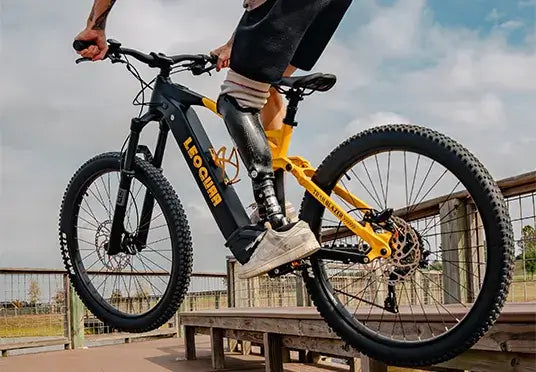
Mid-drive motors are located at the bike's crankset, where the pedals attach. They apply power directly to the drivetrain, meaning the motor's power goes through the bike's gears, creating a completely different riding experience. Instead of being pushed, it feels like you suddenly developed bionic legs. The assistance is natural and directly matches your pedaling effort. A high-quality system, like a Bosch pedal-assist motor, is a prime example of this smooth integration.
- Pros: Superior performance on hills, more efficient battery use, a balanced center of gravity for better handling, and a more natural cycling feel.
- Cons: Typically more expensive and can cause slightly faster wear on the chain and cassette due to the increased force.
So, which is right for you? If your rides are mostly on flat ground, you're on a tighter budget, or you want a simple throttle-powered cruiser, a hub motor is a perfectly good and cost-effective choice. However, if you live in a hilly area, plan to tackle challenging terrain, or you're a cyclist who wants an authentic ride feel, a mid-drive motor is clearly the better investment.
Mistake #3: Ignoring E-Bike Laws
Buying an adult bike with motor without understanding local laws is like buying a car without knowing the speed limit. You might end up with a machine you can't legally ride where you want to go.
In the United States, most states have adopted a three-class system to regulate e-bikes, and knowing the difference is crucial to avoid a ticket or worse, being banned from your favorite trails. This classification system is the single most important legal detail to understand before you buy:
- Class 1: The motor provides assistance only when you are pedaling and stops helping when the bike reaches 20 mph. These bikes do not have a throttle and are the most widely accepted class, generally permitted wherever traditional bicycles are allowed.
- Class 2: The motor can be activated by a throttle and can move the bike up to 20 mph without the rider pedaling. It may also have a pedal-assist system that cuts off at 20 mph, and these are slightly more restricted than Class 1 but still allowed on many bike paths and multi-use trails.
- Class 3: The motor provides assistance only when you are pedaling and can assist up to a top speed of 28 mph. These are often called speed pedelecs and due to their higher speed, they are typically restricted to roads and dedicated commuter bike lanes, often prohibited from multi-use paths and mountain bike trails.
The key point is that laws can vary greatly not just by state, but by city, county, and even park district. An adult bike with motor that is legal on a city street might be illegal on the bike path running alongside it. Before you add any bike to your cart, do your homework. A fantastic resource is the PeopleForBikes guide to state-by-state e-bike laws. A five-minute check can save you from making a thousand-dollar mistake.
Mistake #4: Weight and Service Realities
Product pages show you the fun, not the reality of ownership. Two of the most overlooked aspects of owning a powerful adult bike with motor are its weight and what happens when it needs service.
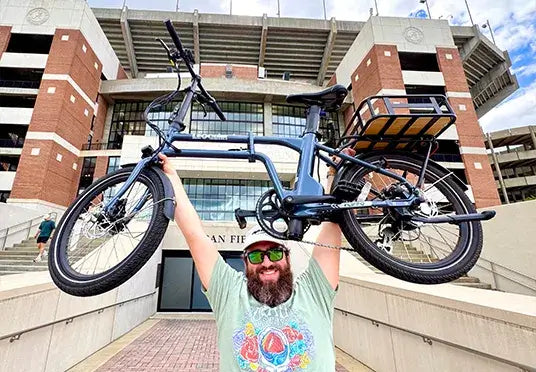
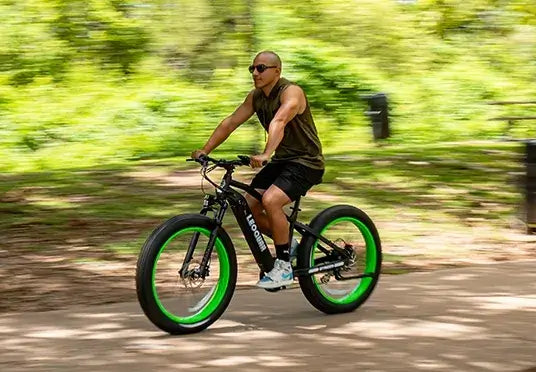
First, let's talk about weight. Many feature-rich e-bikes, especially those with fat tires and large batteries, weigh between 70 and 90 pounds. Imagine lifting that onto a car rack after a long ride, or carrying it up three flights of stairs to your apartment every single day. For many owners, this is the unexpected reality. The bike they love to ride becomes a nightmare to store and transport.
Before you buy, ask yourself honestly:
- Where will I store this bike?
- Do I need to carry it up stairs?
- Will I need to lift it into an SUV or onto a bike rack?
If the answer to any of these involves heavy lifting, a lighter model or a folding ebike might be a much better fit for your lifestyle.
Second, and just as important, is service. Eventually, every bike needs a tune-up or a repair, but when your direct-to-consumer internet-brand e-bike has an issue, who will fix it?
Many local bike shops are hesitant or outright refuse to work on e-bike brands they don't sell. This is due to liability concerns, a lack of access to parts, and unfamiliarity with the specific electronic systems, leaving you with a very expensive paperweight. Before buying, investigate the brand's support system. Do they have a network of local dealers for service, and if not, do they have a reputation for responsive customer service and for quickly shipping replacement parts to you or a willing mechanic? Choosing a brand with a solid service plan is just as important as choosing one with the right specs.
Mistake #5: Understanding Battery Range
Up to 100 miles of range! It's a claim you'll see everywhere, but that up to is doing a lot of work. The maximum range advertised by manufacturers is calculated under absolutely perfect conditions: a lightweight rider on flat ground with no wind, using the lowest level of pedal assist.
In the real world, your mileage will vary a lot. Focusing on the maximum advertised range is a mistake. It's far more useful to understand the factors that actually impact it:
- Your Weight & Cargo: The more weight the motor has to move, the more power it uses
- Terrain: Climbing hills is the fastest way to drain a battery
- Assist Level & Throttle Use: Riding in turbo mode or relying heavily on the throttle will drastically reduce your range compared to using a low pedal-assist setting
- Wind: Riding into a strong headwind is like riding uphill
- Tire Pressure: Underinflated tires create more rolling resistance and drain the battery faster
- Temperature: Batteries perform less efficiently in very cold weather
Beyond daily range, consider the bike battery's long-term health. The battery is the single most expensive component on an adult bike with motor, often costing $500 to $1,000+ to replace, so protecting your investment is key.
Follow these simple rules:
- Avoid running the battery completely dead or storing it fully charged for long periods
- For long-term storage, aim for a charge level between 40% and 80%
- Store the battery indoors, avoiding extreme heat or cold
- Look for bikes with batteries that are certified to safety standards like UL 2849, which ensures they have been rigorously tested for fire safety

Making a Confident Choice
Navigating the world of the adult bike with motor can feel complex, but it doesn't have to be. By avoiding these five common traps, you shift your focus from flashy marketing numbers to the practical realities of ownership.
Don't confuse a quiet, legal e-bike with a noisy gas kit. Look beyond peak wattage and choose a motor type that matches your terrain, understand the local laws before you buy, consider the bike's weight and your plan for service, and finally, have realistic expectations for battery range and take care of your investment.
The best electric bike isn't the one with the biggest motor or the longest advertised range. The best bike is the one that seamlessly fits your life and gets you excited to ride every day, and by making an informed choice, you're not just buying a bike; you're investing in freedom, fun, and years of happy riding.
Frequently Asked Questions
What's the difference between an e-bike and a gas-powered motorized bicycle?
E-bikes use rechargeable batteries and electric motors for quiet, clean operation that's legal on most bike paths. Gas-powered motorized bicycles use gasoline engines, are loud, produce emissions, require engine maintenance, and face legal restrictions that often limit them to roads only.
Should I choose a hub motor or mid-drive motor for my electric bike?
Hub motors are more affordable and simpler, making them good for flat terrain and budget-conscious buyers. Mid-drive motors offer better hill performance, more natural pedaling feel, and superior battery efficiency, making them ideal for hilly areas and serious cyclists.
What e-bike class should I buy to ride on bike paths?
Class 1 e-bikes (pedal-assist only, 20 mph max) are most widely accepted on bike paths and trails. Class 2 bikes (with throttle, 20 mph max) are also allowed in many places. Class 3 bikes (28 mph max) are typically restricted to roads and bike lanes.
How much should I expect an e-bike to weigh?
Most feature-rich e-bikes weigh between 70-90 pounds, which can make storage and transport challenging. Consider where you'll store the bike and whether you'll need to lift it regularly before choosing a heavier model.
What's a realistic range for an e-bike battery?
Advertised ranges like 100 miles are calculated under perfect conditions. Real-world range depends on your weight, terrain, assist level, weather, and riding style. Expect significantly less range than advertised, especially when using higher assist levels or riding in hilly areas.


Leave a comment