




Do You Burn More Calories Walking or Biking?
Quick Answer: Biking usually burns more calories in less time. Walking can burn more calories over the same distance because it takes longer.
✅ By Time: Cycling at a steady pace = 400–600+ cal/hr vs. walking ≈ 200–300 cal/hr.
✅ By Distance: Walking 5 miles often > biking 5 miles (calorie burn).
✅ For Fat Loss: Brisk walking is easy to keep steady. Biking can burn more total calories, especially at a faster pace.
⭐ The best choice is the one you enjoy and can keep doing.
If you're wondering which of walking or biking burns more calories, the simple answer is that biking usually burns more calories in a shorter time period; although walking may burn more calories over the same distance since it takes longer.
It all comes down to what you're comparing. When you have thirty minutes, cycling is generally the better option if you're looking to burn calories. However, when you compare walking five miles with biking five miles, walking might burn more calories.
The guide looks at it according to time, distance, fat loss, effect on the joints, and daily use; it also examines the place that pedal-assist ebikes have.
Walking vs Biking: Which Burns More Calories Per Minute and Mile?
If we want to understand how many calories are burned, we first have to consider a simple measure known as Metabolic Equivalents or METs. A MET can be regarded as a unit of energy expenditure. When a person is sitting quietly, their MET rate is 1. An activity that has a value of 5 METs needs five times as much energy as simply sitting still. Usually, cycling has a higher MET value than walking when the two activities are perceived as being of similar intensity, which means that more energy is burned during cycling in the same length of time.
To make it more concrete, let's consider some actual figures. The table below gives the estimated number of calories burned in 30 minutes by a person who weighs 155 pounds (70 kg). If you're asking yourself whether you burn more calories walking or biking when you're heavier, the answer is yes. People who are heavier usually burn more calories when carrying out the same activity. For instance, a person who weighs 185 pounds will burn about 20 per cent more calories while either cycling or walking than someone who weighs 155 pounds. This shows that both walking and cycling are able to be adapted to your body weight, and thus reinforces the idea of choosing one form of exercise based on your own physiology.
| Activity | Intensity | 125 lbs (57 kg) | 155 lbs (70 kg) | 185 lbs (84 kg) |
|---|
| Walking | 3.5 mph (moderate) | ~120 cal | ~150 cal | ~180 cal |
| Walking | 4.5 mph (brisk) | ~155 cal | ~190 cal | ~220 cal |
| Cycling | 12–14 mph (moderate) | ~240 cal | ~290 cal | ~350 cal |
| Cycling | 14–16 mph (vigorous) | ~300 cal | ~360 cal | ~430 cal |
The facts show that, on a minute by minute basis, cycling is the more efficient way of burning calories. However, what happens when you compare the two on a per-distance basis rather than a per-time basis? If you walk a mile compared to cycling a mile, the difference in calories becomes smaller. For the average adult, walking one mile results in the burning of about 80 to 100 calories, whereas cycling one mile at a moderate speed leads to the burning of about 40 to 50 calories. So if you're asking yourself "does walking or biking the same distance result in more calories being burned?" — walking usually does. But if the comparison is made on a per-minute basis, cycling is generally the more efficient choice.
A bike ride will in most cases lead to a greater total energy expenditure than a walk if you only have 30 minutes. But what about when you're covering a distance rather than spending a set amount of time? Is walking five miles the same as biking five miles? Not exactly. It usually takes most people about 90 to 100 minutes to walk five miles and they burn 300 to 500 calories, depending on their speed and body weight. Cycling five miles at a moderate pace, on the other hand, takes only about 25 minutes and results in the burning of roughly 200 to 250 calories. Therefore, even though the distances are the same, the time taken and the amount of energy used are very different. This is the reason why, when someone asks whether you burn more calories walking or biking the same distance, walking might turn out to be the answer — but it takes a great deal of time.
Health experts point out that a number of factors affect these figures; body weight, age, sex, fitness level, and the type of terrain you're walking or biking on (such as hills compared to flat ground) will all cause the estimates to differ. For instance, jogging or biking uphill leads to a greater number of calories being burned. A 30-minute walk uphill can result in the burning of 50% more calories than the same walk on level ground. In a similar way, biking into the wind or climbing hills involves more muscle groups and increases both heart rate and power use. Therefore, the next time you ask yourself whether walking or biking burns more calories, you should remember to take the ground into account—in some situations a hilly walk could outperform a flat bike ride. Consider this table as an initial reference for grasping the potential of each activity.
Fat Burning: Is Walking or Biking More Effective for Weight Loss?
A vital point that we convey to our clients is that burning calories and burning fat are not identical. When you are exercising, your body draws on two main sources of energy: carbohydrates (which are stored as glycogen) and fat. The intensity of your workout decides which of these fuel sources your body tends to use.
Exercise of a high intensity—such as sprinting on a bike—burns a large number of total calories. Yet a greater proportion of those calories is derived from carbohydrates that are easily accessible. On the other hand, exercise of a low to moderate intensity—such as a brisk walk—burns fewer calories per minute, but a much higher percentage of those calories comes directly from your fat stores.
This ideal fat-burning condition is usually referred to as Zone 2 cardio. If you're uncertain about what Zone 2 is like for you, a general guideline is to maintain a heart rate between 60% and 70% of your maximum heart rate. You can estimate your maximum heart rate using the formula:
| Age | Target Heart Rate (Zone 2) |
|---|---|
| 30 | 114–133 bpm |
| 40 | 108–126 bpm |
| 50 | 102–119 bpm |
| 60 | 96–112 bpm |
You can help optimise both your walking and cycling sessions with regard to fat burning by using a fitness tracker or smartwatch to keep within this range.
This is the level at which you can carry on a discussion without having to gasp for air. Interestingly, a study that compared walking and cycling at the same perceived level of effort discovered that walking leads to greater fat metabolism. This could be because walking is a weight-bearing exercise and as a result it improves the hormonal and metabolic responses associated with fat usage. Therefore, if your aim is primarily focused on burning fat rather than just burning calories, brisk walking provides a strong benefit.
Walking's Fat-Burning Power
It is in this case that walking proves itself to be outstanding; it is very simple both to enter and to stay in Zone 2 for a long time. A lengthy brisk walk lasting between 60 and 90 minutes can keep your body in its optimal fat-burning state and thus makes it a very effective means of reducing body fat over time. Since walking is a weight-bearing exercise, it causes your body to have to work against gravity, which in turn helps fat metabolism and enhances bone density.
Why Cycling Burns More Calories—Even After Your Ride Ends
Although walking is superior when it comes to burning fat at a steady state, cycling is better at burning a large number of calories and at increasing your metabolism. Cycling at a high intensity, particularly when intervals are included, produces a strong afterburn effect. This phenomenon is known as Excess Post-exercise Oxygen Consumption (EPOC).
In simple terms, your body has to work so hard during a workout that it keeps burning calories at a higher rate for several hours after you've finished it, even when you're resting; this increase in metabolism makes cycling an effective means of overall weight loss.
Maximizing Your Results
Understanding the theory is one thing; it's only when you put it into practice that results are achieved. Giving general advice such as simply walking more or using your commuter e-bike isn't sufficient. The following are two sample workout programmes that we find most effective for our clients and which are designed to increase the benefits of each activity.
Supercharge Your Walk
Do not underestimate the benefits of walking. By making a few simple adjustments, you are able to transform a regular walk into an effective workout. Vary the slope: Walking on a slope is one of the most effective methods of improving your exercise since it greatly increases the number of calories burned and your heart rate and puts a strong emphasis on your glutes and hamstrings. Either choose a route that has hills or increase the incline on a treadmill. Add in intervals: This will break the monotony and put a challenge to your cardiovascular system.
Here’s a simple approach: walk at a moderate speed for 3 minutes and then speed up to a fast-paced power walk for 1 minute, repeating this cycle for 30 to 45 minutes. If you want to make it more difficult, you can use a weighted vest to boost the intensity of your walk without affecting your natural gait. Generally, however, we recommend against using weights on your ankles or hands since they may alter your biomechanics and could result in joint strain. The vest, on the other hand, spreads the weight evenly over your core.
Cycling Workouts That Maximize Calorie & Fat Burn
Cycling is designed with intensity and progression in mind. The following explains how to make the most of each stroke of the pedal. Although both walking and cycling work the major muscles in the lower body, such as the glutes, hamstrings, and calves, cycling usually demands greater force production—particularly when the resistance is increased or when going uphill. In contrast, walking mainly involves the glutes when carried out on an incline or when going up stairs. Thus, if you're also asking whether walking or biking results in more muscle growth, cycling generally provides a greater strength benefit, especially for the quadriceps and hips.
Muscle Involvement: Walking vs Cycling
| Muscle Group | Walking Activation | Cycling Activation |
|---|---|---|
| Glutes | Moderate (↑ with incline) | High (especially with hills) |
| Hamstrings | Moderate | High |
| Quads | Low–Moderate | Very High (pedal push phase) |
| Calves | Moderate | High |
| Core | Light | Moderate |
Take up HIIT: High-Intensity Interval Training (HIIT) is ideal for cycling and is a time-efficient method of maximizing calorie burning and producing that afterburn effect.
- A good way to begin riding a stationary or outdoor ebike is to do a 5-minute warm-up, then carry out eight rounds consisting of a 30-second all-out sprint followed by 90 seconds of easy recovery pedalling, and finish with a 5-minute cool-down.
- Boost the resistance: don't merely spin your wheels.
When using a stationary bike, gradually increase the resistance as a way of mimicking the action of climbing a hill. This will build considerable strength in both your quads and glutes and cause your energy burn to rise greatly. If you are outdoors, look for routes that have hills.
As training experts point out, cycling enables a greater degree of progression over time since you can always increase the resistance, ride steeper hills, or go faster. Walking has a natural limit before it becomes jogging or running, but with cycling the scope for improvement is almost unlimited.
Should You Walk or Bike? Here's How to Decide
We've already looked at calories, fat burning, and different workout approaches. The next and most important point is choosing what is suitable for you. The idea of there being a best exercise is a myth; the best exercise is the one that you will carry out regularly since you enjoy it and it fits in with your lifestyle. Don't forget to consider convenience as well: walking can be done almost anywhere—around your neighbourhood, inside a mall, or even at home. Cycling, on the other hand, may involve more planning requirements, particularly if you have to transport your bike to a trail. When deciding between walking and cycling, go with the one that easily fits into your everyday routine because that alone can often decide whether you will keep at it in the long term. Let's now look at the practical differences by means of a direct comparison.
| Factor | Cycling | Walking | The Bottom Line |
|---|---|---|---|
| Joint Impact | Very low impact. The bike supports your body weight, making it excellent for those with joint pain, arthritis, or recovering from certain injuries. | Low impact, but still a weight-bearing activity. Each step sends a small amount of force through your ankles, knees, and hips. | Winner for sensitive joints: Cycling. |
| Muscle Building | Excellent for building significant strength and muscle mass in the lower body: quads, glutes, hamstrings, and calves, especially when using resistance. | Good for overall leg toning and maintaining muscle, but less effective for building substantial muscle mass compared to resistance-based cycling. | Winner for lower-body strength: Cycling. |
| Accessibility & Cost | Requires a bike, which is a significant initial investment. You may also need a helmet, special shoes, or access to a gym with stationary bikes. | Extremely accessible. All you need is a good pair of shoes. It can be done virtually anywhere, anytime, with no cost. | Winner for accessibility & low cost: Walking. |
| Time Efficiency | Burns more calories in less time. You can also cover far more distance, making it a functional form of transportation for longer commutes. | Requires more time to achieve the same calorie burn as cycling. It's less practical for covering long distances quickly. | Winner for the time-crunched: Cycling. |
| Consistency & Enjoyment | Highly dependent on personal preference. Outdoor cycling is subject to weather and requires access to safe roads or trails. | Can be done in almost any weather. It's easy to integrate into a daily routine, like walking the dog, taking a lunch break, or running errands. | Winner for easy consistency: Walking. |
Both activities are essential to a healthy way of life, since large-scale international studies have demonstrated that they are fundamental to establishing healthier and more sustainable communities. The great capacity to transform offered by policies that promote walking and cycling shows how important they are, both for individuals and for society as a whole.
Why Not Upgrade to a Pedal-Assist Ebike?
When you're having to decide between walking and biking, there's a different option that's worth thinking about: a pedal-assist ebike.
With a pedal-assist electric bike you still have to pedal, which means you're not avoiding the exercise. The thing that does change is the effort curve; you are now able to ride a greater distance, maintain a more steady speed, and arrive less exhausted than you would on a normal bike. For a great many people, this makes it much easier to keep up exercise and commuting over the long term.
It is particularly useful when your main difficulty is time. Although walking is good for gradually burning fat, it takes longer. Traditional cycling burns more calories per minute, but it can also seem too strenuous for people who are just starting out, for longer commutes, or when the route involves hills. A pedal-assist ebike is ideally suited to this situation since it keeps you active at the same time as reducing some of the friction that prevents people from riding more frequently.

Why a Pedal-Assist Ebike Makes Fitness More Practical
- You continue to burn calories; even with pedal assistance it doesn't mean the ride is easy. You're still having to use your legs, your heart rate goes up, and you remain active.
- You are able to cover a greater distance since the motor provides assistance when required, which allows many people to ride further than they would on a normal bike.
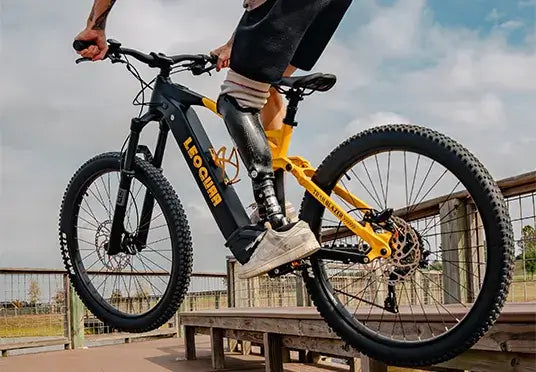
- Hills don't seem so intimidating, which in turn leads to more regular workouts and fewer missed rides.
- It's suitable for use when commuting and for exercising; the same ride can be used for daily transportation and for burning calories through cardio.
- It's easy for beginners. Should a normal bike seem too difficult, an e-bike can help you get started with cycling without leaving you feeling overwhelmed.
For anyone who asks, "Do you burn more calories walking or biking if the bike is electric?", the answer varies according to the amount of assistance you choose. Generally speaking, pedal-assist e-bikes still contribute to keeping you active and can result in a significant number of calories being burned, particularly on longer journeys or when the assist is set at a lower level. The greatest advantage is usually consistency: if a ride seems easier, you're more likely to carry out the same ride again the next day.
Best Pedal-Assist Ebikes for Commuting and Fitness
If you want a ride that supports both daily movement and practical transportation, these are smart categories to consider:
1. Step-Through Commuter Ebike
Best for: daily commuting, casual fitness rides, and beginners
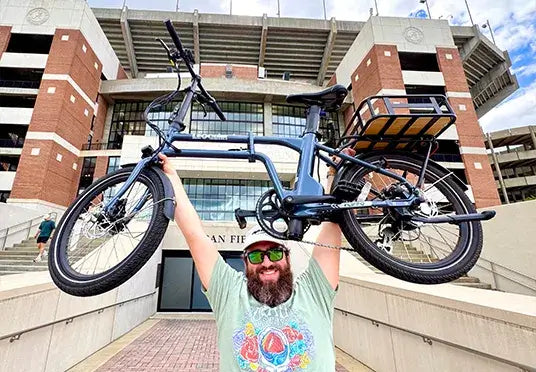
The reason it works is that it is easy to mount and dismount from, comfortable when riding in cities where you have to stop and go, and is perfect if you are looking for a smooth and pleasant ride for both work and weekend exercise.
2. Fat Tire Pedal-Assist Ebike
Best for: mixed terrain, extra comfort, and more stability
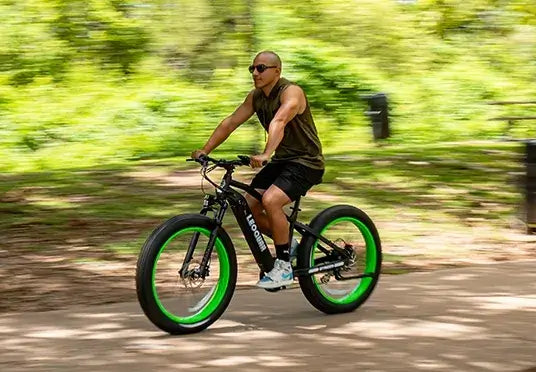
The reason it works is that wider tyres provide a greater sense of confidence when travelling on uneven roads, parking paths, and lightly graded trails; it is a good option if you want your calorie-burning rides to seem more versatile and enjoyable.
3. Long-Range Fitness Ebike
Best for: longer rides, weekend training, and replacing short car trips
The reason it works is that it has a bigger battery and more efficient pedal assistance, which makes it easier to remain out for longer periods and thus results in greater total activity during the week.
Our Pick: Explore a Smarter Way to Ride
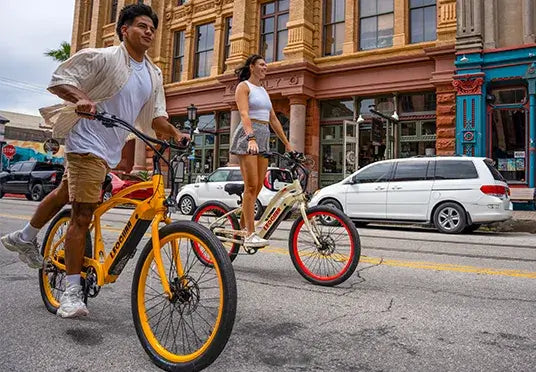
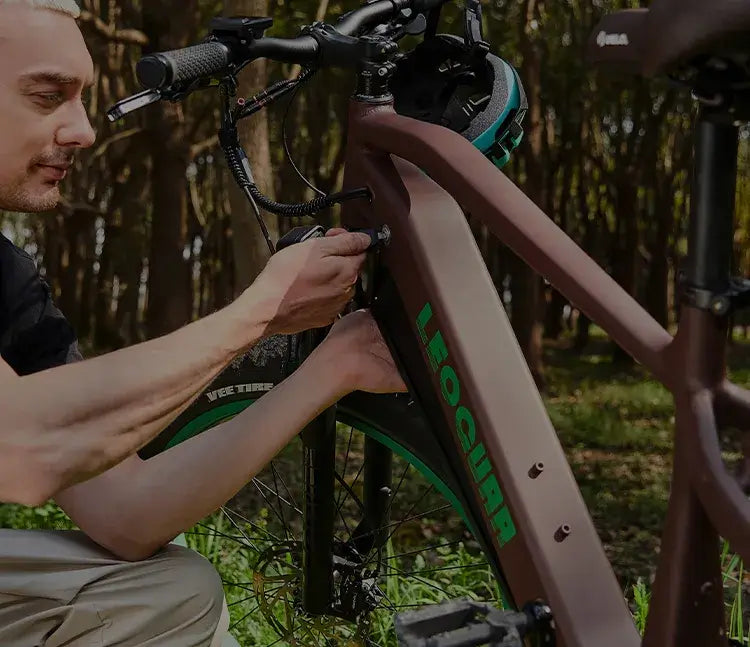
At Leoguar we have noticed a great many riders who, by making the switch to a pedal-assist ebike, have been able to move from short and inconsistent workouts to longer and more enjoyable exercise routines. An ebike can therefore be a sensible upgrade if your aim is to burn calories, commute more efficiently and at the same time enjoy the ride.
👉 Looking for the right model? Explore Leoguar’s pedal-assist ebikes for commuting, fitness, and everyday riding to find a setup that matches your routine.
Environmental and Mental Perks
Both of these activities have been proven to reduce stress. When you spend time getting some physical exercise, particularly when you're outdoors, endorphins are released, your mood improves and you gain a kind of mental clarity that is difficult to obtain in any other way. Whether it's a calm walk in a park or a concentrated bike ride, it counts as a form of active meditation.
From an environmental point of view, the decision is obvious: opting to walk or cycle rather than to drive, even on short journeys, has a major positive effect. It lowers your carbon footprint, decreases air and noise pollution, and contributes to the protection of biodiversity by lowering our dependence on disruptive vehicle infrastructure.
Your Path, Your Pace
Well, then, after all that, what is the outcome of the cycling versus walking debate? The answer depends on you. Let's go over the main findings: cycling is the clear winner when it comes to burning calories at a high intensity in a time-efficient way, and walking is a highly effective and easy-to-access method for burning fat steadily and with low impact.
The discussion shouldn't focus on determining which option is definitively "better" rather it should be about which one is better for you at this moment. An ideal fitness programme usually involves both types of activity. For example, you might cycle three times a week for intense cardio and strength and have long, relaxing walks on your other days as a means of recovery and to gain mental clarity. The most important point is to get your body moving in a method that feels good to you, that you can continue with, and that will help you lead a healthier and stronger life.
🧩 Which suits your routine better?
- 🚶 Walking: Can you consistently fit in 60+ minutes a day?
- 🚴 Biking: Do you prefer short, intense bursts of cardio?
Or, if you're ready to take the next step, check out our expert-picked ebikes for fitness and commuting to kickstart your calorie-burning journey on two wheels.
💬 Tell us in the comments—what works for YOU?
Let’s build a better fitness routine together.
Frequently Asked Questions
1. Q: Does cycling prove to be better than walking when it comes to losing weight?
A: Biking burns more calories each minute and is therefore more time-efficient when it comes to losing weight. On the other hand, walking is better for burning fat since it is easier to stay in the optimal fat-burning zone for longer durations. The better option for you will depend on your free time, how fit you are, and your personal preferences.
2. Q: For how long should I walk or cycle in order to notice results?
A: To lose weight, you should do at least 150 minutes of moderate activity each week, as health experts suggest. This may include walking for 30 minutes five times a week or cycling for 20 to 25 minutes five times a week. You might begin to see results after 2 to 4 weeks of regularly exercising.
3. Q: Is it possible for me to include both walking and cycling in my workout routine?
Yes, definitely—combining both activities is usually the best method. You might cycle for your high-intensity workouts two or three times a week and then walk on your recovery days. In this way, you get the calorie-burning advantages of cycling and the continuous fat-burning benefits of walking.
4. Q: Is jogging or biking more suitable for beginners?
A: Walking is generally better for complete beginners because it requires no equipment, has a lower learning curve, and can be done anywhere. However, if you have joint issues or significant weight to lose, cycling might be more comfortable due to its lower impact on joints.
5. Q: Do I need special equipment for walking vs cycling?
A: Walking only requires a good pair of supportive shoes, making it extremely accessible. Cycling requires a bike, helmet, and potentially other gear like cycling shoes or padded shorts. The initial investment for cycling is much higher, but both can be done affordably once you have the basic equipment.
6. Q: What is the equivalent of 10,000 steps to cycling?
A: 10,000 steps roughly equals 4–5 miles of walking, which would take most people about 75–90 minutes and burn 300–500 calories. To match that calorie burn with cycling, you'd need to bike for around 30–45 minutes at a moderate pace, depending on your speed and body weight. So if you’re trying to replicate your step count on a bike, a 30–45 minute ride is a good rule of thumb.


Leave a comment