





How Do You Check an Ebike Brake Sensor After Handlebar Adjustment?
Adjusting your handlebars? Don't forget the cables. Changing your handlebar height, angle, or lever setup can make your ride much more comfortable, but it also alters how cables move around the cockpit. Your E-bike's brake sensors rely on smooth lever return and a solid connection to cut motor power the moment you brake. If a lead gets stretched, pinched, or loose during an adjustment, the motor might refuse to assist—or worse, fail to cut power when you try to stop.
Make a quick safety check part of every handlebar adjustment. Inspect any visible wires for tension, pull both levers to make sure they snap back freely, turn the handlebars all the way from left to right to check cable slack, and run your model's recommended stationary cutoff test. If you notice any damage, binding, or inconsistent behavior, keep the bike parked and get in touch with customer support before riding.
Handlebar Changes Affect the Brake Sensor
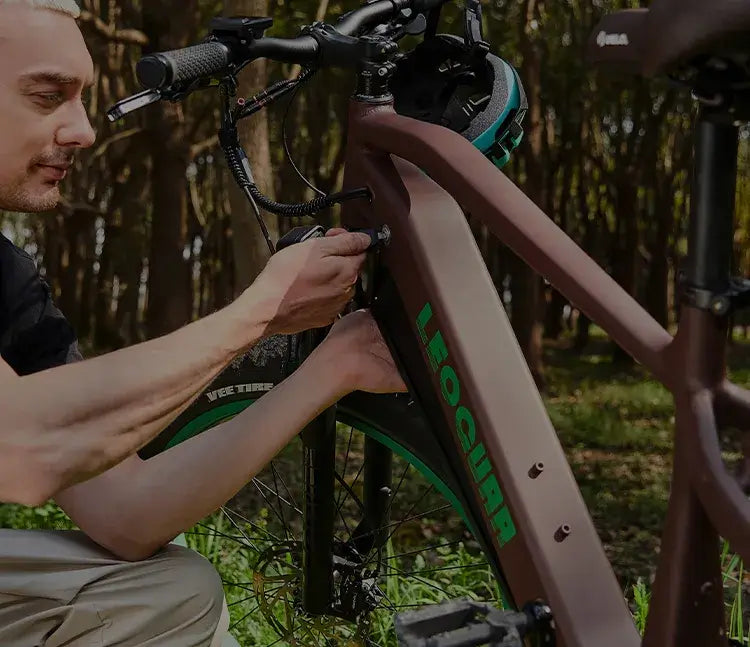
An Ebike Brake Sensor may be integrated with or connected to a brake lever. When the rider squeezes the lever, it signals the controller to interrupt motor power. Raising or rotating the bar changes the distance between the lever and frame, while moving a lever inward or changing its angle can pull on a small sensor lead.
A cable that looks relaxed with the wheel straight can become taut at full steering lock. Leoguar’s adjustable bicycle stem guide likewise stresses preserving adequate cable and hose slack when changing cockpit position.
Start With a Safe Sensor Inspection
Switch the bike off before touching any accessible e-bike brake sensor cable. Follow the exact model manual for battery handling. Do not disconnect, probe, splice, or alter a sensor based on a generic online diagram.
Stabilize the e-bike
Use level ground with the kickstand securely deployed for the visual checks, or a repair stand rated for the bike’s weight. Remove loose clothing, straps, and tools from the wheel and drivetrain area.
Record the cable path
Take clear photos of lever angles, connectors, cable crossings, and tie locations. They provide a useful reference if the new routing feels tight or support needs to review the setup.
Check Brake Sensor Cable Slack
Trace the visible wire leaving each brake lever until it joins the main harness or reaches an accessible connector. Look for cuts, flattened areas, sharp kinks, stretched insulation, exposed conductors, or a cable squeezed beneath a clamp. Cable ties should organize the lead without crushing it.
Sweep through full steering
Slowly turn the handlebar from the left steering limit to the right while watching both sensor leads. At every position, wires should retain relaxed slack and connectors should remain still. Stop if a cable becomes taut, pulls a plug, changes lever position, or catches another control. Do not yank the harness to create slack; restore the prior position or obtain qualified help.

Confirm Brake Lever Return
With the system still off, squeeze one lever gently and release it, then repeat on the other side. Movement should feel smooth, and each lever should return fully without being held by a grip, throttle, display, mirror, bell, or accessory. A lever that remains slightly pulled may continue sending a braking command.
Preserve control spacing
Confirm the repositioned lever has unobstructed travel. Do not change reach screws or hydraulic components unless official instructions authorize it. Mechanical brake trouble and an electrical cutoff issue can coexist, so a normal-looking wire does not prove the brake is safe.
Run the Approved Static Cutoff Test
The current Fastron ST Fat Tire Ebike specifications list a Tektro brake lever with a power cut-off sensor. Use the manual for your exact model; do not generalize this configuration to every Leoguar e-bike.
For a second verified example, the current Sprint Utility Fat Tire Ebike specifications list alloy brake levers with power cut-off. Its connector design and test behavior must still be confirmed from the Sprint manual rather than inferred from another model.
 Only proceed if the visual and lever checks pass and you can safely stabilize the bike. If the manual does not describe a stationary cutoff check, or if you cannot securely elevate the powered wheel, skip the test and contact a qualified technician.
Test without riding
- Secure the bike on a properly rated stand so the powered wheel cannot touch the floor.
- Keep hands, clothing, cables, and tools away from the tire, spokes, chain, rotor, and drivetrain.
- Follow the model manual to activate the system at the lowest practical approved setting.
- Apply the specified brake lever and verify the motor drive stops according to the manual.
- Release the control commanding motor power before releasing the brake lever.
- Switch the system off when the check is complete.
Never make the first check while riding. Never ride with a sensor unplugged, bypassed, damaged, or behaving inconsistently.
Brake Sensor Warning Signs
- Motor assistance remains unavailable after both levers return fully.
- Motor drive does not stop during the model-approved stationary test.
- The result changes as the handlebar turns.
- A brake warning or model-specific error remains on the display.
- A sensor lead is stretched, crushed, cut, frayed, or intermittently connected.
- A connector moves during steering or shows bent pins, moisture, corrosion, or heat damage.
- A lever binds, fails to return, feels abnormal, or contacts another control.
Do not diagnose a controller or motor from one symptom. Photograph the handlebar position, affected lever, cable path, connector exterior, and exact display message, then contact Leoguar support for model-specific guidance.
Ebike Brake Sensor FAQ
Can handlebar adjustment damage an Ebike Brake Sensor?
The adjustment itself does not necessarily damage the sensor, but a new handlebar position can stretch, pinch, rub, or partly disconnect its wire. It can also let another control interfere with brake-lever return.
Should I unplug the brake sensor to test it?
Do not unplug or bypass it for a riding test. Start with external inspection, lever-return checks, and the model-approved stationary cutoff check. Contact support if operation remains inconsistent.
Why does motor assistance stop only when I turn the handlebar?
A cable or connector may be pulled, pinched, or disturbed during steering. Switch the bike off and do not ride until the cause is corrected.
Does every Leoguar e-bike use the same brake sensor?
Do not assume so. Current Fastron ST specifications identify power-cutoff brake levers, but connector type, wiring, and behavior must be confirmed from the exact model page or manual.
Can I ride if only one brake sensor works?
Do not knowingly ride with a failed, disconnected, or bypassed safety cutoff. Keep the bike out of service and obtain model-specific repair guidance.


Leave a comment