




Best Budget Electric Bikes: 5 Specs That Matter More Than Price
Finding the Right Budget Electric Bike
The market for the best budget electric bikes is crowded and confusing. It's packed with countless options, making it very hard to tell a real bargain from a cheap bike that will cost you more later. The biggest mistake buyers make is looking only at the price. A $900 bike can be much better value than a $700 bike if it has the right parts.
This guide won't just give you a list of bikes. We will teach you the 5 key specs that really determine how well an e-bike works, how safe it is, and how long it lasts. As publications that conduct rigorous testing by Wirecutter have found, quality parts are most important for a good experience. By the end of this article, you will know how to analyze any best cheap electric bike and make a smart, confident choice.
Spec 1: Battery and Range
The battery is the heart of your e-bike. Its most important feature isn't the range they advertise, but its safety rating and real capacity. This is where you can tell good brands from risky ones.
The Importance of UL Certification
This is the most important safety spec that most simple lists ignore. Look for UL 2849 or UL 2271 certification on the product page. This means the entire electronic system—the battery, charger, and motor controller—has been tested and certified by a global safety group to prevent fire risks. An e-bike fire is a major disaster, and UL certification is the biggest sign that a brand takes your safety seriously. As highlighted in Consumer Reports' e-bike safety testing, certified electronics are a must-have mark of a trustworthy budget e-bike. Don't buy an e-bike without it.
Decoding Battery Specs
E-bike marketing often throws around volts (V) and amp-hours (Ah). Here's a simple way to understand them: if Volts (V) are like the pressure of a water hose, Amp-Hours (Ah) are like the size of the water tank. To get a true sense of the battery's total energy and range, you need to look at Watt-hours (Wh).
Watt-hours (Wh) = Volts (V) x Amp-Hours (Ah)
This is the best way to compare the "gas tanks" of different e-bikes. Here's what these numbers mean for an average rider on mixed terrain:
- 360Wh (e.g., 36V 10Ah): Good for short, mostly flat rides. Expect a real range of 15-25 miles.
- 480-500Wh (e.g., 48V 10.4Ah): This is a common sweet spot for budget e-bikes, offering good flexibility for daily rides and light hills. Expect 20-40 miles.
- 672Wh+ (e.g., 48V 14Ah): Great capacity for longer rides, big hills, or using the throttle more freely. Expect 30-50+ miles.
Removable vs. Integrated Batteries
For practical use, a removable battery is a huge plus. It lets you bring the battery inside for charging, which is important for anyone living in an apartment or without a garage. It also makes the bike lighter to lift onto a rack and allows for easier battery replacement later.
Spec 2: The Motor
Many shoppers focus only on wattage, but this number doesn't tell the whole story about how an e-bike will perform. The type of sensor and the torque number are much more important for how the bike actually feels to ride.
The Wattage Myth
Most budget electric bikes use hub motors, which sit in the center of the rear wheel. They are cheap, reliable, and give a clear "pushing" feeling. You'll see them advertised as 250W, 350W, 500W, or 750W. While higher wattage usually means more power, a well-made 500W motor from a quality company can feel smoother and more responsive than a poorly made 750W motor. Power is nothing without control.
Torque and Sensor Type
These two specs really make the difference in ride quality.
Torque (Newton-meters, Nm): This is the motor's turning force, or its "pulling power." It's what gets you moving from a stop and helps you climb hills. For a budget e-bike, 50-60 Nm is solid for general use. Anything over 80 Nm is very powerful and will make steep hills feel almost flat.
Sensor Type (The Brains): The sensor tells the motor when and how much help to give. This is probably the most important factor in how "natural" an e-bike feels.
Cadence Sensors: These are the most common type on budget bikes. They work like an on/off switch: as soon as the system detects you are pedaling, it gives a set amount of power based on your chosen assist level. The good part is that it feels powerful and needs little effort. The bad part is that it can feel jerky, unnatural, and surge without warning.
Torque Sensors: These are the mark of a higher-quality e-bike. They measure how hard you are pedaling and match the motor's output accordingly. If you push hard on the pedals, you get a lot of help. If you pedal lightly, you get a gentle boost. This creates a smooth, natural ride that feels like an extension of your own effort. It also tends to be more efficient, making battery range longer. As market analysis from Electrek shows, torque sensors are becoming a key feature that separates premium-value models from basic entry-level bikes.
Spec 3: The Brakes
An electric bike is heavier and faster than a regular bicycle, making its brakes the most important safety feature. Almost any budget e-bike worth buying will have disc brakes, but how they work makes a huge difference.
Mechanical vs. Hydraulic
The choice is between mechanical and hydraulic disc brakes. One is okay; the other is better in every way that matters for e-bike safety.
| Feature | Mechanical Disc Brakes | Hydraulic Disc Brakes |
|---|---|---|
| How it Works | A steel cable pulls the brake caliper | Fluid pressure moves the brake pistons |
| Stopping Power | Good | Excellent, more powerful & consistent |
| Feel | Firmer lever pull required | Light, one-finger modulation |
| Maintenance | Requires periodic cable adjustment | Self-adjusting; rarely needs bleeding |
| Cost | Cheaper | More expensive |
Our Recommendation for Safety
Based on our experience testing dozens of e-bikes, the extra weight and speed of an electric motor make stopping power absolutely critical. While mechanical disc brakes are "good enough" for a lightweight rider on perfectly flat, dry terrain, we strongly recommend hydraulic brakes for almost everyone. The better control, easy lever feel, and consistent stopping power, especially in wet conditions or on a steep hill, provide a safety margin that is worth every penny of the small price increase. As top guidance from cycling experts consistently notes, hydraulic brakes are the preferred choice for the added performance and safety needed on heavier e-bikes.
Spec 4: Drivetrain and Gearing
The drivetrain consists of the pedals, chain, and gears that transfer your power to the wheel. On a budget e-bike, the quality and type of gearing directly impact flexibility and maintenance.
Single-Speed vs. Geared
Single-Speed: Found on some simple, lightweight budget e-bikes, a single-speed drivetrain has one gear. The main benefit is simplicity and very low maintenance—there's no derailleur to adjust or break. However, this design only works well on flat terrain. Trying to climb a hill without gears, even with a motor, can be a struggle.
Geared Systems: Most budget e-bikes come with a multi-gear system, typically a 7- or 8-speed derailleur operated by a shifter on the handlebar. This is much more flexible. Lower gears make it easier to start from a stop and climb hills, while higher gears let you pedal at higher speeds without your legs spinning out of control.
What to Look For
For a geared system, look for a derailleur and shifter from a good brand, most commonly Shimano. Even Shimano's entry-level groupsets, like Tourney or Altus, are reliable and a sign that the company didn't cut corners on this important mechanical part. A quality drivetrain ensures smoother shifting and greater durability over thousands of miles.

Spec 5: Frame, Fork, and Tires
The bike's physical structure—its frame, fork, and tires—defines its comfort, utility, and handling. These parts are just as important as the electronics.
Frame and Geometry
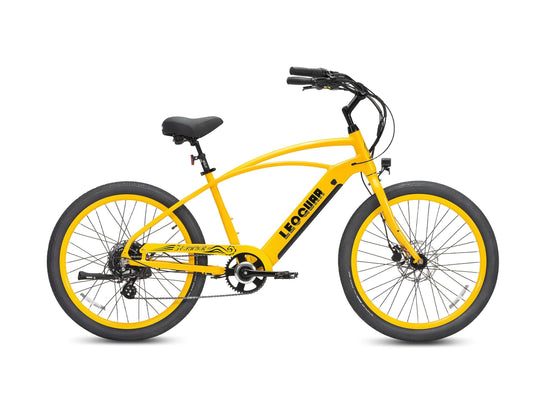
You will typically see two main frame styles: a traditional step-over (with a high top tube) and a step-thru (with a very low or absent top tube). Step-thru frames are much easier to get on and off, making them a great choice for casual riders, seniors, or anyone with limited flexibility. Most budget frames are made of aluminum alloy, which provides a good balance of strength, weight, and cost.
Suspension vs. Rigid Fork
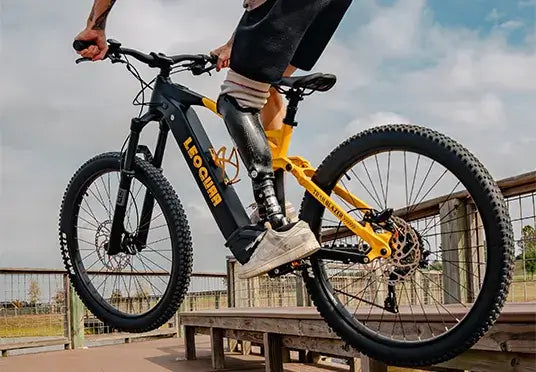
Many cheap e-bikes use a suspension fork as a marketing feature. Be careful. A low-quality, heavy spring fork often does more harm than good. It adds significant weight and can feel bouncy and uncontrolled, absorbing your pedaling energy. On smooth pavement, it's unnecessary. A good rigid fork paired with wider tires often provides a more comfortable and efficient ride. A quality suspension fork is a great feature, but it's rarely found on bikes under the $1,200-$1,500 mark.
Tires Make the Ride
The tires are your only contact with the ground. Their size and tread dictate where you can comfortably ride.
- Commuter/Hybrid Tires (1.75" - 2.4"): These are best for pavement and hard-packed paths. They roll efficiently and provide a nimble feel.
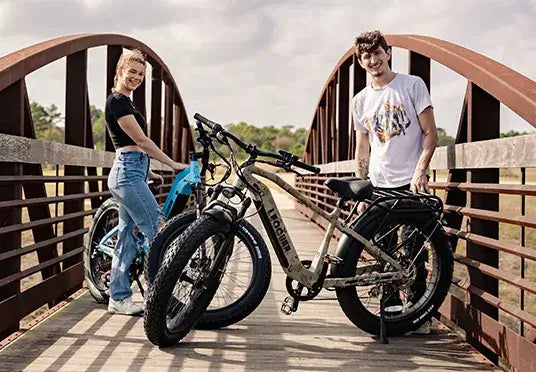
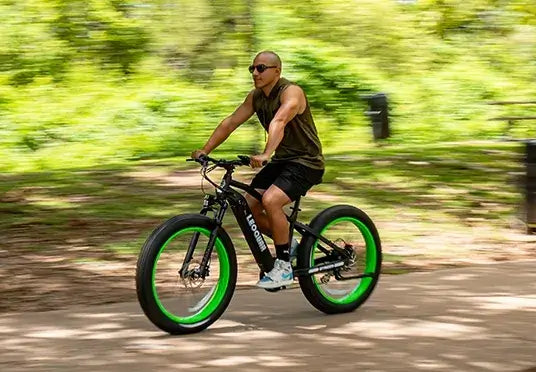
- Fat Tires (4.0"+): These massive tires offer incredible cushioning and float over sand, snow, and rough trails. The trade-off is that they are heavier, slower, and can feel less precise on pavement.
Choose the tire that matches your intended use. A fat tire bike may look cool, but if you're only riding on city streets, a more efficient commuter tire is a better choice.
Frequently Asked Questions
Q: What's the minimum battery capacity I should look for in a budget e-bike?
A: For most riders, look for at least 480Wh (48V 10Ah) as a good starting point. This will give you 20-40 miles of range depending on terrain and assist level. Anything below 360Wh is really only suitable for very short, flat rides.
Q: Are torque sensors worth the extra cost on a budget e-bike?
A: Yes, absolutely. Torque sensors provide a much more natural riding experience and better battery efficiency compared to cadence sensors. If you can find a budget e-bike with torque sensors, it's worth paying a bit more for the significantly improved ride quality.
Q: Do I really need hydraulic brakes on an e-bike?
A: While mechanical disc brakes can work, hydraulic brakes are strongly recommended for e-bikes due to their extra weight and speed. The superior stopping power and control are important safety features that justify the small price increase.
Q: Should I avoid e-bikes without UL certification?
A: Yes, you should avoid e-bikes without UL 2849 or UL 2271 certification. These certifications ensure the battery and electrical system have been independently tested for fire safety. An e-bike fire can be catastrophic, so this certification is non-negotiable.
Q: What's better for a budget e-bike: fat tires or regular tires?
A: It depends on where you'll ride. For city streets and paved paths, regular commuter tires (1.75"-2.4") are more efficient and provide better handling. Fat tires are only worth it if you plan to ride on sand, snow, or very rough terrain regularly.


Leave a comment