




750W Electric Bicycle: What Influences Speed & Acceleration?
Beyond the 750W Sticker
You've seen the number everywhere: 750W. It's the gold standard for a powerful electric bicycle in many regions, promising thrilling speed and robust performance. But what does that number truly translate to on the road or trail?
Why can one 750w electric bicycle feel sluggish while another feels like a rocket? The answer is that wattage is only one piece of a much larger puzzle. To truly understand what makes your e-bike fast and responsive, we need to look at a combination of factors.
The real-world performance of any 750w electric bicycle is a dynamic interplay between its components, the rider, and the environment. To get the full picture, we must consider:
- Motor Torque and Type
- Battery Output
- Rider and Cargo Weight
- Terrain and Environment
- Tire and Drivetrain Choices
In this guide, we'll break down each of these elements. We're moving beyond the spec sheet to give you a complete picture of what influences the speed and acceleration of your 750w electric bicycle, empowering you to make a smarter choice or get the most out of the bike you already own.
Understanding Power Ratings
Before we dive deeper, it's crucial to understand what that "750W" label actually means. It's not as straightforward as a single number might suggest, and it's intertwined with both technical definitions and legal regulations that shape your riding experience.
Nominal vs. Peak Power
The 750W figure you see advertised is almost always the motor's nominal power. Think of this as the continuous, sustainable power output the motor can handle for extended periods without overheating. It's the marathon pace of your e-bike. However, there's also peak power. This is the maximum power the motor can deliver in short bursts, like when you're accelerating from a standstill or tackling a steep, short incline.
A 750w electric bicycle might have a peak power output of 1000W, 1300W, or even more. This burst of power is what gives you that thrilling "kick" when you demand it, but it cannot be sustained indefinitely. A bike with a high peak power will feel much more responsive and capable during demanding moments.
| Power Type | Definition | Rider Experience |
|---|---|---|
| Nominal Power (e.g., 750W) | The continuous, sustainable power output. | Determines cruising capability and overall endurance. |
| Peak Power (e.g., 1000W+) | The maximum power output for short bursts. | Provides quick acceleration and hill-climbing punch. |
E-Bike Class Speed Limits
In the United States, the power of a 750w electric bicycle is also governed by a classification system that limits its top assisted speed. Even if the motor could technically propel you faster, manufacturers restrict the bike to comply with these laws. Understanding these classes is key to knowing what to expect. According to sources like e-bike classifications, the system is generally as follows:
- Class 1: The motor provides pedal-assist only (no throttle) and cuts off at 20 mph.
- Class 2: The motor can be activated by a throttle and provides assistance up to 20 mph. You can also pedal-assist up to 20 mph. Many 750w electric bicycle models fall into this category.
- Class 3: The motor provides pedal-assist up to 28 mph. These bikes may or may not have a throttle, but if they do, it must cut off at 20 mph.
So, while your 750W motor has plenty of power, its top speed is ultimately determined by its class designation.
Torque: Your Acceleration King
If wattage is the motor's endurance, torque is its raw strength. This is arguably the most important, and often misunderstood, metric when it comes to how a 750w electric bicycle actually feels to ride. Torque is the force that gets you moving, and it's the king of acceleration.
Watts vs. Torque Analogy
To make this clear, we like to use a simple analogy. Think of wattage as the top speed a runner can maintain in a marathon. It's a measure of sustained output over time.
Torque, on the other hand, is the explosive power that same runner has to sprint off the starting block or surge up a short, steep ramp. It's the immediate, twisting force that turns the wheel. A bike can have high wattage but low torque, making it feel slow to start, or high torque and moderate wattage, making it feel incredibly punchy off the line.
What Torque Figures Mean
Torque is measured in Newton-meters (Nm). For a 750w electric bicycle, you'll typically see torque figures ranging from 60 Nm to over 95 Nm. This number tells you a lot about the bike's character.
- 60-75 Nm: This is a solid amount of torque for general commuting on relatively flat terrain. It will provide a noticeable boost from a stoplight and handle moderate hills without issue.
- 85 Nm and Above: This is where things get exciting.
A 750w electric bicycle with 85 Nm or more of torque will offer exhilarating acceleration. It's what you want for conquering steep hills, carrying heavy cargo, or if you are a heavier rider. It provides the grunt needed to get the bike's mass moving quickly, regardless of the situation.
Hub Motors vs. Mid-Drive
Where that torque is applied also matters. The two main types of motors, as detailed in guides on hub motors and mid-drive systems, deliver power in fundamentally different ways.
Rear Hub Motors: This is the most common type on a 750w electric bicycle, especially on fat tire and value-oriented models. The motor is located in the hub of the rear wheel. It provides a distinct "pushing" sensation, as it directly powers the wheel. It's simple, reliable, and excellent for providing raw power on flats and moderate inclines.
Mid-Drive Motors: This motor is located in the center of the bike frame, where the pedals connect. It applies power to the crank, not the wheel directly. This means the motor can leverage the bike's own gears.
By shifting into a lower gear, you multiply the motor's torque, making mid-drives exceptionally efficient at climbing very steep hills. The power delivery often feels more natural and integrated, like an extension of your own pedaling effort.
Beyond the Motor
The motor is the heart of your 750w electric bicycle, but the performance is a full-body effort. Several other components play a critical role in how that 750 watts of power translates into speed and acceleration on the pavement or trail.
The Battery's Role
A battery is more than just a fuel tank for range. Its voltage (V) directly impacts how effectively the motor can perform. Most 750w electric bicycle models use a 48V or sometimes a 52V system. A higher voltage system allows the electrical current to flow more efficiently to the motor. This means the motor can more easily and quickly reach its peak power output, resulting in snappier acceleration and better performance under heavy load. Think of it as improving the "pressure" of the energy flow.
Why Gearing Matters
The drivetrain is the unsung hero of e-bike efficiency. A bike with a good range of gears allows you to keep both your legs and the motor operating in their most efficient range. When starting from a stop or approaching a hill, shifting to a lower (easier) gear is crucial. This reduces the strain on the motor, allowing it to spin at a higher, more efficient RPM. This is especially important for mid-drive motors, which rely on the gears to maximize torque for climbing, but it also helps hub motors by reducing load and conserving battery.
Tires and Pressure
Your tires are the only point of contact with the ground, and their design has a significant impact on performance.
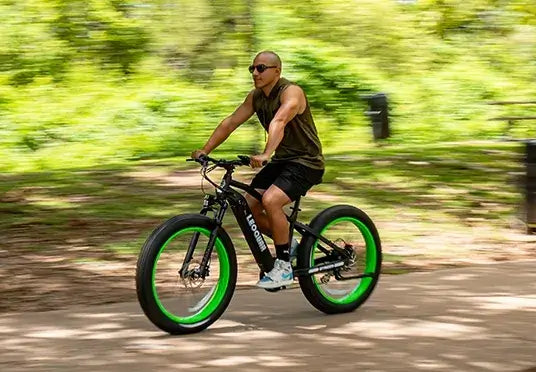
* Fat Tires (4 inches+): Common on many 750w electric bicycle models, these provide incredible traction and a cushioned ride. However, their large contact patch creates more rolling resistance, which can slightly reduce top speed and make the bike feel a bit slower to accelerate on smooth pavement.
* Commuter/Road Tires: Thinner, smoother tires have much lower rolling resistance.
This allows the bike to accelerate faster on pavement and maintain high speeds with less effort from the motor and rider. Regardless of the type, maintaining proper tire pressure is vital. Underinflated tires drastically increase rolling resistance, robbing you of speed and battery range.
Putting It to the Test
Theory is one thing, but the real test is how a 750w electric bicycle performs in the wild. We've spent countless hours on various models, and here's how the interplay of these factors feels in three common scenarios, based on a typical 750W, 85 Nm fat-tire e-bike.
Scenario 1: The Urban Commute
Riding through city streets is where you feel the immediate benefits of a powerful setup. Pulling away from a stoplight, the high torque is instantly noticeable. You get a powerful, confident surge of acceleration that gets you up to speed with traffic in seconds. The motor's nominal power easily helps you maintain a cruising speed, and on an open, flat stretch, you can comfortably ride at the bike's legal speed limit, often 28 mph on a Class 3 model, with the motor doing much of the work. It transforms a stop-and-go commute from a chore into a thrill.
Scenario 2: The Steep Hill Challenge
Now we face a challenging 15% grade. As you hit the base of the hill, you can feel the motor kick into its peak power output, drawing more energy from the battery to fight gravity. This is where high torque is non-negotiable. It's the force that keeps your momentum from vanishing, churning the wheel and pulling you upward. On a mid-drive, you'd shift into a low gear, and the climb would feel surprisingly manageable.
On a powerful hub motor, you still make it up with authority, feeling the raw power pushing you from behind. Without adequate torque, the bike would slow to a crawl and the motor would feel like it was straining.
Scenario 3: The Loaded Cargo Run
For this test, we've added a 50-pound load to the rear rack. The effect of total weight becomes immediately apparent. Acceleration from a standstill is noticeably slower; the motor has more inertia to overcome. The same 85 Nm of torque is working harder. On flat ground, once you're up to speed, maintaining it is still relatively easy.
But hitting even a moderate incline requires significantly more assistance from the motor. You'll likely use a higher pedal-assist level, and you can almost feel the battery's energy being consumed at a faster rate. This scenario perfectly illustrates that a motor's power is always relative to the total weight it has to move.

A Faster, Smarter Ride
As we've seen, the 750W number on the side of an electric bicycle is just the beginning of the story. It's a key indicator of potential, but it doesn't define the experience. True performance—the thrilling acceleration, the hill-conquering ability, and the effortless cruising speed—is a product of a well-balanced system.
Let's recap the key takeaways:
* Wattage is the motor's endurance, but torque (Nm) is its strength, defining your acceleration and climbing power.
* Peak power gives you short bursts of speed, while nominal power is for sustained cruising.
* Your bike's legal speed limit is determined by its Class (1, 2, or 3), not just its motor power.
* The battery, gearing, tires, and total weight all play crucial roles in how that power gets to the road.
For buyers: Look beyond the wattage. Pay close attention to the torque figure (Nm) and consider the motor type. If you face steep hills or plan to carry heavy loads, prioritize a bike with 85 Nm of torque or more.
For riders: You can optimize your bike's performance. Keep your electric bike tires inflated to the recommended pressure, use your gears wisely to keep the motor in its sweet spot, and be mindful of how much weight you're carrying. By understanding these principles, you can transform your 750w electric bicycle from just a number on a spec sheet into a truly smart, fast, and capable machine.
FAQ
Q: What's the difference between a 750W motor's nominal and peak power?
A: Nominal power (750W) is the continuous power the motor can sustain for long periods without overheating. Peak power is the maximum burst of power for short periods, often 1000W or more, giving you quick acceleration and hill-climbing ability.
Q: Why do some 750w electric bicycles feel faster than others?
A: The riding experience depends on more than just wattage. Torque (measured in Nm), motor type (hub vs mid-drive), battery voltage, bike weight, and tire choice all significantly impact how fast and responsive your e-bike feels.
Q: How much torque should I look for in a 750w electric bicycle?
A: For general commuting on flat terrain, 60-75 Nm is adequate. For steep hills, heavy cargo, or heavier riders, look for 85 Nm or more. Higher torque provides better acceleration and climbing power.
Q: What's the maximum speed of a 750w electric bicycle?
A: The top speed depends on the bike's class designation, not just motor power. Class 1 and 2 bikes are limited to 20 mph, while Class 3 bikes can assist up to 28 mph, regardless of having a 750W motor.
Q: Should I choose a hub motor or mid-drive motor for my 750w electric bicycle?
A: Hub motors are simpler, more reliable, and great for flat terrain and moderate hills. Mid-drive motors are more efficient for steep climbs and heavy loads because they work with your bike's gears, but they're typically more expensive and complex.


Leave a comment