



Types of Electric Bikes: 6 E-Bike Types and 3 Classes Explained
Finding Your Perfect Match
The electric bike market is growing fast. If you're wondering which type of electric bike is right for you, you've come to the right place. The secret is to stop focusing on specs and start focusing on you. The best way to understand the different types of electric bikes is to group them by their intended use and how they fit into your lifestyle.
This guide will help you understand e-bikes better. First, we'll cover the essential legal "Classes" that define performance. Then, we'll dive deep into the six main e-bike types. Finally, we'll give you a clear framework to choose your perfect ride.
Understanding the 3 E-Bike Classes
Before exploring bike styles, you need to understand the legal framework. In the United States and many other regions, e-bikes are sorted into three categories. This system creates a standard for power and speed, as detailed in the widely recognized three e-bike classifications. Understanding these classes is the first step to knowing what a bike can do and where you can legally ride it.
Class 1: Pedal-Assist
Class 1 is the most basic and widely accepted category. The motor on a Class 1 e-bike only provides help when you are actively pedaling. This help gently cuts off once you reach a speed of 20 mph. Because they work most like a traditional bicycle, Class 1 e-bikes are usually allowed on most bike paths, multi-use trails, and anywhere a regular bike can go.
Class 2: Throttle-Assist
Class 2 e-bikes offer more options. Like Class 1, they provide pedal help up to 20 mph. However, they also include a throttle, which lets you engage the motor and move the bike without pedaling at all. The throttle is also limited to 20 mph. This feature is great for getting a boost from a complete stop or for times when you just want to cruise. This added power mode means Class 2 e-bikes may face more restrictions on certain mountain bike or multi-use trails.
Class 3: Speed Pedal-Assist
Class 3 e-bikes are the fastest in the street-legal category. The motor provides pedal help up to an impressive 28 mph, making them ideal for commuters who need to keep pace with city traffic. By law, Class 3 e-bikes cannot have a throttle that works above 20 mph, though some may have one that cuts off at that lower speed. Due to their higher speeds, these bikes are often restricted to roads or designated commuter bike lanes and are usually not allowed on recreational bike paths or trails.
| Class | Motor Assistance | Max Assisted Speed | Throttle? | Where You Can Typically Ride |
|---|---|---|---|---|
| Class 1 | Pedal-Assist Only | 20 mph | No | Most bike paths, trails, and roads |
| Class 2 | Pedal-Assist & Throttle | 20 mph | Yes (up to 20 mph) | Roads, some bike paths; may be restricted on trails |
| Class 3 | Pedal-Assist Only | 28 mph | No (or limited to 20 mph) | Roads and designated commuter lanes; often restricted from paths |
The 6 Main E-Bike Types
Now that you understand the classes, let's explore the e-bike types designed for different riders and adventures. Each category is built for a specific purpose, with a unique feel and special features.
1. Commuter or City E-Bikes
Commuter e-bikes are built for urban transportation. They are the workhorses of the e-bike world, designed to make daily travel efficient, sweat-free, and fun.
Key Features: These bikes focus on practical use. They usually feature an upright riding position for better visibility in traffic, built-in front and rear lights, full-coverage fenders to keep you clean, and a rear rack for carrying a laptop bag or groceries. Tires are usually slick or semi-slick for low rolling resistance on pavement.
The Riding Experience: Imagine your daily commute transformed. Hills that once felt like a workout become gentle slopes. You glide past traffic jams, arriving at your destination feeling refreshed, not exhausted. The motor help feels like a consistent tailwind, making stop-and-go traffic easy and turning a 5-mile trip into a quick, pleasant journey.
Best For: Daily commuters, city dwellers, running errands, and anyone looking to replace a car for short-to-medium distance trips.
2. Electric Mountain Bikes (e-MTBs)
Electric mountain bikes are not about making trail riding easy; they're about making it more accessible and extending the adventure. They open up new possibilities for off-road exploration.
Key Features: E-MTBs are built tough. They feature strong, reinforced frames, powerful motors (often mid-drive for better weight distribution and torque), long-travel front and rear suspension to absorb big hits, and wide, knobby tires for maximum grip on dirt, rocks, and roots.
The Riding Experience: The feeling is one of empowerment. An e-MTB allows you to power up steep, technical climbs that would be a lung-burning hike on a regular bike. This saves your energy for what many riders love most: the descent. You can fit more laps in, explore trails further from the trailhead, and ride with friends of varying fitness levels. It's like having your own personal shuttle for every climb.
Best For: Off-road trail riders, adventurers wanting to explore deep into the backcountry, and anyone looking to maximize their time on technical terrain.
3. Cruiser E-Bikes
Cruiser e-bikes are all about one thing: comfort. These bikes blend classic, laid-back beach cruiser style with modern electric help for the ultimate leisurely ride.
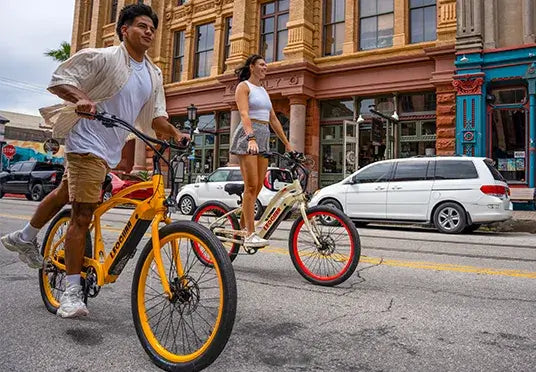
Key Features: Style and comfort are most important. Cruisers are defined by their relaxed, laid-back frame geometry, high, swept-back handlebars that allow for a fully upright posture, and wide, plush saddles. Many feature step-through frames for easy mounting and dismounting. The focus is purely on enjoyment, not performance.
The Riding Experience: Riding a cruiser e-bike is pure, stress-free fun. Picture a warm, sunny day, gliding easily along a beachside boardwalk or through a quiet park. The motor does the work, providing a gentle push as you pedal, so you can focus on the scenery and the simple joy of the ride. It's cycling at its most relaxed.
Best For: Casual recreational rides, comfort-focused riders, cruising on flat terrain, and leisurely neighborhood exploration.
4. Folding E-Bikes
For those who are short on space but big on convenience, folding e-bikes are the perfect solution. They pack a full e-bike experience into a portable, storable package.
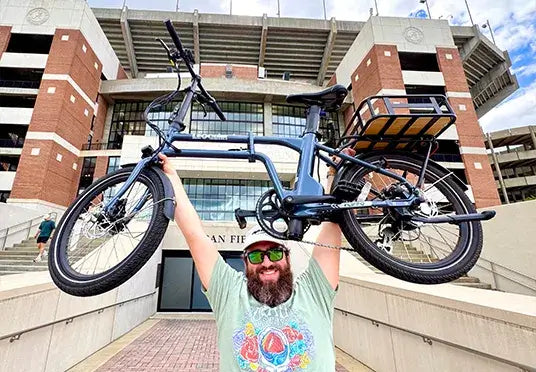
Key Features: The defining feature is a strong hinge mechanism in the middle of the frame, and often on the handlebar stem, that allows the bike to fold down to a fraction of its size. They usually use smaller wheels, usually between 16 and 20 inches, to achieve their compact form factor.
The Riding Experience: The small wheels give folding bikes a zippy, nimble feel, making them incredibly quick to accelerate from a stop—a great feature in city traffic. While they can feel slightly less stable at very high speeds compared to a full-size bike, the trade-off is unmatched convenience. The ability to fold it up and take it on a train, tuck it under your office desk, or store it in an apartment closet is a game-changer.
Best For: Riders with limited storage space, multi-modal commuters (bike-and-train), and people who travel with their bike in an RV or boat.
5. Cargo E-Bikes
Cargo e-bikes are the minivans of the bicycle world. They are built from the ground up to haul heavy or bulky loads, making them a legitimate and practical car replacement for many families and businesses.
Key Features: These bikes are built for strength. They feature long, reinforced frames (longtails) or large front-mounted boxes (bakfiets), powerful motors to handle heavy loads, and a low center of gravity for stability. They come equipped with a wide range of accessories, including child seats, passenger benches, and large baskets.
The Riding Experience: You feel incredibly capable on a cargo e-bike. Even when loaded with two kids or a week's worth of groceries, the bike remains stable and surprisingly easy to maneuver. The powerful motor help makes you feel like you're riding an unladen bike, flattening hills and making heavy loads feel weightless. It turns everyday errands into a fun, outdoor experience.
Best For: Families transporting children, small business owners making local deliveries, and anyone who needs to regularly haul groceries or other large items.
6. Fat Tire E-Bikes
Fat tire e-bikes are the all-terrain vehicles of the e-bike universe. Their massive tires give them the ability to conquer surfaces that would stop most other bikes in their tracks.
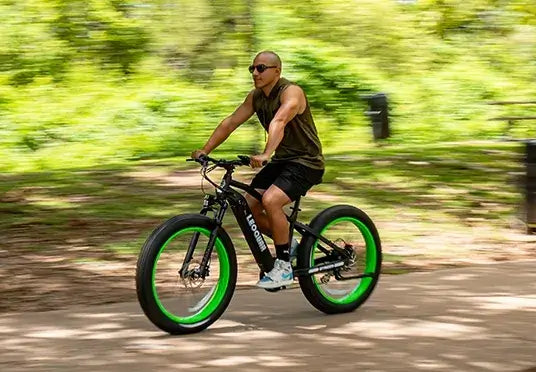
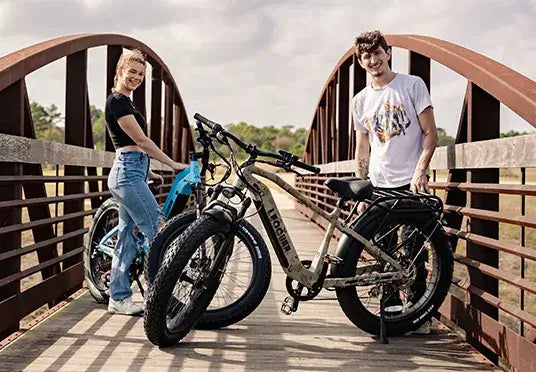
Key Features: The name says it all. These bikes are characterized by their oversized tires, usually 4 inches wide or more. This large contact patch allows them to float over soft surfaces like sand and snow. They have rugged frames and powerful motors to turn those giant wheels through challenging terrain.
The Riding Experience: Riding a fat tire e-bike is a confidence-inspiring experience. The huge tires act as a form of passive suspension, smoothing out bumps and providing incredible traction. It feels like you're floating over obstacles. This stability allows you to explore new areas, from snowy winter trails to sandy beaches, extending your riding season and your sense of adventure.
Best For: All-season and all-terrain explorers, riding in snow or on sand, and any rider who prioritizes maximum stability and traction over speed.

How to Choose the Right E-Bike
With a clear understanding of the types available, you can now find your perfect match using a simple, three-step process.
Step 1: Define Your Use
Be honest about what you will use the bike for 90% of the time. Is it for a daily 10-mile commute? Weekend trail adventures? Hauling your kids to school? Your primary purpose is the single most important factor and will immediately narrow your choices. A commuter doesn't need a full-suspension e-MTB, and a trail rider won't be happy on a cruiser.
Step 2: Consider Your Terrain
Where will you be riding? Your environment dictates the features you need. If your world is flat pavement, a cruiser or simple city bike will suffice. If your commute includes steep hills, you'll want a bike with a more powerful motor and better gearing. If you plan to ride on dirt paths or rough roads, look for a model with front suspension and wider, more versatile tires.
Step 3: Factor in Logistics
Think about the practical realities. How much storage space do you have? If you live in a small apartment, a folding e-bike might be your only option. Do you need to carry it up stairs? If so, weight becomes a critical factor. Finally, determine your budget. While it's tempting to want the highest-spec model, it's more important to find a reliable bike that fits your primary needs and your wallet.
Your E-Bike Journey Begins
Choosing the right type of electric bike is about matching the machine to your mission. By first understanding your own needs and then learning how each category is designed to meet those needs, you can move from confusion to clarity. The perfect e-bike is the one that seamlessly integrates into your life and inspires you to ride more often. Now that you're armed with this knowledge, your journey to finding the perfect ride can truly begin.
Frequently Asked Questions
Q: What's the difference between Class 1, 2, and 3 e-bikes?
A: Class 1 e-bikes only provide motor assistance when you pedal and stop at 20 mph. Class 2 e-bikes have both pedal assistance and a throttle, both limited to 20 mph. Class 3 e-bikes provide pedal assistance up to 28 mph but typically don't have a throttle above 20 mph.
Q: Can I ride my e-bike in the rain?
A: Most e-bikes are designed to handle light rain and wet conditions, but they're not fully waterproof. It's generally safe to ride in light rain, but avoid heavy downpours and never submerge the electrical components in water.
Q: How far can I ride on a single charge?
A: Range varies greatly depending on the battery size, motor efficiency, terrain, rider weight, and how much you use the motor assistance. Most e-bikes can travel between 20-60 miles on a single charge under normal conditions.
Q: Do I need a license or insurance for an e-bike?
A: In most U.S. states, you don't need a license or insurance for Class 1 and Class 2 e-bikes. Some states may require a license for Class 3 e-bikes. Check your local regulations as laws vary by location.
Q: How much should I expect to spend on a quality e-bike?
A: Quality e-bikes typically range from $1,200 to $4,000, with some high-end models costing more. While cheaper options exist, investing in a reputable brand with good components and warranty coverage is usually worth the extra cost for reliability and safety.


Leave a comment