

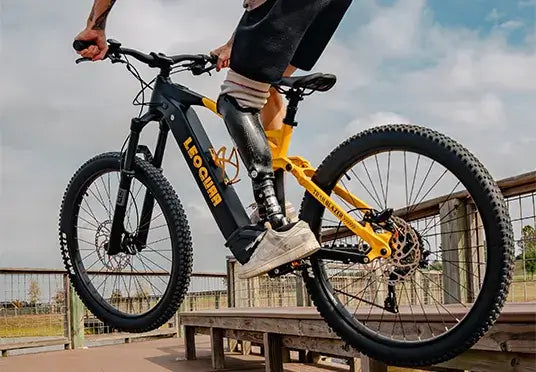


Leoguar Fastron vs Velotric Nomad 1 Plus Fat Tire Ebike: Which Wins?
Most riders want the best mix of power, range, and price in a fat tire electric bike. The Leoguar Fastron is the clear winner for these riders. It gives you better torque for climbing hills, a bigger battery for longer rides, and the same premium features for $410 less than its competitor. This big cost savings makes it an amazing value, and you don't give up any core performance.
Here's how to decide:
- Choose the Leoguar Fastron if: You want the best performance for your money. You want stronger hill-climbing power, faster starts from stops, and longer range for your rides. The value here can't be beat.
- Choose the Velotric Nomad 1 Plus if: Carrying heavy loads is your top need. If you plan to haul heavy gear, add a child seat with groceries, or you're a heavier rider, the 440 pound limit makes this the right choice.
At a Glance: Spec Showdown
Looking at these bikes side by side shows the key differences that affect how they perform. These numbers form the backbone of our analysis and show where each bike does best.
| Feature | Leoguar Fastron | Velotric Nomad 1 Plus |
|---|---|---|
| Price | $1,489 | $1,899 |
| Motor | 750W Rated | 750W Rated |
| Torque | 85Nm | 75Nm |
| Battery Capacity | 720Wh | 691Wh |
| Max Range | Up to 60 miles | Up to 55 miles |
| Brakes | Tektro Hydraulic Disc | Hydraulic Disc |
| Max Load Capacity | 300 lbs | 440 lbs |
| Tires | Vee 26" x 4.0", 72TPI | 26" x 4.0" Puncture-Resistant |
| Display | 2.0" Color w/ CANBus | 3.5" LCD |
| Charging Port | USB-C | USB-A |
| Safety Certifications | UL 2849 & UL 2271 | UL 2849 & UL 2271 |
The numbers show a clear story here. The Leoguar Fastron beats the competition in three key areas: torque, battery size, and range, while costing $410 less. The Nomad 1 Plus stands out mainly for its much higher weight limit.
Power, Performance, and Torque
When you look at a fat tire electric bike, the motor's wattage is just part of what matters. The real feeling of power, especially on tough terrain, comes from torque. This is where you see a big difference between the Fastron and Nomad 1 Plus.
The 85Nm Torque Advantage
Both bikes have a strong 750W rear hub motor, which works great for all-terrain riding. But the Leoguar Fastron's motor makes 85Nm of torque, which is 10Nm more than the Velotric Nomad 1 Plus's 75Nm. This isn't just a number-it's real performance you can feel every time you ride.

This extra electric bike torque gives you several key benefits:
* Faster Starts: From a complete stop at a traffic light or trail crossing, the Fastron feels more responsive and ready to go. It gets up to speed with less work, giving you a more confident feel in stop-and-go riding.
* Better Hill Climbing: This is where the 85Nm really shows its worth. On steep hills where the 75Nm motor might feel like it's working too hard, the Fastron keeps its speed with much less effort. For riders in hilly areas, this means you don't have to use the lowest gear as much and can climb with more power and less strain. The motor feels like it's helping you instead of fighting the hill.
* Better Performance on Loose Ground: A fat tire electric bike should work on more than just pavement. When you ride on gravel paths, sandy areas, or wet grass, torque keeps you from getting stuck. The Fastron's higher torque helps the wide tires grip better and push through soft surfaces more easily, keeping you moving forward where a lower-torque bike might slow down.
While wattage often relates to how fast an e-bike can go, torque defines its raw pulling power. For more details on the technical side, check out this guide on understanding e-bike motor torque and how it affects your ride quality. The Fastron's advantage here is a main reason why it feels so much better to ride.
| Feature | Leoguar Fastron | Velotric Nomad 1 Plus |
|---|---|---|
| Motor | 750W Rated | 750W Rated |
| Torque | 85Nm | 75Nm |
| Pedal Assist Speed | Up to 28 MPH | Up to 28 MPH |
| Default Setup | Class 2, 20 MPH | 12–28 MPH |
| Unlockable Speed | Class 3, unlock to 28 MPH | Class 3, up to 28 MPH |
Speed and E-Bike Classes
Both the Fastron and Nomad 1 Plus can reach Class 3 speeds of up to 28 MPH with pedal-assist. This makes them fast enough for almost any commuting or fun riding needs. However, they come set up differently right out of the box.
The Fastron ships as a Class 2 e-bike, with a default top speed of 20 MPH for both throttle and pedal assist. This keeps you legal with most local rules right away. For people who live where higher speeds are allowed, you can easily unlock the bike to reach 28 MPH. This clear setup is user-friendly and helps you ride legally.
The Nomad 1 Plus lists a speed range of 12-28 MPH. While it also reaches Class 3 performance, the Fastron's approach feels more straightforward for riders who care about following the law. We always tell riders to check their local laws and e-bike classifications before changing speed settings to make sure they ride safely and legally on roads and trails.

Battery, Range, and Adventure
A fat tire electric bike lets you explore farther, but that freedom depends directly on your battery's capacity. More stored energy means more miles on the trail, less worry about running out of power, and confidence to take that scenic side trip. In this important area, the Fastron again has a clear edge.
The Edge in Energy Capacity
The Leoguar Fastron has a 48V, 15Ah battery, which gives you 720Wh (Watt-hours) total capacity. The Velotric Nomad 1 Plus comes with a slightly smaller 691Wh battery. While the 29Wh difference might not look huge on paper, it means real-world advantage in stored energy.
Think of it this way: that extra 29Wh is more fuel in your tank. It's the backup power you need to handle one last unexpected hill at the end of a long day. It's the confidence to use a higher level of electirc bike pedal assist without always worrying about your battery level. Over the life of the bike, this small but steady advantage in capacity adds up to more freedom and less time stuck to a charger. It's another point that makes the Fastron's lower price even more impressive-you pay less for more energy.
Real-World Range Results
Manufacturers' range estimates are always best-case scenarios, usually achieved on flat ground, with a light rider, using the lowest pedal-assist setting. Even so, these numbers give you a useful baseline for comparison.
The Fastron lists a maximum range of up to 60 miles, while the Nomad 1 Plus lists up to 55 miles. The key point isn't the exact number, but how they compare. With its larger 720Wh battery, the Fastron has a higher ceiling for range. On an average ride using a mix of throttle and medium pedal assist, both bikes will give you plenty of miles, but the Fastron always offers that extra buffer. For commuters who want to go several days between charges or weekend riders planning all-day adventures, the combination of a larger battery and higher potential range in the Fastron is a big practical benefit.

Which Bike is for You?
Specs only tell half the story. The best fat tire electric bike is the one that fits your specific lifestyle and needs. We've created three rider profiles to help you see which of these excellent e-bikes is the perfect match for you.
Profile 1: The Value-Driven Adventurer
Who they are: This rider wants maximum bang for their buck. They want a powerful fat tire electric bike for a mix of weekday commuting on bumpy city streets and weekend adventures on forest roads and gravel trails. They love tackling hills and want a bike that feels powerful and responsive, but they're also budget-conscious and want their money to go as far as possible.
Why the Fastron is perfect: For this rider, the Leoguar Fastron can't be beat. The combination of higher 85Nm torque, a larger 720Wh battery for longer range, and a price that's $410 lower is unbeatable value. The power is there for the fun stuff-speeding up quickly, conquering steep hills, and pushing through loose terrain. The big cost savings can go directly toward essential accessories like a high-quality lock, helmet, and storage bags, giving you a fully equipped adventure machine for less than the base price of the competitor.

Profile 2: The Heavy-Duty Hauler
Who they are: This rider plans to use their e-bike as a true work vehicle. They might be a heavier person, or they plan to carry serious cargo. This could include weekly grocery runs, loading up with camping gear, or safely mounting a child seat on the rear rack. For them, weight capacity isn't secondary-it's the main thing.
Why the Nomad 1 Plus is the only choice: For the Heavy-Duty Hauler, the Velotric Nomad 1 Plus's 440 pound maximum load capacity is the single most important feature, making it the clear winner. The Fastron's 300 pound limit, while enough for the average rider and some cargo, won't work for someone who needs to maximize their carrying ability. The extra cost of the Nomad 1 Plus is worth it as an investment in the strength and safety needed to handle these heavier loads. If your needs fall into this category, the Nomad 1 Plus is built for the job.
Profile 3: The Tech-Focused Commuter
Who they are: This rider values the small details and modern technology that make daily use better. They appreciate a clear, readable display, modern charging standards for their devices, and signs of a well-designed, reliable electronic system.
Why the Fastron wins: The Leoguar Fastron pulls ahead for the tech-savvy rider. Its waterproof color display isn't just prettier but also much easier to read in bright, direct sunlight compared to a basic LCD. The inclusion of CANBus protocol, a communication system often found in higher-end e-bikes and cars, suggests a more solid and reliable connection between the controller, motor, and display. Finally, the built-in USB-C port is a forward-thinking touch, allowing for faster and more convenient charging of modern smartphones and devices without needing an adapter. These details give the Fastron a more modern and polished feel.
Safety, Control, and Components
Beyond power and range, the quality of an e-bike's safety and control parts is crucial. These are the parts that keep you safe, build confidence, and determine how long the bike will last. Here, a closer look shows subtle but important differences.

UL Certification: The Gold Standard
First, it's important to note that both the Leoguar Fastron and the Velotric Nomad 1 Plus meet the industry's highest safety standards. Both bikes are certified to UL 2849 (for the entire e-bike electrical system) and UL 2271 (for the battery).
This isn't just marketing talk. It means that an independent, globally recognized safety organization has thoroughly tested the battery, charger, and electrical system to prevent fire, explosion, and electrical shock dangers. For any fat tire electric bike, especially one you'll charge in your home or garage, this dual UL certification is a must-have feature and a huge trust signal for both brands.
| Feature | Leoguar Fastron | Velotric Nomad 1 Plus |
|---|---|---|
| UL 2849 | Yes | Yes |
| UL 2271 | Yes | Yes |
| Brake Type | Hydraulic Disc | Hydraulic Disc |
| Brake Brand | Tektro | Not specified |
| Tire Size | 26" x 4.0" | 26" x 4.0" |
| Tire Detail | Vee, 72TPI | Puncture-Resistant |
| Max Load Capacity | 300 lbs | 440 lbs |
Braking Power and Transparency
Both bikes have hydraulic disc brakes, which is the better choice for a heavy, fast-moving fat tire electric bike. They offer much more stopping power, better control, and more consistent performance in wet weather compared to mechanical brakes.
However, there's a key difference in transparency. The Leoguar Fastron specifies that it uses Tektro hydraulic brakes. This matters. Tektro is a well-established, respected brand in the cycling industry, known for making reliable and effective braking systems. Naming the brand gives buyers more confidence in the component's quality, performance, and future availability of replacement pads and parts. The Nomad 1 Plus simply lists "hydraulic disc brakes," leaving the specific brand and model unclear. In our view, transparency in critical safety components is always a plus.

Tires, Traction, and TPI
The massive 26" x 4.0" tires are what define this bike category, providing incredible stability and cushioning. The Nomad 1 Plus highlights that its tires are "puncture-resistant," which is an excellent feature for commuters who want to avoid flat tires.
The Fastron provides a more technical specification: "Vee 26" x 4.0", 72TPI" tires. The TPI, or Threads Per Inch, refers to the number of threads in the tire's casing. A higher TPI count, like the 72TPI found on the Fastron's tires, generally means a more flexible, lighter, and better-performing tire. It can bend better to match the terrain for improved grip and often provides a smoother ride feel compared to lower TPI tires (like 27 or 60 TPI) that are stiffer and heavier. This is a subtle detail, but for careful riders, it points to a higher quality component choice.
The Final Verdict
After a detailed head-to-head analysis, the choice between the Leoguar Fastron and the Velotric Nomad 1 Plus becomes clear. It comes down to one critical user priority.
The Velotric Nomad 1 Plus is a capable fat tire electric bike that serves a specific and important niche. Its main strength, and indeed its main selling point, is its massive 440 pound load capacity. Combined with a large, easy-to-read display, it's the go-to option for riders who absolutely must maximize their bike's carrying ability for heavy cargo or personal weight requirements.
However, for nearly every other rider, the Leoguar Fastron presents an overwhelmingly stronger case. It delivers a better experience across the board, establishing itself as the clear leader in overall value. Let's recap its decisive advantages:
* Better Price: At $1,489, it costs $410 less, a significant saving that can be used for high-quality accessories.
* Better Power: The 85Nm motor provides 10Nm more torque, translating to noticeably better hill-climbing and acceleration.
* Better Range: Its larger 720Wh battery offers more energy capacity and higher potential range for longer adventures.
* Better Components: The inclusion of branded Tektro hydraulic brakes and higher-TPI tires shows a commitment to quality in critical areas.
* Better Tech: A modern waterproof color display, a more robust CANBus system, and a convenient USB-C port give it a more refined, up-to-date feel.
While the Velotric Nomad 1 Plus excels in its specific niche, the Leoguar Fastron delivers a stronger, more feature-rich, and more modern package for significantly less money. For the vast majority of riders in the market for a fat tire electric bike, the Fastron represents the smarter purchase and the decisive winner in this showdown.
Frequently Asked Questions
Q: Can I unlock the Leoguar Fastron to go faster than 20 MPH?
A: Yes, the Fastron can be unlocked to reach Class 3 speeds of up to 28 MPH. However, always check your local laws before modifying speed settings to ensure you're riding legally in your area.
Q: What's the real-world difference between 85Nm and 75Nm of torque?
A: The 10Nm difference translates to noticeably better hill climbing, quicker acceleration from stops, and improved performance on loose terrain like sand or gravel. You'll feel the Fastron working with you rather than struggling on challenging terrain.
Q: How much weight can I actually carry on the Leoguar Fastron?
A: The Fastron has a 300-pound total load capacity, which includes the rider's weight plus any cargo. For most riders and typical cargo loads, this is sufficient, but heavier riders or those needing to carry substantial cargo should consider the Nomad 1 Plus with its 440-pound capacity.
Q: Are both bikes safe to charge indoors?
A: Yes, both the Fastron and Nomad 1 Plus are certified to UL 2849 and UL 2271 safety standards. This means they've been rigorously tested for fire, explosion, and electrical shock prevention, making them safe to charge in your home or garage.
Q: What's the advantage of the USB-C port on the Fastron?
A: The USB-C port charges modern devices faster than USB-A and is becoming the standard for smartphones, tablets, and other electronics. This means you won't need to carry adapters and can charge your devices more quickly while riding.


Leave a comment