







Why Leoguar Builds Our Own Ebike Aluminum Alloy Frames?
At the core of every great electric bike is its skeleton: the frame. While many frames look similar, the choice of ebike frame materials is one of the most important decisions in engineering. It controls strength, weight, handling, and how long the ebike will last. We often see questions about aluminum alloy ebike frames, and for good reason—they represent the industry's sweet spot.
But not all aluminum frames are created equal. This article reveals our manufacturing process, showing why we at Leoguar insist on building our own frames from the ground up and what that commitment means for your ride.
Quick Answer: The Leoguar Ebike Frame
We build our own aluminum alloy ebike frames to achieve total control over quality, performance, and design integration. This allows us to create a superior, more reliable ebike.
Here's the breakdown:
The Industry Standard: Aluminum alloy is the best material for most ebike frames because it offers an unmatched balance of strength, low weight, rust resistance, and affordability. It's the smart choice for building a high-performance, commuter electric bike.
The Leoguar Philosophy: Instead of buying generic, off-the-shelf frames, we engineer our own. This ensures every tube, weld, and angle is perfectly designed for our specific motor, battery, and geometry. We control the entire process, from raw material to final heat treatment.
The Rider's Benefit: You get an ebike that feels balanced and unified. Our integrated approach leads to better handling, stronger durability under the stress of a motor, and a sleek design where the battery and components are part of the frame, not just attached to it.

Why Ebike Materials Matter
An ebike isn't just a bicycle with a motor attached; it's a completely different vehicle with unique demands. The addition of a motor and battery introduces significant higher weight—often 10-15 kg more than a standard bike.
This extra mass, combined with the increased ebike torque from the motor, places huge stress on the frame. The material and construction must be strong enough to manage these forces without bending or failing over thousands of miles. This is where the choice of ebike frame materials becomes critical for long-term durability and ride quality. A frame that isn't engineered for these specific loads can lead to poor handling, reduced efficiency, and potential safety issues.
As experts note, a frame's impact on handling and durability is magnified on an ebike, making material science a key difference between a mediocre product and a truly reliable one. This is why we focus so intently on the foundation of our bikes.
Our In-House Frame Philosophy
Many ebike brands source their frames from a catalog of "open-mold" or generic designs. This approach is faster and cheaper, but it involves significant compromises. The brand must fit their chosen components into a pre-existing frame, often leading to awkward weight distribution and a disconnected ride feel. At Leoguar, we do the opposite.

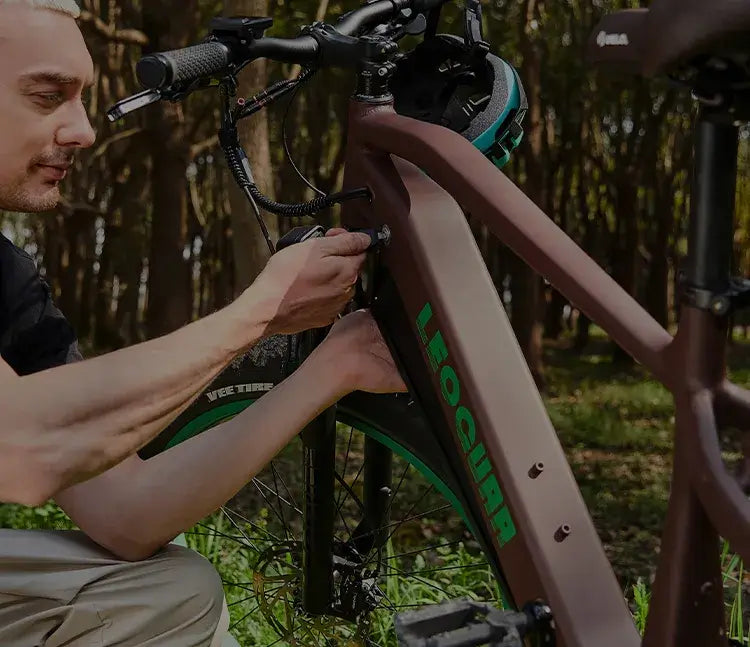
We embrace a vertically integrated process for our aluminum alloy ebike frames because it's the only way to guarantee a truly unified product. Our first-hand engineering process begins with the electric bike components. We design the frame geometry around the precise dimensions and weight of the motor and battery.
This ensures a low, stable center of gravity and predictable handling. We don't just design it; we build it. Our team has complete oversight of the manufacturing, from selecting the specific aluminum alloy to defining the protocols for welding and heat treatment. Every weld is carefully inspected for integrity, and every frame undergoes a precise heat treatment process to restore its strength and durability after welding.
This obsession with control allows us to conduct rigorous prototype testing, fine-tuning the balance between stiffness for power transfer and compliance for rider comfort. The result is a Leoguar ebike frame that offers a level of performance, reliability, and aesthetic integration that simply cannot be achieved with a generic, off-the-shelf solution.
Understanding Aluminum Alloy
When we talk about an "aluminum" ebike frame, we are referring to an aluminum alloy, not pure aluminum. Pure aluminum is relatively soft and not strong enough for a bicycle frame. By mixing aluminum with other elements like magnesium, silicon, or zinc, we create an alloy with a much higher strength-to-weight ratio. The two most common alloys in the ebike industry are 6061 and 7005.
Each has distinct properties that make it suitable for frame construction.
| Feature | 6061 Aluminum | 7005 Aluminum |
|---|---|---|
| Primary Alloying Elements | Magnesium & Silicon | Zinc & Magnesium |
| Post-Weld Treatment | Requires heat treatment (T6) | Ages naturally to near-full strength |
| Formability | More formable, ideal for complex tube shapes | Slightly higher ultimate strength |
| Common Use | Widespread due to its excellent balance and workability | Often used where complex shaping is less critical |
At Leoguar, we primarily use 6061 aluminum alloy because its superior formability allows us to use advanced techniques like hydroforming to create complex, integrated designs. The mandatory heat treatment process also gives us another critical point of quality control to ensure every frame meets our exacting strength standards.
Benefits of Aluminum Alloy Ebike Frame
Aluminum alloy has become the go-to material for the vast majority of ebike frames for a collection of very practical reasons. It's not just about cost; it's about delivering a balanced, high-performance package for real-world riders.

Lower Weight, Better Handling
A lighter frame makes an ebike easier to pedal without assistance, nimbler in corners, and simpler to manage when you need to lift it, whether onto a car rack or up a flight of stairs. The lower mass of an aluminum alloy ebike frame directly contributes to a more responsive and efficient ride.
High Strength for Ebike Loads
Ebikes are heavy. An average ebike weighs 10-15 kg more than its non-electric counterpart. An aluminum alloy ebike frame provides the necessary strength to safely support the rider plus the added weight of the battery and motor. Its high strength-to-weight ratio ensures the frame can withstand the torque and daily stresses of electric-assisted bike riding for years.
Better Corrosion Resistance
Unlike steel, aluminum does not rust. It naturally forms a protective layer of aluminum oxide on its surface, which prevents corrosion. For riders who commute in all weather or live in humid or coastal climates, this corrosion-resistant ebike frame is a significant advantage, ensuring longevity and a clean look without constant vigilance.
Lower Maintenance Than Steel
A steel vs aluminum ebike frame comparison often highlights maintenance. Steel frames are susceptible to rust and require diligent care, including touching up paint chips immediately to prevent corrosion from taking hold. Aluminum frames are far more forgiving, requiring little more than regular cleaning to stay in excellent condition.
More Affordable Than Carbon
While carbon fiber offers the ultimate in low weight, it comes at a steep price. An aluminum frame delivers a significant portion of the performance benefits—namely low weight and high stiffness—at a fraction of the cost. This makes a high-quality, affordable ebike frame accessible to a much wider audience.
Flexible for Modern Designs
This is where aluminum truly shines for ebike design. Using a process called hydroforming, we can shape aluminum tubes into complex profiles. This flexibility is key for creating an internal battery ebike frame, where the battery is seamlessly integrated into the downtube. This not only looks cleaner but also protects the battery and improves the bike's overall structural integrity.

Ebike Frame Materials Explained
While aluminum is the most common choice, it's helpful to understand the full spectrum of different ebike frame materials to see why it holds that top spot.
Aluminum Alloy
The champion of balance. It's lightweight, strong, stiff, corrosion-resistant, and affordable. Its workability allows for modern, integrated ebike frame designs. This is the best material for the vast majority of ebike frames, from commuters to mountain bikes.
Steel
Known for its strength, durability, and smooth ride quality due to its natural compliance. However, steel is significantly heavier than aluminum and is prone to rust if not cared for. It's a good choice for touring or cargo bikes where durability outweighs the need for low weight.
Carbon Fiber
The premium, performance-oriented material. It boasts an incredible stiffness-to-weight ratio and can be molded into highly aerodynamic shapes. However, it is very expensive, and its impact resistance can be a concern for daily use, making it less practical for most ebike applications.
Titanium
Offers a ride quality similar to steel with the light weight and corrosion resistance of aluminum. It's incredibly durable and has a beautiful, unique finish. Its high material cost and difficult manufacturing process reserve it for high-end, boutique, or custom ebike frames.
Magnesium Alloy
Even lighter than aluminum, magnesium offers excellent vibration damping. However, it is more susceptible to corrosion and is more expensive and difficult to work with than aluminum, which has limited its adoption in the mainstream ebike market.

Aluminum vs Steel for Ebikes
The classic debate of aluminum vs steel ebike frame comes down to a clear set of trade-offs.
- Weight: Aluminum is the decisive winner. A steel frame is considerably heavier, which negatively impacts an ebike's handling, acceleration, and ease of lifting.
- Corrosion: Aluminum does not rust, making it ideal for wet or humid conditions. Steel will rust if the paint is chipped or scratched and requires more maintenance.
- Ride Feel: Steel is known for its compliant, vibration-damping ride. However, modern aluminum frames, designed with wider tires and engineered tube shapes, can also provide a very comfortable ride.
- Cost: Steel is generally cheaper in its raw form, but the advanced hydroforming and butting techniques used on modern aluminum frames deliver superior performance for a very competitive price, offering better overall value.
For most ebike users, the lightweight and corrosion-resistant properties of an aluminum or steel ebike frame make aluminum the superior choice.
Aluminum vs Carbon for Ebikes
When comparing an aluminum vs carbon fiber ebike frame, the choice is between practicality and peak performance.
- Weight: Carbon fiber is lighter, which can make an already heavy ebike feel a bit more nimble. However, the weight savings are often marginal in the context of a full ebike system (motor and battery) and come at a huge cost.
- Cost: This is the biggest differentiator. Carbon fiber frames are significantly more expensive to produce, which dramatically increases the final price of the ebike. Aluminum offers a much better performance-per-dollar ratio.
- Durability and Impact Resistance: Aluminum tends to dent on impact, while carbon fiber can crack, sometimes with damage that isn't visible. For a daily-use vehicle like an ebike, the robustness and predictable nature of an aluminum frame are often preferable.
For elite racing or riders for whom budget is no object, a carbon fiber vs aluminum ebike might lean toward carbon. For everyone else, aluminum provides a durable, lightweight ebike frame material without the exorbitant cost and fragility concerns.
Are Premium Frames Worth It?
What about a titanium ebike frame or a magnesium ebike frame? These premium ebike frame materials occupy a niche in the market.
Titanium offers a "forever frame" with a legendary ride feel and complete corrosion resistance, but at a price point that is often double or triple that of a high-quality aluminum bike. Magnesium is an interesting emerging material, but its manufacturing challenges and corrosion concerns have kept it from widespread use.
While these materials are excellent, they reinforce the value proposition of aluminum. They show that while you can spend more, it's difficult to find a better-balanced material for the specific demands of modern ebikes.
Best Material for Your Style
The best material for an ebike frame ultimately depends on how you ride.
For Commuting Ebikes
Aluminum alloy is the ideal choice. It's lightweight for navigating urban environments, corrosion-resistant for all-weather riding, and durable enough to handle daily use and abuse.

For Off-Road Ebikes
Both aluminum and carbon fiber are used, but aluminum is often preferred for its durability and lower cost. It can handle the impacts of trail riding without the high replacement cost or catastrophic failure risk of carbon.
For Budget-Conscious Riders
Aluminum and steel are the top contenders. However, aluminum generally provides a lighter, more modern package for a similar price, making it the best ebike frame material for budget riders seeking performance.
For Premium Performance
For those seeking the absolute lightest and stiffest ride, carbon fiber is the choice. Titanium is also an option for a premium, comfortable, and durable "bike for life."
Why Aluminum Makes Sense
In the world of ebikes, the most expensive material is not always the best. The goal is to build a balanced, reliable, and accessible vehicle.
While carbon fiber is lighter and titanium is more durable, neither can match the incredible blend of performance, cost-effectiveness, and design flexibility of aluminum alloy. That is why are ebike frames made of aluminum so frequently.
It's not a compromise; it's the most intelligent and practical choice for the needs of the modern ebike rider. It delivers the strength to handle the motor, the low weight for great handling, and the value that makes performance accessible.
FAQ About Ebike Frames
What is the best material for an ebike frame?
For the majority of riders and applications, aluminum alloy is the best material. It offers an optimal balance of strength, low weight, corrosion resistance, and cost, making it perfect for everything from city commuting to trail riding.
Why are most ebike frames made from aluminum alloy?
Most ebike frames are aluminum because it provides the best all-around performance package for the price. It's strong enough to handle the extra weight and torque of a motor and battery, light enough for responsive handling, and resistant to rust, all while keeping the bike affordable.
Is aluminum alloy strong enough for heavy ebikes?
Absolutely. The aluminum alloys used in ebike frames, like 6061-T6, are engineered for high strength. When properly designed and heat-treated, as we do at Leoguar, these frames can easily withstand the forces of a heavy ebike, rider, and cargo for many years of safe use.
What is the difference between 6061 and 7005 aluminum?
They are two different alloys with slightly different properties. 6061 is more formable, making it ideal for creating complex tube shapes through hydroforming. 7005 is slightly stronger but less workable. Both are excellent for bike frames, but 6061 offers greater design flexibility.
Is aluminum better than steel for ebikes?
For most ebike applications, yes. Aluminum is significantly lighter and does not rust, which are two major advantages for a vehicle that is already heavy and often used in all weather conditions. While steel offers a compliant ride, modern aluminum frames with wider tires close that comfort gap significantly.


Leave a comment