



Best Foldable Electric Bike for Adults: Compare Electric vs Traditional
Whether you're commuting in the city, exploring the suburbs, or seeking mountain-ready features, finding the best foldable electric bike for adults means matching your lifestyle with the right power and design.
Finding the best foldable bike starts with one simple need: a bike that fits your life. You want something that can be tucked away in a closet, carried onto a train, or put in your car trunk without any hassle. We understand this need completely. The main appeal of a foldable bike has always been how easy it is to carry and store. This has been its biggest selling point for many years. For adults looking to try one locally, simply searching "foldable bikes near me" can help you test ride different models and find what truly fits your needs.
But something big has changed for today's adult riders. The addition of a quiet motor has transformed the compact folding electric bike for adults into a serious daily-use machine, far beyond just a short-distance toy. This change isn't just about making cycling easier for people. It's about completely changing what your bike can do for you in your daily life. The difference is huge: one bike is for occasional convenience, while the other can change how you travel every single day.
Electric vs Traditional Foldable Bikes: Which Is Better for Adults?
Choosing between a traditional folding bike and an electric one is the most important decision you'll make. It's not about which one is "better" overall, but which one works best for your specific needs as an adult rider who wants to use it regularly. We've broken down the key differences to help you decide which option makes the most sense for your situation.
Key Differences Between Electric and Traditional Folding Bikes
| Feature | Traditional Foldable Bike | Foldable Electric Bike for Adults |
|---|---|---|
| Effort Required | 100% pedaling, great workout | Pedal-assist, arrive fresh |
| Hill Performance | Tough on steep climbs | Motor support flattens hills |
| Range | Based on your fitness | 20–50 miles per charge |
| Weight | Lighter (20–30 lbs) | Heavier (40–65 lbs) but more powerful |
| Maintenance | Standard bike upkeep | Includes battery & motor care |
| Best For | Flat, short commutes | Daily rides, errands, long distances |
Who Needs a Traditional Folder?
A non-electric folding bike works great for certain people. If you're someone who enjoys the physical challenge of cycling and wants that workout feeling, a traditional folder might be perfect for you. People on tight budgets where the initial cost matters most should also consider this option. Traditional folders work well for individuals who only cover very short, flat distances, like riding from an apartment to a nearby park or store.
Why Most Adults Should Choose an Electric Foldable Bike
We strongly recommend an electric model for adults in these situations. If you plan to commute daily and want to arrive at work feeling energized instead of tired and sweaty, an electric folder is the way to go. People whose routes include hills, bridges, or areas with consistent headwinds will find the motor incredibly helpful. Anyone who wants to replace car trips for errands, shopping, or social visits should definitely consider electric. Those who see the bike as a practical solution for solving the "last-mile problem" will get the most value from an electric model.
For most adults, the added capability of the electric motor isn't a luxury item. It's what makes the foldable bike a consistently useful and enjoyable part of daily life that you'll actually want to use regularly. Unlike basic foldable bikes, electric models are engineered to support longer routes, heavier riders, and hilly terrains, making them ideal for adults seeking practical everyday transportation. If your primary need is getting to work quickly and efficiently, a foldable electric commuter bike offers the best balance of power, portability, and convenience.
How Pedal-Assist Makes Foldable Electric Bikes Ideal for Adults
So what are the real benefits that make an electric motor such a game-changer for adults? The advantages come down to four key areas that directly address the challenges and desires of modern urban and suburban life. These benefits make the difference between a bike you use occasionally and one that becomes part of your daily routine.
Why Commuters Love Foldable Electric Bikes
🕒 Save Time
Skip traffic and never wait for the subway again
🧥 No Sweat
Ride in work clothes without arriving exhausted
🏙️ Urban-Ready
Compact enough to store in your office or apartment
🔋 Effortless Hills
Motor assist makes slopes feel flat
1. Conquer Your Commute
The biggest barrier to bike commuting is often the "sweat factor" that makes people avoid cycling to work. A foldable electric bike eliminates this problem completely by providing just enough power to keep you from getting tired and sweaty. The pedal-assist motor gives you exactly the right amount of help, which means you can ride to the office in your work clothes and arrive fresh, not tired and messy. Hills and headwinds, which can turn a pleasant ride into a difficult struggle, are no longer obstacles that ruin your day. You stay in control of the ride, and your commute becomes an enjoyable part of your day instead of a workout you have to survive.
2. Expand Your Horizons
With a traditional bike, a 10-mile ride can feel like a major challenge that requires planning and preparation. With an electric foldable bike, that same distance is just the beginning of what you can easily accomplish. Most foldable electric bikes offer a range of 20 to 50 miles on a single charge, depending on the model and how much assist you use. This extended range means you can go farther and explore more areas without worrying about getting too tired. Weekend trips to neighboring towns, exploring long park trails, or running errands across the city are now well within reach, all without worrying if you'll have enough energy for the return journey home.
3. The Great Equalizer
Have you ever wanted to ride with a partner, family member, or friend, but differences in fitness levels made it difficult for everyone to enjoy the ride together? The electric bike solves this problem by acting as the great equalizer between riders of different abilities. The rider who needs more help can use a higher level of pedal assist, while the stronger rider can use a lower setting or turn off the motor completely. This setup allows everyone to ride together at a comfortable pace, enjoying the scenery and each other's company without anyone feeling left behind or held back by the group.
4. A True Car Replacement
A traditional bike is great for carrying just you from place to place. An electric bike is capable of carrying you and all your stuff without making you work much harder than usual. The motor takes away the extra effort required to haul weight, turning your foldable bike into a true car replacement for many local trips around town. With the addition of a sturdy rear rack, you can easily carry a week's worth of groceries, a briefcase, or even install a child seat on certain models that support it. As experts at ebiketips.road.cc note, some models function as a "micro-cargo bike", offering incredible utility in a compact package that fits in small spaces.
How Adults Use Foldable Electric Bikes Every Day
Theory is helpful, but how does a foldable electric bike actually perform when you use it in real daily situations? Based on our experience helping many riders choose the right bike, here are three common scenarios where an electric foldable bike becomes an essential tool that solves real transportation problems.
Urban Commuting with a Foldable E-Bike: Ditch the Subway and Save Time
The Challenge: You live in a small 700-square-foot apartment with no garage or bike storage area. Your daily commute is five miles with one big hill that makes you tired and sweaty. You're completely tired of crowded subways and bus schedules that change without warning, making you late for work.
The Solution: A compact foldable electric bike becomes your transportation lifesaver that solves all these problems at once. It stores neatly in your front hall closet without taking up much space. The electric motor makes that dreaded hill completely disappear, and your commute becomes a guaranteed 20 minutes of fresh air and gentle exercise. You can bring the bike inside your office for safe storage and up to your apartment for easy charging overnight.
Scenario 2: The Suburban Commuter
The Challenge: You drive to a commuter train station every day, but the closest free parking is a long 15-minute walk away from the platform. After the train ride to the city, your office is another 10-minute walk from the destination station. The "last mile" problem at both ends adds 50 minutes of walking and hassle to your day, making your commute much longer and more tiring than it needs to be.
The Solution: You park in the free lot, pop your car trunk, and unfold your electric bike in seconds. You effortlessly cruise to the train platform in just three minutes instead of walking for 15. At your destination station, you unfold the bike again and ride directly to your office door without any walking. The whole process becomes seamless and enjoyable, especially when you consider how market leaders are famously quick and easy to fold. You've just saved nearly an hour every day and turned a frustrating walk into a pleasant ride that you actually look forward to.
Scenario 3: The Weekend Adventurer
The Challenge: You love exploring new towns and state parks with your RV or on weekend car trips to different areas. But once you're parked at your destination, you're either limited to walking distance or forced to pack up the entire vehicle just to go to a store or trailhead. This limitation really reduces how much you can explore and enjoy your trips.
The Solution: Two foldable electric bikes fit easily in the storage bay of your RV or the trunk of your car without taking up too much space. Now you have complete freedom to explore wherever you want to go. You can ride into the quaint downtown five miles away for dinner, explore a 15-mile scenic bike path, or quickly run to a camp store for supplies, all without ever starting your engine or moving your main vehicle.
How to Choose the Best Foldable Electric Bike for Adults
Fit and ergonomics matter too. Many adults worry whether a foldable bike can support their height or riding posture comfortably. Look for adjustable seatposts and handlebars to fine-tune the fit. Some of the men’s best foldable electric bikes for adults even support riders up to 6'5" with extended frame geometry for a confident ride.
Once you've decided that an electric foldable is the right tool for your needs, the technical specifications can feel overwhelming and confusing. We're here to make them simple and easy to understand. Here's what really matters when you're shopping for the best foldable electric bike for adults.
Understanding E-Bike Specs: Battery, Motor, and Wheel Size Explained
Motor Power (Watts): How much help do you actually need for your riding situation? Motors are typically rated in Watts, which tells you how powerful they are. A 250W motor works great for flatter areas and provides gentle assistance that feels natural. If your commute involves significant hills, you're a heavier rider, or you plan to carry cargo regularly, we recommend looking for a 500W motor or higher for more torque and climbing power that won't leave you struggling.
Battery Capacity (Ah/Wh): How far do you want to go on a single charge? Think of Amp-hours (Ah) as the size of your fuel tank and Watt-hours (Wh) as the total energy available for your rides. A higher number for either measurement means you can go farther before needing to recharge. Battery lifespan is another key consideration, especially for those who rely on their e-bike daily. Quality batteries typically last 500–800 full charge cycles, which translates to several years of use. If you're choosing the best foldable electric bike for adults, look for models with reputable battery brands like LG or Samsung to ensure long-term reliability. For daily commuting and moderate use around town, a battery around 400-500Wh is a great starting point that typically delivers that useful 20-50 mile range.
Safety tip: When choosing your foldable electric bike, make sure it includes reliable disc brakes and quality-certified battery systems (such as LG or Samsung cells). We always advise prioritizing tested safety components over flashy extras.
Wheel Size: Do you prioritize compactness or comfort for your rides? Most foldable bikes use either 16-inch or 20-inch wheels, and each size has clear advantages. 16-inch wheels offer the most compact fold possible, making them ideal for multi-modal commuting and very tight storage spaces like small apartments. 20-inch wheels provide a more stable, comfortable ride that feels much closer to a full-size bike. For those who occasionally venture onto dirt roads or gravel trails, a mountain-style foldable electric bike with fat tires and suspension can offer the extra grip and control needed for rougher terrain.
If you're planning light off-road use or riding on gravel or uneven paths, consider a mountain-style foldable electric bike with suspension and wider tires. These models combine portability with performance, especially for adventurous adults. They roll over bumps and potholes more smoothly, making them a better choice for longer rides or rougher city streets that aren't perfectly maintained.
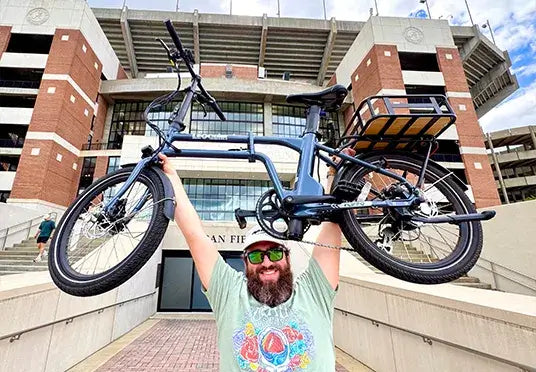
Weight: Understanding the portability trade-off is crucial for making the right choice. Electric foldable bikes weigh more than their traditional counterparts, usually between 40 and 65 pounds total. A heavier bike often has a more powerful motor or a larger battery that gives you more range and assistance. Be realistic about how often you'll actually need to carry the bike up stairs or lift it into vehicles. If you live on the fourth floor of a building without an elevator, every single pound matters for daily use. If you're just lifting it into a car trunk occasionally, a few extra pounds for significantly more range might be a worthwhile trade-off. Still worried about the hassle of lifting a heavier e-bike? Some models now include built-in rolling wheels that let you drag the folded bike like a suitcase—a small innovation that makes a big difference when you're navigating train stations or crowded sidewalks.
Key Features to Look For
Folding Mechanism: How fast and easy is it to fold and unfold? Look for a bike that can be folded and unfolded in under a minute without requiring tools or complicated steps. Secure latches that won't come loose during riding are absolutely non-negotiable for safety.
Brakes: With the higher speeds and weight of an electric bike, having good brakes is essential for your safety and confidence. We strongly recommend disc brakes (either mechanical or hydraulic) over older rim-style brakes for better performance. They offer superior stopping power in all weather conditions, especially when it's wet outside.
Gearing: Even with a motor helping you, having gears is still important for efficiency and comfort. They allow you to pedal at a comfortable pace whether you're starting from a complete stop, climbing a steep hill, or cruising on a flat road. Good gearing also helps conserve battery life by letting you contribute more of your own power when it's easy to do so.
Integrated Accessories: Check if the bike already includes essential items like front and rear lights, fenders (mudguards), and a rear rack for carrying things. Buying a bike where these accessories are already integrated saves you money and ensures they fit perfectly. You won't have to worry about finding compatible parts or dealing with installation issues later. Night visibility is especially critical for urban riders. If you often ride after sunset, prioritize models with high-lumen integrated lights or reflective frame elements. These details turn your foldable electric commuter bike into a safer choice for evening commutes or late returns from the office.
Common Mistakes First-Time Buyers Make
Even the best foldable electric bike for adults can disappoint if you choose the wrong fit for your needs. Many first-time buyers overlook critical factors like weight tolerance, tire size, or folding speed. Always test-fold the bike before buying and check whether it fits into your regular storage space (home, office, train station, etc.).
What’s the Best Foldable Electric Bike for You?
Ask yourself these 4 quick questions:
-
How far do you ride each day?
→ If it’s over 5 miles, an electric option is ideal. -
Do you deal with hills or bridges?
→ Consider models with 500W+ motors for better climbing. -
Do you live in a small space?
→ Look for 16" wheels or ultra-compact folding bikes. -
Do you plan to carry groceries or gear?
→ Choose models with a sturdy rack and higher payload.
🛒 Tip: The best foldable electric bike for adults is the one that balances your real-life riding needs—not just specs on paper.

Are Foldable Electric Bikes Worth It? Here’s What Adults Should Know
There's no denying that a quality foldable electric bike requires a significant upfront investment. The initial cost is definitely higher than a traditional folder or a regular bike. So the big question is: is it actually worth spending the extra money? For the vast majority of adults who will use it regularly, our experience shows the answer is a clear yes.
The Total Cost of Ownership
Think about more than just the price tag when making your decision. Compare the cost of the electric bike to what you currently spend on transportation every month. How much money do you spend on a monthly transit pass, gas for your car, car insurance payments, parking fees, or ride-sharing services like Uber? For many people, an electric bike actually pays for itself in just one to two years through transportation savings. When you look at it this way, it's not really an expense that drains your budget. It's an investment in more efficient, affordable, and enjoyable transportation that saves money over time.
A Health and Lifestyle Upgrade
The true value of owning a foldable electric bike extends far beyond just the financial benefits. It's about the freedom of zipping past rush-hour traffic while everyone else sits stuck in cars. It's the gentle exercise you get every day without even thinking about it as a workout. It's knowing you're reducing your carbon footprint and helping the environment with every trip. The stress-free commute leaves you energized and happy for the day ahead instead of frustrated from traffic.
Choosing the best foldable bike isn't just about buying a product that gets you from point A to point B. It's about investing in a better, healthier, and more convenient lifestyle that improves your daily experience. That’s why many male riders specifically search for the men’s best foldable electric bike for adults—seeking models built for larger frames, more torque, and long-distance reliability.
Many men prefer models with extended range and rugged frames, and search for the men’s best foldable electric bike for adults when choosing a durable, all-purpose ride. These options are often tailored to support taller frames, greater loads, and sporty designs.
This guide is based on our extensive hands-on experience testing foldable electric bikes across multiple terrains, use cases, and rider types. At Leoguar Ebikes, we’ve helped hundreds of riders—from urban commuters to weekend adventurers—find the perfect e-bike that truly fits their lifestyle. We don’t just write about these bikes—we ride them, fix them, and constantly compare them in real-world scenarios.
Every model and feature mentioned in this guide reflects not only our research but also real feedback from adult riders across cities, suburbs, and trails. We’re committed to helping you find the best foldable electric bike for adults—one that works just as well in your daily routine as it does on your next adventure.
Ready to find your perfect ride? Whether you're commuting to work, exploring new neighborhoods, or looking to replace car trips, there’s a foldable electric bike built for your lifestyle. Explore Leoguar's full lineup of foldable electric bikes for adults and start your next ride with confidence.
Frequently Asked Questions
1. Q: How long does it take to charge a foldable electric bike battery?
A: Most foldable electric bike batteries take 4-6 hours to fully charge from empty. Many riders charge overnight or during work hours, so the bike is always ready when needed. Some newer models offer fast-charging options that can reach 80% capacity in 2-3 hours.
2. Q: Can I ride a foldable electric bike in the rain?
A: Yes, most quality foldable electric bikes are designed to handle light rain and wet conditions. The electrical components are sealed to prevent water damage. However, avoid riding through deep puddles or heavy downpours, and always dry the bike thoroughly after wet rides to prevent rust.
3. Q: How much maintenance does a foldable electric bike require?
A: Electric foldable bikes need regular bike maintenance like tire pressure checks, brake adjustments, and chain lubrication. Additionally, you'll need to care for the battery by charging it regularly and storing it properly. Most riders find the maintenance manageable with basic bike knowledge.
4. Q: What happens if the battery dies while I'm riding?
A: If your battery runs out of power, you can still pedal the bike like a regular bicycle. It will be heavier than a traditional bike due to the motor and battery weight, but it's completely rideable. Most bikes also have battery indicators to warn you before the power runs out.
5. Q: Are foldable electric bikes allowed on public transportation?
A: Policies vary by location and transit system. Many trains and buses allow folded bikes during off-peak hours, but some have restrictions on electric bikes due to battery concerns. Always check with your local transit authority for specific rules before planning to bring your bike on public transportation.
6. Q: Where can I find foldable bikes near me?
A: Many local bike shops now carry foldable electric bike options. Use Google Maps, Yelp, or local cycling forums to search “foldable bikes near me.” Be sure to test ride different models in person to see which one fits your body and lifestyle best before purchasing. Local e-bike retailers are often happy to let you compare a few folding electric bike styles before you commit.


Leave a comment