

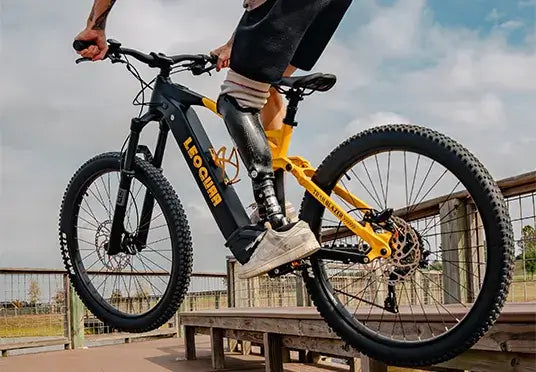


Electric Pedal Bicycles: Why Pedal Assist Improves Comfort And Range
If you consider electric pedal bicycles, the term that is constantly mentioned is pedal assist. This feature goes beyond being just an additional component; it is the key technology that completely alters the way cycling feels. Pedal assist is similar to a secret ingredient in that it makes riding more comfortable, enables you to travel a greater distance, and makes biking enjoyable for all.
Pedal assist strengthens your effort in a smart manner by detecting when you're pedalling and then providing extra power from the motor. As a result of this cooperation, you use less energy, are able to climb steep hills without difficulty, and can cover a greater distance on a single battery charge. In this guide we will explain how this technology functions, examine the way it affects comfort and distance, and offer expert advice to help you get the most out of each ride.
What Is Pedal Assist?
In order to properly understand its advantages, it is necessary to first get a clear idea of what pedal assist is. It is a seamless system which perfectly combines human power with electric power and the result is a ride that seems natural yet is also greatly enhanced.
How Does a Pedal Assist E Bike Actually Work?
A pedal assist e bike functions by detecting when you're pedalling and then immediately adding motor power. The sensors pick up the moment you begin to pedal and send this information to the controller, which in turn instructs the motor on the amount of assistance to give.
Most current systems modify the level of assistance according to cadence or the force applied to the pedals. As a result, the bicycle responds to the way you ride rather than maintaining a constant speed.
In conclusion, a pedal assist e-bike doesn't take over your effort; it amplifies it, which is the reason the cycling experience still remains that of actual cycling.
Your Pedaling Partner
Imaginate pedal assist as being like your most reliable riding companion, not similar to a motorcycle's throttle. In contrast to systems in which the motor does all the work, an electric bicycle with pedals requires you to take part. The motor only activates when you are actually pedalling. A great many people compare the sensation to that of having a constant, soft breeze pushing you from behind. It doesn't take control away from you; on the contrary, it enhances your own power, so each time you push the pedals has a better effect. It is this feature that makes pedal assist special and ensures that you remain involved in cycling.
Pedal Assist vs Throttle E-Bikes
People often compare a pedal assist e-bike with those that have only a throttle. The main difference lies in the way the motor works. With a throttle bike, it moves as soon as you press the throttle, even if you're not pedalling. A pedal assist e-bike, on the other hand, only gives you power when you are pedalling. For the majority of riders, pedal assist seems more natural and helps to extend the battery range since their legs take on part of the work.
This advantage is supported by real-world riding tests, which show that a pedal assist e bike uses about 15 to 20 percent less energy per mile than one that is operated solely by a throttle. Since the riders provide some of the power, the motor does not have to run at full output as frequently.
On longer rides, this increased efficiency causes the battery to last much longer.
The System's Components
- The sensors (the Senses): these function in a manner similar to the system's brain since they detect when you are pedalling and, in the case of more advanced systems, also detect how hard you are pedalling. They then send this information directly to the controller.
- The motor (also known as the muscle): The controller receives the signal from the sensors and instructs the motor regarding the amount of power to provide; this power is then passed directly on to the drivetrain where it helps the wheels to turn.
- The battery (referred to as the heart) supplies the power required by the entire system and provides the energy needed by the motor.
You're In Control
- In Eco Mode, Low Assist provides a slight boost, which is ideal for use on level roads, for saving battery, or if you want to get more exercise.
- In the Medium Assist mode (Tour/Normal) the assistance provided is clear and is ideal for everyday journeys to work, for ascending small hills, and for combating medium headwinds.
- High Assist (Turbo/Boost): Provides maximum power and is suitable for climbing steep hills, for speeding up quickly in traffic, or when you need to get to a place fast without breaking a sweat.
With a pedal assist e-bike, each setting determines the amount of motor power that will help when you're pedalling. The lower the level, the less assistance it gives and the higher the level, the more motor support it provides. Level 1 typically offers about 25 per cent motor assistance. The middle levels, for example levels 2 or 3, give more support when commuting or when going up moderate hills. The highest level then gives the greatest boost when climbing steep hills or when you need quick acceleration.
Conclusion: By understanding the different pedal assist levels, riders will be able to strike a balance between comfort, speed, and battery range.
The importance of this technology lies in the way the law categorises e-bikes. In the United States there are generally three types of e-bike. Class 1 e-bikes provide pedal assistance only up to 20 mph, and Class 3 e-bikes offer pedal assistance only up to 28 mph. These categories are based on the widely adopted U.S. regulations for e-bikes, which specify how pedal-assist e-bikes may be used on roads and bike paths. The system serves to differentiate e-bikes from electric scooters and motorcycles. This demonstrates how important pedal assistance is to modern e-bikes.

The Comfort Revolution
The greatest advantage of pedal assist is that it greatly improves riding comfort, both for the body and for the mind, by getting rid of the problems which usually make normal cycling seem like hard work.
Conquer Hills, Not Lungs
For most people, a steep hill brings their cycling to an end. If they are using a normal bike, they have to shift into the easiest gear, stand on the pedals and climb the slope while breathing heavily. The situation is entirely different when pedal assist is used; what was once a frightening incline becomes a manageable gradient. We still recall a particularly difficult local hill which had previously stopped our daily journey to work; on this same hill, with the pedal assist set on medium, the slope became mild rather than a challenge that had ended our exercise. We reached the top feeling energised rather than tired. This new confidence in dealing with any kind of terrain completely alters the places you can ride and the way in which you do so.
Arrive Fresh, Not Sweaty
Those who cycle to work want to get to the office feeling fresh and prepared for the day, and pedal assist makes this a reality. The motor takes over most of the effort, particularly when accelerating and while going up hills, so that you can maintain a comfortable speed without having to do the strenuous physical work that causes you to sweat. As a result, you won't need to take a shower after cycling or change your clothes, which is why the electric pedal bicycle is one of the best forms of city transportation.
Reducing Joint Strain
It isn't suitable for all people to do high-impact exercise. Although regular cycling is generally gentle on the joints, it can still place a great deal of stress on the knees, hips, and ankles, particularly when going uphill or covering long distances. Using a pedal assist feature reduces the maximum force that your joints have to take with each pedal stroke.
Health research backs this advantage. Studies involving pedelec riding indicate that riders are able to achieve moderate levels of physical activity while at the same time experiencing less stress on their joints than with traditional cycling; furthermore, research carried out at the university suggests that commuting regularly by e-bike can improve cardiovascular fitness and aerobic capacity while at the same time reducing overall fatigue.
It has been consistently shown that since electric pedal bicycles require less physical effort, they are ideal for low-impact exercise; this is particularly beneficial for older adults or people who have joint pain since it enables them to obtain heart health benefits without having to endure the strain associated with normal cycling. As a result, the pleasure of cycling can now be enjoyed by a much larger number of people.
Go The Extra Mile
It might seem strange, but using pedal assist—which involves your own effort—is much better for getting the most distance than using only a throttle. This happens because of the working relationship between human power and motor power.
The Science of Synergy
An electric motor uses the most energy when starting from a stop or running at very low speeds under high load. This is when it works least efficiently. When you pedal, especially to get the bike moving, you provide the starting force that overcomes resistance. This lets the motor start working when it can operate more efficiently.
Think of your battery like a tank of water. Using only throttle mode is like opening a big faucet—the water drains fast. Using pedal assist is like using a small, efficient faucet to add to the water you are already providing yourself. By sharing the work, you greatly reduce the total energy use, letting that same tank of water, or battery charge, last much, much longer.
Smarter Riding Adventures
This efficiency directly means longer rides and more freedom. A typical pedal assist e bike can travel between 40 and 80 miles on one charge. Range depends on terrain, rider weight, battery size, and assist level.
Real-world range testing shows how much assist level affects distance. Many modern pedal assist e bikes typically travel 20 to 50 miles per charge under mixed riding conditions. Lower PAS levels extend range because the motor uses less power while the rider contributes more effort.
Using low assistance on flat roads greatly extends distance. Riders who actively pedal and manage assist levels often achieve the longest range.
By actively managing your assist levels—using a low setting on flat ground and saving higher levels for hills and headwinds—you become the master of your battery life. This isn't just about making your commute longer. It's about opening new possibilities.
A weekend ride is no longer limited by how tired you get or fear of running out of battery far from home. You gain confidence to explore that unknown trail, visit the next town over, or simply stay out longer, knowing your pedaling and the motor are working together for the best efficiency.
From "Push" to "Partner"
Not all pedal-assist systems feel the same. The "feel" of the ride depends largely on what type of sensor the electric bicycle uses: a cadence sensor or a torque sensor. Understanding this difference is important for choosing a bike that matches your riding style.
What Makes a Good Pedal Assist E Bike in 2026
When one is buying a pedal assist e bike nowadays, they usually concentrate on three main features. The first of these is a responsive torque sensor which ensures a smooth delivery of power. The second is battery capacity since it enables longer range rides. The third is motor efficiency as this maintains a natural level of assistance.
Many contemporary e-bikes used for commuting and trekking combine a mid-drive motor with torque sensors and as a result offer the smoothest possible riding experience while at the same time maximizing battery efficiency.
The cadence sensor picks up the fact that the pedals are being turned and the torque sensor measures the amount of pressure you are applying to the pedals. Torque sensor systems also increase efficiency since the motor reacts immediately to the pressure that the rider exerts and thus provides power only when it is required.
An analysis of the industry indicates that torque-based pedal assist systems are more efficient in their use of energy than those based on simple cadence sensors since they do not supply full motor power when the rider is only giving a light pedal input.
The result is that the riding experience becomes quite different. As is often pointed out by experts writing for publications such as ebiketips.road.cc, the decision regarding the type of sensor has a major influence on the way the bike feels, since a number of high-end commuter bikes opt for a torque sensor on the motor because of its natural and easy response.
| Feature | Torque Sensor | Cadence Sensor |
|---|---|---|
| How It Feels | Natural & Easy. Feels like your own strength is made stronger. The harder you pedal, the more power you get. | A Helpful "Push". The motor gives a set amount of power once you start pedaling, no matter how hard you push. |
| Responsiveness | Instant. Power comes the moment you apply pressure to the pedals. | Slight Delay. The motor starts after the cranks have turned a certain amount. |
| Best For | Riders wanting a true cycling feel, performance riding, and handling technical hills. | Commuters, casual riders, and those who prefer a more relaxed, less effortful ride. |
| Typical Cost | Usually found on mid-to-high-end electric bicycles. | Common on more affordable and entry-level models. |
Your Strategic Guide
Having an electric pedal bicycle is one matter; gaining expertise in its pedal-assist system is something else. If you use the various assist levels in a thoughtful way, you can exactly tailor each ride to match your particular objectives, whether those are speed, exercise, or exploration.
Master Your Ride
Here are our tested strategies for different situations:
When it comes to your daily commute, you should aim to combine convenience with some light exercise. On level ground, begin with a low level of assistance (either 1 or 2) so as to warm up and add to the effort. If you come across a hill or if you're running late, then set the assistance level to medium or high (3 or 4) in order to maintain your speed and prevent arriving sweated out. Using this method will make your commute both efficient and enjoyable.
To get the maximum range: on a long trip the primary aim should be to conserve your battery. View the motor as a tool and not as something you can rely on entirely. For the majority of the journey you should use the lowest available assist level (Eco or 1). Your legs should provide most of the power when riding on flat ground or on gently rolling terrain. Increase the assist level only when facing steep hills or strong headwinds. This approach will reward you with excellent range.
If you want to get fit, switch on the pedal assist so that you can have a longer and more steady workout. Set the assist to the lowest level (1 or 2) in order to keep your heart rate elevated. In this situation, the role of the motor is not to make the ride easy, but to help you cope with difficulties such as steep hills which might otherwise cause you to have to stop, thus allowing you to keep up your effort throughout the whole ride.
If you want to go on a relaxed cruise: on a weekend ride that is slow and leisurely, comfort is important. Choose a mid-level level of assistance (2 or 3) so that there is no feeling of strain. The setting you select should allow you to pedal gently, make easy conversation with a riding partner, and at the same time enjoy the views. This is all about simple and effortless enjoyment.

Your Journey, Amplified
An electric bicycle fitted with pedals and operated by a smart pedal-assist system doesn't only alter the way you ride but also changes the possibilities available during a ride; it goes beyond being merely convenient since it is a transformative technology which makes cycling more comfortable, efficient, and inclusive.
It makes hills level, reduces the distance you have to cover, and gets rid of the obstacles posed by physical fitness or joint pain. It gives you the ability to tackle your daily commutes, extend your adventures, and once again enjoy cycling without being held back by the old limitations. The journey is still yours—the effort, the control, and the experience—but now it is enhanced.
Frequently Asked Questions
Q: How long does the battery last with pedal assist?
A: Battery life depends on your assist level, terrain, and how much you pedal. On low assist with active pedaling, most e-bikes can go 40-80 miles on a single charge.
Q: Do I still get exercise with pedal assist?
A: Yes, you definitely still get exercise. Pedal assist requires you to pedal, and you can control how much effort you put in by adjusting the assist level.
Q: Can I ride my electric pedal bicycle without employing the motor?
A: Yes, definitely. You can switch off the pedal assist altogether and then ride it as if it were a normal bike, but it will be heavier than a standard bicycle.
Q: Is pedal assist accepted everywhere?
A: In most places, yes. Pedal-assist e-bikes are legal in most US states and many countries, but speed limits and power restrictions may vary by location.
Q: What's the difference between pedal assist and a throttle?
A: Pedal assist only works when you're pedaling and provides proportional help, while a throttle gives power on demand without pedaling, like a motorcycle or scooter.
Q: Is a pedal assist e bike good for beginners?
A: Yes. A pedal assist e bike is very beginner friendly because the motor helps when pedaling becomes difficult. New riders can start with a low assist level and gradually increase support as they gain confidence. Many beginners find that pedal assist makes longer rides less intimidating.


Leave a comment